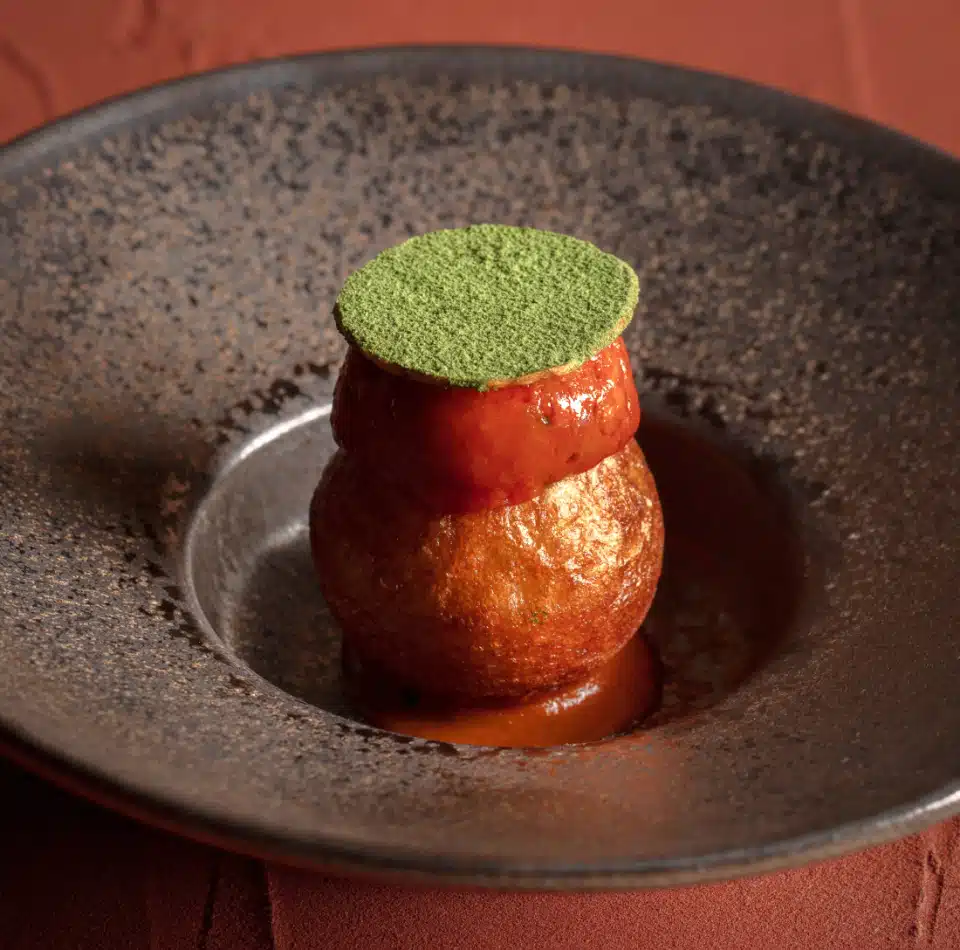
When I looked at London’s dining scene, I felt there was still very little representation of West African cuisine at that level, despite the depth, sophistication and regional diversity of the food culture. There were brilliant home kitchens and community restaurants, but very few spaces presenting those flavours and traditions through the lens of contemporary fine dining. I wanted to create somewhere that approached West African cuisine with the same care, precision and ambition often afforded to other culinary traditions, while staying true to its identity.
Akoko has never been about reinventing the cuisine. It is about creating a platform where those stories, ingredients and techniques can be experienced in a different setting and understood in a broader context.

One of the biggest misconceptions is that West African food is one dimensional or overly informal. In reality, it’s incredibly layered, regional and technique-driven. There’s a huge depth of flavour built through fermentation, smoking, spice blending and slow cooking traditions that have existed for generations.
One of the biggest misconceptions is that West African food is one dimensional or overly informal.
Another misconception is that refinement somehow means moving away from authenticity. For me, refinement is simply care and attention to detail where the essence of the cuisine remains the same. We’re just presenting it in a way that allows people to experience its complexity more clearly.
My background shaped Akoko entirely because I came into hospitality from a place of curiosity and connection rather than convention. Before opening the restaurant, I travelled across West Africa spending time in kitchens, bakeries, markets and local communities, learning directly from people and understanding the cultural significance behind ingredients and dishes.
Those experiences taught me that food is never just about the plate. It’s about generosity, memory, storytelling and hospitality. Akoko was built around those values. I wanted the restaurant to feel thoughtful and considered, but also warm and welcoming.
To me, modern West African cuisine means allowing the cuisine to evolve naturally while staying rooted in its foundations. Tradition is the starting point. The flavours, techniques and cultural references remain intact, but there’s space to refine, reinterpret and present them differently.
Some dishes at Akoko are very close to traditional preparations, while others take inspiration from a memory or ingredient and move in a more contemporary direction. The key is honesty as innovation only works when there’s a genuine understanding and respect for what came before it.
For me, authenticity isn’t about strict replication, it’s about integrity. The menu has to reflect the flavours, techniques and emotions that make the cuisine what it is. Fine dining simply asks for consistency, precision and attention to detail, and those things are not at odds with West African cooking. We spend a lot of time thinking about balance, texture and presentation, but flavour always comes first.
At Akoko, every dish is designed to tell a story, whether that’s through the use of spice, a cooking technique or the history of a particular region. The aim is to create an experience that feels immersive while remaining grounded in something genuine.
Some ingredients are easier to find now than they were a few years ago, but there are still challenges around consistency, seasonality and quality. We place great importance on sourcing local produce wherever possible and are fortunate to have access to exceptional British ingredients. At the same time, we work hard to ensure the flavours and techniques remain rooted in West African cooking.
In many ways, it’s the spices, layering and cooking methods that define the cuisine rather than a single ingredient. That balance has naturally shaped the evolution of the menu and encouraged creativity while keeping the identity of the food intact.

I think fermentation probably comes closest because it speaks to patience, depth and transformation. Across West Africa, fermentation has always played a central role in cooking, whether through iru, ogi, fermented cassava or spice pastes. It creates complexity and layers of flavour in a very natural way. More broadly, though, I’m drawn to techniques that carry history and intention. Fire cooking, smoking and preserving all create flavours that feel instinctive and deeply rooted in memory.