A graduate of hospitality school in Istanbul, Turkey, Kohen began his cruise industry career aboard the legendary Queen Elizabeth II in 1990 as a Head Sommelier. Since then, he has held leadership positions overseeing large-scale food and beverage operations around the world, developing concepts that blend exceptional cuisine, memorable service and operational excellence.
Today, as Vice President of Food & Beverage for Princess Cruises, Kohen helps guide dining and beverage experiences across a fleet of 17 ships serving guests on every major continent. His responsibilities range from menu development and chef partnerships to beverage innovation, food safety protocols, sustainability initiatives and the training of thousands of hospitality professionals. Under his leadership, Princess has forged partnerships with world-renowned culinary and beverage talents, creating experiences that rival many of the world’s finest land-based restaurants.
For Total Food Service, the opportunity to speak with Kohen came at a particularly important time. Across every segment of foodservice, operators are being challenged to deliver more memorable dining experiences while managing labor shortages, rising costs, increasing food safety requirements and changing consumer expectations. Cruise ships face these same challenges—often on a much larger scale.
What makes the cruise industry especially fascinating is its ability to serve as a testing ground for emerging hospitality trends. From celebrity chef collaborations and authentic global cuisines to zero-proof beverages, advanced kitchen technologies and sustainability initiatives, cruise operators are often among the first to identify and implement ideas that eventually influence the broader restaurant industry.
Equally important is the industry’s commitment to food safety and responsible beverage service. Every meal served and every cocktail prepared must meet rigorous standards while still delivering a memorable guest experience. As operators everywhere seek to balance creativity, consistency and guest well-being, there may be no better classroom than the modern cruise ship.
In this conversation, Kohen shares insights into the evolving world of cruise ship dining, the importance of authentic hospitality, and the strategies Princess Cruises is using to create world-class experiences both on the plate and in the glass.
My career began after graduating from hospitality school in Istanbul, Turkey. From the beginning, I was drawn to the combination of people, culture and creativity that defines our industry. I worked across hotels, restaurants and large-scale food and beverage operations before joining the cruise industry in 1990 aboard the legendary Queen Elizabeth II as a Head Sommelier.

What attracted me to cruising was the opportunity to deliver hospitality on a truly global scale. You’re not simply serving a meal or a glass of wine—you are creating complete experiences that connect cuisine, destinations and exceptional service while traveling the world.
The answer comes from experience, listening and teamwork. We are fortunate to work with talented people from around the world, and our guests provide valuable feedback every day. We study global culinary and beverage trends and collaborate with leading chefs, mixologists and industry partners to identify concepts that can work in a cruise environment.
Not every restaurant concept can simply be replicated onboard a ship. We operate a fleet of 17 ships serving guests around the world, so every idea must be scalable, operationally sound and capable of delivering consistent quality. Innovation must always be balanced with execution.
Everything begins with service. Our philosophy is centered on consistency, personalization and genuine hospitality. We invest heavily in training because our goal is not simply to execute recipes but to create emotional connections with our guests.
Product knowledge, craftsmanship and attention to detail are all important, but memorable hospitality comes from making people feel welcome and valued. When guests remember how you made them feel, they return. That loyalty is what drives long-term success.
Technical skills can absolutely be taught. We can train someone to prepare a cocktail, cook a meal properly or provide table service. What cannot easily be taught is attitude.
The people who succeed have enthusiasm and genuinely enjoy serving others. We operate culinary schools and extensive training programs, but the first thing we look for is a positive attitude and a willingness to learn. If someone has that foundation, our trainers and technology can help them become successful professionals.
You can teach someone where to place the fork and knife, but true hospitality is delivered with a smile, sincerity and a personal touch.

Cruise ships operate some of the most complex food and beverage environments in the world, and many of the principles we’ve developed can benefit land-based restaurants. First, precision planning and forecasting are essential. Because storage space is limited and resupply opportunities are infrequent, we rely on highly detailed data-driven forecasting to reduce waste and control costs. Second, operational discipline is critical. Serving thousands of meals every day across multiple venues requires standardized procedures, exceptional coordination, and consistent execution to ensure quality never varies, even under tremendous volume. Third, every resource—from ingredients to labor to space—must be maximized, creating a culture of efficiency that encourages using whole ingredients, minimizing excess, and continuously refining processes. Finally, cruise operations demonstrate the importance of guest-centric flexibility. We simultaneously serve casual dining guests, fine dining enthusiasts, health-conscious travelers, and those seeking indulgent experiences, reinforcing the value of variety and personalization. Those same principles can help any restaurant improve efficiency while delivering an exceptional guest experience.
For us, authenticity is far more important than simply attaching a famous name to a menu. We wanted chefs who become part of our culture and who are willing to train our teams, work onboard and engage with our guests.
Anyone can license a celebrity name as a marketing tool, but we wanted genuine partnerships. The chefs we work with help us develop menus, train our people and create experiences that fit the Princess brand. At the same time, they learn about the unique challenges of operating restaurants at sea. It becomes a collaborative relationship rather than a simple endorsement.
One outstanding example is our partnership with 13-time World Pizza Champion Tony Gemignani. Together we developed unique pizza recipes using carefully selected ingredients and rigorous training programs for our teams. His commitment was to ensure authenticity, and our commitment was to source the proper ingredients and execute his vision consistently across the fleet.
Another great collaboration is with James Beard Award-winning Chef Makoto Okuwa. Working with his team allowed us to develop authentic Japanese dining experiences while training sushi masters and sourcing the proper ingredients. Authenticity matters, and our guests recognize the difference.
We have also worked with renowned Italian Butcher Dario Cecchini. His expertise goes beyond recipes—he teaches craftsmanship. Our butchers have traveled to Italy to learn proper cutting techniques and preparation methods directly from him. Those investments in education elevate the guest experience.
We’re seeing tremendous demand for both, and the key is offering balance rather than choosing one over the other. Today’s guests are increasingly seeking flexibility and personalization in their dining experiences. There is clearly growing interest in health-forward, plant-forward, and wellness-driven cuisine that reflects broader consumer trends toward nutrition and mindful eating. At the same time, guests still want memorable indulgent experiences, whether that’s an elegant multi-course dinner, an exceptional steak, handcrafted desserts, or a chef-driven specialty restaurant. Our responsibility is to create menus that satisfy both lifestyles while maintaining exceptional quality. Ultimately, hospitality is about providing choice and allowing guests to celebrate the way they want to celebrate.

Our beverage program follows the same philosophy as our culinary program: authenticity and storytelling.
We partnered with Handshake Speakeasy in Mexico City, recognized among the world’s top bars, to develop exclusive cocktails for Princess guests. The goal is to bring that experience onboard rather than simply copying recipes. Every cocktail tells a story and reflects the destination and the people behind it.
We also work closely with renowned Mixologist Rob Floyd, who travels throughout our fleet training bar teams and inspiring them to continually improve. Competitions and ongoing education help create pride and professionalism among our bartenders.
Absolutely. The demand for zero-proof beverages continues to grow, and we view it as an opportunity for creativity rather than limitation.
We did not want to simply create another mocktail menu. Instead, we explored adaptogens and innovative ingredients that produce sophisticated beverages with complex flavors while containing no alcohol. These drinks are designed to complement wellness, mood and celebration without sacrificing the experience.
Guests increasingly want choices, and our responsibility is to provide exciting options that fit many different lifestyles.
Handshake Speakeasy has been recognized among the world’s finest bars, and we wanted to bring that caliber of mixology directly to our guests.
The partnership allows us to create exclusive cocktails inspired by their expertise while adapting them for the Princess experience. Many guests may never visit Mexico City, but through these beverages they can enjoy a taste of that culture and creativity onboard our ships.
Hospitality is about creating memorable stories, and beverages can play an important role in that experience.
Technology is essential because it improves consistency, efficiency and sustainability. However, I do not believe technology will replace the human element in culinary operations.
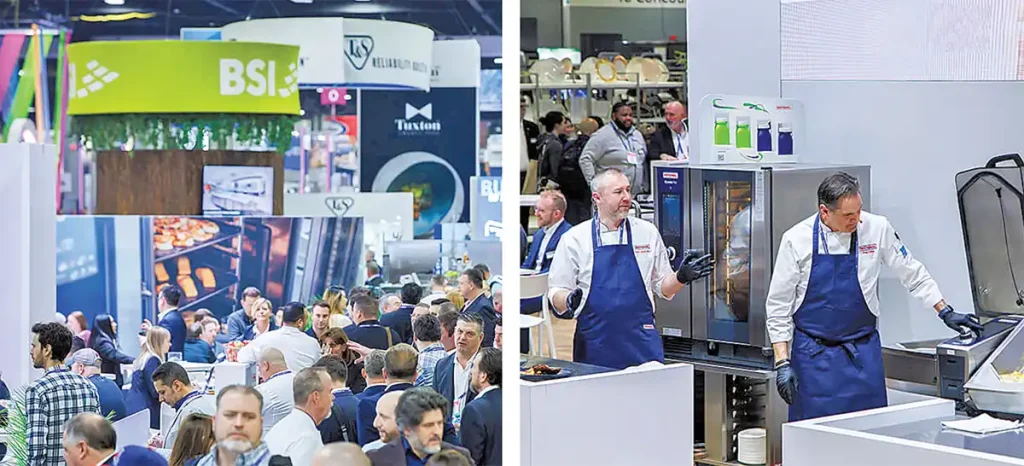
Our teams regularly attend industry events, including the recent National Restaurant Association Show, to identify innovations that can improve our operations. We evaluate equipment that enhances production while reducing labor, energy consumption, water usage and food waste.
Our newest ships incorporate advanced kitchen technologies designed to improve accuracy and efficiency while supporting our culinary teams.
Certainly. We utilize specialized vegetable washing systems and advanced fruit preparation equipment capable of slicing and dicing products consistently and efficiently.
The objective is not to eliminate people but to allow our teams to spend more time on craftsmanship and guest interaction rather than repetitive preparation tasks.
We serve millions of meals annually, so even small improvements in efficiency can significantly reduce waste and improve sustainability. Protecting resources and protecting our oceans are important priorities for us.

Food safety is fundamental to everything we do. Operating onboard ships requires rigorous planning, disciplined procedures and strict adherence to health regulations.
Certain preparation methods that might be common elsewhere are subject to different regulations in cruise operations. For example, sous vide preparation is not permitted under the public health guidelines governing our ships, while blast chilling plays an important role in maintaining quality and safety for many products.
Every procedure is designed with guest safety as the highest priority.
Sustainability is at the heart of Princess Cruises’ food and beverage philosophy, with a comprehensive strategy focused on reducing waste at every stage of the operation—from sourcing and preparation to service and post-consumption. One of the company’s signature initiatives is its Less Left Over program, which emphasizes smarter forecasting, more efficient preparation methods, and maximizing the use of ingredients to minimize waste before it is ever created.
Across the fleet, these practices have significantly reduced food waste per guest while improving overall resource efficiency. Princess also utilizes advanced onboard technologies, including biodigesters and dehydrators, which convert food waste into more manageable and environmentally responsible outputs. These systems help reduce landfill contributions, lower emissions, and streamline operations, demonstrating that sustainability and operational excellence can successfully work hand in hand.
Yes. Centralized preparation allows us to achieve consistency, quality control and operational efficiency. From there, products are distributed and finished throughout the ship’s dining venues.
This approach helps maintain standards while supporting the wide variety of dining experiences available across our fleet.
The cruise industry offers one of the most exciting opportunities available today. It provides international experience, exposure to multiple disciplines and the chance to work alongside talented professionals from around the world.
Whether your interests are culinary arts, beverage management, dining service or leadership, there are tremendous opportunities for growth. At Princess Cruises, we invest significant time and resources in developing our teammates and creating long-term career paths both onboard and ashore.
Hospitality is ultimately about people. If you have passion, curiosity and a willingness to learn, this industry can provide an extraordinary and rewarding career.
All photos courtesy of Princess Cruises unless noted