QSR’s biggest competition is the C-store

3 Min Read

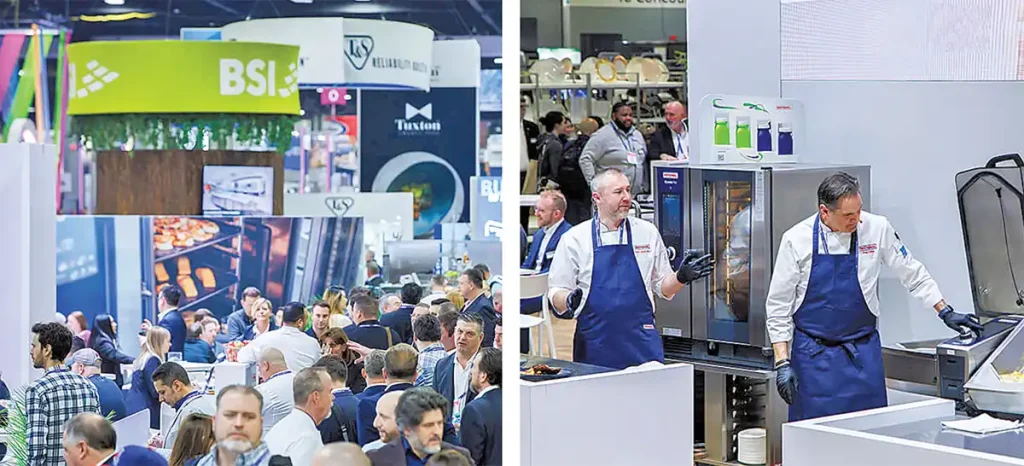
Rich Shank, senior principal and vice president of innovation of Technomic, at the FS/TEC conference on Wednesday. Photo by Jon Mouer
In the year 2026, quick-service restaurants’ biggest competitors aren’t each other — they’re convenience stores.
So said Rich Shank, senior principal and vice president of innovation of Technomic, at the FS/TEC conference on Wednesday.
“Ninety-five percent of C-store operators confirm that foodservice is a strategic priority for their business,” Shank shared. “Eighty percent agree that foodservice is vitally important to the success of their total store. … They’re coming aggressively for the restaurant space, because they see a pretty big opportunity to compete with all of us.”
Not only that, but they are drawing in the consumers who were once attracted to restaurants.
“Sixty-eight percent of consumers believe that C-stores are just as capable as restaurants of offering fresh, quality food and beverages,” he said.
Store designs at C-stores including QuickChek, Dash In, and Sheetz now mimic traditional QSRs, Shank said, showcasing sleek interiors with kiosks, self-serve areas, and self-checkouts.
The C-stores are heavily tech-driven, and therefore restaurant technology teams should emphasize more the human element of hospitality that they offer, thus differentiating themselves from tech-forward C-stores.
In fact, consumers are looking for that human element. Although convenience is still crucial, 60% of consumers prefer ordering with staff as opposed to self-serve kiosks at limited-service restaurants, according to Shank.
“When a customer orders through a staff member, their satisfaction and loyalty metrics average around 58%,” he said. “When they order from the brand or first-party digital app, it drops a little bit, but it’s not statistically significant. You’re still showing me who you are through your brand’s apps and websites. … Once you start getting away from the human and the brand, and you get down to third party, satisfaction drops to 51%. When you go to a kiosk, satisfaction drops to 49%.”
Of course, it also comes down to the reason for a customer’s visit.
“Service the occasion that your customers are there for,” Shank said. “If your customers are there for something grab and go, [they] need to get in and out, that’s great. If some of your customers are there for grab and go and others are there because [they] want to go hang out, you need to service both ends of that consumer spectrum. If you’re only doing one, you’re probably going to struggle.”
He gave the example of Starbucks going through that moment about three years ago, before CEO Brian Niccol took over and re-emphasized the third place.
Ordering methods in order of overall consumer appeal are:
-
Inside the unit with an employee
-
Via the restaurant’s app or website
-
At the drive-thru with an employee
-
Inside the unit at a kiosk
-
Via a third-party app or website
-
At the drive-thru with AI voice assist
The human element can set QSRs apart from convenience stores, and technology can be used to create the desired hospitality.
While traffic is sluggish across the industry, according to Technomic, there are pockets of growth in various segments. The brands that score highest on brand identity, innovation, and cultural relevancy are growing the fastest — restaurants that score above average grew at a rate of 8.2% in 2025, while below-average restaurants were at -3.4%.
Technomic is projecting a return to real growth in 2026, although has downgraded earlier predictions to 0.7% growth due to rising gas prices.
The highest growth this year is expected to come from coffee/cafe and salad concepts on the LSR side and FSR Asian and steak restaurants. Meanwhile, the LSR pizza segment is likely to continue declining along with FSR seafood and Mexican.
More of a rebound is expected in 2027, at 1.3% real growth.