This post may contain affiliate links. Please read my disclosure policy.
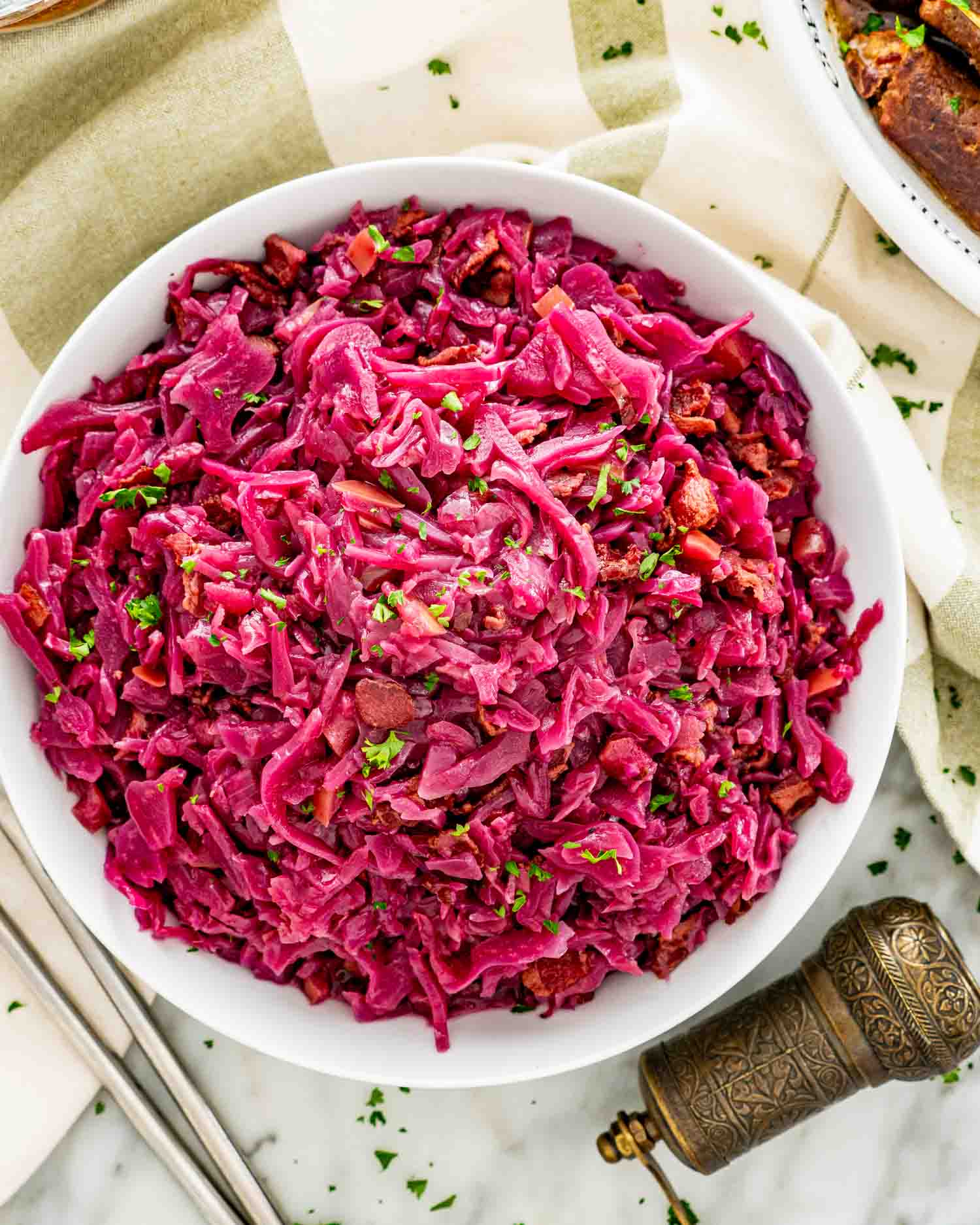
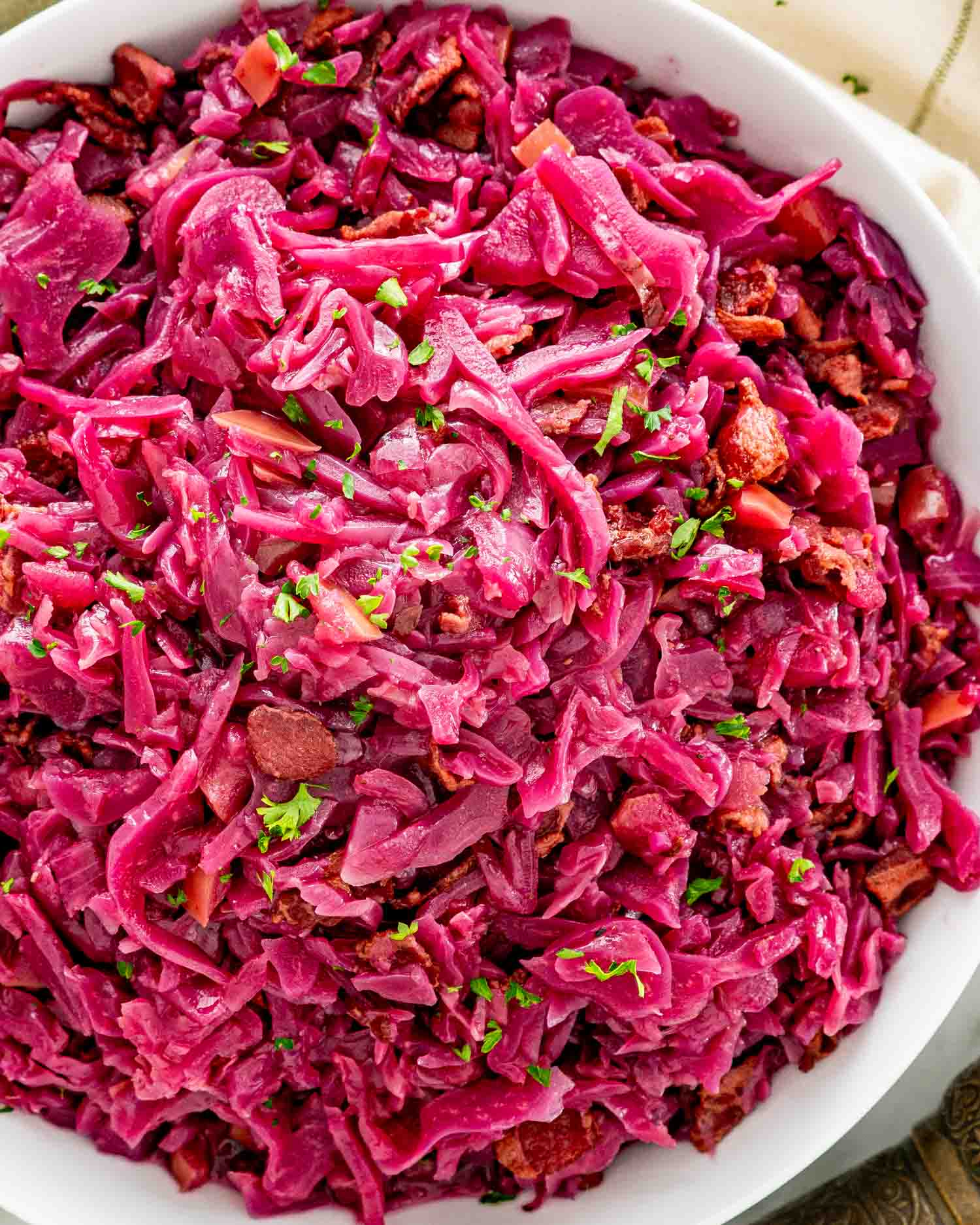
German Red Cabbage, or Rotkohl, is shredded cabbage braised low and slow with apples, bacon, brown sugar and vinegar until it turns deep and glossy and sweet and sour all at once. It takes 4 hours, only about 20 minutes of which involve you doing anything. And it’s one of the very few side dishes that’s genuinely better 3 days later, which around the holidays is worth its weight in gold.
Table of Contents
There’s a version of red cabbage that gets 20 minutes in a pan and comes out crunchy and sharp and faintly disappointing. This is not that.
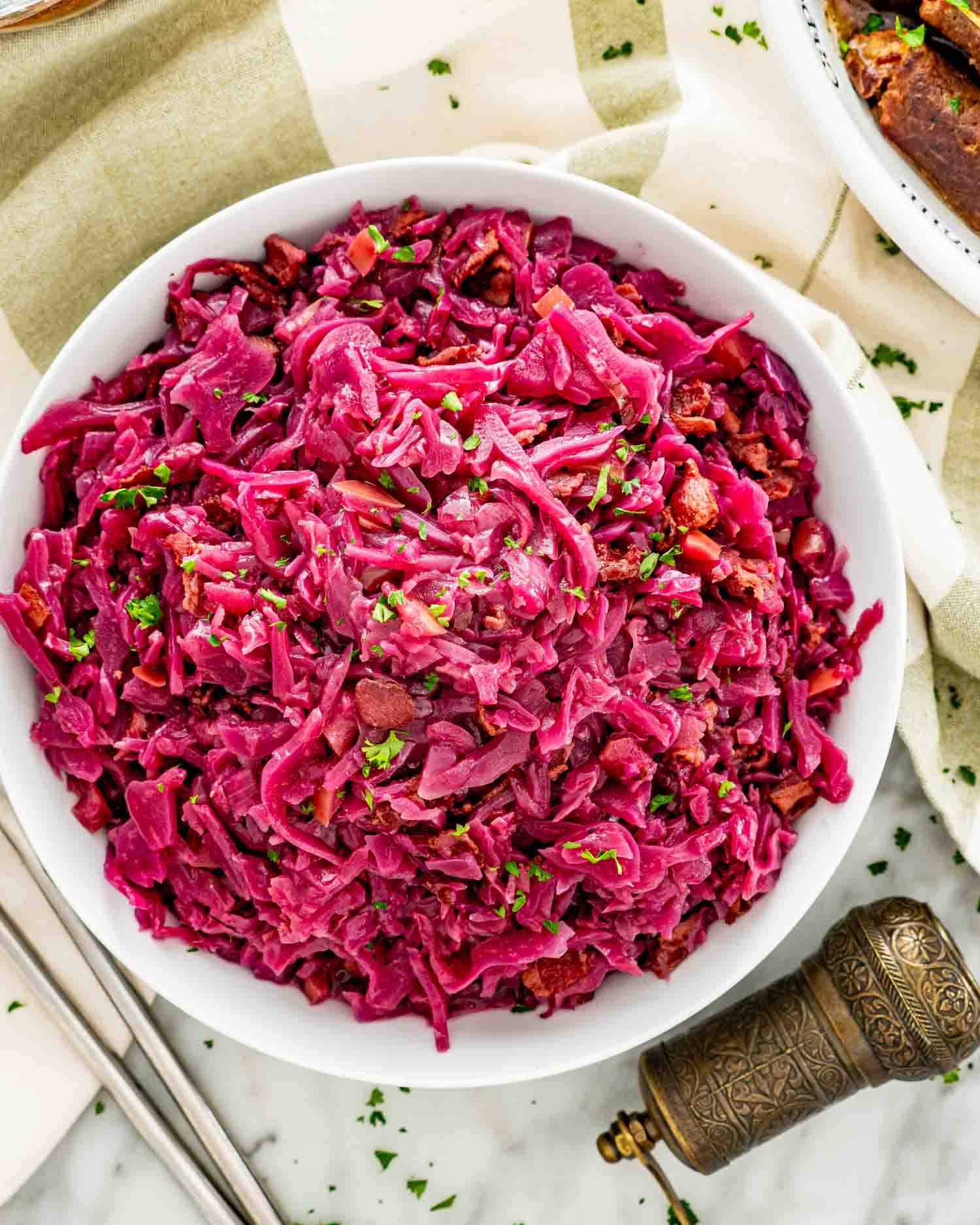
This one goes low and slow until the cabbage completely gives in. It turns silky, it goes a deep jewel color, and the sweet and sour thing it has going on lands somewhere between a pickle and a compote in the best possible way. It’s the stuff you get on a plate in Germany next to something roasted, and it’s the reason the plate works.
The real trick is that almost none of those 4 hours belong to you. You shred, you simmer, you build a quick sweet and sour sauce, you stir it all together, and then the pot does the rest while you get on with everything else. On a day when the oven is full and the kitchen is chaos, having one thing quietly taking care of itself on a back burner is a genuine gift.
And it improves in the fridge. Make it Sunday for Wednesday and it’ll be better than if you’d made it Wednesday.
All the same vegetable, and the arguing is half the fun.
In North America you’ll hear it called red cabbage or purple cabbage, depending mostly on who you learned it from. It’s the same head in the same bin at the same store, and honestly purple is the more accurate description of what’s in front of you.
In Germany the name changes by region, which Germans take more seriously than you might expect. The north says Rotkohl. The south and Austria say Blaukraut. You’ll also see Rotkraut. Red cabbage versus blue cabbage, and the reason is chemistry: the cabbage turns bluer in alkaline conditions and redder with something acidic, which is one very good reason this recipe has a cup of vinegar in it.
So whichever word you grew up with, you’re in the right place.
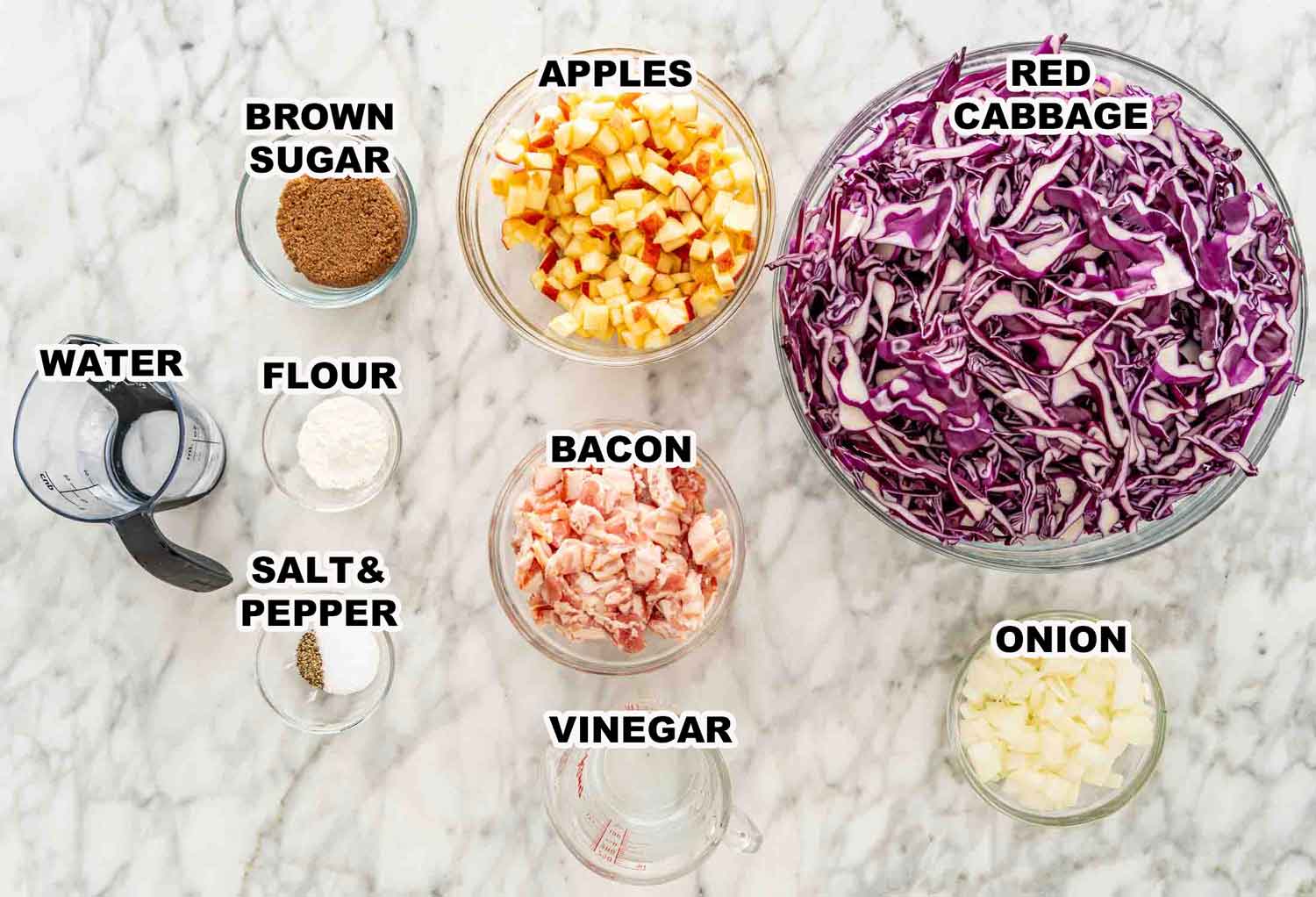
- Red cabbage (1 large head, shredded, about 8 to 10 cups): The star. Shred it fairly fine, since it collapses considerably over 4 hours and finer shreds give you a better texture at the end.
- Bacon (8 slices, diced): Salt, smoke and a bit of fat to build the sauce on. You only keep 2 teaspoons of the rendered fat, so this is about flavor rather than richness.
- Apples (2, diced small): Gala is my pick. Something sweet that softens into the cabbage rather than staying in firm chunks. They go in partway through and melt away almost entirely.
- Onion (1 medium, diced): Into the sauce, where it softens and disappears.
- Brown sugar (½ cup, packed): The sweet half of sweet and sour. It sounds like a lot until you taste it against a cup of vinegar.
- White vinegar (1 cup): The sour half, and it’s assertive. It’s also doing real work beyond flavor, since the acid is what keeps the cabbage a bright deep red instead of drifting toward grey blue.
- All purpose flour (4 teaspoons): Thickens the sauce just enough to coat everything rather than pool at the bottom.
- Water (2 cups): Split across the cooking, the sauce and topping up as it goes. Amounts are spelled out in the method.
- Salt (2 teaspoons) and pepper (¼ teaspoon): Cabbage needs more seasoning than people expect, and there’s a lot of it here.
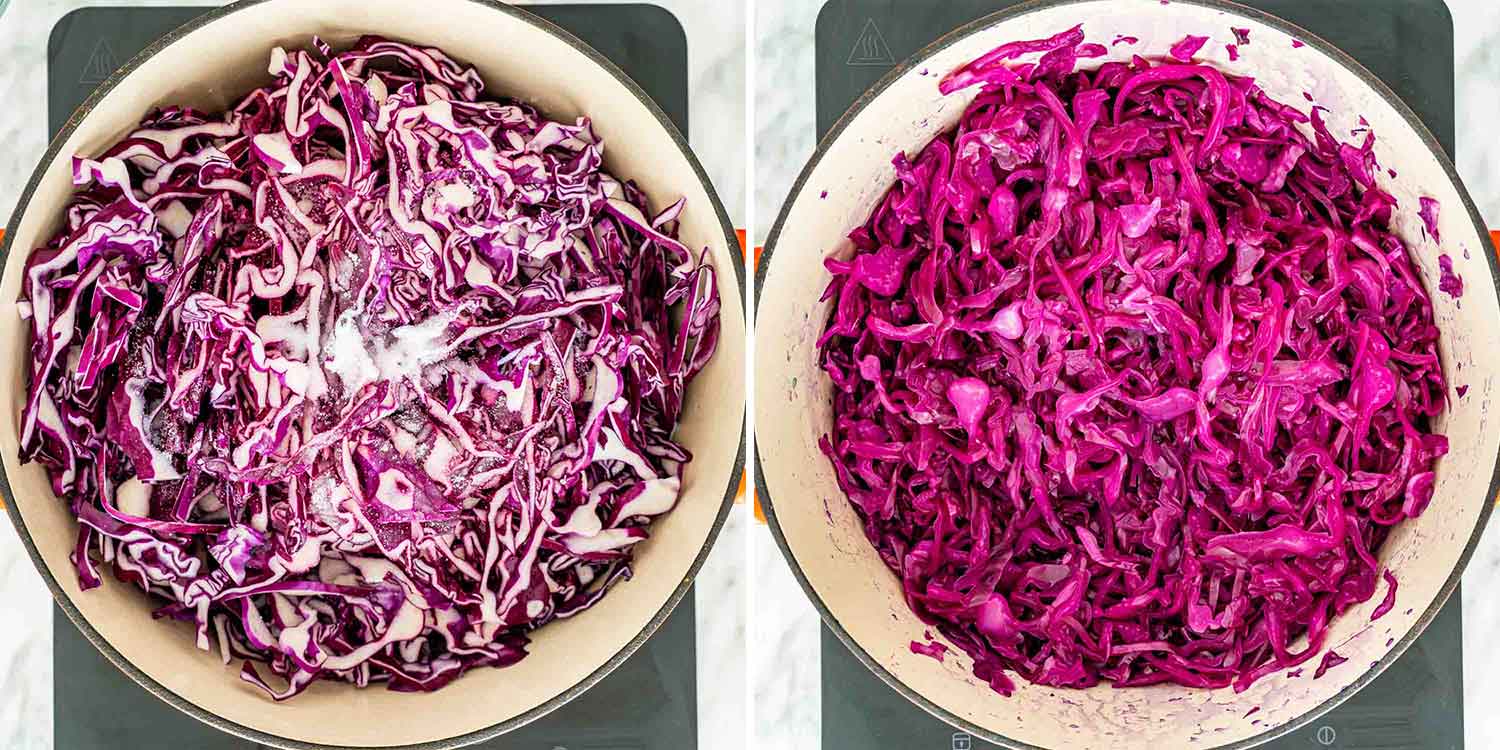
Start the cabbage: Put the shredded cabbage in a large pot with 1 cup water, ½ cup of the vinegar and the salt. Bring it up to a boil, then drop it to a simmer for 10 minutes, stirring now and then. It’ll lose a lot of its volume here, which is exactly what you want.
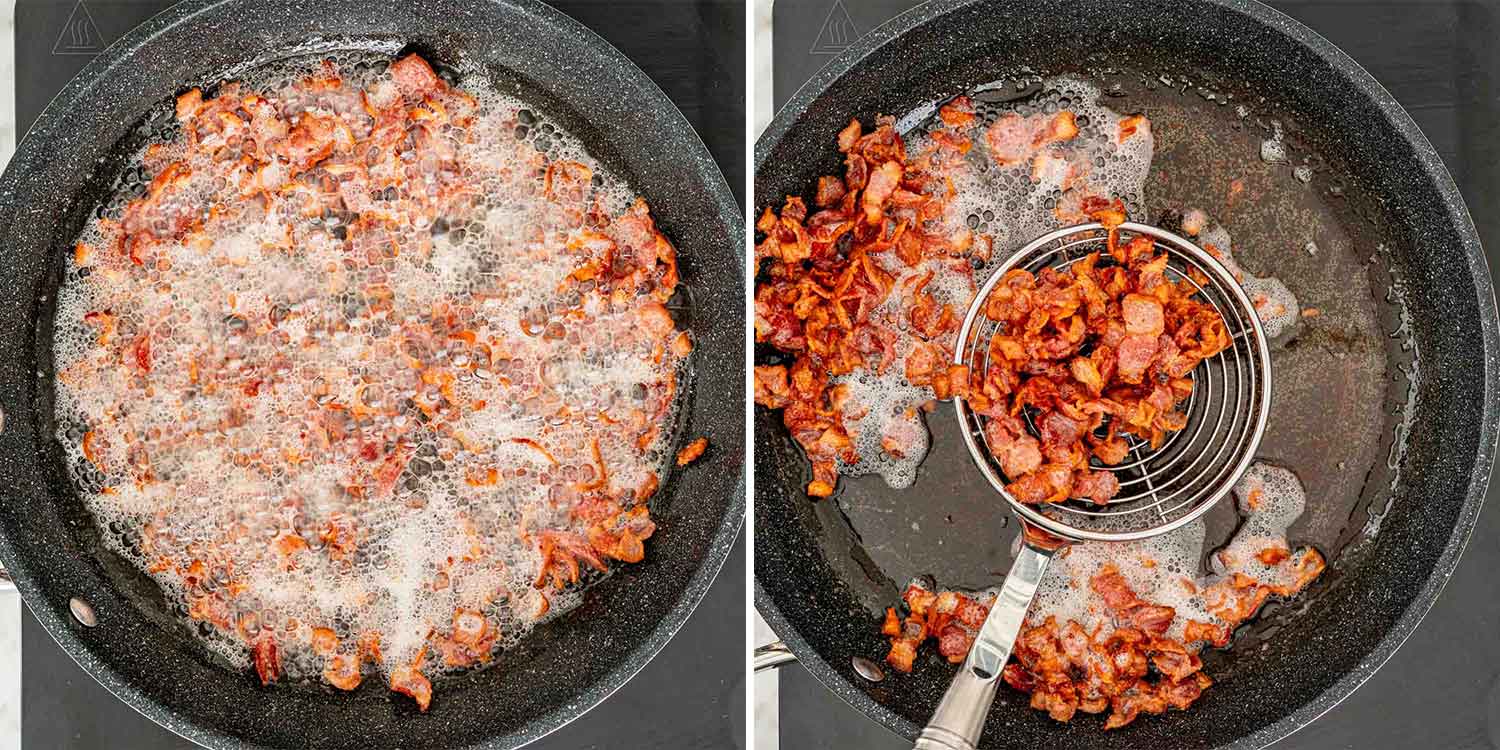
Cook the bacon: In a separate pan, fry the diced bacon until crisp. Keep 2 teaspoons of the fat in the pan and pour the rest off. Set the bacon aside. If there’s a lot of liquid sitting in the cabbage pot, drain some of it away.
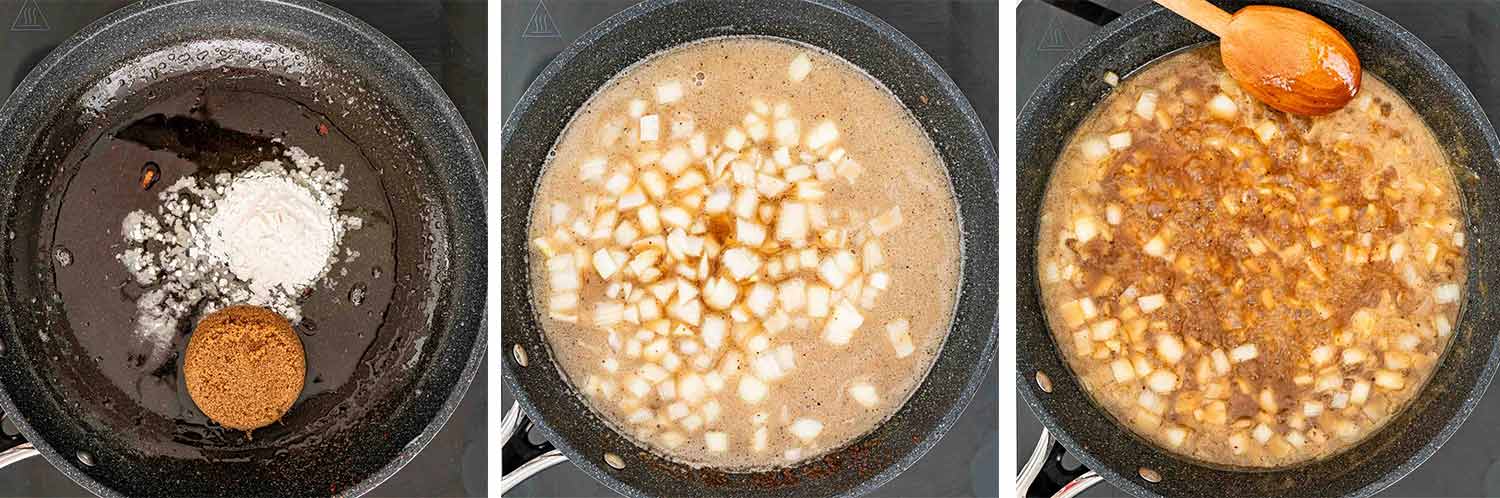
Build the sweet and sour sauce: In the pan with those 2 teaspoons of bacon fat, stir the ½ cup brown sugar and 4 teaspoons flour together over medium heat. Add ¼ cup water and ¼ cup vinegar, then the pepper and the diced onion. Let it simmer about 5 minutes until the onion has softened and the sauce has thickened.
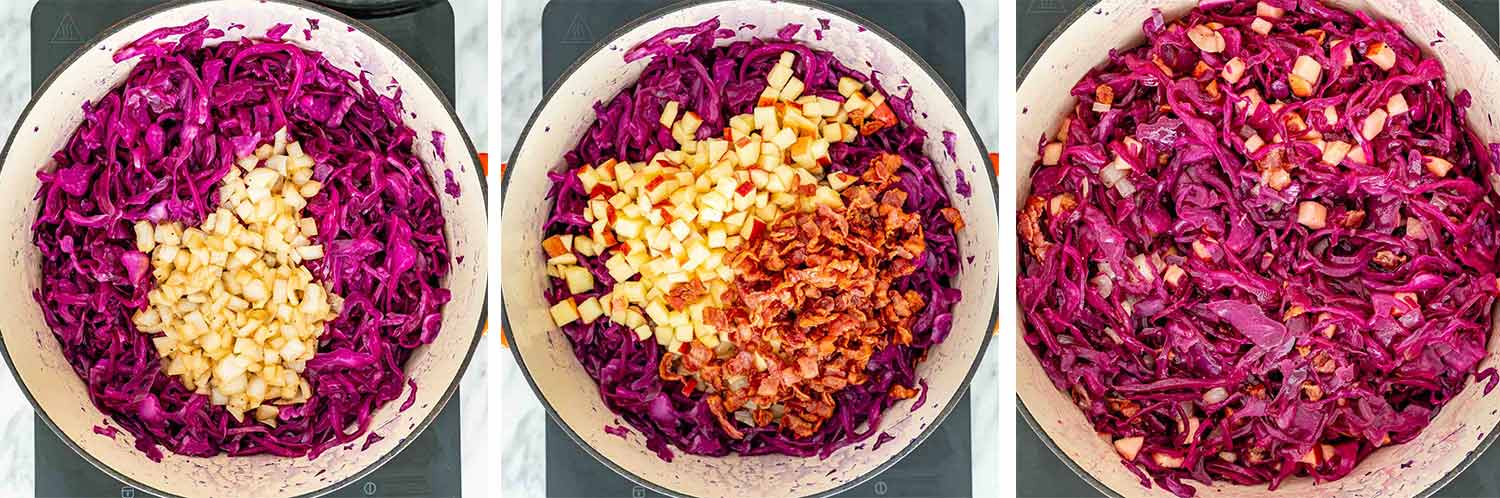
Bring it together: Pour the sauce into the cabbage pot. Add the bacon and the diced apples. Stir it through and bring it to a gentle boil.
Then leave it alone: Turn it down to the lowest simmer you can manage and let it go for 3 to 5 hours. Look in on it occasionally. Keep the last ¾ cup water and ¼ cup vinegar nearby, and add a splash whenever it starts looking dry.
Taste before serving: After that long it may want more salt, or a splash more vinegar if it’s gone too sweet for you. Adjust it to your plate.
Because that’s where the texture comes from, and there isn’t a shortcut that gets you to the same place.
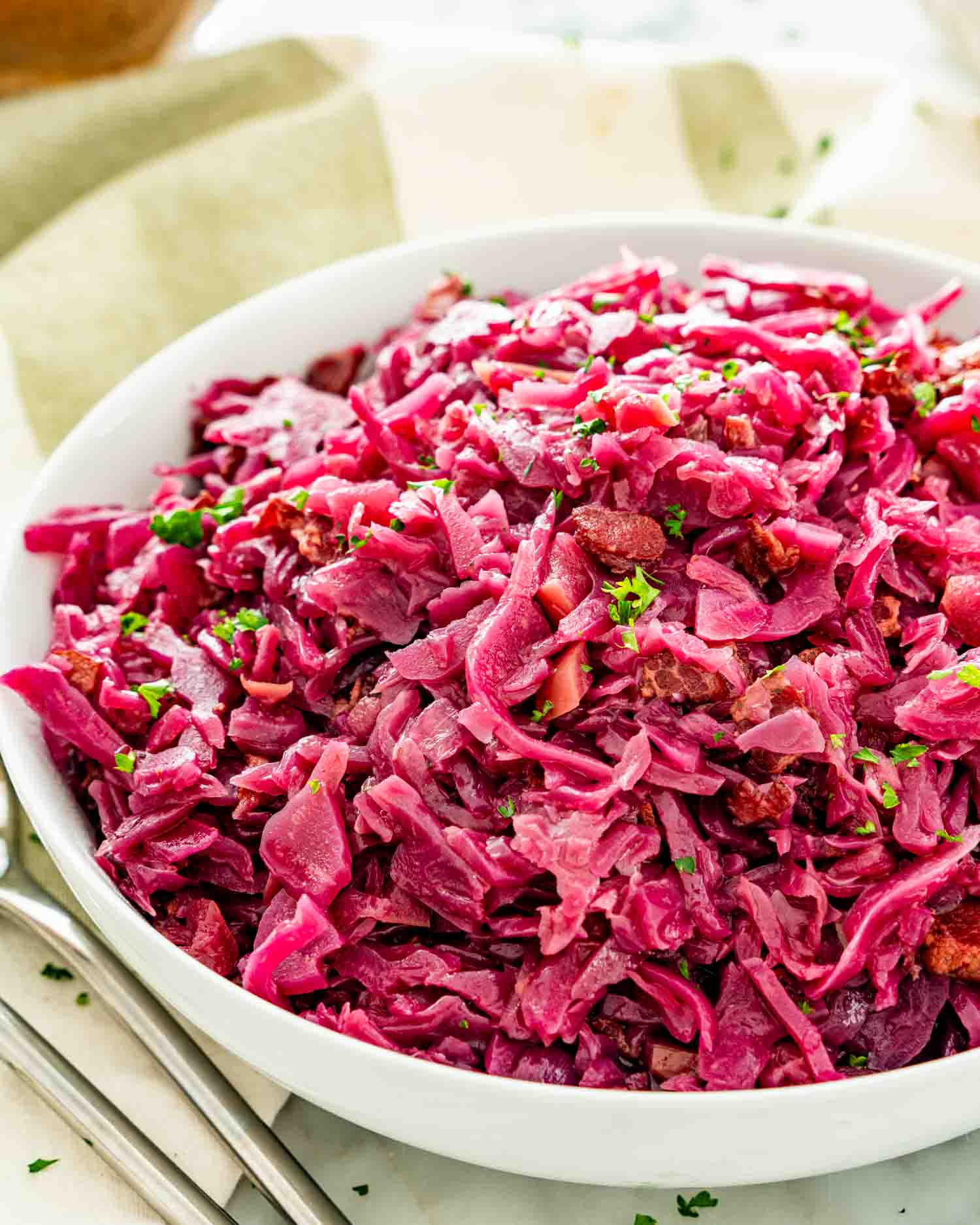
Cabbage cooked briefly is crunchy and bright and sharp, which is lovely in a slaw and wrong here. What you’re after is the opposite: completely collapsed, silky, the shreds gone soft enough to melt against a fork. That takes time and low heat and there’s no way around it.
The long simmer is also what marries the sweet and the sour. Early on it tastes like sweetened vinegar and cabbage sitting in the same pot, obviously separate. Somewhere around hour 2 it stops being 3 flavors and becomes 1.
The good news is that those hours cost you almost nothing. Twenty minutes of actual work at the start, a look in every half hour, and a splash of liquid when it needs it. Put it on when you start the roast and it’ll be ready when everything else is.
- Shred it finer than feels necessary. It collapses enormously and fine shreds give a much better final texture.
- Keep the heat genuinely low. A bare simmer, barely a bubble. Too high and the bottom catches before the top softens.
- Don’t skip the vinegar. Beyond the flavor, the acid is what keeps the color a deep red rather than a sad blue grey.
- Season at the end as well as the start. Four hours of reduction changes the balance and it usually wants a final adjustment.
- Use a heavy pot. A thin one scorches on the bottom over a long braise.
- Make it ahead. See below, because this is the best thing about the recipe.
Red cabbage is better on day 2 and better still on day 3. The flavors settle, the sharp edge of the vinegar rounds off, and everything gets deeper.
Which makes it the single most useful thing on a holiday menu. Make it Sunday, keep it covered in the fridge, and reheat it gently on the stove on the day while your oven is busy doing 6 other things. It frees up a burner, a pot and a chunk of your attention at exactly the moment you need all three.
It keeps 5 days in the fridge. Reheat it low and slow with a splash of water, and taste it again before it goes out, since it may want a touch more vinegar once it’s been chilled.
- No bacon: Leave it out and start the sauce with 2 teaspoons of butter or oil instead. You lose the smoke, you keep the dish.
- Red wine vinegar or cider vinegar: Both mellower than white. Use the same amount if you’d like something gentler.
- With red wine: Swap ½ cup of the water for red wine. Deeper and a bit more festive.
- Warm spices: A cinnamon stick, 2 cloves and a bay leaf added with the sauce is very traditional, especially at Christmas. Fish them out before serving.
- A little more tart: A splash of apple cider or a spoonful of red currant jelly stirred in at the end is common in German kitchens and very good.
What To Serve With Red Cabbage
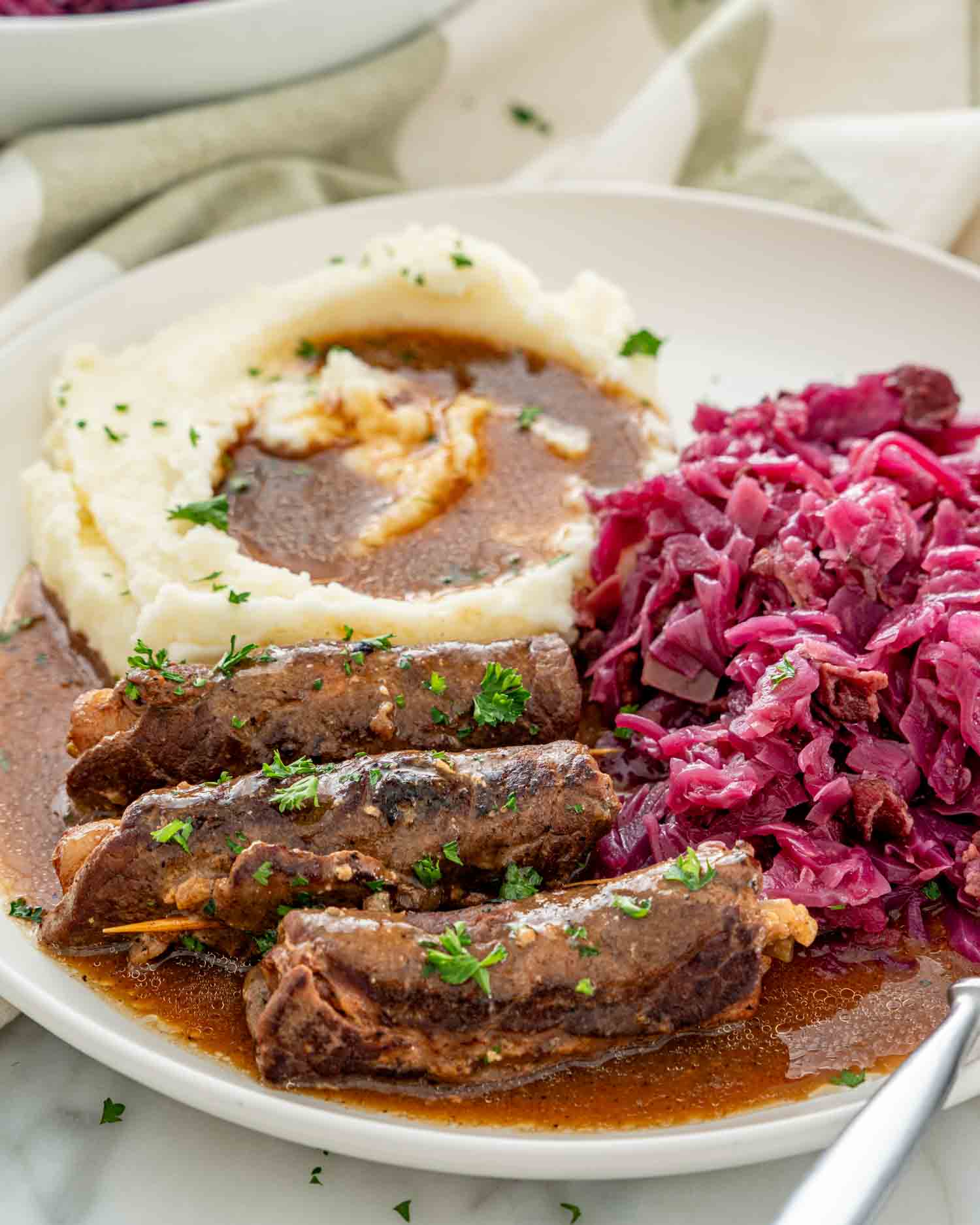
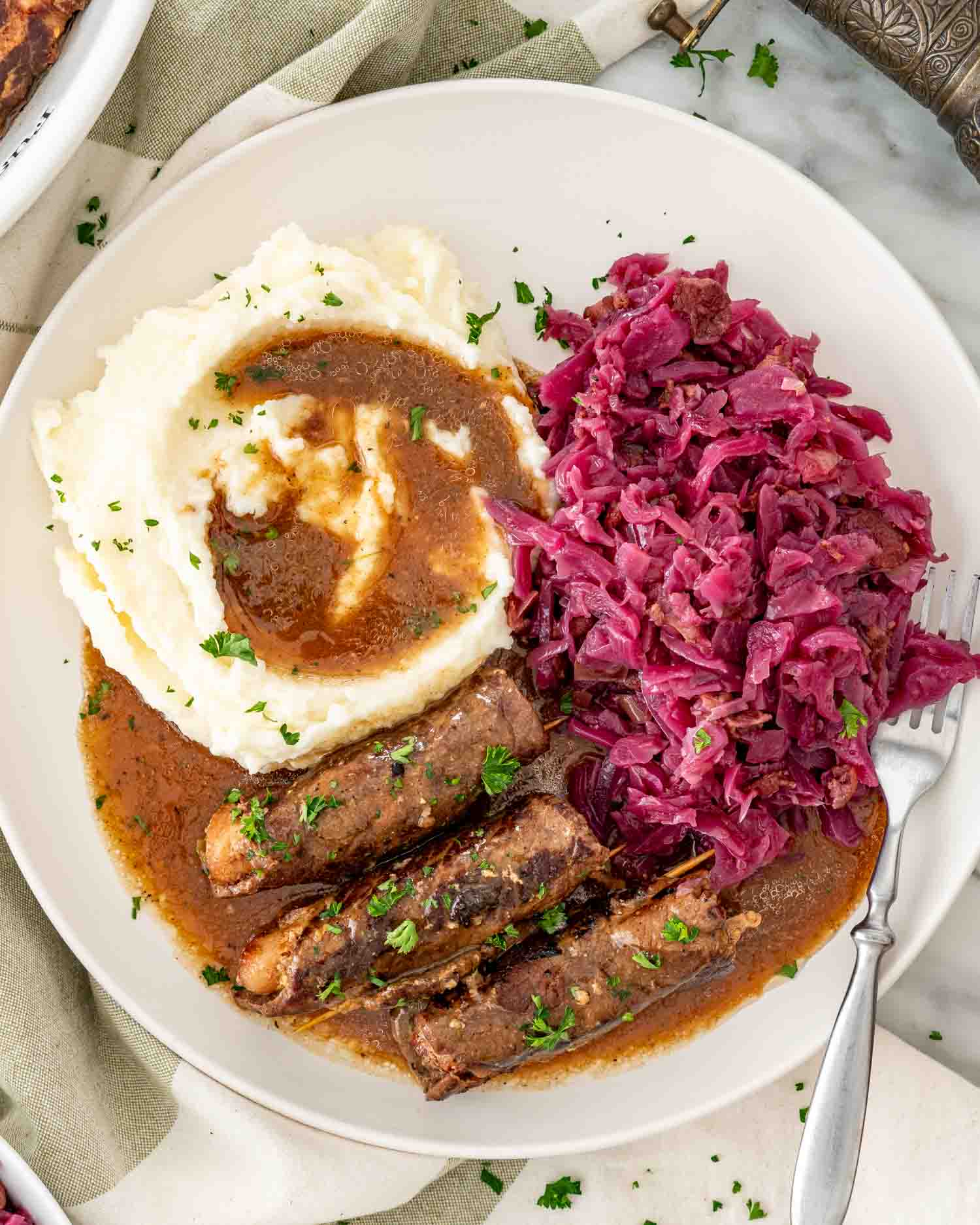
This is a side dish with a job, and the job is standing next to something rich and roasted. Here are the recipes I like to serve mine with:

German Beef Rouladen
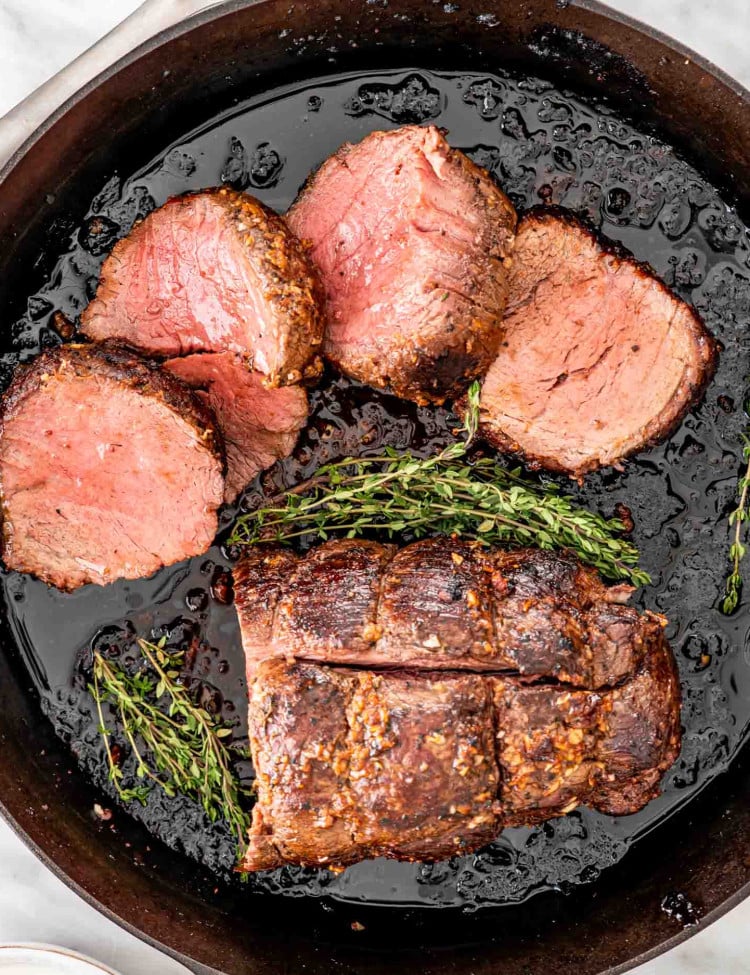
Beef Tenderloin
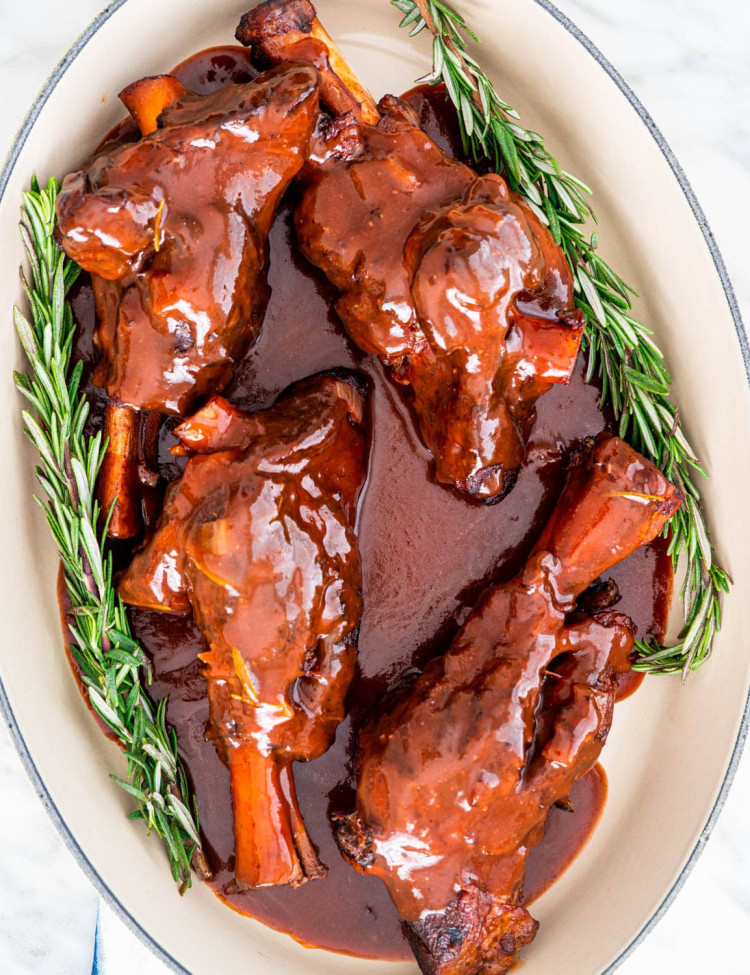
Braised Lamb Shanks

Meatballs with Mushroom Gravy
Five days in an airtight container in the fridge, and better for every one of them.
It freezes well for up to 3 months. Cool completely, portion it, and thaw overnight in the fridge. Reheat gently on the stove with a splash of water.
Reheat low and slow rather than in the microwave, which heats it unevenly and does the texture no favors.
Before You Begin! If you make this, please leave a review and rating letting us know how you liked this recipe! This helps our business thrive & continue providing free recipes.
Traditional German red cabbage slowly braised with apples, bacon, brown sugar and vinegar until silky and sweet and sour. Also known as rotkohl, blaukraut or purple cabbage. Only 20 minutes of hands on work, and it’s better on day 2, which makes it the ideal holiday side.
- 1 large red cabbage (shredded, about 8-10 cups)
- 8 slices bacon (diced)
- ½ cup brown sugar (packed)
- 4 teaspoon all-purpose flour
- 2 cups water (divided)
- 1 cup white vinegar
- 2 teaspoon salt (or to taste)
- ¼ teaspoon pepper (or to taste)
- 1 medium onion (diced)
- 2 apples (diced small, Gala recommended)
Before You Begin! If you make this, please leave a review and rating letting us know how you liked this recipe! This helps our business thrive & continue providing free recipes.
-
Add the shredded cabbage, 2 teaspoons salt, 1 cup of the water and ½ cup of the vinegar to a large pot. Bring to a boil, then reduce to a simmer and cook 10 minutes, stirring occasionally.
-
In a separate pan, fry the diced bacon until crisp. Reserve 2 teaspoons of the fat and discard the rest. Set the bacon aside. Drain excess liquid from the cabbage pot if needed.
-
In the pan with the reserved 2 teaspoons bacon fat, combine the ½ cup brown sugar and 4 teaspoons flour over medium heat. Add ¼ cup water and ¼ cup vinegar, then stir in the ¼ teaspoon pepper and the diced onion. Simmer 5 minutes until the onion has softened.
-
Pour the sauce into the cabbage pot. Add the bacon and the diced apples. Stir and bring to a gentle boil.
-
Reduce to the lowest possible simmer and cook 3 to 5 hours, checking occasionally. Keep the remaining ¾ cup water and ¼ cup vinegar on hand and add a splash whenever it looks dry.
-
Taste and adjust the salt and vinegar before serving.
- The water and vinegar are used in 3 stages: 1 cup water and ½ cup vinegar with the cabbage, ¼ cup water and ¼ cup vinegar in the sauce, and the remaining ¾ cup water and ¼ cup vinegar held back for topping up during the long simmer.
- Shred the cabbage finely. It collapses a great deal over the cooking time.
- Keep the simmer very low and use a heavy pot so the bottom doesn’t catch.
- The vinegar keeps the cabbage a deep red. Without enough acid it drifts toward blue grey.
- White vinegar is sharp. Red wine or cider vinegar can be used in the same quantity for a mellower result.
- To make it without bacon, start the sauce with 2 teaspoons of butter or oil.
- For a Christmas version, add a cinnamon stick, 2 cloves and a bay leaf with the sauce and remove before serving.
- Better on day 2 and day 3. Keeps 5 days refrigerated, freezes 3 months. Reheat gently with a splash of water.
Serving: 1servingCalories: 227kcal (11%)Carbohydrates: 33g (11%)Protein: 5g (10%)Fat: 9g (14%)Saturated Fat: 3g (19%)Polyunsaturated Fat: 2gMonounsaturated Fat: 4gTrans Fat: 0.03gCholesterol: 15mg (5%)Sodium: 774mg (34%)Potassium: 478mg (14%)Fiber: 4g (17%)Sugar: 24g (27%)Vitamin A: 1615IU (32%)Vitamin C: 84mg (102%)Calcium: 87mg (9%)Iron: 1mg (6%)
Notice: Nutrition is auto-calculated for your convenience. Where relevant, we recommend using your own nutrition calculations.
Frequently Asked Questions
Is purple cabbage the same as red cabbage?
What’s the difference between rotkohl and blaukraut?
Does it really need 4 hours?
Can I make it ahead?
Why did my red cabbage turn blue?
Can I freeze it?
Can I leave the bacon out?