Their restaurant and foodservice customers are navigating higher construction costs, tighter labor markets, rising food prices and greater pressure to get new kitchens open on schedule. At the same time, dealers need manufacturers and distribution partners that can help move a project from the drawing board through installation—and stay engaged when service and warranty issues arise.
That has increased the value of a distribution partner capable of looking beyond individual equipment specifications. Niki Arakelian, President of Nordon Inc., sees the dealer’s need evolving toward what the company describes as a hybrid approach that combines equipment, project support, logistics, technical knowledge and long-term follow-through. “Our cradle-to-grave logic has to hold true to maintain a customer,” Arakelian said. “It doesn’t end with the sale; it just begins.”
That philosophy is becoming especially important when a restaurant opening is working against the clock. A project may involve architects, contractors, electricians, plumbers, hood installers and national equipment manufacturers, with each element dependent on the others. A delayed refrigerator, oven, ice machine or beverage system can affect training, inspections and ultimately the opening date.
By the time many operators get to equipment selection, much of the original budget has already been consumed by construction and permitting. Arakelian noted that operators can arrive at the equipment stage after dealing with “the build-out, the fit-out, the drawings, the regulations, the electrician and the tradesman.”
That reality places additional pressure on dealers to help customers find value rather than simply chase a particular brand or specification. “There’s good, better, best in all levels of equipment,” Arakelian outlined. The challenge is selecting equipment that fits the menu, anticipated volume, available space and budget while also considering what happens after installation.
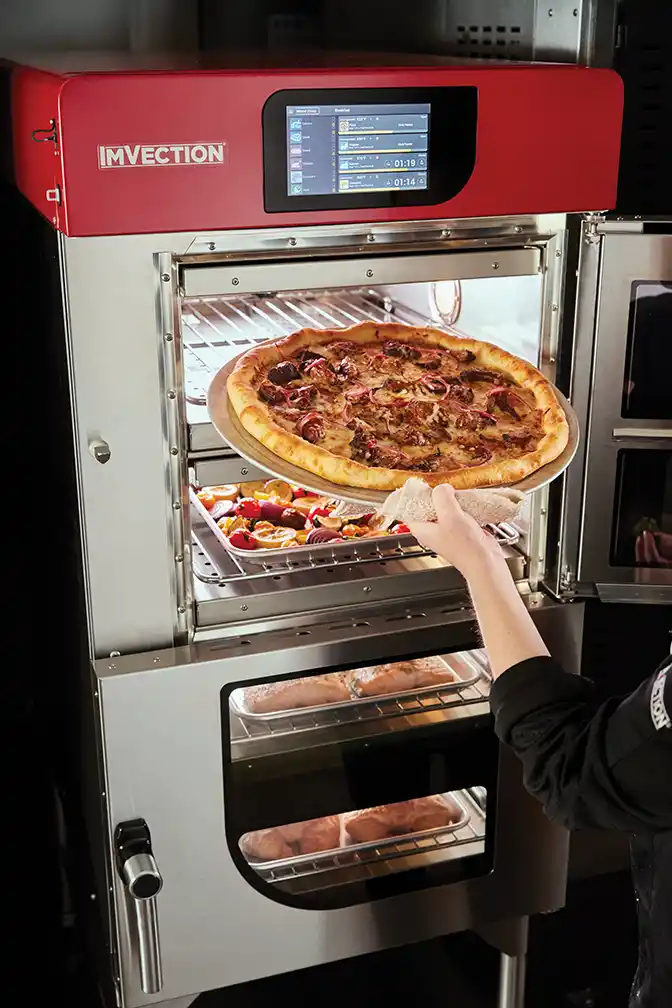
For many of Nordon’s dealer partners, the process begins much earlier than equipment selection. Dealers can bring customers, chefs and menus into Nordon’s test kitchen so equipment choices can be matched to actual operational needs. The conversation might include whether a combi oven can replace separate convection and steaming equipment, how to reduce space under the hood, what refrigeration configuration makes sense or how a serving line should flow. “We look at what their plans are,” Arakelian said. “They bring them in and we look at what makes sense for them. We try to help them both save money and give them sensible equipment.”
Those decisions increasingly involve labor as well. With restaurants trying to operate efficiently with smaller teams, the location and configuration of equipment can have a measurable impact on productivity. Nordon helps with custom fabricated expo lines that flow with everything under the hood to increase the speed of service. Open kitchens create another consideration: equipment is no longer hidden in the back of the house. “Open kitchens are sexy,” Arakelian noted. “Equipment is part of the dining experience now. It is so visible, it has to pop. The same thinking is showing up in pizza concepts, where the oven, dough preparation and production process can become part of the guest experience.”
There is also a growing opportunity to rethink beverages as part of the profitability equation. With food and labor costs pressuring margins, the right hot or cold beverage program can provide an incremental revenue stream while also enhancing the guest experience. That is an area where Arakelian and the Nordon team bring a particularly relevant background. Building a beverage program, Arakelian explained, starts with understanding the customer rather than simply choosing a dispenser or refrigerated merchandiser. “When you’re doing a beverage program, you look at the demographic, you look at the route to market, and you look at what kind of visibility they have,” Arakelian said. “In beverage, it’s the categories. Is it soft drink? Is it nutraceuticals? Is it health-related? Is it just hydration?”
“There’s huge growth in grab-and-go equipment and meal solutions piece to it,” Arakelian added. The common denominator is convenience. Cashless retail, refrigerated merchandising and automated service can help an operation generate sales without adding a traditional cashier or additional labor. That gives dealers another opportunity to move the equipment conversation beyond replacing what an operator already owns and instead look for equipment that can create revenue or reduce operating costs.
Nordon’s broader equipment capabilities now span cooking, refrigeration, combi ovens, high-speed ovens, beverage systems, walk-ins, serving lines and other major kitchen categories. That breadth can become particularly valuable when architects and restaurant designers need help translating a footprint into a kitchen that actually works operationally.
The need for local inventory and dependable last-mile logistics is also driving Nordon’s expansion. Building on its success in Southern New Jersey and Philadelphia, the company is opening a warehouse in Amityville, Long Island, to provide closer access to the New York Metro market while continuing to serve its dealer partners on a wholesale basis. “With the addition of Amityville, we’re responding to our dealer partners by extending our reach,” Arakelian said. “We have a wholesale hybrid approach.” For Nordon, that includes carrying inventory and investing in resources that enable dealers to respond more quickly when a project needs equipment. “Having goods closer to the action today, it means a whole hell of a lot,” Arakelian concluded. “That last mile for us—last mile of delivery—is very important.”
For dealers and the restaurant and foodservice operators they support, the message is increasingly clear: equipment distribution is moving beyond price and product availability toward a broader combination of design assistance, application knowledge, logistics, installation coordination, warranty support and revenue-building ideas.
Dealers, operators, architects and other industry professionals interested in learning more about Nordon’s equipment, beverage and project-support resources can visit NordonInc.com or contact the Nordon team at 800-544-0400 to discuss a project, equipment needs or arrange a visit through an authorized dealer or industry partner.