The Federal Trade Commission and several states are suing restaurant tech giant Toast, alleging deceptive practices related to its fees, customer support, and cancellations policies for restaurants.
The lawsuit, filed Thursday in federal court in Northern California, claims that Toast hides the true cost of its products, charges restaurants for services they didn’t enroll in, falsely advertises 24/7 support, and makes it difficult for restaurants to cancel their subscriptions.
These practices have “drained the hard-earned profits of businesses just trying to serve their customers,” said Christopher Mufarrige, Director of the FTC’s Bureau of Consumer Protection, in a statement. “These practices are illegal, and the FTC will continue to take aggressive action to ensure a fair, transparent and competitive marketplace.”
Toast said it strongly disagreed with the allegations and that it had been working with the FTC since mid-2025 to resolve its claims outside of court.
“The FTC disregarded the information we provided showing the extent to which our restaurant customers negotiate their contracts,” the company said in a statement. “We are prepared to defend our business and fight this unprecedented action through litigation.”
It added that the FTC is seeking to apply the Restore Online Shoppers’ Confidence Act in the case, which Toast believes does not apply to contracts between businesses.
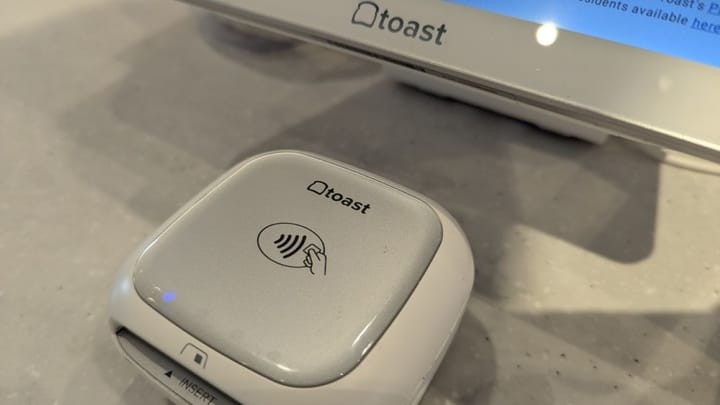
Boston-based Toast is one of the largest tech providers for small- and medium-sized restaurants. Nearly 200,000 businesses use its technology, which includes a POS system, ordering devices, payments, online ordering, marketing, and other services.
Toast generated more than $6 billion in revenue in 2025. More than 80% of that comes from financial services such as payment processing and business loans.
Much of the complaint focuses on Toast’s pricing and fees.
It alleges that Toast hides payment processing fees and other charges behind a $0/month “Pay-as-you-Go” subscription marketed toward one- or two-unit restaurants. According to the lawsuit, this option provides restaurants with free Toast hardware and software but comes with a higher processing fee to cover those costs.
The suit argues that the $0/month offer is contradicted by several fine-print stipulations that could be easy to miss. For instance, it says, the $0 price only applies to one POS terminal, even though it is advertised for restaurants that need one to two terminals. This is disclosed in small type at the bottom of the webpage, the suit says.
The lawsuit also brings up the controversial 99-cent online ordering fee that Toast charged to consumers between September 2021 and June 2023. The lawsuit says this fee was not disclosed to restaurants in their contracts. In the summer of 2023, the fee sparked widespread backlash among restaurants, and Toast removed it. The company has not reimbursed customers for the fee, the lawsuit says.
The lawsuit also alleges that restaurants “frequently complain” that after buying a Toast subscription, the company will enroll them in add-ons they did not sign up for, sometimes even after they ask to cancel those services.
The lawsuit says Toast makes it difficult for restaurants to cancel its services in general. Canceling is a multi-step process that requires the help of multiple Toast departments, it says.
Restaurants that need help from Toast with cancelling or other issues often struggle to get it, the lawsuit says, despite promises throughout its website of “24/7 support” from real Toast representatives.
The lawsuit includes complaints from more than a dozen customers who said they had trouble getting in touch with someone at Toast, even after weeks or months of trying.
In addition to the FTC, the government’s main consumer protection agency, plaintiffs in the case include the attorneys general of Colorado, Florida, Illinois, Iowa, Nebraska, Oklahoma, and Utah and the people of the state of California.
The complaint asks the court to block Toast from continuing the alleged practices as well as monetary damages and civil penalties.
Toast said it remains committed to helping restaurants operate better and increase sales. “Nothing about today’s news changes our customer service, pricing, or support,” it said.