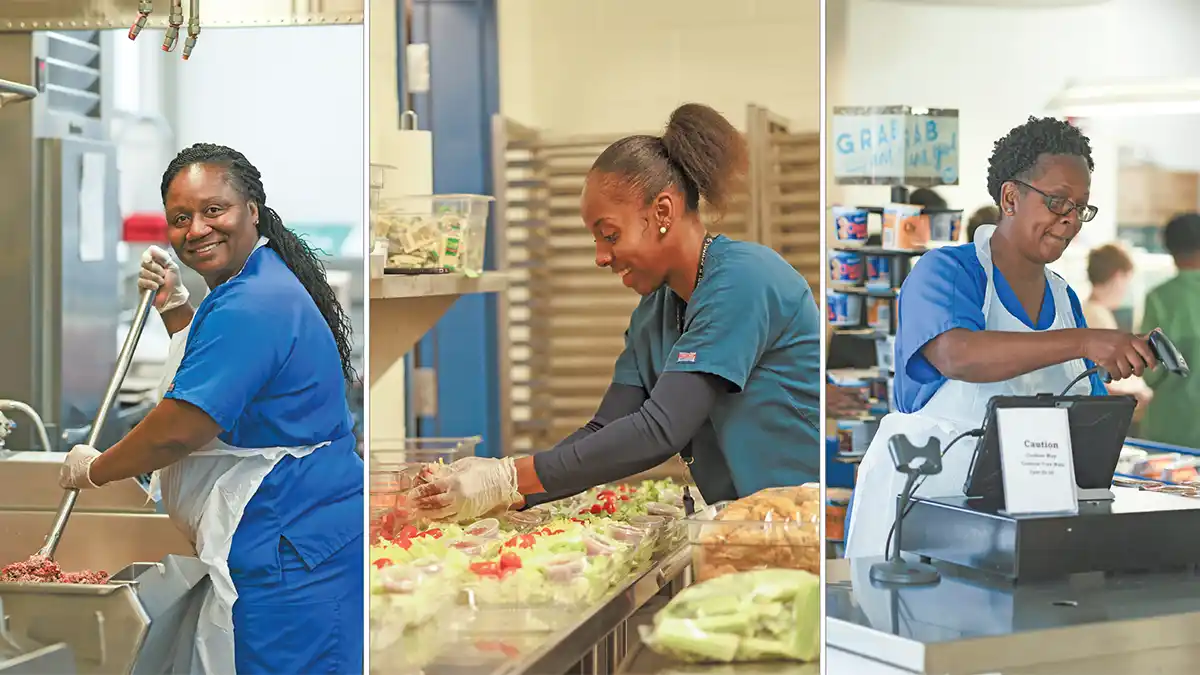
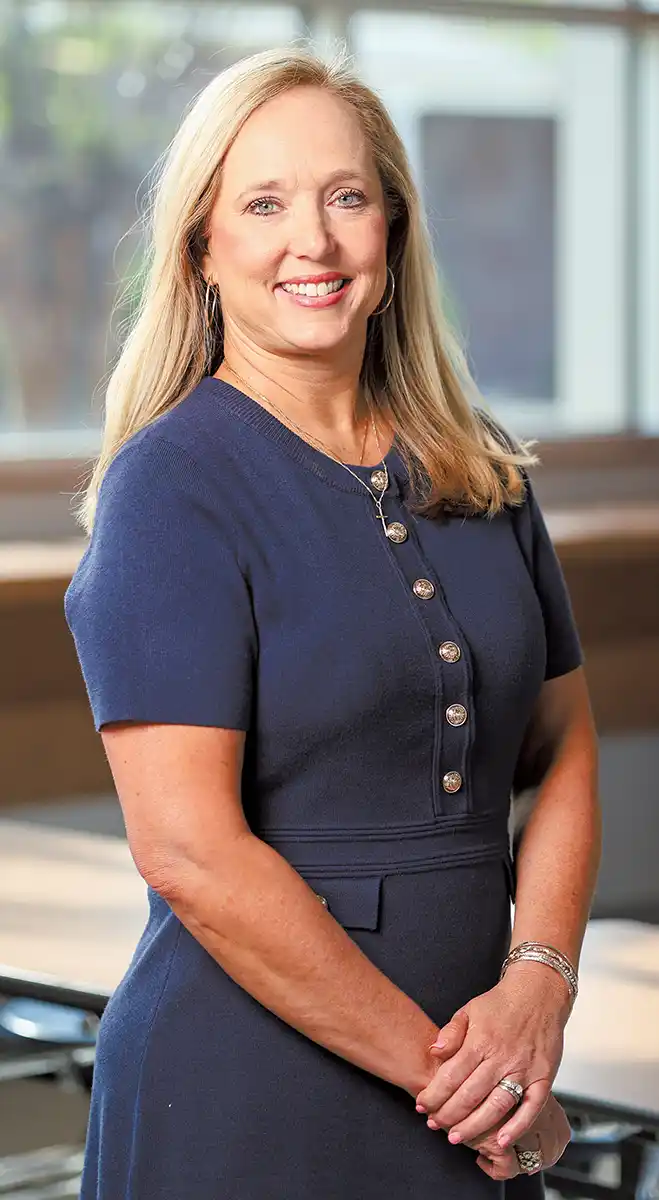
At the same time, Powell brings the perspective of an operator who lives the challenges of school nutrition every day. As Child Nutrition Director for Auburn City Schools in Alabama, she leads a 60-member team serving nearly 9,500 students across 14 sites in one of the state’s fastest-growing districts. Last year alone, the program served approximately 300,000 breakfasts and 840,000 lunches.
With food and labor costs rising, nutrition standards evolving, school kitchens requiring new infrastructure and equipment, and districts being challenged to offer fresher and more appealing meals, TFS wanted to hear directly from Powell about where school nutrition is headed.
TFS also wanted to share the SNA agenda for feeding America’s K-12 students: advocating for workable nutrition standards, appropriate funding, expanded access, stronger partnerships and the tools school nutrition professionals need to succeed.
We have a lot on the agenda, and I think it is going to be a great year. My first thought is always: How do we support our members — the school nutrition professionals throughout the United States — in their states and communities? One of the best ways we can support them is through strong advocacy. We are looking very closely at nutrition standards and the new dietary standards that will impact school meal programs.
Our federal programs align with the Dietary Guidelines, and we are waiting for USDA to release specific standards for schools. We want to advocate for nutrition standards that are feasible and for the funding necessary to support everything we are being asked to accomplish in schools.
To me, feasible means being able to continue expanding scratch cooking, increasing protein options, offering fresh foods and incorporating more locally grown products while having the resources to make those goals possible. Funding is a major part of that conversation. Food costs have increased significantly, so we have to make sure school programs can afford to offer meals that meet the standards being established.
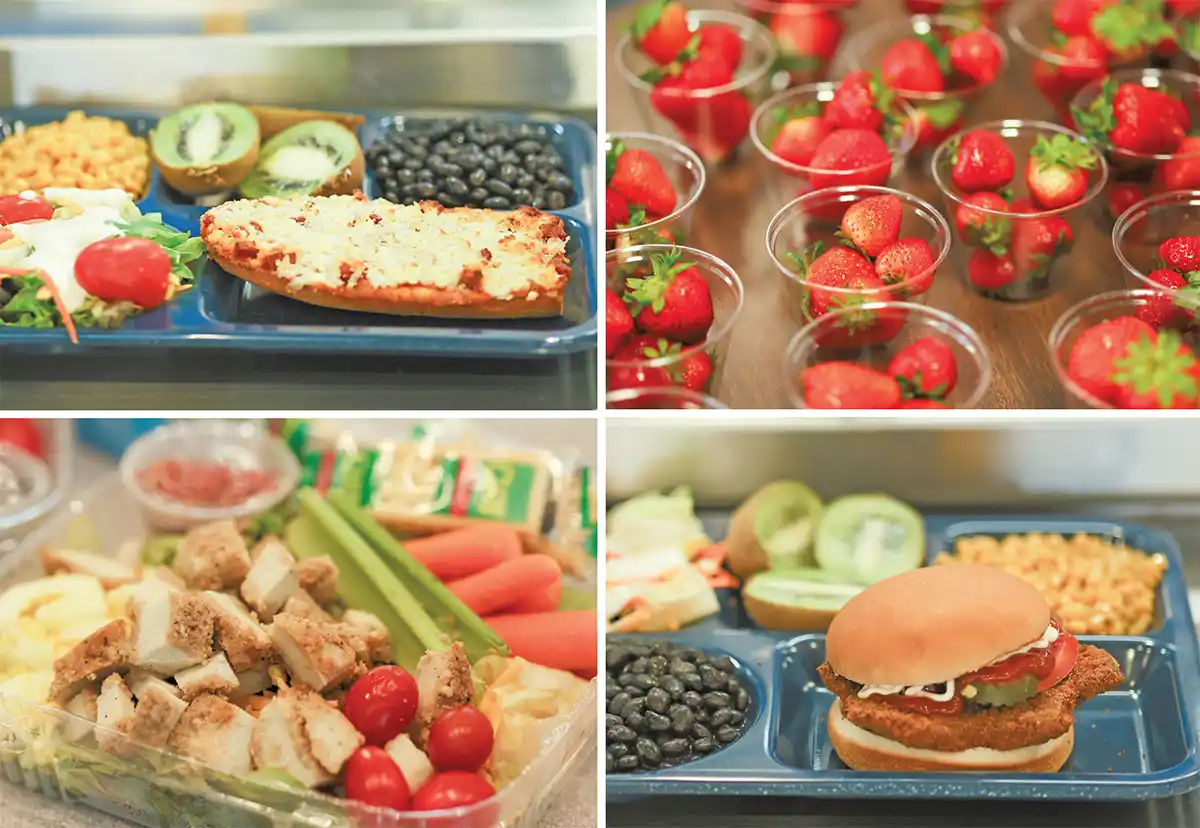
At Auburn City Schools, for example, we try to work with local farm-to-school sources whenever products are available. In the spring, we offered fresh strawberries from an Alabama vendor. We also have hydroponic lettuce produced nearby that we try to purchase. Those vendors may not be large enough to supply everything we need all year, but those partnerships allow us to bring a local component into our schools and serve a really nice, fresh product. We want to support more opportunities like that.
I really like the term “speed scratch” because it speaks to the efficiencies school nutrition programs have to achieve. Unlike a restaurant down the street, we are serving a very large number of students in a very short period of time. At my high school, for example, we have approximately 2,100 students who need to be served within a limited timeframe. When you think about how much food we have to produce and how quickly we have to serve it, speed scratch is often the best model.
We may purchase fresh lettuce but work with a vendor who provides it already chopped. It is still a fresh product, but it helps us manage labor and improve kitchen efficiency. Food costs are up, but labor costs are up as well. That allows us to put more emphasis on other fresh items we might prepare ourselves. Students also really enjoy building their own meals and making choices. We created what we call a nacho-burrito line, and one of our team members made fresh pico for it. It looked beautiful and tasted delicious. Those are the types of things we want to continue doing.
It is about more than just having the equipment. You also have to have the infrastructure and foundation necessary to support that equipment. That is why you hear so much about grant funding for school kitchens. Grants may help provide equipment, but schools may also need the infrastructure necessary to support it. Some kitchens have limited space, and others are located in very old buildings.
Every community is different. For us, we love having a great combi oven. It gives us the ability to crisp products while supporting healthier preparation methods. It has been a long time since we have had fryers in our kitchens, so having an oven capable of producing that crisp texture can help us create a product students enjoy. It needs to appeal to their eyes as well as their taste buds.
Especially with younger children, they often need to see a food over and over again before they become comfortable with it. We say children first eat with their eyes. Their first introduction may simply be seeing something new. Then maybe you do a taste test. I love when schools can say, “We have this new item coming up, and we want you to try it,” and provide a very small sample in its own little cup so it does not even touch the foods the child already knows and loves. That introduction is important.
Students may need to be exposed to something multiple times before they begin thinking about it, considering it and eventually tasting it. Taste tests and preliminary trials can be fantastic. The truth is, sometimes a new item is a bust with students. When that happens, you go back, regroup and say, “That recipe wasn’t it. We’re going to rebuild it.”
COVID was incredibly difficult, and I would not say foodservice operations are completely recovered from it. We are still rebuilding our rhythms and developing what I would call our post-COVID rhythms. But yes, I think COVID highlighted the importance of safe food preparation and strong food-safety standards. For school nutrition professionals, those practices were already part of our everyday routine.
We had been operating under food-safety and health inspection standards for years. SNA is celebrating 80 years of service, and I like to think we have been working on the rhythm of serving safe, healthy food for a very long time — and doing it with a lot of love. COVID brought that work to the forefront. It also strengthened our partnerships with industry. Those partners helped us obtain products, equipment and other resources we needed to keep serving our communities.
There are many different types of partners. Certainly, there is the food manufacturing industry, but there are also organizations focused on hunger and health. We want partnerships that recognize the connection between school meals, health and a student’s readiness to learn in the classroom. There are equipment companies as well. ITW, for example, has done an equipment giveaway.
SNA also hosted a summit that brought together more than just industry partners. It included nonprofit organizations working on hunger, groups representing parents and families, school business officials, the Academy of Nutrition and Dietetics and others. These are all people and organizations that touch the communities we serve. There were tasks, goals and partnerships that came out of that summit, and we are working through those now. I believe there is momentum to continue building those relationships and expanding the broader understanding of school meals.
This is a very hot topic every time school nutrition professionals get together. We were recently at our annual conference, and the conversation continues to be about increased food costs and increased labor costs. Those are the two biggest expenses in our day-to-day operations. Of course, equipment costs are significant as well, but food and labor are ongoing every single day. The federal reimbursement rate did increase by a small amount, and we are thankful and appreciative for that increase.
However, reimbursement is not increasing as quickly as our costs. That becomes especially challenging when we are being encouraged to serve more fresh products and local products, because those products can cost more. The conversation becomes: How do we achieve better pricing, and how do we secure enough funding to keep up with what is happening in day-to-day school nutrition operations?
Yes. USDA still provides the commodity distribution program, and it remains part of school nutrition. However, even commodity programs have not necessarily been able to keep pace with all the needs, costs and preparation requirements facing schools today. That program continues to evaluate how it can best help schools and evolve with what school nutrition programs need. Our goal remains very simple: We want to serve everyone. We want every student to have the opportunity to eat with us during their school day.
Some states are looking at ways to provide additional funding for school meals. There are states with universal meals, meaning students can eat at no cost, with the state helping to fund the portions that are not covered through the federal program. There are also many programs operating under community eligibility, which allows all students in qualifying communities to eat free.
Those approaches can build a culture where students are all part of the same community. The message becomes: Let’s eat healthy while we are on campus. Let’s not skip meals. Let’s prepare our bodies for the school day and for after-school activities. National SNA has provided additional support for state-level advocacy because every state is different. What is happening legislatively can change from one state to another, so we watch those developments as they evolve and help our state organizations
advocate effectively.
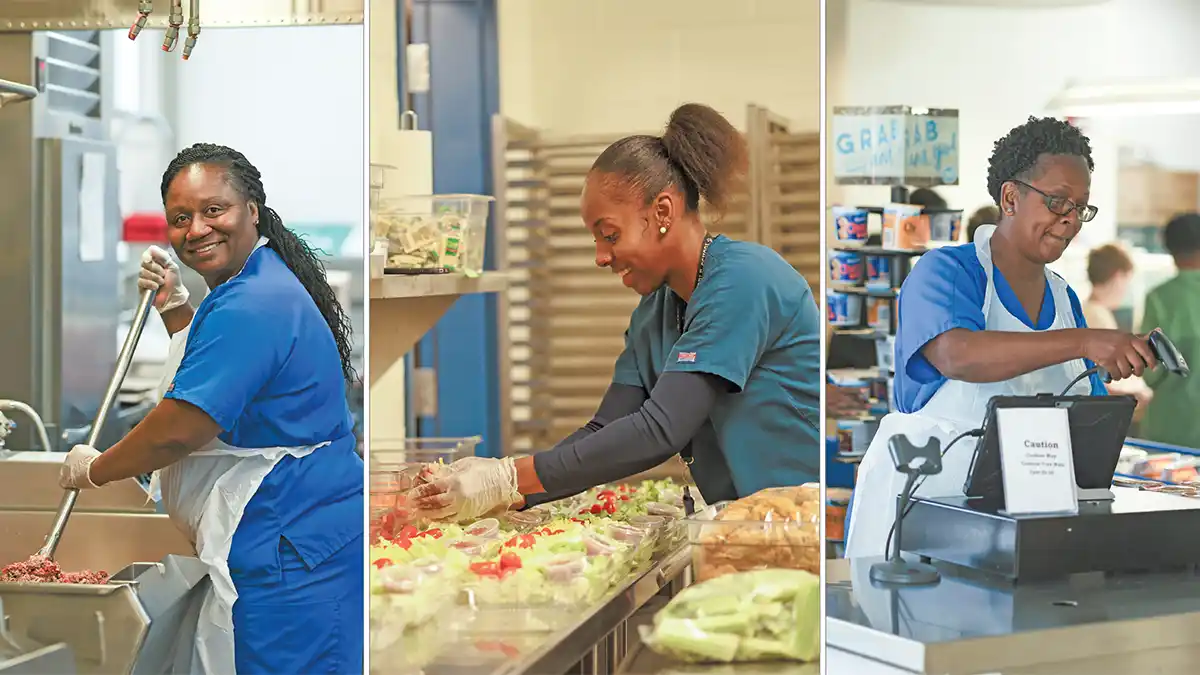
I would describe school nutrition professionals as an incredibly compassionate, service-minded and service-oriented group. The people who are most successful in these programs see a greater good in serving students. They meet children where they are. That is the heart of a child nutrition professional. Those are the people you see building outstanding programs and making a difference in children’s lives every day. Think about the start of a student’s day. A bus driver may pick the child up, and then that student comes to breakfast. A school nutrition employee may be one of the first people the student interacts with. That interaction can influence how the child’s entire day begins.
We are always looking for people to join us in this work. You have to have something in your heart that makes you want to serve students because it is hard work. It is hands-on work. It requires you to be onsite every day. This is not a remote job. You have to be there. So yes, recruiting individuals who want to do this work can be a challenge. But I will also tell you that many times, once people join us, they love it. They develop those connections with students, and those relationships become very meaningful.
Absolutely, and I think the move toward more recipe development and fresh preparation has helped drive that. We need expertise in taking a recipe and making it work in high-volume production. That is a specialized skill. As school nutrition programs increase scratch and speed-scratch cooking and work with more fresh products, chefs can help determine how those products should be prepared and handled so they remain at their best from both a nutritional and quality standpoint.
Visual appeal matters, too. The need for recipe development, production expertise and better utilization of fresh ingredients has helped bring more culinary professionals into the school nutrition community.
I believe the greatest opportunity is through partnerships. Those can be advocacy partnerships or partnerships with groups like the Academy of Nutrition and Dietetics as we work on nutrition standards and advocate for the funding needed to serve the K-12 market. I would also like to see greater consistency across states. If I am going to partner with a manufacturer, the rules governing what I can purchase in Alabama should not be completely different from what another school nutrition program can purchase somewhere else.
USDA is looking at ways to address those issues. Building standards that work throughout the United States rather than creating unnecessary state-by-state differences can make it easier for schools and manufacturers to work together.
We have a great relationship. USDA Secretary Brooke Rollins attended our annual conference in July, and we were very pleased to have her join us. We want to continue that partnership because our programs fall under USDA and that relationship is critical to the work we do.
SNA has had a long-term relationship with USDA. School nutrition professionals have many ideas about what can be done in schools, and we want to keep that conversation going so we can continue making progress and moving forward on what is best for the communities we serve.
We want school nutrition programs to be fully funded and equipped to serve every student and help fuel them in the classroom for success. SNA has been serving this mission for 80 years. I am committed to being part of carrying that legacy forward so school nutrition professionals can continue serving students for the next 80 years and beyond.
Right now, I would say we are seeing more opportunities on the administrative and preparation side than necessarily inside the kitchen itself. There are opportunities with paperflow, data analysis, menu planning, nutritional analysis and recipe development, including looking at ingredients and how recipes are structured.
Schools may eventually see additional efficiencies through equipment and other technologies inside the kitchen. But today, I think much of the immediate opportunity is on the front end — using technology to help us analyze information, plan menus and support the work that has to happen before meals reach the serving line.
We want them to join the School Nutrition Association. Go to our website and become part of the organization. We want industry companies to be our partners and come alongside us. School nutrition professionals and industry have an opportunity to continue educating one another and learning together. That partnership is an important part of how we continue moving school nutrition forward.
All photos courtesy of School Nutrition Association