For many readers, the catastrophic financial collapse that hit Lebanon in 2019 likely got lost in the never-ending parade of plagues, wars and crises that have dominated the news this past decade. But whether you know anything about Lebanon or not, this brand-new story is a truly riveting read. Beirut-based reporter and photographer Jacob Russell brings us the tale of three ordinary people who were fed up with being left behind — and took dramatic action.
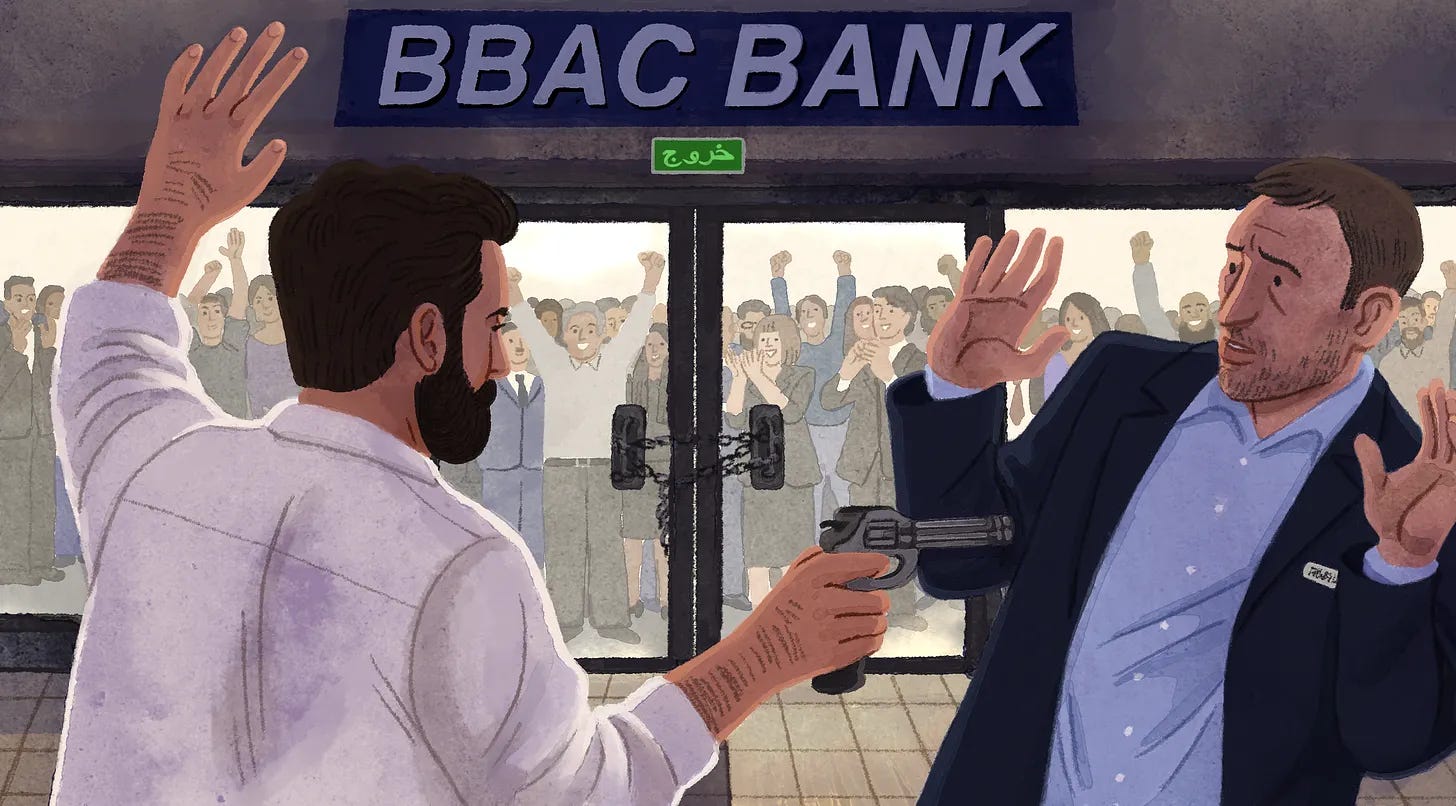
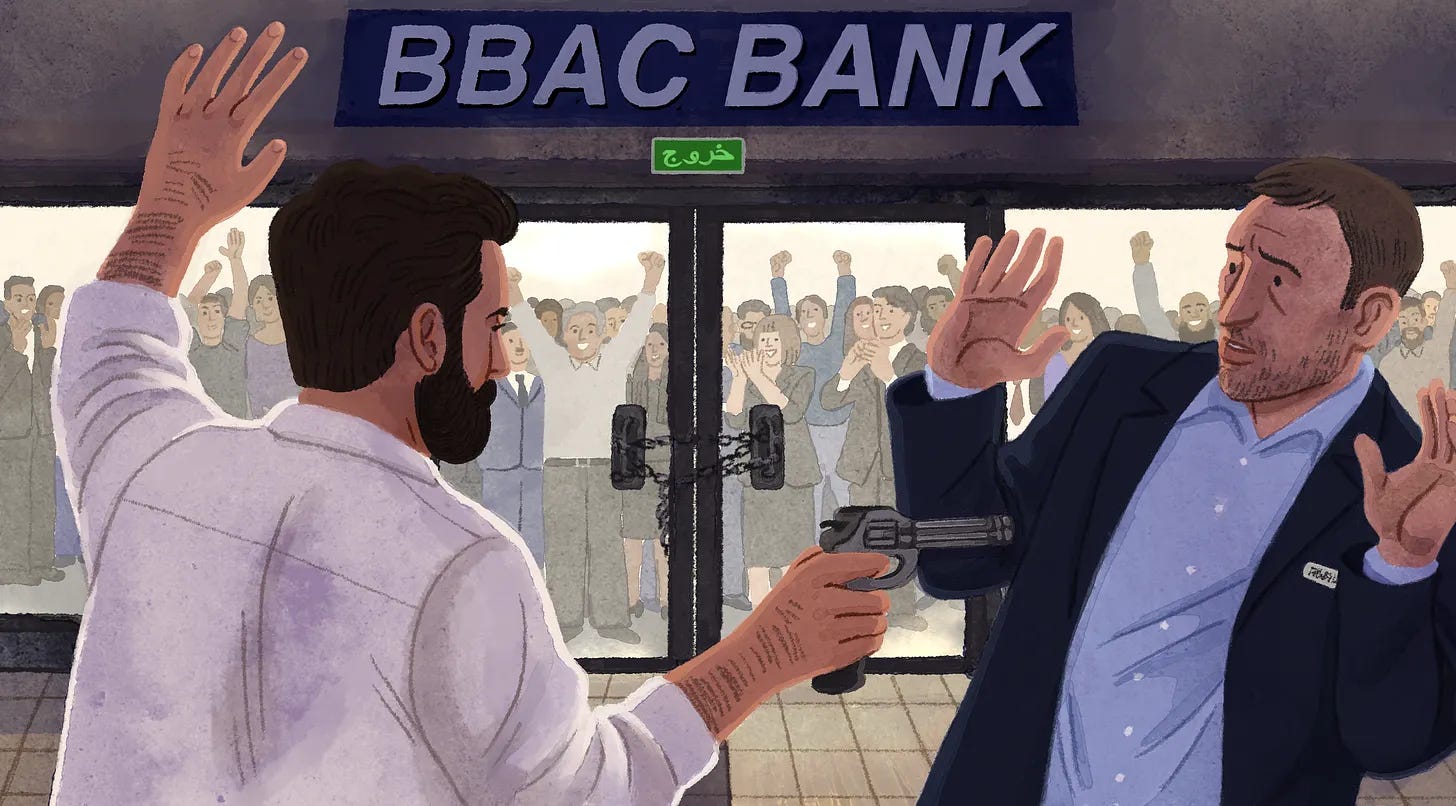
The morning of January 18, 2022 was bitterly cold in Lebanon’s Bekaa Valley. In the village of Kefraya, at the foot of the region’s westernmost mountains, Abdallah al-Saii woke early to a message from his bank manager. After reading it, he put his phone down and made some coffee, moving quietly to avoid waking his wife and children. He drank a cup or two in silence and thought through his options, which seemed to him to have narrowed to one. By the time the coffee was finished he had made a decision. He took one of his son’s school bags and placed his pistol inside. Then he left the house, closing the door quietly behind him.
For months al-Saii had been trying to extract the last $50,000 from his own bank account, and for months the bank had been stalling, demanding spurious justifications. That morning’s message requested proof that he needed the money to pay a business expense. He did not. He needed the money to feed his family.
The parallel mountain ranges that bracket the valley, isolating it from Syria to the east and Beirut to the west, make another world of the Bekaa. Beirut’s grip is tenuous there and people tend to run their own affairs. Al-Saii is a big man with a Glock habitually tucked into his waistband. But such an accessory hardly raises an eyebrow in the Bekaa, and al-Saii’s graying beard can’t hide babyfaced features and a quick smile. He gives the impression that he could use his size to play Santa Claus just as effectively as he could intimidate with it.
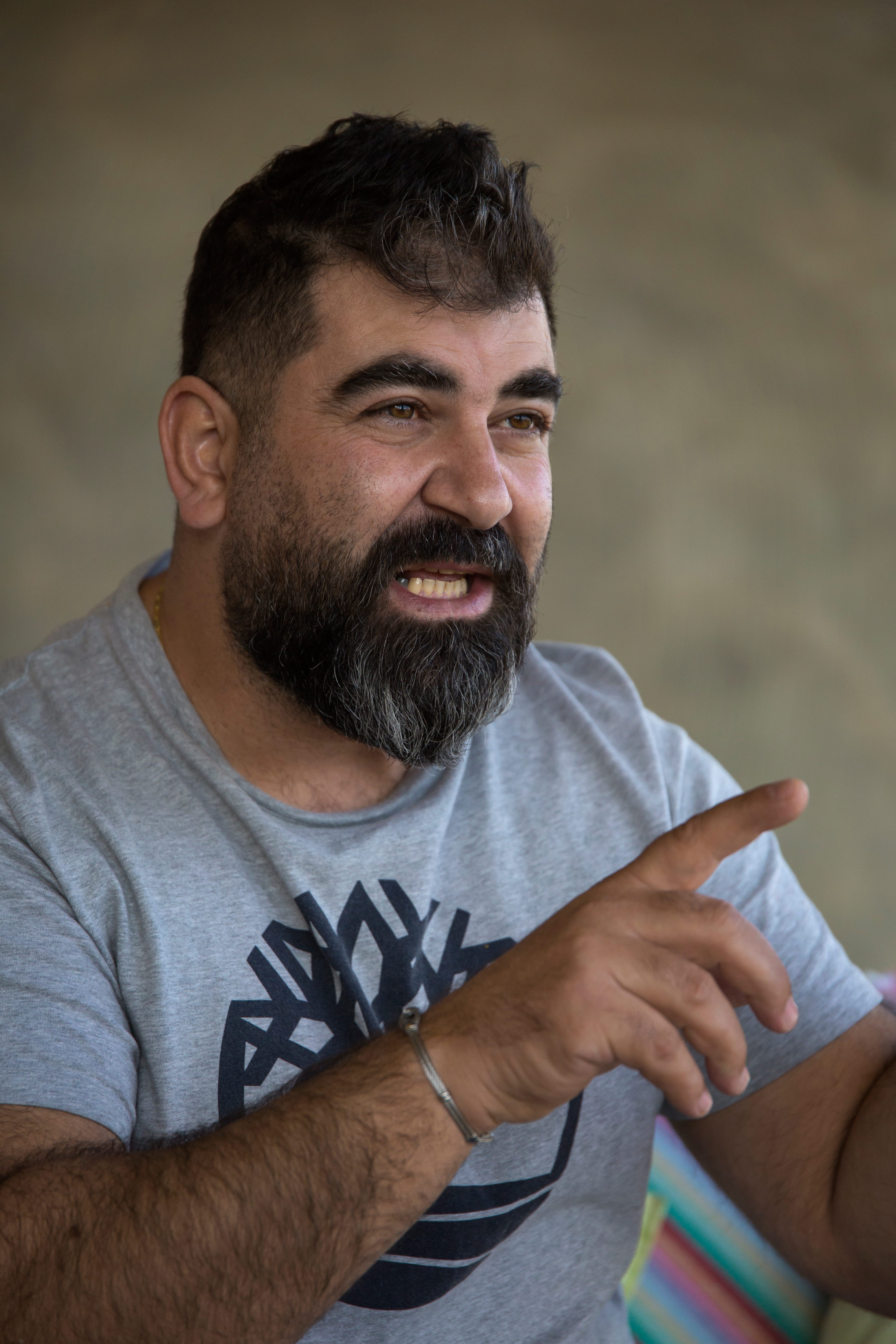
Al-Saii stopped at his father’s house to collect two bottles of fuel from a stockpile he kept there. Then he went on to the cemetery and knelt on the cold-tempered earth next to his mother’s grave. His breath misted in the frigid air as he prayed.
In the village of Joub Jannine ten minutes down the road, he parked outside the BBAC bank branch and walked in calmly. “Hey, Abdallah, how are you?” he asked clerks who knew him well after his countless attempts to squeeze his own money out of them. He returned their greetings as he scanned the room. Among the early-morning customers there was a couple with their young son. On seeing them, al-Saii was pulled up short by the thought of his own son, David. He knew that what he was about to do would terrify this child, and that he would want to kill anyone who did the same thing to David. He took a seat in the foyer, his bag on his lap, and waited. When the family left, al-Saii stood up and made for the manager’s office, drawing open the zip on his bag.

To understand why a loving father and husband might decide over his morning coffee to rob a bank, you need to understand the dire transformation that Lebanon went through in the early 2020s. Despite its association with disorder and conflict, for many years Lebanon had a healthy middle class. Even if there were not many opportunities inside the country, good universities turned out graduates who went abroad and supported whole families back home. A visitor to Beirut in the years between 2005 and 2019 would have come across a buzzing city full of new cars, sleek restaurants, and shops selling the kind of things you buy after you have everything you actually need. At the center of it all were Lebanon’s famed banks.
Lebanon’s banking sector was long seen as a paragon of stability in a region heaving with unrest. In order to keep the Lebanese Lira pegged to the dollar, the central bank had to ensure a constant flow of dollars into the country. Strict banking secrecy laws and interest rates as high as 20% drew capital from around the world, especially from the millions of Lebanese expats living and working abroad. Despite an evidently dysfunctional economy, there were huge amounts of cash sloshing around Lebanon during those years.
On the surface, Lebanon’s banks were a global success story. But underneath it was a level of financial malfeasance that would make Bernie Madoff blush. In order to give the appearance of stability and fund a government running an eye-watering deficit, the central bank was borrowing dollars from commercial banks at huge interest rates. It relied on further inflows to repay those debts, and covered the gaps with highly creative accounting. In 2023, after the collapse, auditors remarked drily that “even an unconventional accounting policy, in order to be a policy, needs to have certain basic features, e.g. … not be dependent upon ad hominem judgment.”
A few people started to become suspicious. Fouad Debs was a partner at Debs & Associates, a family law firm that counted some private banks among their roster of clients. Debs, 39, who bears a striking resemblance to the actor Ben Stiller, looks lawyerly; the kind of person you might meet on a padel court or a golf course. But behind his button-down shirts beats an activist’s heart.
In the late 2010s Debs began to smell something rotten in the system. The extraordinary interest rates on offer smacked of desperation. An unusual amount of money was leaving the country and the financial engineering going on behind the doors of the central bank was just too convoluted to be healthy. However he looked at it, it looked like a pyramid scheme.
Debs warned friends and colleagues that something wasn’t right, but few listened. The common narrative held that, through all of Lebanon’s travails, the banks had been the one point of stability. And things seemed to be going well for once. There was no reason to panic now.
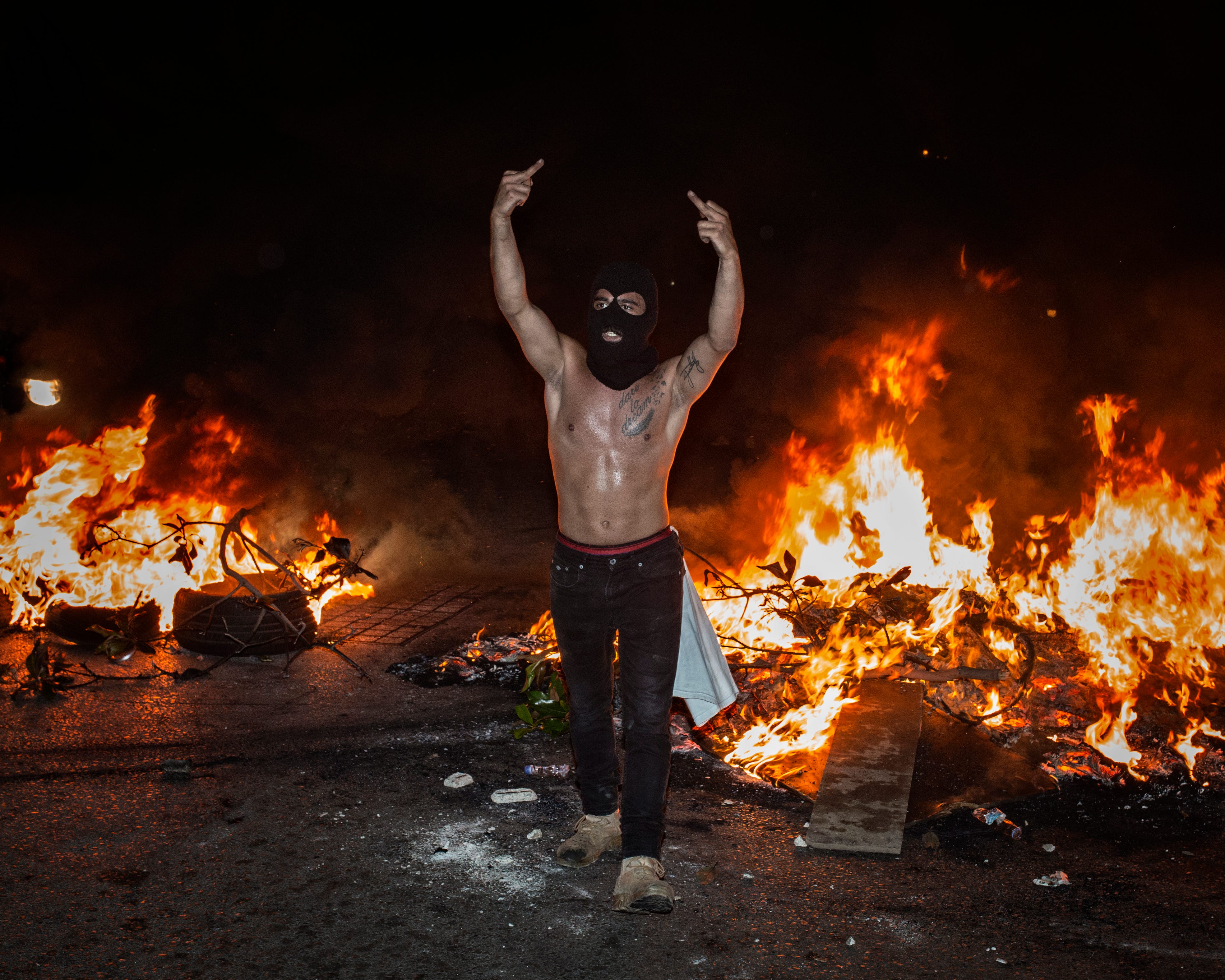
But Debs was on to something. The flow of dollars coming from abroad was drying up and, in October 2019, the pyramid collapsed. As the Lira started to slip from its peg, the government scrambled to find the cash to prop it up. A wildly ill-advised tax on the messaging app WhatsApp brought people out to the streets, and the protests immediately spiraled into a nationwide movement calling for a complete overthrow of the establishment.
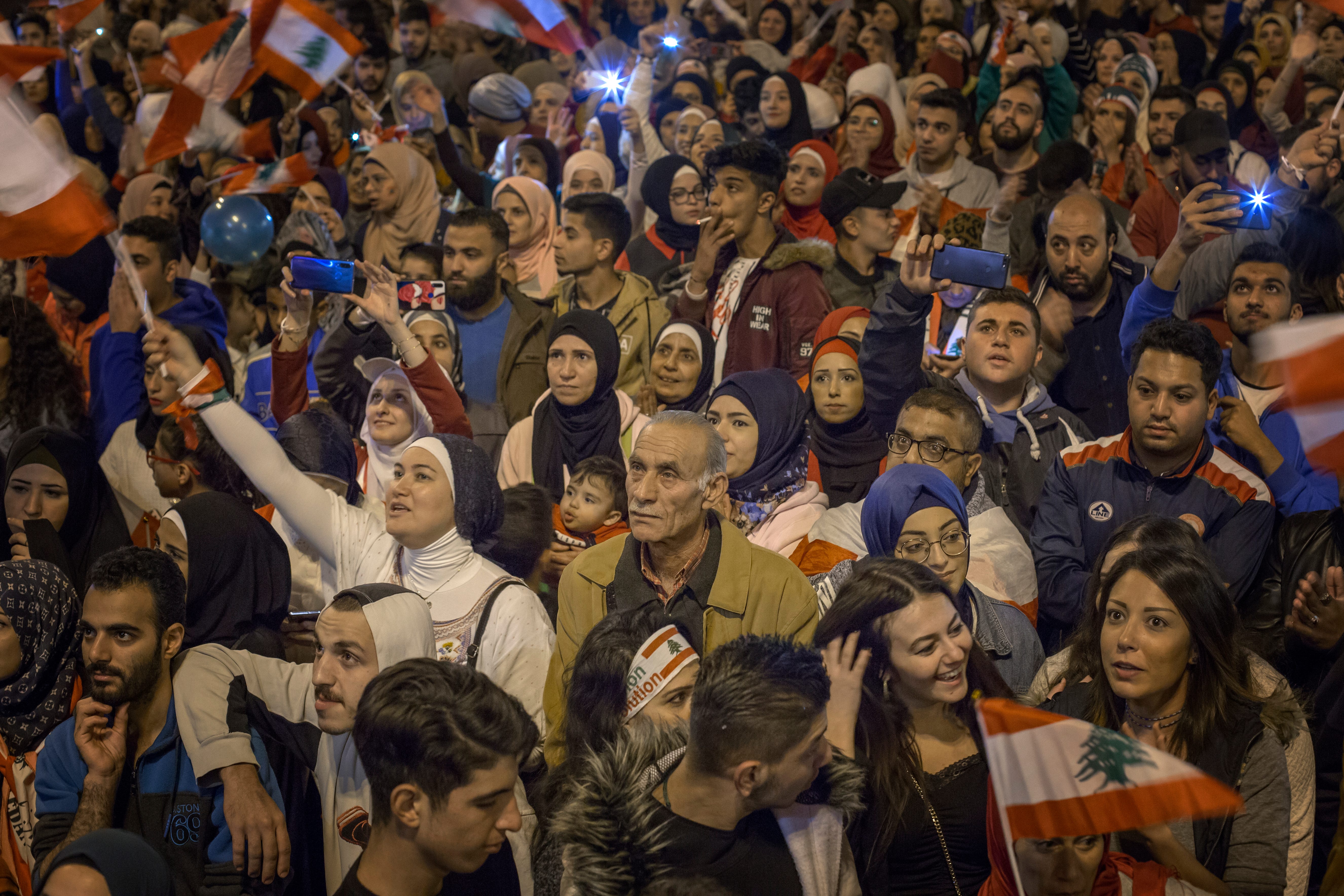
The banks shut their doors, ostensibly to avoid a run. Debs suspected that a bank run was still occurring, but an exclusive, invite-only bank run. He was right. While the banks remained closed to the public, well-connected depositors moved billions of dollars out of the country.
When they reopened a couple of weeks later, the banks tried to stem the bleeding by throttling depositors’ access to their own money. Dollar-denominated accounts were frozen, or dribbled out via complicated mechanisms designed to pass on the bank’s loss. Meanwhile, deposits in Lira simply melted away as the currency lost 95% of its value. Salaries paid in Lira became worthless, a month’s wages barely enough to buy a single bottle of cooking oil. Lebanon’s middle class collapsed at dizzying speed, plunging people who had lived comfortable, urbane lives into poverty in a matter of weeks. The vast majority of these accounts are still locked up today, withdrawals only allowed at cents on the dollar.
Debs was horrified by the speed of the collapse and the indifference of the people who had caused it. One event in particular rammed home the tragedy that had befallen his country. On the morning of July 3, 2020, a 61-year-old man named Ali Mohamed al-Hiq arrived outside a branch of Dunkin’ Donuts in West Beirut. He placed a copy of his own, clean, judicial record against a small tree that stood in a pot nearby. Then, holding a Lebanese flag in one hand, he shot himself in the head. Attached to the legal paper was a single line reading, “I am not a heretic.” A reference to the lyrics of a famous song by Lebanese composer Ziad Rahbani: “I am not a heretic, but hunger is a heretic, poverty is a heretic and humiliation is a heretic.”
Debs came to think of the crisis as “the crime of the century.” In the years following the collapse, his firm offered legal advice and lobbied for reform. They filed over 100 lawsuits on behalf of depositors, with mixed success. They had some victories but, even then, would often be forced into a settlement to avoid years of appeals.
By the time Abdallah al-Saii walked into the bank in Joub Jannine, Debs was part of a loose collection of lawyers and activists known as the Union of Depositors. He got a call from someone in the Bekaa telling him that a depositor was emptying their account by force, something he had long expected would happen. Two years of fighting in court, lobbying the IMF, and endless campaigning had led to little more than a few nominal victories. Debs had come to believe that direct action was the only route left, and was puzzled that it had taken so long to come about. “Finally!” he thought as he grabbed his car keys and threw on a coat.

When Debs arrived in Joub Jannine, the scene outside the bank was chaotic. Bystanders milled about, barely kept in check by police officers and soldiers. Officers from the police Intelligence Division stood talking with al-Saii through the locked front door of the bank.
Inside, al-Saii had pushed a couch up against the door and sprayed gasoline on it. Early on during the heist he had let out the remaining customers, keeping the clerks behind their counter and the manager in her office on the phone to her superiors at BBAC. To al-Saii’s astonishment, the executives were lowballing him. “They’re offering $10,000 a month until the account is empty,” the manager told him, the phone still on her ear.
“You really don’t understand what’s going on here, do you?” he roared as he sprayed more gasoline around the office.
“Just let him take the money,” screamed the manager down the phone. “He’s going to kill us all!”
After several hours, the bank agreed to release his money. The cash would be given to al-Saii’s wife and, when he was confident that she was home unmolested, he would give himself up. “Make sure you enter the withdrawal on the system,” he told the manager as she counted out $50,000. “I’m not here to steal anything.”
When he came out, he was arrested by police officers whose salaries had been squashed to around $50 a month by the crisis. As the cops clicked handcuffs onto him, one leaned in and, using an honorific that means ‘hero,’ whispered, “I’m sorry ya batal, I would never do this to you if I wasn’t obliged by the uniform.”
Debs and the Union of Depositors went to work on al-Saii’s behalf. He was relieved when the judge set his bail at $5 during the first hearing, an indication that she was sympathetic to his situation.
When al-Saii got out, he spent some time calling the bank employees that had been his hostages, all of them more or less his neighbors, apologizing for putting them through the ordeal and assuring them that it was nothing personal.

For months after the Joub Jennine hold-up, the crisis dragged on, worsening all the time as swathes of the country slid into grinding poverty. Debs could not understand why nobody was following in al-Saii’s footsteps. There was a brief flurry of national debate over whether he was a hero or a villain, but, other than shouting into the faces of impassive tellers, nobody else took the kind of action that Debs thought would cut through the impunity of the bankers.
On the morning of August 11, right in the sweltering dog days of summer, Debs was being interviewed by a journalist. Halfway through the interview he received a call. “It’s happening again, Fouad. Federal Bank in Hamra. Get down there.”
Bassam Hussein, a 42-year-old shopkeeper, didn’t pay very much attention to al-Saii’s case when he read about it. If asked, he would say that he approved, but as a rule, he preferred to keep his attention on his own affairs rather than other people’s. Like most in Lebanon, his own affairs were becoming increasingly onerous.
When the banks shut their doors, Hussein had over $200,000 in his account; money he had made selling a property and saving the generous tips he received from a job at an upmarket Beirut hotel before he opened a small supermarket. His bank, the Federal Bank of Lebanon, arranged to let him withdraw $400 a month, along with a voucher for $200 that could be used in specific stores against the balance of his account.
Things were tight. He had a wife and two sons to care for and his father suffered from Alzheimer’s; but with a lot of ducking and weaving, he was making it work. Then one day, his father fell and fractured his hip. The hospital bill came to over $10,000. Hussein, knowing that a visit to the bank would be fruitless, took out a loan.
In July, he went in to withdraw his monthly allowance. “I’m sorry, Bassam,” the manager, Hassan Halawi, told him. “We haven’t got it this month. Don’t worry though, we’ll give you $800 when you come back next month.”
Hussein, who comes from Ouzai, a tough, hardscrabble neighborhood adjacent to the Beirut airport, considered making a scene. He has a humble, steady demeanor, but it is a stillness that he can gather into dead-eye menace when required. A long beard conceals the lower half of his face, adding to an inscrutability that inspires caution. But he had watched the shouting and screaming that occurred every day in banks all over the city, and knew that it never worked.
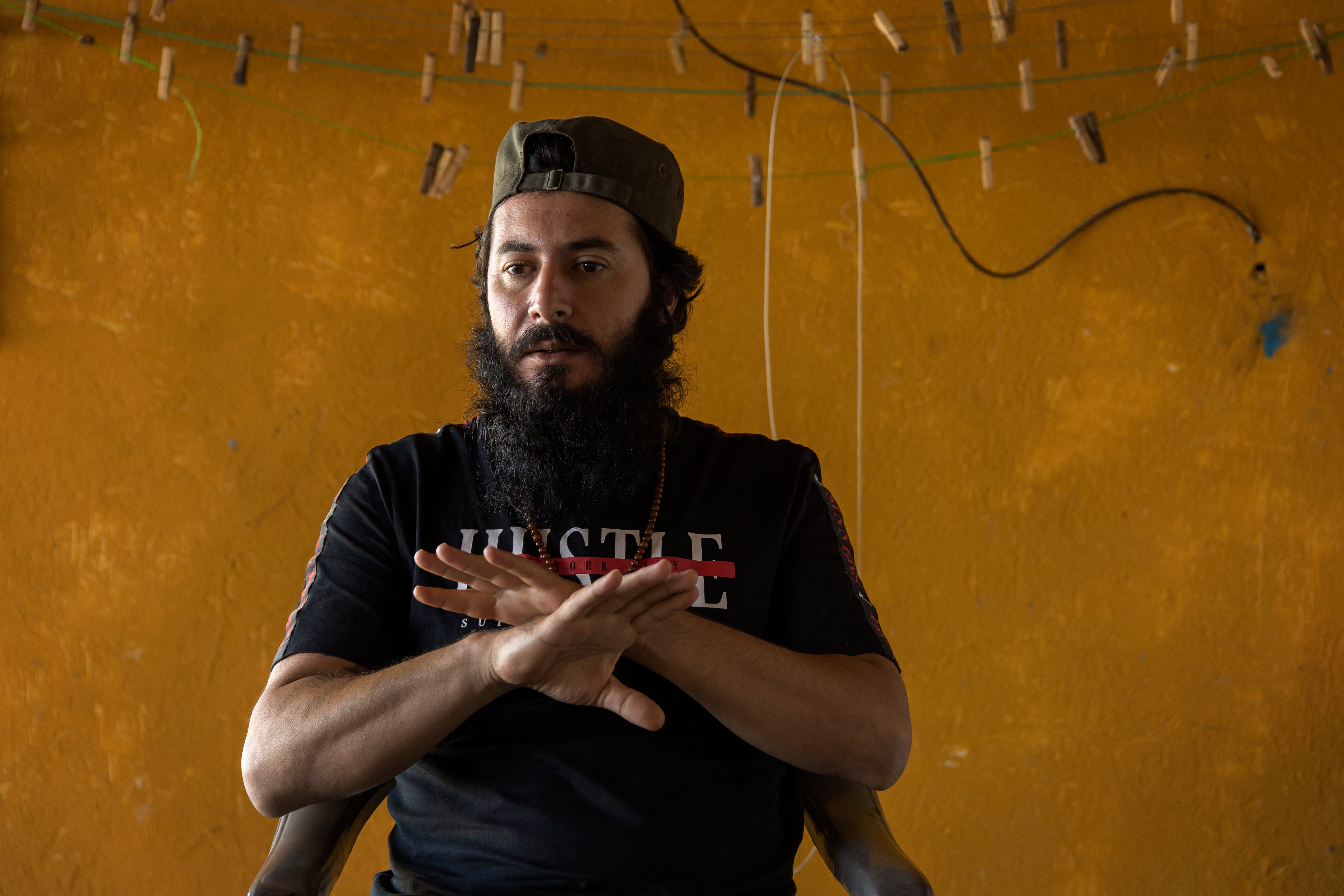
When he returned in August, he was told once again that there was no money. “It’s some kind of delay at the central bank, there’s nothing we can do about it,” Halawi said with a shrug.
“What do you mean there’s no money? You’re a bank. Look, I’ve taken a loan to get my father treated, give me the $400 for this month at least.”
The manager was growing impatient. “Really, Bassam, we don’t have anything to give you. I’ll call you when the money arrives.”
Hussein was also growing impatient, an impatience born of months of worry and scraping by. He felt his temper rise. “Don’t play this game with me. I’m not like all these other sheep.”
At that point, Halawi made a grave mistake. He laughed. “Oh yeah? And what are you going to do about it? Go on, Bassam, I’ll call you when we have something for you.”
There was a moment’s silence in which, had you listened carefully, you might have heard the deadbolt click of an irrevocable decision occurring in Hussein’s mind. Very quietly, he said, “You’ll bear the consequences of this.” Then he got up and left.
A few days later, on the morning of August 11, Hussein pulled up outside the bank at nine a.m. sharp. In the footwell of the passenger seat was a jerrycan containing twenty liters of gasoline and a magazine-fed shotgun. He parked at the curb outside the entrance and went in empty-handed to make sure the manager was there. He wanted his money, but he wanted it specifically from this man’s hands.
Halawi looked surprised to see him. “I told you I’d call when we had your money.”
“I know,” replied Hussein. “I was just passing by so I came to check.”
“Alright, well, like I said, we’ll call you.”
Hussein returned to his car and retrieved the gun and the gas. This time he came in hard, the rage of a proud man forced to beg propelling him through the door. The room burst into immediate pandemonium. He racked the shotgun and a lady fainted. Taking the keys from a clerk, he dragged the unconscious woman outside and locked the door. Among the customers still remaining, there was an elderly man. “You can go, uncle, you’re too old for this,” Hussein told him.
“But I need $200,” the man replied. “I came to get my $200 for the month.”
“Well, I’m not going to ask for your money but if you want I’ll give you $200 from mine when I get it.”
“Eh, ok, I’ll stay,” said the old man, and took a seat.
Hussein corralled his hostages behind the counter and assured them he meant them no harm, but also that he would shoot anyone who tried anything. The doors locked and hostages subdued, he went into Halawi’s office. When he saw the man through his adrenalized tunnel vision, the years of struggle, of trying to keep his family afloat, of begging for money that he had believed was his, rose up. He put the shotgun in Halawi’s terrified face and snarled, “I want my money.”
“OK, OK, calm down, Bassam. Calm down. We can work it out,” begged Halawi. “I can get you the $400 now.”
Hussein couldn’t believe what he was hearing. “You’re still trying to give me $400, you son-of-a-bitch? I want my money. All of it!”
Halawi scurried to the safe, hunched in fear. When he opened it, Hussein saw that there was, at most, $4,000 inside, alongside a pile of all but worthless Lira. “I don’t care what you do, who you have to call, but I’m not leaving with less than $200,000,” Hussein told him. “Start making calls.”
The bank is in a busy commercial district, near the Dunkin’ Donuts where al-Hiq shot himself. Within minutes, representatives of every security agency in Lebanon were gathering outside. They faced a twofold problem. Inside the bank, Hussein, in three-quarter-length jeans, flip-flops and a reversed baseball cap, paced up and down, smoking, too furious to speak coherently with the negotiators at the door. But behind them, the gaggle of passersby who had gathered to watch was rapidly growing into an angry crowd.
Before long, soldiers were tussling with people who wanted to enter the bank and assist Hussein. When Debs pulled up, the scene warmed his heart. Led by activists with megaphones, a large crowd chanted “We are all Bassam!” and “Be strong, Bassam, fight! Get it all!” Protestors at the front got into it with sweating cops in riot gear and Debs struggled to keep his feet under him as he tried to get closer.
Eventually Hussein calmed down enough to start talking to the negotiators. They were placatory, asking him if everything was OK inside, if he needed coffee or anything else. After three hours they offered him $5,000. He flew into a rage at the audacity of the offer and promised that he would beat Halawi to a pulp if he wasn’t taken seriously. “Forget Halawi,” the cop told him. “It’s us that are going to get you your money, forget this guy. Alright, let’s see if we can get more.”
The offers rose with the temperature as the day dragged on. $10,000. $15,000. Each time an offer was made, word of it would leak out to the ever-increasing crowd outside and cries of “Don’t take it, Bassam! Get it all!” rang out. Each time Hussein refused. The fumes from the gas he had spilled on the counters mixed with the August humidity and made the air fetid and heavy. The elderly man who had elected to stay started to feel light-headed, so Hussein let him out.
During the afternoon, one of the clerks brought Hussein a phone. “Hi, Bassam, it’s T-Marbouta, the restaurant around the corner. You guys have been in there for hours, you must be starving. Can we send you some food?” Around forty-five minutes later, the food arrived and was passed through the doors. Hussein sat down to eat shawarma sandwiches, salads and mezze with his hostages. He kept Halawi sitting in his office, hungry.
Late in the afternoon, the bank’s offer stood at $35,000 and the right to withdraw $400 per day until Hussein’s account was emptied. One of the negotiators, an officer who had built a rapport with Hussein over the course of the day, called him over. “Look, man, I think you have to take this offer,” he told him, leaning in conspiratorially. “They’re getting really impatient to finish this out here. I don’t know how much longer I can stop them from coming in shooting. It’s time to think of your family now.”
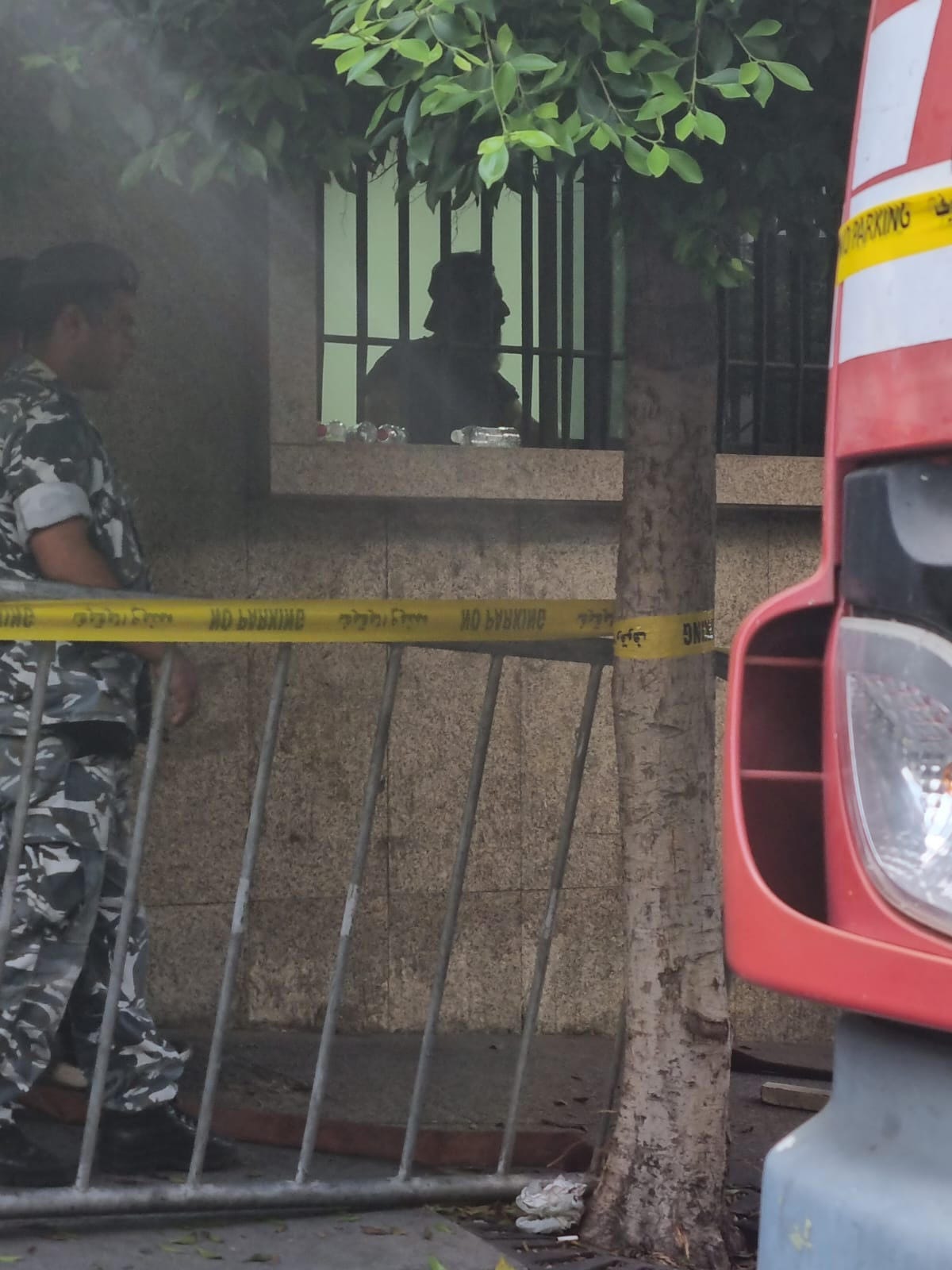
Hussein, tired and with no real desire to be a martyr, realized that this was as good as it was going to get. He began to release the hostages one at a time. Then he put down his shotgun and came out. A huge cheer went up from the crowd; he turned and waved as the police escorted him to a car, free of handcuffs, an officer holding the door for him.
Debs jumped in a cab and followed him to the police station, talking his way in to make sure he was properly represented. Hussein spent just five days in jail, going through a series of interviews in which he says every police officer he spoke to congratulated him on taking action.
After al-Saii robbed his bank, Lebanon was torn between admiration and disapproval. By the time Hussein emerged from Federal Bank and waved to his supporters, the whole country was cheering. On the day he left jail and returned home to Ouzai, a crowd met him, hoisting him onto their shoulders and parading him triumphantly through the street to the sound of fireworks and celebratory gunfire.
Debs thought that surely this would be the event that broke the levees holding back an entire nation’s outrage. But still, to his confusion, nobody followed suit in the weeks following. He didn’t know that the true final straw was already in motion.

Sali Hafiz, 32, does not resemble the typical image of a bank robber. Petite, dark-haired and made up, she is both shy and sure of herself at the same time. She seems to be always on the verge of laughter, as if life is a long-winded joke that’s funnier to tell than it is to hear.
Despite her apparent levity, Hafiz is serious about her country. At the tender age of 11, the assassination of ex-prime minister Rafic Hariri jolted her into political consciousness. She joined the successful protests against Syrian occupation that were triggered by the assassination. Life was good afterwards. Lebanon was independent and hopeful. Her family were not rich but they were fine. Sali studied at university to become an interior designer.
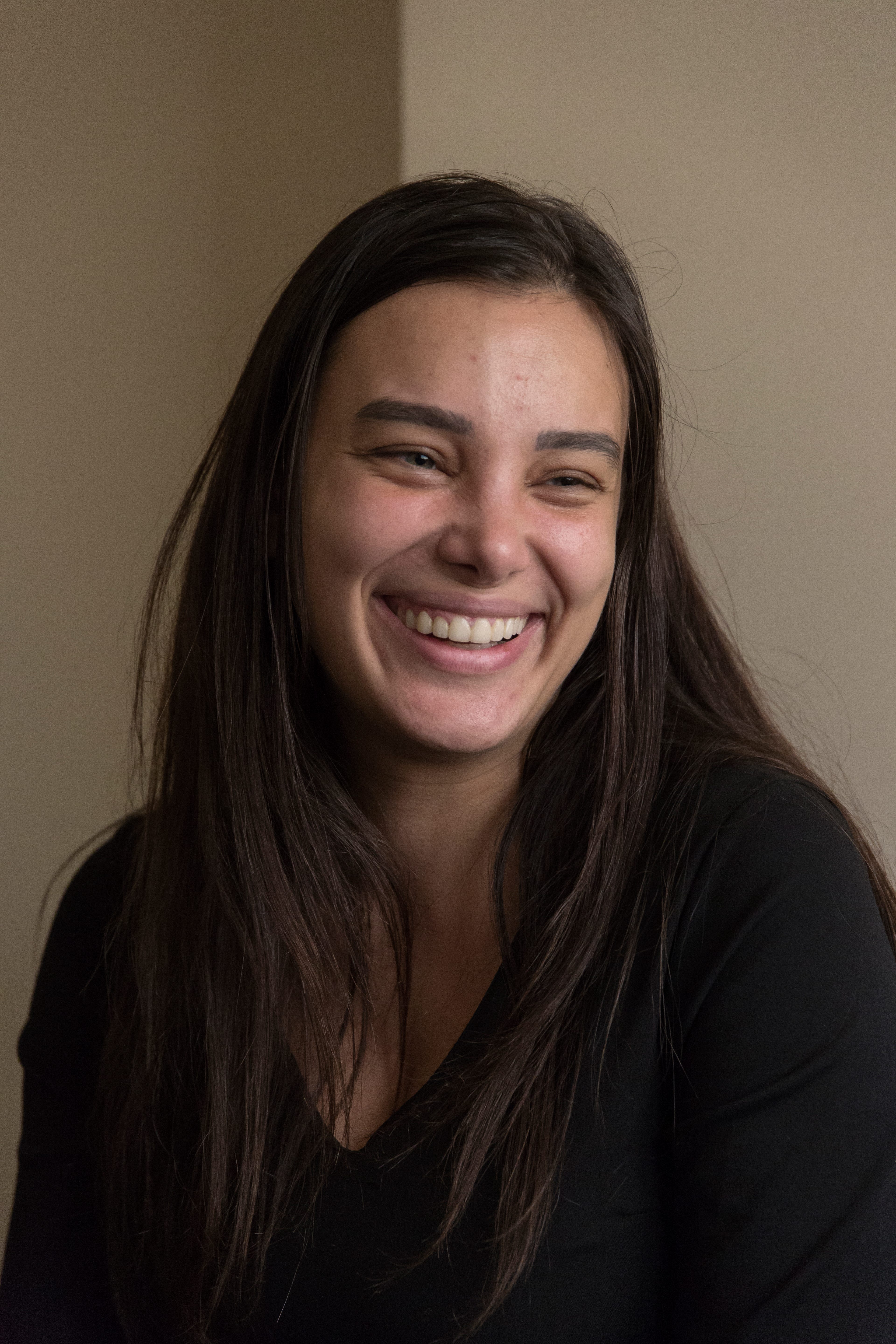
But by the time people took to the streets in 2019, Hafiz was already becoming disillusioned by the stagnation and corruption that plagued Lebanese politics. She was immediately in the thick of the action, organizing protests and dodging tear gas canisters, exhilarated to see how all levels of Lebanese society participated in the movement.
But then the momentum was lost and, as the thrill of possible change gave way to despondency, tragedy hit the family; Hafiz’s sister, Nancy, was diagnosed with brain cancer. The cost of treatment amounted to $14,000 a month. The family had some money, enough to start at least, but it was trapped in the bank and they were effectively broke.
For months, Sali Hafiz watched Nancy waste away. She spent countless days in the bank, begging for more than the $200 per month they would release, her sister’s life hanging on each degrading meeting. When doctors told the family that, without an operation, the end was very near, Nancy begged Sali to raise her daughter. It was more than Sali could hear.
A plan had been forming in her mind. A far-fetched plan, a kind of desperate last measure. But then she watched Hussein emerge from Federal Bank to the roar of an approving crowd, saw him released home to a hero’s welcome, and began to put her plan into action.
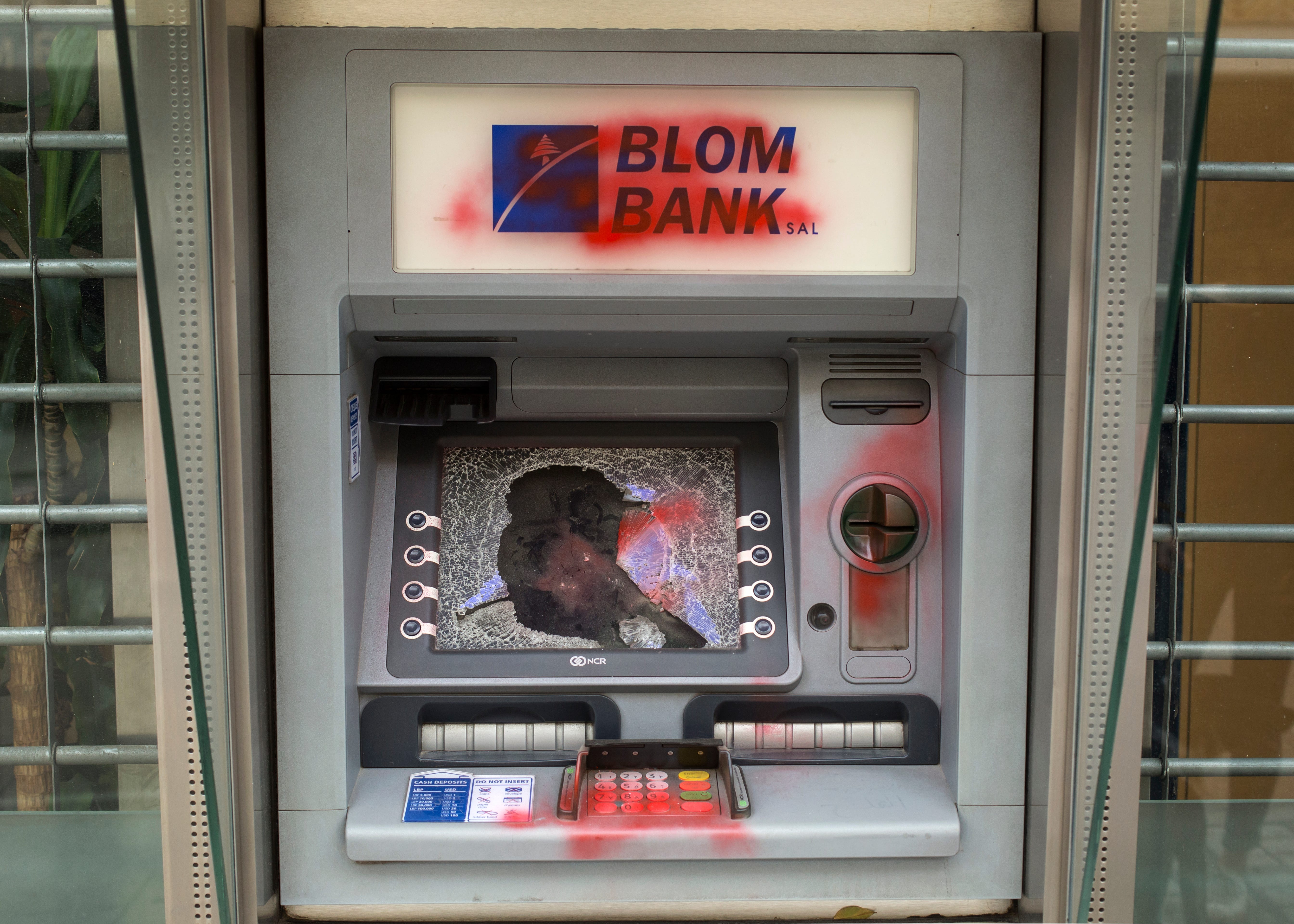
On September 14, 34 days after Hussein’s hold-up, Hafiz arrived at a branch of Blom Bank in central Beirut with a few friends and her nephew’s toy pistol in her bag. They carried a large bottle of water to which they’d added a little petrol to impart the smell. The bank was busy and, as usual, thick with the humiliation of people begging for their own money.
When they went in, Hafiz, her dark hair flying over a black t-shirt and black pants, drew the toy pistol, holding it high in the air and making the motion of chambering a round. Customers and staff scrambled for the exit before one of the heist gang threw chains around the doors. Hafiz spoke into a camera that live-streamed the whole event.
“My name is Sali Hafiz. I came to Blom Bank to get back the money of my sister who is dying in hospital.” Then she jumped onto a desk, shoulders back, chin up, and tucked the toy pistol into the waistband of her pants. The image flew around Lebanon in minutes, breaking open years of tension.
The branch is near the headquarters of Lebanon’s General Security department, and Hafiz knew she didn’t have long. The livestream had immediately gone viral and activists were already gathering outside to support her. Among them was Hussein, who had raced over and was speaking to journalists, exhorting people to follow in his and Hafiz’s footsteps.
After a brief negotiation, she was given $13,000. She dropped the toy pistol, the doors were opened and the robbers sent the panicked hostages flooding into the street, mingling with them and feigning their own terror. Outside, they split up and Sali went home, making calls to friends saying that she was fleeing the country. She had no plans to leave but she needed to buy some time.
Before long, police began to gather outside her apartment building, preparing to enter. Inside her flat, Sali strapped the bag of money to her belly and covered it with an abaya. She wrapped a hijab around her hair and pulled it tight. The police were on their way up as she waddled down the stairs, clutching the bulge under her abaya and moaning gently. They dutifully parted to let her through; a couple of officers wished her congratulations and said they hoped it was a boy.
A relative was waiting in a car outside and they drove out of Beirut toward the Bekaa Valley, where the state’s authority peters out and one can be wanted for a lifetime. Meanwhile, the image of Hafiz standing on the desk, proud, unbroken, feminine, normal, was working its magic. Within hours, Rami Charafeddine entered a bank in the Beirut satellite town of Aley and forcibly took $30,000 from his account. In the following two days, seven banks were held up across the country.
Hafiz spent the next ten days on the run, passing from one friendly house to another. Then, encouraged by the glee with which Lebanon had responded to the robbery, she returned to Beirut and gave herself up. In the gloom of a courthouse undergoing a power cut, the judge set her bail at twenty dollars. He remarked that, if she were to do it again, he would be grateful if she could obtain some of his savings too.
Dozens of heists and sit-ins took place in the following weeks. Debs accompanied a member of parliament who led an unarmed sit-in at her own bank, walking away with $8,500 from her account.
Eventually the banks met force with force. Fuzzy slogans proclaiming things like, “Your financial stability is our goal” disappeared from branch windows, replaced by welded sheets of iron. Private security guards with Kalashnikovs and shotguns allowed one customer in at a time. The optic honesty was somehow refreshing.
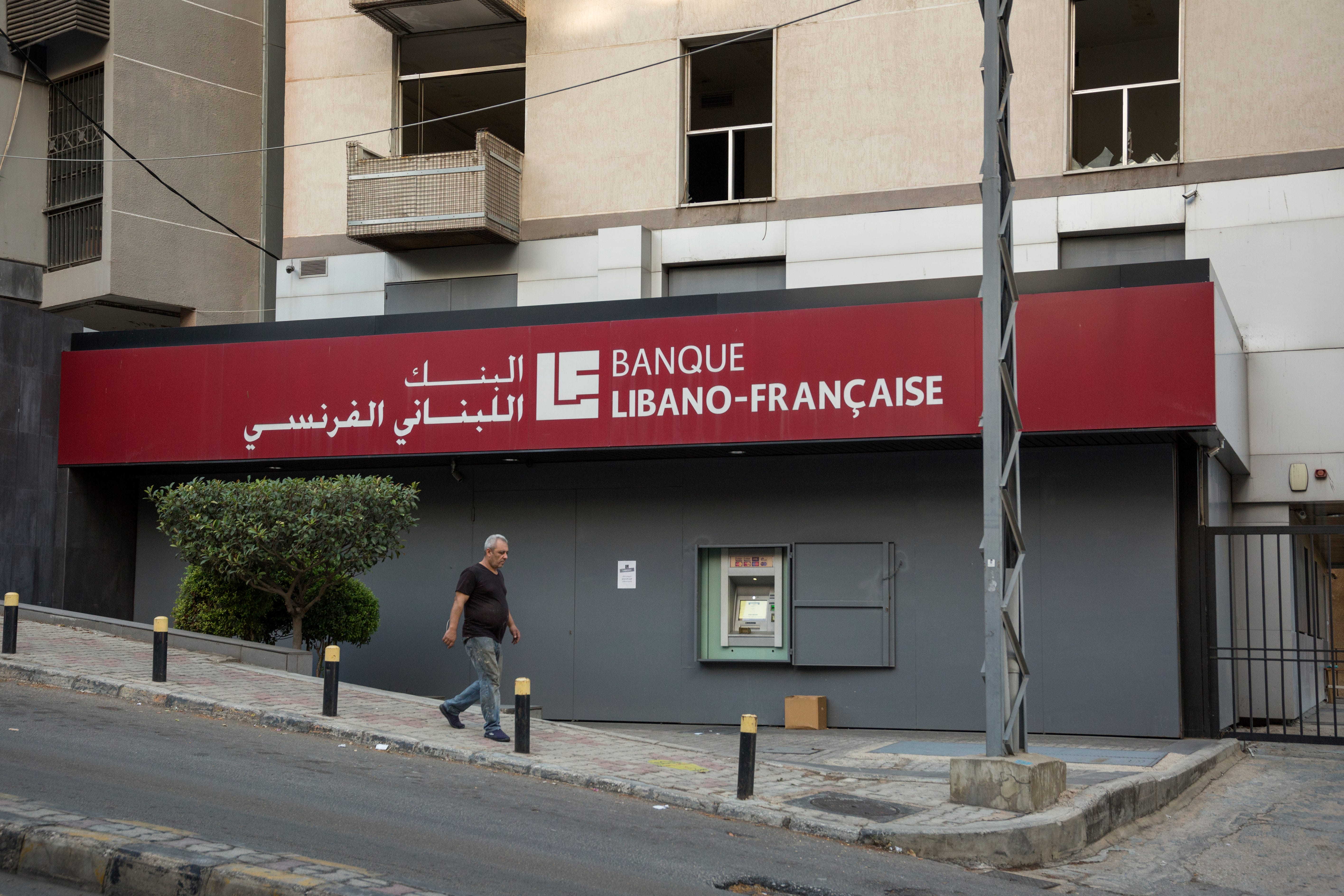
The year of heists now feels like a distant memory in today’s Lebanon. A glowing spot of people power in the relentless parade of unfortunate events that is Lebanon’s recent history. Al-Saii, Hussein and Hafiz all faced charges that were either quickly dropped or pursued half-heartedly.
Al-Saii still lives in Kefraya with his family. He keeps a low profile but speaks of his hold-up with pride.
Sali Hafiz knew how to work a crowd and gained some celebrity from her hold-up. As so often happens, money brought problems too. Nancy received treatment and her cancer went into remission, but in the process she suffered a paralysis that left her unable to walk or talk. The family became embroiled in legal disputes over the proceeds of the heist and the publicity that came from it, and some accused Sali of letting the fame go to her head.
Hussein still returns to Federal Bank each month to pick up the cash that was promised as part of his deal. He has nearly emptied his account, which is far more than most depositors ever received. He says there are no hard feelings between him and the clerks that he once held at gunpoint. His neighborhood, Ouzai, frequently falls within the forced evacuation zones imposed by the Israeli military in its war against Hezbollah. During periods when the conflict ramps up, he takes his family out of town somewhere safer, but if he’s fazed, he doesn’t show it. During one interview for this piece, conducted in a furniture store around the corner from his apartment, an airstrike hit nearby, rattling windows. Hussein sighed and took a drag from his cigarette. “What were you saying?” he asked.
Brendan Spiegel is Narratively’s co-founder and editorial director.
Claire Wyman is a Brooklyn-based illustrator. She likes to pet dogs and bake too much banana bread.