A great marinade is really just three things in a bowl: oil, acid, and seasoning.
Oh, and about ten minutes of your time. Master that, and you can make nearly anything taste like you fussed over it for days. Below you’ll find five of our test-kitchen favorite marinades, the method behind them, and the answers to the questions cooks actually ask.
Starting with the big one: how long do you leave your meat in the marinade?
The 3-Part Marinade Formula
Once you understand what each part does, you’ll never need to follow a recipe again, and you’ll always be able to create your own. Every marinade is a balance of three things.
Oil carries flavor and keeps food from drying out or sticking over high heat.
Acid, like vinegar, wine, or citrus juice, tenderizes and pulls seasoning down into the food.
Seasoning is where the personality lives: a single well-built spice blend does the work of a dozen jars, plus a little salt and sometimes a touch of sweetener to balance the acid.
A dependable starting point is about 3 parts oil to 1 part acid, and roughly ½ cup of marinade per pound of food. Planning to turn the extra into a sauce? Make ¾ cup to 1 cup per pound so you’ve got enough to work with.
How Long Should You Marinate?
This is the question we get most, and the one that separates a great result from a mushy one. More time isn’t always better. Acid keeps working the whole time food sits in it, so delicate proteins left too long can turn soft and chalky. Use these ranges as your guide, and lean toward the shorter end for anything bright and citrusy:
- Seafood & fish (30 min-2 hrs)
- Veggies & fruit (30 min-2 hrs)
- Tofu (1-12 hrs)
- Chicken, turkey & pork (2-12 hrs)
- Beef & lamb (2-24 hrs)
A good rule of thumb: the tougher the cut of meat, the longer the marinade can go. A quality steak needs only 20-30 minutes, but a full pork shoulder is happy overnight. And always marinate in your refrigerator, never on the counter.
Which Marinade Should You Try?
Not sure where to start? Pick by what’s on the menu tonight:
- Grilling steak → Roman Pepper Marinade or Kansas City Steak Marinade
- Chicken → Mt. Olympus Greek Marinade or California Citrus Marinade
- Seafood & shrimp → California Citrus Marinade or Caribbean Citrus Garlic Marinade
- Pork → Hudson Bay Marinade or Latin Adobo Marinade
- Veggies & tofu → California Citrus Marinade or Latin Adobo Marinade
- Want bold heat & spicy → Jerk Marinade or Juicy Cuban Island Marinade
Roman Pepper Steak Marinade
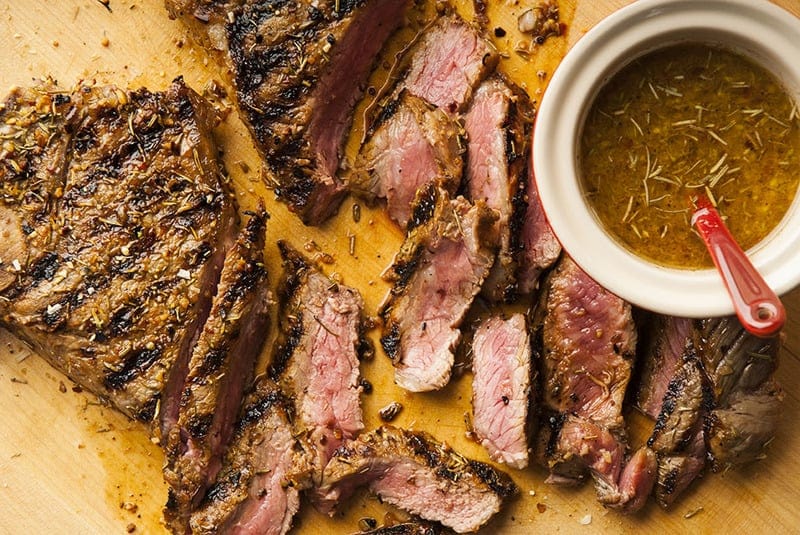
Inspired by Bistecca alla Fiorentina, this is the perfect marinade for a good cut of steak. Just olive oil, lemon, garlic, and rosemary, doing exactly what they do best. Don’t stop at beef, though: it’s lovely for infusing Italian flavor into chicken, meaty white fish, or vegetables.
Recipe by Savory Spice Test Kitchen
While this is the perfect marinade for steak, it’s also lovely for infusing Italian flavors into chicken, meaty…
 Healthy Cooking
 Grilling & BBQ
 30-Minute Meals
Yields
1 cup
Prep Time
10 minutes
California Citrus Marinade
Bright, zesty, and anything but ordinary. Our salt-free California Citrus Rub brings the sunshine; add oil, vinegar, and a little fresh tarragon and you’ve got a marinade with a fresh, vibrant twist. It shines on chicken, pork, tofu, shrimp, fish, or a whole pile of summer vegetables.
Recipe by Savory Spice Test Kitchen
Bright, flavorful, and anything but ordinary. Our salt-free California Citrus Rub brings zesty sunshine to every…
Healthy Cooking30-Minute MealsYields
1/2 cup
Prep Time
15 minutes
Jerk Marinade
Bring the island vibes to the backyard: bold, sweet-and-spicy Jamaican Jerk Seasoningwith a splash of fresh citrus. Fire up the grill, gather your people, and let the island heat work its magic. Save a little of the marinade to simmer into a basting sauce or a spicy paste.
Kansas City Steak Marinade
Fire up the grill for this flavor-packed classic. It’s a go-to for juicy cuts of steak, but don’t stop there. It’s just as mouthwatering on pork chops or hearty veggies like mushrooms, squash, and zucchini.
Recipe by Savory Spice Test Kitchen
Fire up the grill with this irresistible, flavor-packed marinade. It’s a go-to for juicy cuts of steak, but don’t…
Grilling & BBQ30-Minute MealsYields
1 cup
Prep Time
5 minutes
Mt. Olympus Greek Marinade
Opa! All the Greek essentials, like olive oil, lemon, garlic, oregano, and spearmint, in one easy marinade. It’s a natural for grilled or baked chicken, and just as good on vegetables, seafood, or lamb.
4 Bonus Marinades Worth Trying
Once the formula clicks, it’s hard to stop. So outside of our five favorites, we had to provide a few more bonus test-kitchen favorites, each built on a single blend:
Juicy Cuban Island Marinade: zesty citrus and bold Cuban Island Spice with a splash of teriyaki; bright, savory, and built to turn heads at a cookout.
Caribbean Citrus Garlic Marinade: tart, tangy, and sunny; made for fish and shrimp on summer skewers and tacos.
Recipe by Savory Spice—Sellwood/Portland, OR
Fire up the grill—this one’s a game-changer. Zesty citrus meets bold Cuban Island Spice, layered with peppery herbs,…
Grilling & BBQ30-Minute MealsYields
1/2 cup
Prep Time
30 minutes
Cook Time
20 minutes
Hudson Bay Steak Marinade: hearty cracked coriander and caraway with red wine and balsamic; robust for beef, but great on chicken and pork too.
Latin Adobo Marinade: bright, zesty, and a little smoky; an easy way to work Latin flavor into any protein.
How to Cook Marinated Food (So It Sears, Not Steams)
A marinade sets up the flavor; how you cook it decides whether you get a crust or a sad, gray exterior. A few things we do every time:
- Pat it dry. Lift the food from the marinade and blot off the excess with a paper towel. Wet food steams instead of browning, and a dry surface is what gives you that caramelized, restaurant-style crust.
- Watch the sugar. Marinades with honey, teriyaki, or fruit juice can scorch over high, direct heat. Sear first, then move to a cooler zone to finish, or flip more often to keep them from burning.
- Don’t crowd the pan or grill. Give each piece room so heat can do its job. Cook to temperature, not to the clock, and let meat rest a few minutes before slicing so the juices settle back in.
- Discard or boil the leftover marinade. Anything that touched raw meat needs a hard boil (at least 5 minutes) before it goes near finished food . But, more on that below.
Marinade vs. Dry Rub vs. Brine: What’s the Difference?
They’re often lumped together, but each does a different job.
A marinade is a wet mix of oil, acid, and seasoning that adds flavor and lightly tenderizes.
A dry rub is seasoning applied straight to the surface, no liquid, for a bold, concentrated crust (great when you want maximum bark on the grill or smoker).
A brine is a saltwater soak whose main job is moisture and juiciness, not surface flavor. Short on time or want a heavy crust? Reach for a rub. Want tang and tenderness? Marinate. Worried about a lean cut drying out? Brine, then season.
Make It Ahead for Meal Prep (and Freeze It)
Marinades are a meal-prep secret weapon.
Here’s the trick: add your protein and marinade to a zip-top bag and freeze it flat. It marinates as it thaws, so by the time it’s defrosted in the fridge, it’s seasoned through and ready for the grill, with no extra step. You can also mix a batch of marinade on its own and keep it refrigerated for a few days.
And any time you want a built-in sauce, make a double batch and set half aside before it touches raw meat.
Marinade FAQ
What are the three parts of a marinade?
Oil, acid, and seasoning. Oil carries flavor and keeps food moist; acid tenderizes and helps seasoning soak in; and seasoning brings the flavor and balances the acid.
What’s the ratio of oil to acid?
About 3 parts oil to 1 part acid is a reliable start. Lean on more acid for tougher cuts, but go easy. Too much can turn tender proteins mushy.
How much marinade do I need per pound?
Roughly ½ cup per pound. If you’ll reduce the extra into a sauce, make ¾ cup to 1 cup per pound.
Can you marinate too long?
Yes. In an acidic marinade, fish and seafood can start to break down in as little as a couple of hours, and even chicken can turn soft if left for days. Stick to the ranges above.
Do you rinse marinade off before cooking?
No need to rinse. Just shake or blot off the excess. Rinsing washes away flavor; patting dry keeps it while still letting the surface brown.
Can you use leftover marinade as a sauce?
Yes, if it touched raw meat, boil it for at least 5 minutes first. Boiling makes it safe and thickens it into a sauce. Easier still: reserve some before it meets the raw protein.
What kind of container should you marinate in?
Use a non-reactive container, like glass, stainless steel, or a zip-top bag. Skip aluminum, which can react with the acid and throw off the flavor.
What if I’m short on time?
Even 20-30 minutes makes a difference, especially on thin cuts, shrimp, or veggies. For a quick boost, poke or score the surface so the marinade reaches more of the food.