Cooking oils and fats shape far more than flavor. They influence how food browns, crisps, emulsifies, and behaves under heat, and choosing the right one can make a noticeable difference to both texture and technique. Neutral, high-smoke-point oils are well suited to frying, roasting, and searing, while more aromatic oils are often at their best in dressings, sauces, or as a finishing touch. Animal fats such as butter, ghee, lard, duck fat, and tallow bring their own cooking properties and distinctive character.
This guide explores 28 cooking oils and fats from around the world, from everyday staples to regional specialties, with a look at their flavor, smoke point, and the culinary uses they suit best.
A note on smoke points: The temperatures provided below are approximate. An oil’s smoke point can vary depending on how it was refined, its quality and freshness, and its individual composition. Use these figures as practical guidance rather than absolute thresholds.
Avocado oil has one of the highest smoke points of any cooking oil, with refined versions reaching around 270°C (520°F), which makes it genuinely useful for high-heat cooking methods that would destroy a more delicate oil. It’s pressed from the flesh of the avocado rather than the seed, giving it a mild, buttery flavor that’s neutral enough for everyday cooking but pleasant enough to use in dressings and marinades where you’d actually taste it.
It works well for searing, roasting, grilling, and deep frying, and pairs naturally with bold flavors like chili, lime, and garlic. The main drawback is price. It’s considerably more expensive than most other neutral oils, which makes it hard to justify for high-volume cooking.
Refined coconut oil has had most of its distinctive coconut aroma and flavor removed during processing, leaving behind a neutral, clean-tasting fat with a smoke point around 230°C (450°F). The refining process also makes it considerably more affordable than unrefined virgin coconut oil, and the neutral flavor means it works across a much wider range of applications without the coconut character that would be intrusive in, say, a savory curry or a chocolate cake.
It’s solid at room temperature below around 24°C (76°F), which matters for baking where fat consistency affects texture.
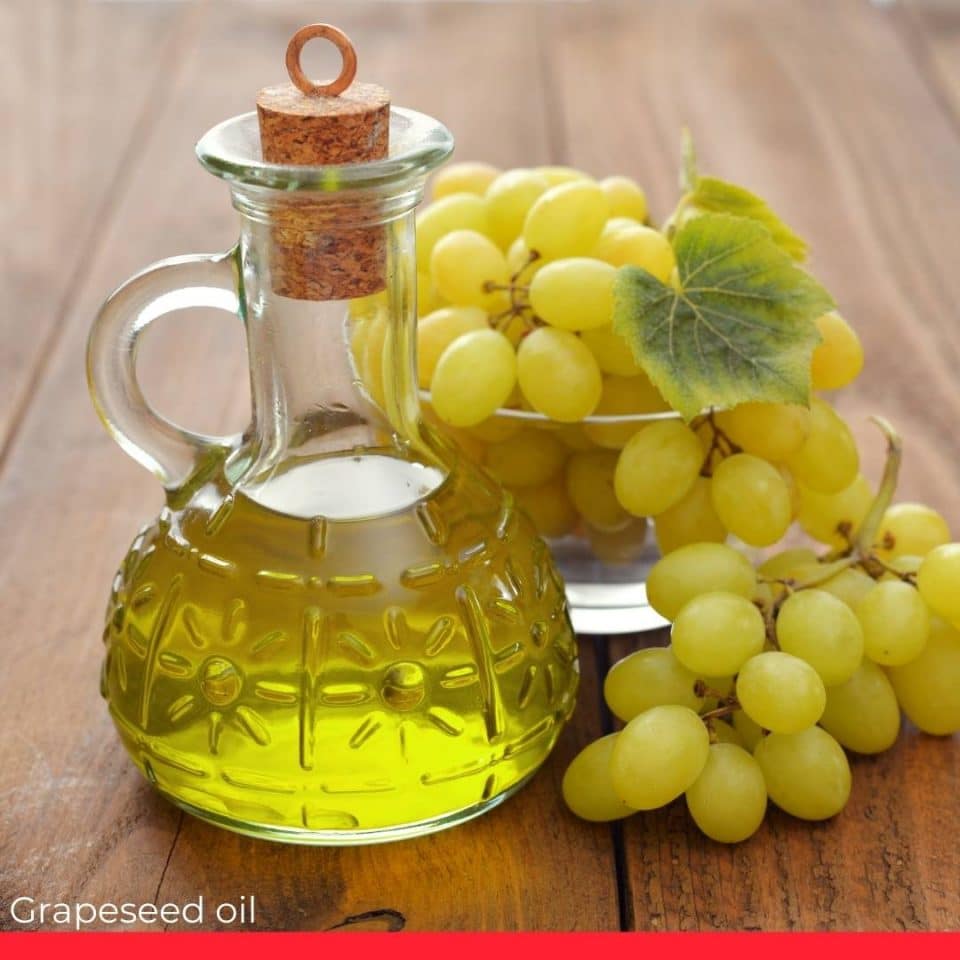
Grapeseed oil is a byproduct of winemaking, pressed from the seeds left over after grapes are crushed for wine, and it’s one of the more versatile neutral oils available. The smoke point sits around 215°C (420°F), high enough for most sautéing and frying applications, and the flavor is genuinely neutral with only the faintest hint of grape that’s imperceptible in most cooked dishes.
It has a light texture that makes it a good base for homemade mayonnaise and vinaigrettes, or as a drizzle over milder-flavored dishes, or anywhere where a heavier oil like olive would dominate, and it works well for high-heat cooking where you want the ingredients rather than the fat to do the talking. Its higher polyunsaturated fat content also means it has a shorter shelf life once opened.
Canola is a type of low-erucic-acid rapeseed developed for food use. Although the names are sometimes used interchangeably on cooking-oil labels, not all rapeseed oil meets the technical standard for canola.
The smoke point is around 200–230°C (400–450°F) depending on refinement, the flavor is neutral to the point of being almost invisible, and the price is low enough to make it the default everyday cooking oil in millions of kitchens. It works for frying, roasting, baking, and dressings without imposing any character of its own.
Refined sunflower oil is one of the most widely used cooking oils globally, valued for its high smoke point (around 225–230°C / 440–450°F), its neutral flavor, and its low cost. Like canola, it’s essentially invisible in finished dishes, which makes it reliable for frying, roasting, and baking where you want the ingredients to carry the flavor.
It’s high in vitamin E and relatively high in polyunsaturated fats, particularly linoleic acid. High-oleic versions, produced from a different sunflower variety, are more stable at high heat and increasingly common in commercial food production. The unrefined version has a pleasant, faintly nutty flavor but a much lower smoke point, putting it closer to a finishing oil than a cooking one.
Peanut oil has a smoke point around 230°C (450°F) for refined versions and a mild, clean flavor with just a faint nuttiness that’s barely perceptible in most cooked dishes. It’s the traditional frying oil of choice across much of East and Southeast Asia, where it’s used in woks for high-heat stir-frying, and in the American South, where it’s the preferred oil for deep-frying turkey.
Highly refined and unrefined peanut oils differ in the amount of residual peanut protein they may contain. Anyone with a peanut allergy should check the product label and follow the advice of their healthcare professional. Unrefined peanut oil retains a much stronger peanut flavor and a lower smoke point, placing it firmly in finishing oil territory.
Corn oil is extracted from the germ of corn kernels and has a neutral flavor and a smoke point around 230°C (450°F), making it a capable high-heat cooking oil for frying and roasting. It’s been a staple of American commercial cooking and food manufacturing for decades, and remains a common choice for deep frying in commercial kitchens.
The flavor is marginally less neutral than canola or sunflower, with a faint sweetness that’s detectable while cold but disappears entirely with heat. It’s high in polyunsaturated fats and relatively affordable, though it’s been largely displaced by canola and sunflower oils in home kitchens over the past few decades. It remains the oil of choice for making popcorn in many parts of the world, where that faint corn sweetness is actually a feature.
Rice bran oil is extracted from the outer layer of rice grains removed during milling, and it’s one of the more underappreciated high-heat cooking oils available. The smoke point is impressive at around 230–250°C (450–480°F), the flavor is mild and faintly nutty without being assertive, and the light texture makes it versatile across frying, stir-frying, roasting, and even salad dressings.
It is widely used in parts of South and East Asia, particularly for frying and stir-frying, where it’s valued for its stability at high temperatures and its relatively long shelf life.
Untoasted sesame oil, sometimes labeled simply as “sesame oil” or “light sesame oil” to distinguish it from its toasted counterpart, has a smoke point around 210°C (410°F) and a flavor that’s considerably more neutral, with only a faint, clean nuttiness.
It’s used in East and Southeast Asian cooking as a general-purpose cooking oil for stir-frying and sautéing, seafood, and dishes where its mild character adds a subtle background note without the intensity that toasted sesame oil would bring. In Korean cooking it’s used both for cooking and as a light finishing oil, often combined with other seasonings in marinades and namul. The difference between this and toasted sesame oil is significant enough that the two are not interchangeable. Toasted sesame burns at cooking temperatures, while this version handles heat much better.
Extra virgin olive oil is obtained directly from olives using mechanical or other physical methods, without chemical refining. Its flavor varies enormously according to the olive variety, origin, ripeness, and production method, ranging from mild and buttery to grassy, peppery, and intensely fruity.
Its smoke point varies with quality and freshness, but good extra virgin olive oil is suitable for sautéing, roasting, and many other everyday cooking methods, as well as dressings and finishing. For very high-volume frying, however, its price and pronounced flavor may make a refined oil more practical.
Unrefined coconut oil (also labeled virgin or extra virgin) retains everything that refining removes: the aroma, the flavor, and the character of the coconut itself. The smoke point is low at around 175°C (350°F), which rules it out for high-heat cooking, but in applications where coconut flavor is welcome it’s a genuinely useful fat.
It works well in baking, smoothies, raw desserts, and Southeast Asian dishes where coconut is already part of the flavor profile. It’s solid at room temperature and melts quickly on contact with heat, which affects how it behaves in baking recipes designed for liquid oils or butter. The nutritional debate around its high saturated fat content is ongoing, but as a flavor ingredient used in moderation it has a clear and legitimate place in the kitchen.
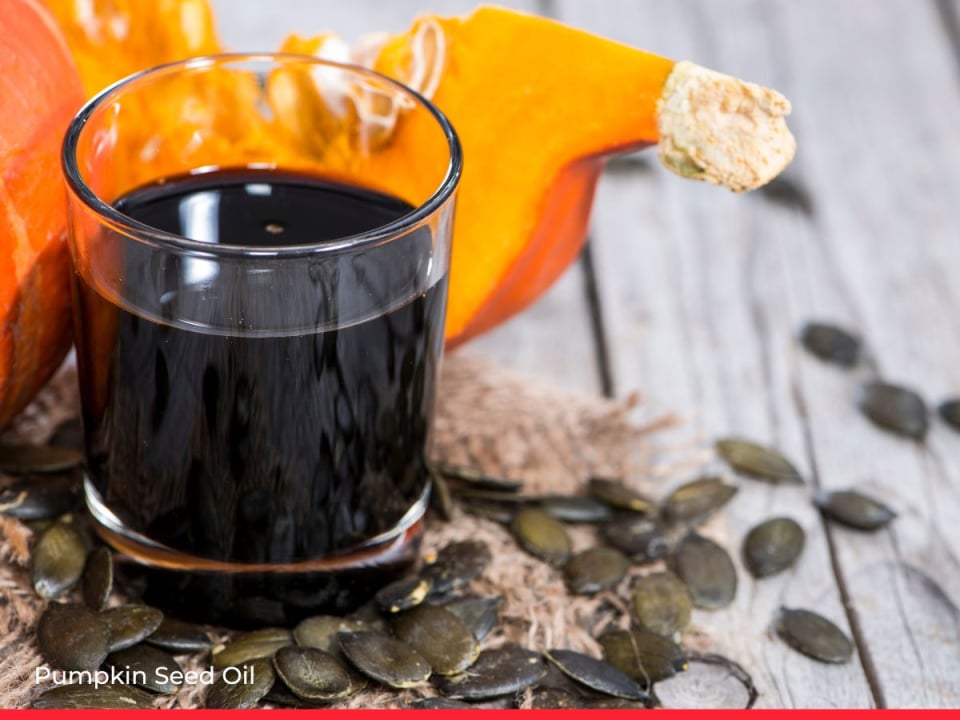
Pumpkin seed oil is immediately recognizable by its deep, dark green color, which can look almost black in the bottle. Its flavor varies noticeably from one product to another: oils made from roasted pumpkin seeds can be intensely toasty and nutty, while others are milder, smoother, and more restrained. That variation is part of what makes pumpkin seed oil so distinctive, and it is worth tasting different bottles to find the style you prefer.
It’s produced primarily in Austria and Slovenia, where it carries protected geographical status in Styria, and it’s deeply embedded in the food culture of that region.
The smoke point is low at around 160°C (320°F), so it’s best used cold or as a finishing oil. A drizzle over pumpkin soup is the classic application, but it also works beautifully over vanilla ice cream, in salad dressings, and as a finishing touch on roasted vegetables. It’s expensive relative to most oils, but a little goes a long way and the flavor is genuinely distinctive.
Toasted sesame oil is one of the most instantly recognizable aromas in Asian cooking, made by pressing sesame seeds that have been roasted before pressing. The result is a dark, intensely fragrant oil with a deep, nutty richness that transforms even a small amount of food. The smoke point is low at around 170°C (340°F), so it burns quickly and should generally not be used for frying or high-heat cooking.
It is primarily used as a finishing oil and flavoring agent: stirred into dressings, drizzled over noodles, added at the end of a stir-fry, or used as a seasoning in marinades and dipping sauces. A few drops go a long way. It pairs particularly well with soy sauce, ginger, garlic, and chili, which is why it appears so consistently across Japanese, Korean, and Chinese cooking.
Walnut oil has a distinctive flavor that’s immediately recognizable: rich, slightly bitter, and deeply nutty in a way that’s more complex than most nut oils. It’s almost exclusively a finishing oil, with a low smoke point around 160°C (320°F) that makes it unsuitable for cooking.
Cold, it shines in salad dressings (particularly with bitter greens like endive and radicchio), drizzled over roasted beets or goat cheese, or used to finish pasta dishes where its nuttiness can actually be tasted. It pairs well with aged cheeses, walnuts (naturally), apple, pear, and robust vinegars like sherry. Walnut oil goes rancid relatively quickly due to its high polyunsaturated fat content, so buying it in small quantities and storing it in the fridge is worth the habit.
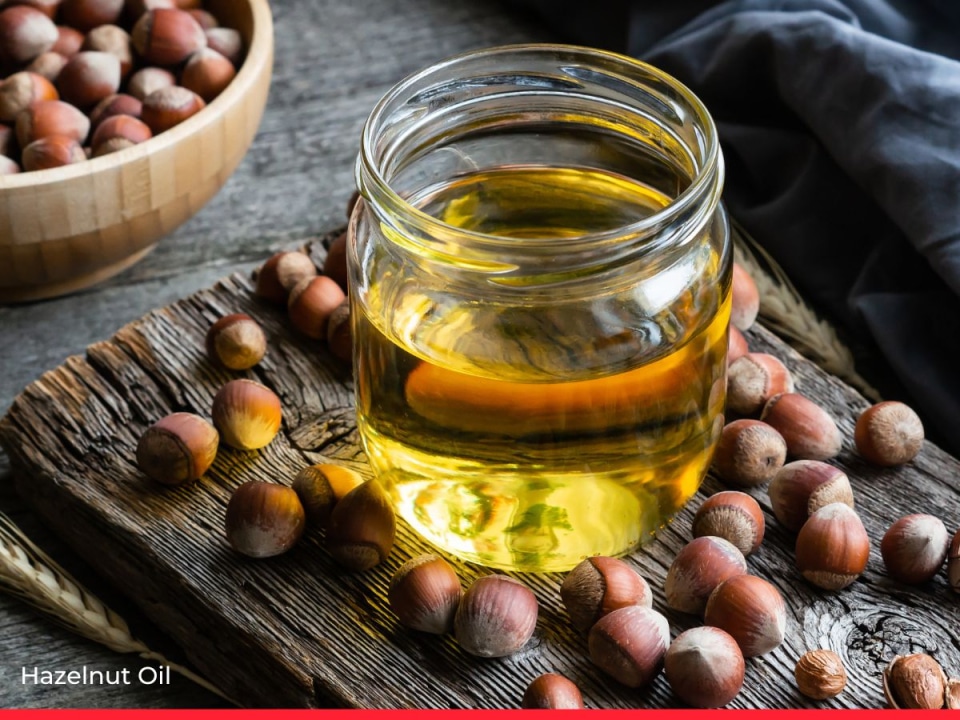
Hazelnut oil is one of the more elegant finishing oils available, with a smooth, gently sweet nuttiness that’s less assertive than walnut oil and more refined than most seed oils. The smoke point is around 220°C (430°F) for refined versions, though most hazelnut oil sold for culinary use is unrefined and should be treated as a finishing oil.
It pairs naturally with chocolate (the combination is essentially the flavor of gianduja), works beautifully in baking where a subtle nut flavor enhances without dominating, and makes an excellent base for vinaigrettes alongside champagne or white wine vinegar. It’s particularly good drizzled over roasted asparagus, green beans, or salads with soft goat cheese. Like walnut oil, it goes rancid relatively quickly and benefits from refrigerated storage once opened.
Flaxseed oil (also called linseed oil) occupies an unusual position in the kitchen. It’s one of the richest plant sources of omega-3 fatty acids, which is the primary reason most people buy it, but its culinary applications are genuinely limited. The smoke point is very low at around 107°C (225°F), so it is best used cold and is not suited to frying or sustained high-heat cooking.
It’s used cold, typically stirred into smoothies, drizzled over cottage cheese, added to dressings, or mixed into yogurt. It goes rancid faster than almost any other oil and must be refrigerated and used quickly.
Culinary argan oil is a different product from the cosmetic version that most people are more familiar with, and it’s worth making that distinction clearly. Food-grade argan oil is made from roasted argan kernels, which gives it a warm, nutty, toasty flavor with a richness that’s been compared to a combination of sesame and hazelnut. It’s produced exclusively in Morocco, where it’s used as a finishing oil and condiment rather than a cooking fat. The smoke point is low at around 160°C (320°F).
Drizzled over couscous, tagines, salads, and dips, or mixed with honey and almonds into amlou (a traditional Moroccan spread), it adds a distinctly North African character. It’s expensive and available mainly in specialty stores, but for anyone cooking Moroccan food seriously it’s worth having on the shelf.
Butter is the most familiar cooking fat in the Western kitchen, made by churning cream until the fat separates from the buttermilk, and its flavor is the benchmark against which most other fats are measured.
The smoke point is relatively low at around 150°C (300°F) for whole butter, because the milk solids burn before the fat itself does. This limits its use for high-heat cooking, though clarifying it (removing those milk solids) raises the smoke point considerably. Where butter excels is in flavor: it’s essential for croissants and puff pastry, where it creates those distinctive flaky layers; for beurre blanc and hollandaise, where it forms the backbone of the sauce; and for finishing risotto, pasta, and pan sauces, where a cold knob stirred in at the end adds gloss and richness. European-style butters with higher fat content (82-84%) behave differently from standard varieties in baking, producing flakier pastry and more tender crumbs.
Brown butter, made by cooking it until the milk solids caramelize, is one of the most useful and transformative things you can do with a basic ingredient.

Ghee is butter that has been slowly cooked until all the water evaporates and the milk solids are removed, leaving behind pure butterfat with a nutty, caramel-like depth that regular butter doesn’t have. The smoke point rises dramatically to around 250°C (480°F) as a result, making it one of the more capable high-heat animal fats available.
It’s a cornerstone of Indian cooking, used for everything from tempering spices to making dal, biryani, and sweets, and it carries deep cultural and religious significance in South Asian food traditions. It’s shelf-stable at room temperature for extended periods, which is part of why it developed as a preservation method in hot climates before refrigeration.
Lard has had a long and somewhat undeserved reputation problem in the post-war era, when vegetable shortening displaced it in Western kitchens on health grounds that have since been considerably complicated by the evidence on trans fats. It’s rendered pig fat, and the best versions (particularly leaf lard from around the kidneys) are remarkably clean-tasting, with a neutral flavor and a smoke point around 190°C (375°F).
Its real reputation rests on pastry: lard produces the flakiest, most tender pie crusts, cookies and biscuits of any fat, a quality bakers who know it well will defend enthusiastically. It’s also excellent for frying, roasting potatoes, and cooking any dish where you want richness without a strong animal flavor. Traditional cuisines across Europe, Latin America, and Asia have relied on it for centuries, and its rehabilitation in serious cooking circles has been well underway for some time.
Duck fat is the most culinarily celebrated of the rendered poultry fats, and its reputation is well earned. It has a smoke point around 190°C (375°F), a rich, savory flavor with a subtle gamey depth, and a silky texture that coats ingredients beautifully. Its most famous application is confit duck, where the legs are slowly cooked submerged in their own fat, but its real everyday value is in roasting potatoes.
Duck fat-roasted potatoes have a crispness and flavor that vegetable oils simply don’t produce, and this alone justifies keeping a jar in the fridge. It also works beautifully for sautéing vegetables, cooking eggs, and making pastry. It keeps well refrigerated for weeks, and saving the fat from a roasted duck is one of the most worthwhile kitchen habits you can develop.
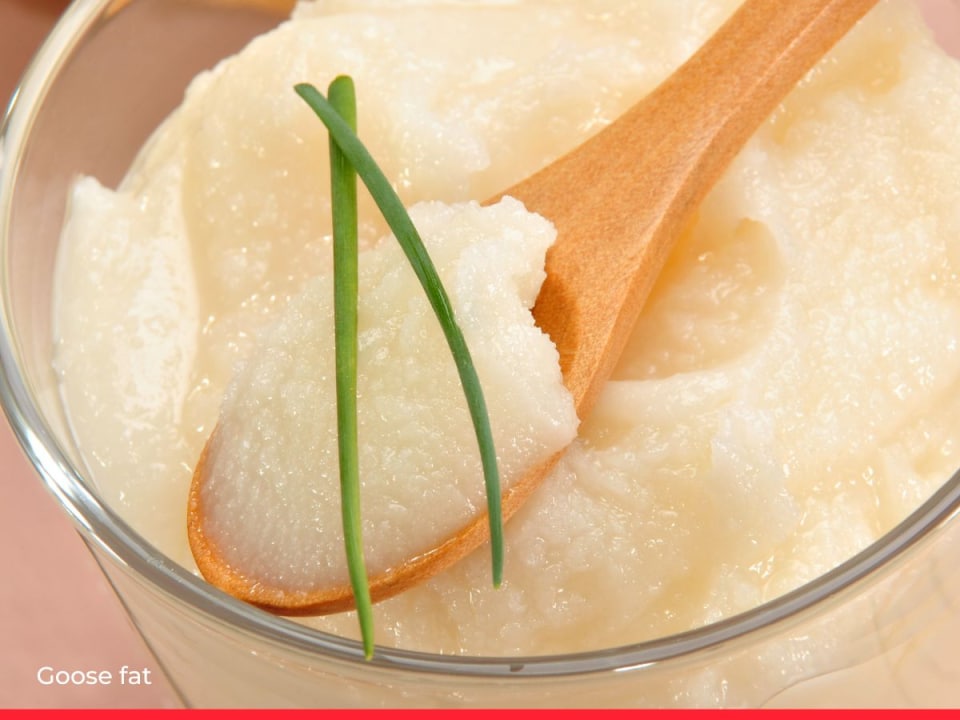
Goose fat is the richer, slightly more intensely flavored cousin of duck fat, with a similar smoke point around 190°C (375°F) and an even more luxurious texture. It’s rendered from the considerable fat reserves of a goose, which produces significantly more fat per bird than a duck, and it has a long tradition in Central and Eastern European cooking where roast goose is a festive staple.
Like duck fat, its most celebrated application is roast potatoes, where it produces an exceptional result. It also appears in traditional French confit preparations and is used in British Christmas cooking, where jars of goose fat have become a seasonal staple in supermarkets. The flavor is milder and less gamey than you might expect, making it more versatile across different dishes than its provenance might suggest.
Tallow is rendered beef (or sometimes mutton) fat, and it was the dominant frying fat in much of the Western world before vegetable oils took over in the 20th century. The original McDonald’s French fries were cooked in tallow, and many people who remember them maintain they were considerably better as a result.
The smoke point is high at around 250°C (480°F), the flavor is rich and distinctly beefy, and the fat is solid at room temperature with a waxy texture. It’s excellent for deep frying, roasting potatoes, and cooking any dish where its flavor is an asset rather than a distraction. It’s also shelf-stable and keeps well. Beef suet (the raw fat from around the kidneys) is the unrendered version, used directly in British cooking for suet pastry and steamed puddings.
Schmaltz is rendered chicken fat, a cornerstone of Ashkenazi Jewish cooking, and one of those ingredients that people who grew up eating it tend to be fiercely loyal to. The name comes from the Yiddish word for fat, and the rendering process typically includes onions cooked slowly in the fat, which adds a savory sweetness to the finished product.
The smoke point sits around 190°C (375°F). It’s used for frying, sautéing, and as a spread on bread (often with gribenes, the crispy chicken skin cracklings left over from rendering). Matzah ball soup, chopped liver, and knishes all traditionally use schmaltz. The flavor is rich, savory, and distinctly chickeny in the most comforting possible way. It’s less widely available than duck fat or lard outside Jewish delis and specialty stores, but easy to make at home from chicken skin.
Red palm oil is extracted from the fruit of the oil palm tree, and its most immediately striking quality is its color: a deep, vivid orange-red that stains everything it touches, coming from an exceptionally high concentration of beta-carotene. The smoke point sits around 200°C (390°F), making it suitable for cooking, and the flavor is distinctive and polarizing: earthy, slightly savory, with a richness that’s unlike any other vegetable oil and that tends to divide people cleanly into fans and non-fans.
It’s a foundational ingredient in West African and Brazilian cooking, essential to dishes like jollof rice, egusi soup, and moqueca, where its flavor and color are part of the dish’s identity rather than just background fat. It’s worth distinguishing from refined palm oil, which is colorless, flavorless, and the version used extensively in processed food manufacturing.
Mustard oil is pressed from mustard seeds and has a flavor profile that announces itself immediately: sharp, pungent, and intensely spicy when raw, mellowing considerably when heated to its smoke point of around 250°C (480°F). In India, Bangladesh, and Pakistan, it’s one of the most important cooking oils in regional cuisines, used for frying, pickling, and tempering spices, and the practice of heating it to smoking point before adding other ingredients is specifically designed to take the edge off its raw pungency. In Eastern Europe, particularly in parts of Russia and Ukraine, it appears in traditional cooking as well.
In the United States, expressed mustard oil may be subject to import restrictions because of its erucic acid content and is often labeled for external use. The European Union regulates maximum erucic acid levels in edible oils and foods. Availability and labeling therefore vary considerably by market.
Camellia oil, pressed from the seeds of the tea plant (Camellia sinensis) or its ornamental relatives, is one of East Asia’s oldest and most prized cooking oils, with a history of use in China and Japan stretching back centuries.
The smoke point is impressive at around 220°C (430°F), and the flavor is remarkably delicate: light, clean, and faintly grassy with a subtle sweetness that makes it versatile across both cooking and finishing applications.
In China it’s used for stir-frying, dressings, and as a finishing drizzle, and it’s sometimes compared to a lighter, more neutral version of olive oil in terms of its versatility. In Japan, where it’s known as tsubaki oil, it appears in traditional cooking and has also been used for centuries in hair and skin care. It’s high in oleic acid, giving it good stability and a reasonably long shelf life, and it’s increasingly available in Western specialty food shops as interest in East Asian cooking traditions grows.
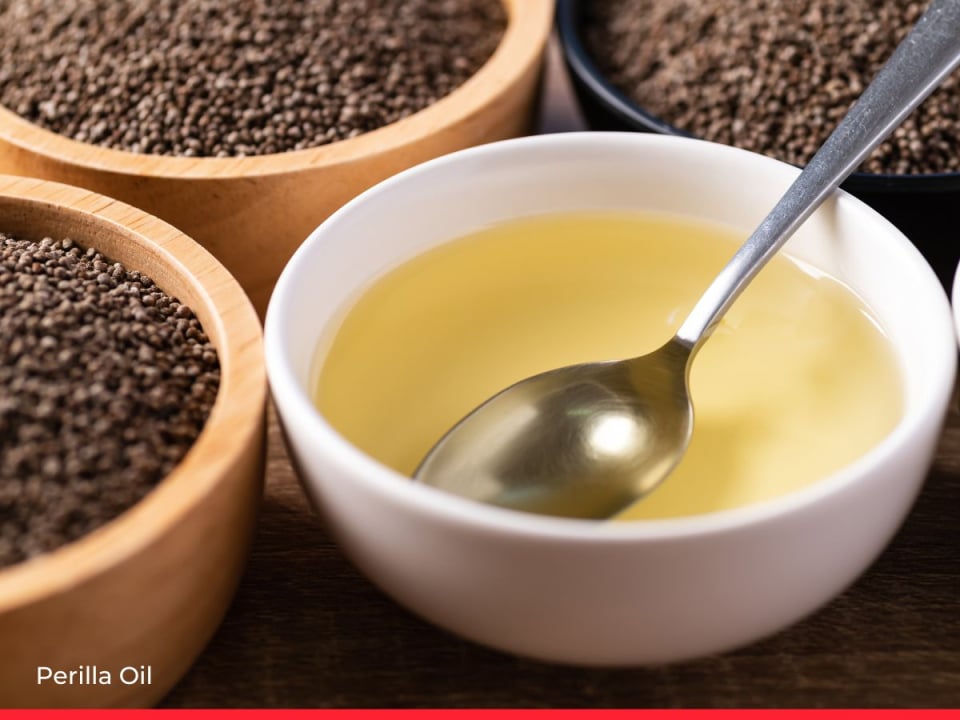
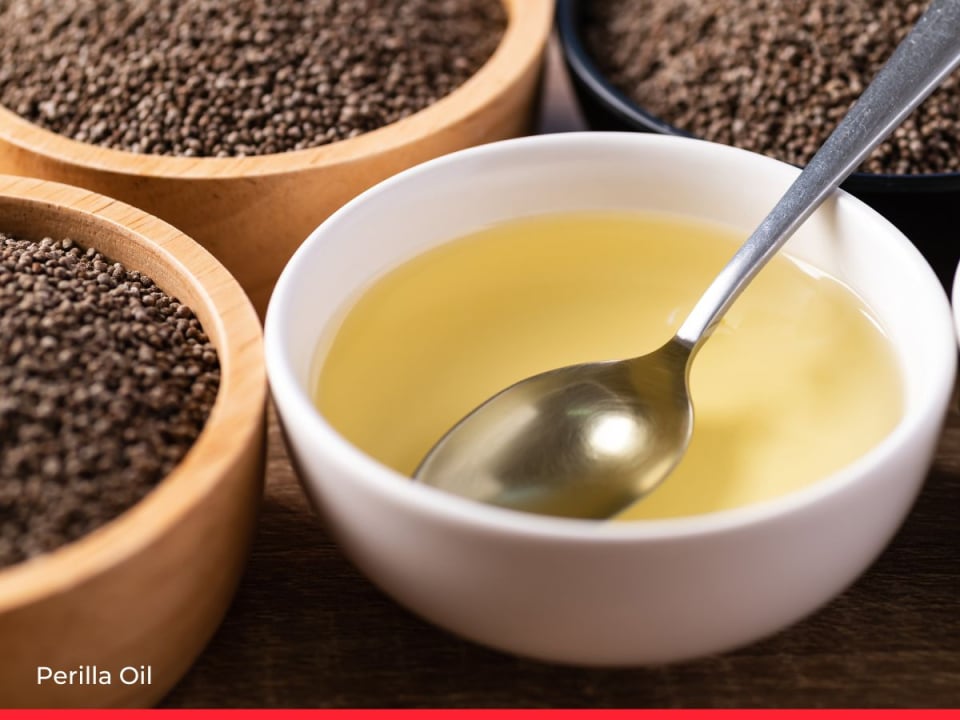
Perilla oil is pressed from the seeds of the perilla plant, a herb closely related to shiso and widely used across East Asian cooking. It has one of the most distinctive flavor profiles of any cooking oil: intensely nutty and aromatic, with a faint herbal quality that reflects its botanical origins.
Its low smoke point, around 160°C (320°F), makes it best suited to finishing rather than high-heat cooking. Perilla oil is particularly important in Korean cuisine, where it is used in dressings, namul (seasoned vegetable dishes), and as a finishing drizzle over rice, noodles, and other dishes. Chef Aaron Chang of Nōksu in New York told Chef’s Pencil that, alongside good-quality gochujang, doenjang, and ganjang, high-quality perilla or sesame oil can make a noticeable difference in home-cooked Korean food, bringing the aromas together and making even simple dishes feel more special.
Perilla oil is also notable for its exceptionally high omega-3 content, which contributes to its relatively short shelf life once opened. Refrigeration and prompt use are recommended. Its flavor is pronounced enough that a small amount goes a long way, and it pairs especially well with soy sauce, sesame, garlic, and ginger.
Related: 20 Types of Vinegar and Their Best Culinary Use
Related: 33 Types of Sugar and How to Use Them
Related: 35 Types of Honey: Flavors, Origins & How to Use Them
Related: 15 Types of Squash & Pumpkin and How to Cook Them
Related: 23 Types of Rice and When to Use Them