Photos courtesy the author.
This story is part of our ongoing series From the Ground Up, a collaboration between Narratively and ScottsMiracle-Gro exploring the lives, memories, and connections rooted in the yards, fields, and green spaces we call home.
We didn’t mean for it to become anything serious. Just a pastime, we said.
At first, it was just grass. A wide, open patch of green that separated the building for the senior high school kids and the one for us first-year college students. It hosted a big sundial in the middle, framed by trees that filtered the afternoon light into something cinematic enough to make us feel like main characters, because we believed we were. We went there because it was convenient, because it was open, because people passed through. We went there because you could see everything from that spot.
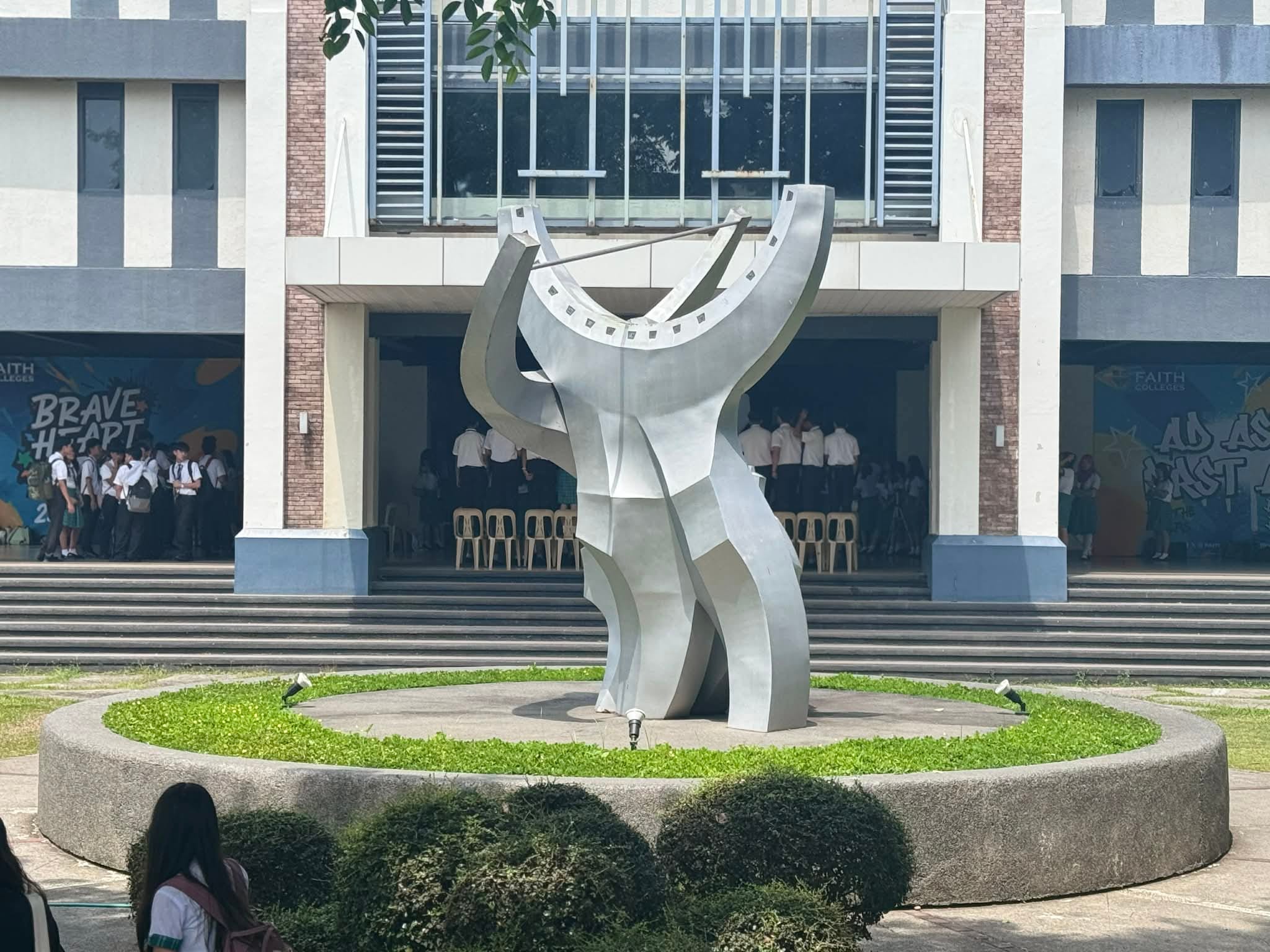
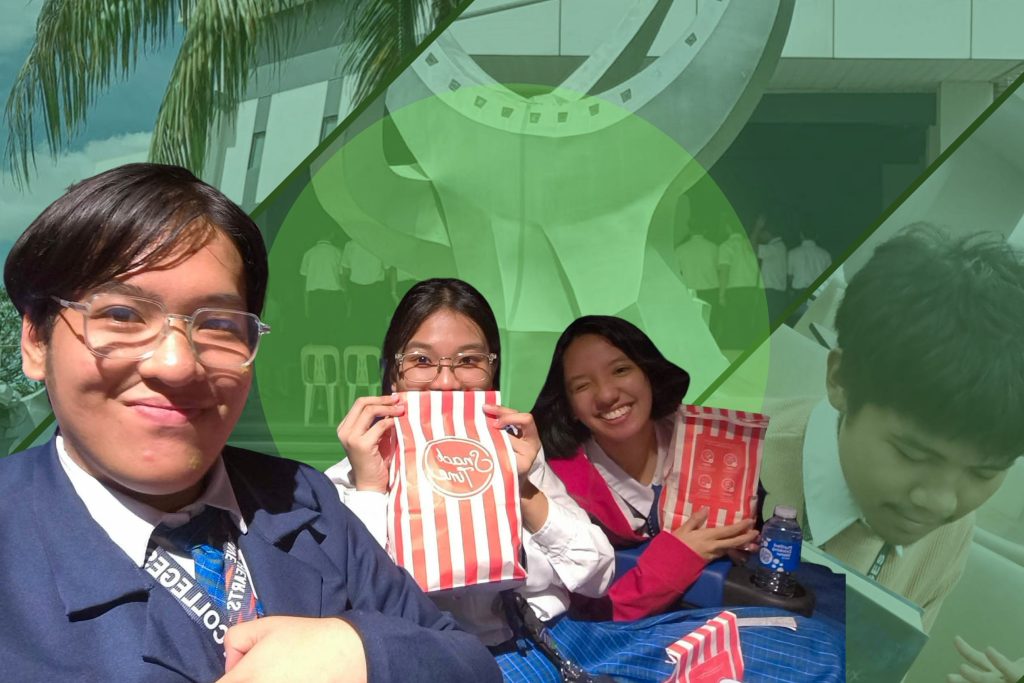
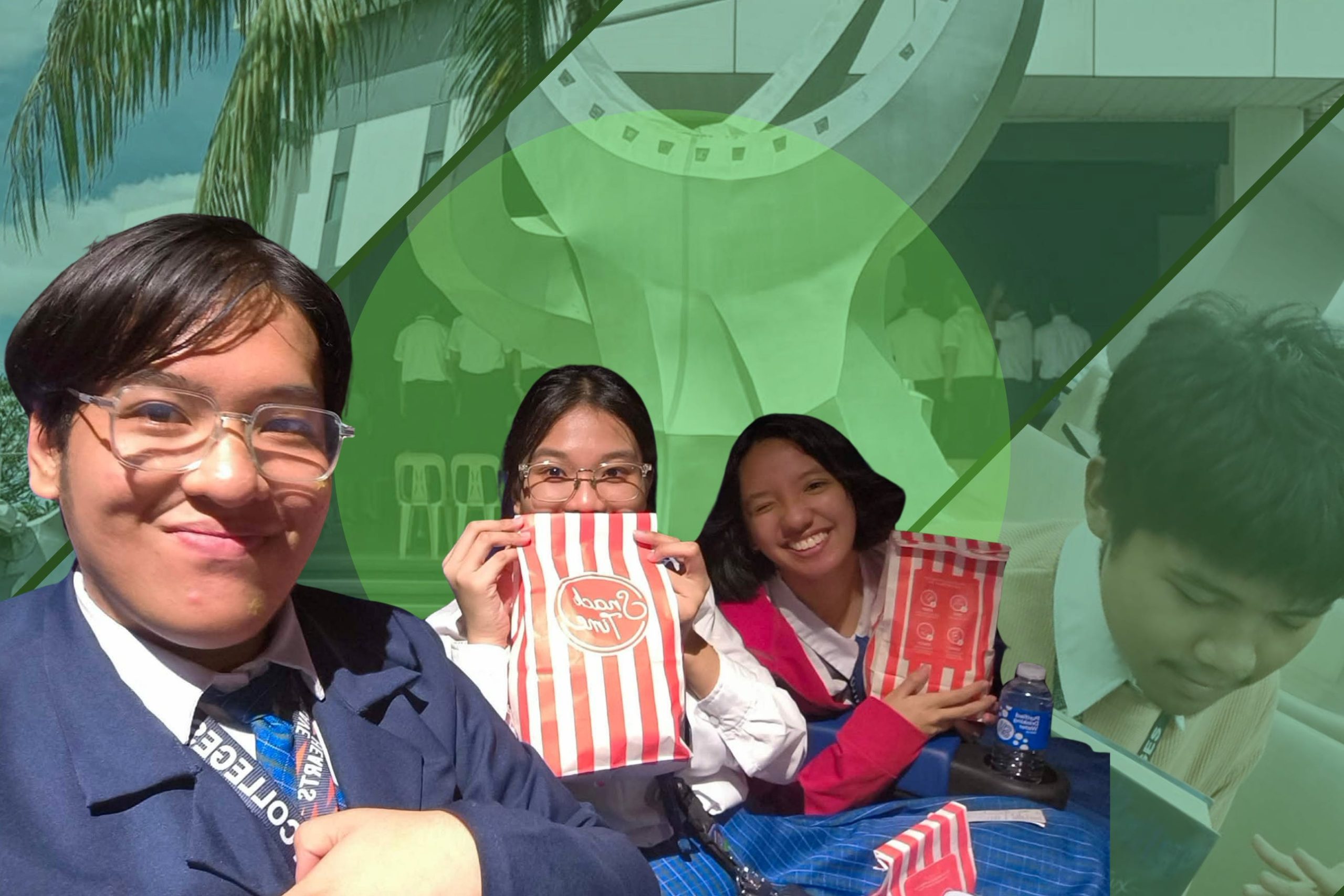
The patch of grass where the author would people-watch between college classes.
“Teh,” Kia whispered, using the Tagalog word for “sis,” and nudging me with her elbow. “May pogi dun (There’s someone handsome there).”
I didn’t look right away. You never look immediately. Looking too fast meant you cared too much and I didn’t want to look desperate.
“Saan? (Where?)” I asked, eyes pretending to be still glued to my phone.
“By the stairs. Blue shirt. Messy hair. Nerdy look. Mukhang single (Looks available).”
I finally glanced up, slow and casual, like I wasn’t already constructing a fictional personality for a stranger I would never speak to.
Ian sighed beside us, dramatic, exhausted yet weirdly happy in a way only someone forced to witness our nonsense daily could be.
“Madam naman,” he said. “Pwede bang maging normal tayo for once? (Can we please be like normal students for once?)”
Mikah, lying flat on the grass like she had been placed there intentionally by the universe, didn’t even open her eyes.
“No, bro,” she said calmly. “Culture na natin toh (It’s our culture).”
Charrie looked up from her phone, assessed the scene for exactly two seconds, then deadpanned, “What the f—,” before returning to whatever world she was scrolling through. She was always unbothered.
That was us. That was the ritual. We called it “pogi-hunting” — half-joking, half-serious, like naming this pastime after the “handsome” boys we were ogling made it less embarrassing.
We would sit there between classes or during breaks, pretending to rest while scanning the horizon for new crushes — boys we would talk about for 10 minutes and then forget by sunset. It was unserious and loud and full of laughter that didn’t care who heard it. A lot of people heard it —
Cough.
We came there to look outward. At people. At possibilities. At distractions. None of us admitted it then, but we also came because it felt better than going home. The grass was always warm in the afternoon, heat rising through our uniforms, grounding us.
People passed by — some familiar, some not — and every so often someone would wave or shout a name. “Oy, Edward! Bakit kayo nandyan?! (Why are you here?!)” It was public enough to feel alive, private enough to feel like ours. No one told us to leave. No one asked what we were doing. Whenever we were free, whether it was before our first class, during break or after dismissal, we were allowed to exist there without explanation.
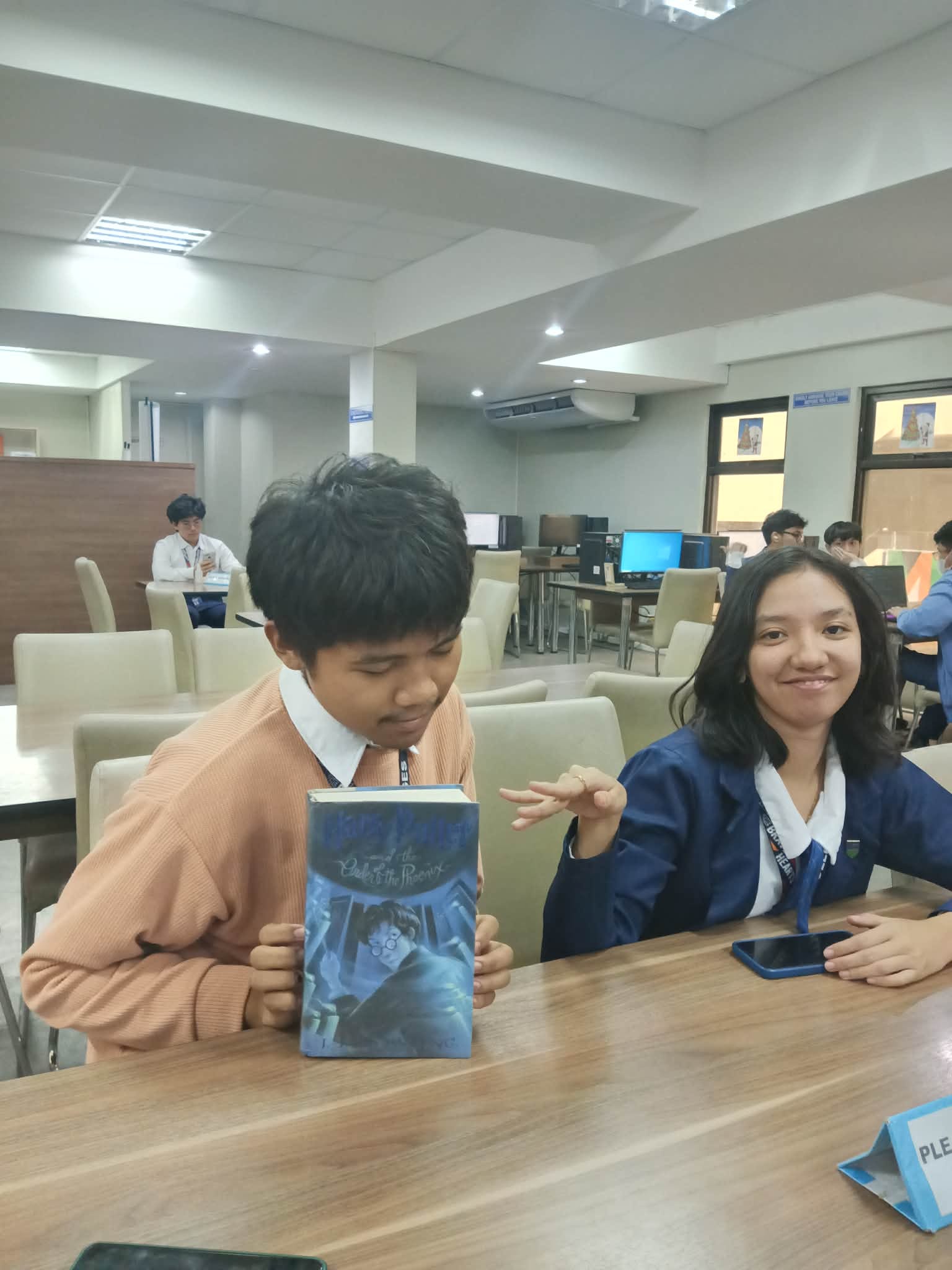
The author, left, with a friend from the “pogi-hunting” crew, on campus.
At first, our conversations stayed light.
“Rate him,” Kia would say, already opening her camera app to zoom in discreetly.
“Seven,” I’d reply. “Eight if he has trauma. 10 if he’s straight and will play with my heart.”
Ian would groan. “You people…”
Charrie would mutter nonchalantly, “Lucifer is watching,” without looking up.
We laughed easily then. We were still at the start of our journey of adulthood, being 18 and all. Our laughter was honestly performative, sharp-edged, meant to fill space. The laugh that sounded like we were on substances, which we were not. We didn’t know yet how to sit in silence together. Silence felt like something dangerous, something that would force us to talk about things we weren’t ready to name.
But days have a way of repeating themselves until repetition turns into familiarity, and familiarity turns into comfort.
We kept coming back. We even had a name, C5. The C came from the first letter of the cafe across the street, where we would stop for drinks before going back to our spot. Five for the five of us.
Even on days when there were no pogi sightings worth reporting. Even when the grass was damp and left stains on our clothes. Even when the weather seemed to be wanting us to not go.
Even when our phones were dead and we had nothing new to say.
Somewhere along the way, the space stopped being just a lookout point. It became a waiting room.
For results. For messages. For clarity. For hope. For versions of ourselves we dreamed would arrive eventually.
“Pagod na ako (I’m tired),” Kia said one afternoon, her voice flatter than the usual charm it had.
She lay back, arms spread wide, staring at the sky. “If I fail this subject, I swear, I’ll simply disappear.”
Nobody laughed.
Ian picked at the grass, pulling blades loose one by one. “You won’t,” he said quietly. “You’re too loud to vanish.”
Mikah shifted beside us, finally sitting up. “We’ll figure it out,” she said, not dramatic, not forced.
Just certain. “We always do.”
That was the first time I noticed the shift.
The jokes didn’t disappear, but they softened around the edges. We still talked about boys, but now it was accompanied with complaints about deadlines, about money, about families who didn’t understand why we were so tired all the time. The grass listened. The trees watched. The space held us without comment.
I started to associate that place with relief.
After exams, we would collapse there, bodies heavy, minds buzzing. Sometimes someone brought food, sometimes no one did, and we would joke about it while still sharing what little we had. Kia always forgot utensils. Ian always complained but still ate. Mikah never asked for anything and somehow always ended up being the one we leaned on. Charrie said the least but noticed the most.
There were afternoons when we barely spoke at all.
We’d sit shoulder to shoulder, watching the sky change color, the building cast longer shadows.
Phones would come out, then go back into bags. Someone would sigh. Someone would hum.
Someone would sing obnoxiously loud. The world moved around us, but we stayed.
It can begin as a joke and deepen without ceremony. It can form not through declarations, but through consistency — showing up, again and again, even when there’s nothing special happening.
“Remember when this was just pogi-hunting?” I said once, laughing. Kia snorted. “True but we changed.”
Ian smirked. “No, hindi kayo nagbago. (No, you haven’t changed.)” Mikah smiled, eyes on the sky. “But at least we’re together bro.”
Charrie nodded. “Character development.”
There were days when one of us didn’t show up, and the space felt off-balance. We’d glance at the path instinctively, waiting. Sometimes the missing presence came with an explanation, sometimes it didn’t. Either way, the absence was felt.
I think that’s when I understood it wasn’t just the place anymore.
It was the people.
The space didn’t just hold our laughter; it held our transitions. Our growth. We arrived there as kids performing specific versions of ourselves, and slowly became people who didn’t have to.
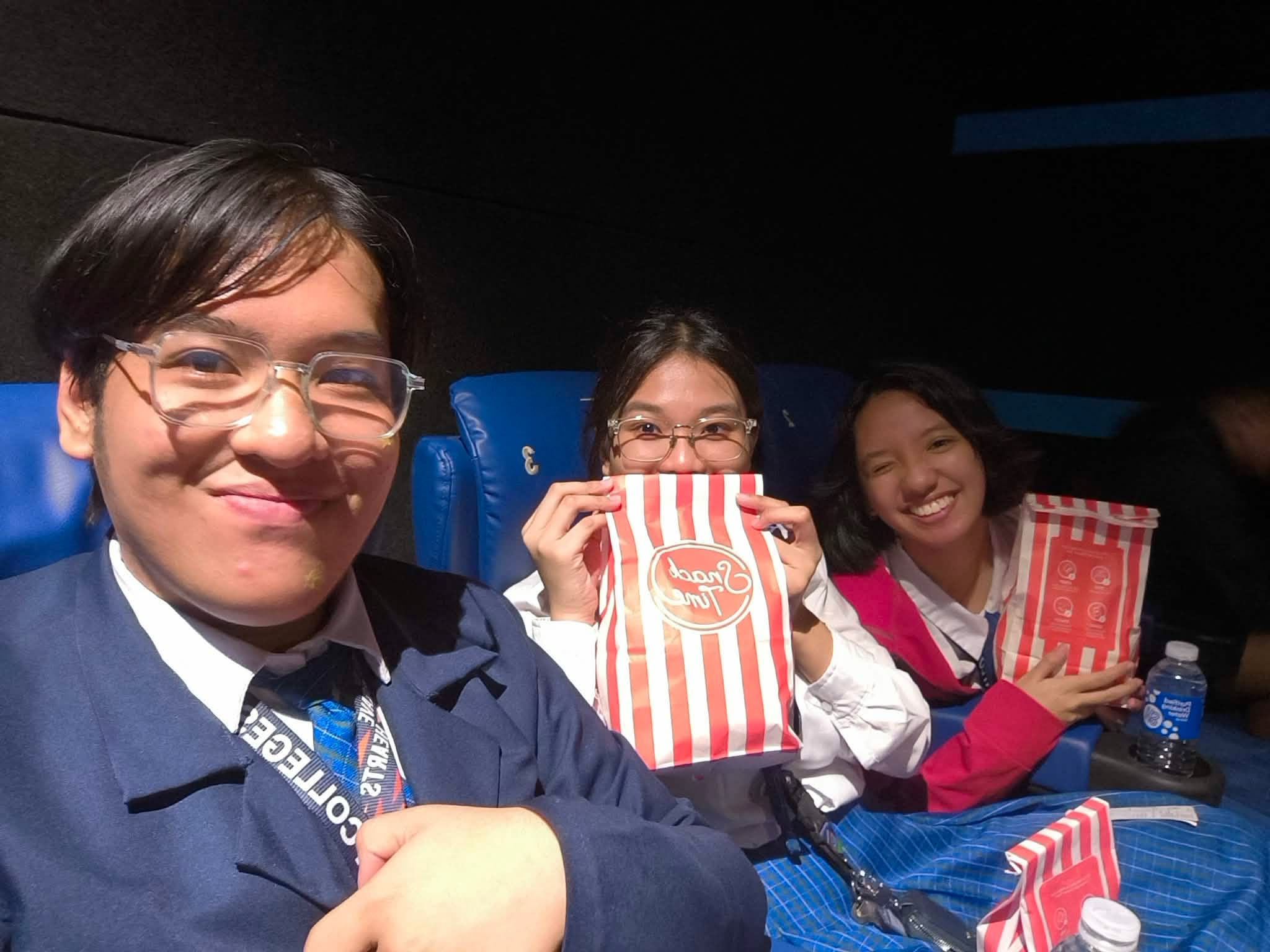
The author, left, and friends, together.
I remember one afternoon in particular: No jokes. No commentary. Just us sitting there as the sun dipped lower.
“Sis,” Kia said softly, breaking the silence. “Wala na masyadong pogi, no? (There aren’t many handsome guys, no?)”
Ian leaned back on his hands. “Finally,” he said. “Peace.”
Charrie looked around at all of us, then at the grass, the trees, the building looming quietly behind us.
“This is better,” she said. “This is enough.”
Nobody argued.
I think about that moment a lot now, a year later, even after I’ve moved countries. About how we didn’t need to name what we were becoming. We just stayed long enough for it to settle into us.
Somehow, without planning it, without naming it, that patch of grass became part of who I am — woven into my sense of home, my understanding of love, my belief that belonging doesn’t always come from where you start, but from where you choose to sit down and stay.
That space is still there. People still pass through it. New students sit on the grass, probably for reasons just as unserious as ours once were. They laugh too loudly. They scan the horizon.
They think they’re just killing time. I want to tell them to pay attention.
Not because the place is magical, but because moments like that don’t announce their importance until they’re already memories. Because one day, you’ll look back and realize that the place you went to look for something fleeting gave you something lasting instead.
We came there to look for boys.
We stayed because we found each other.