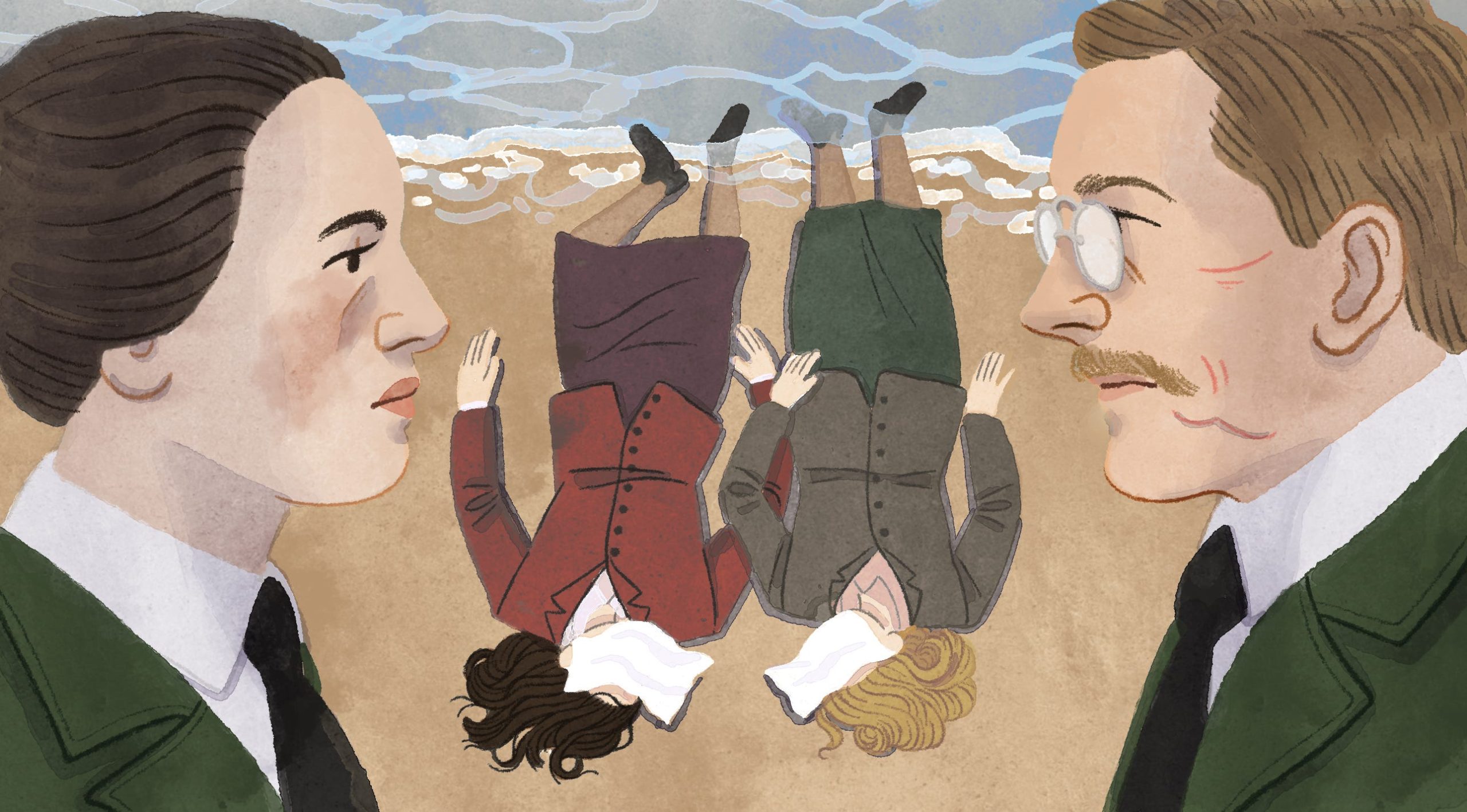
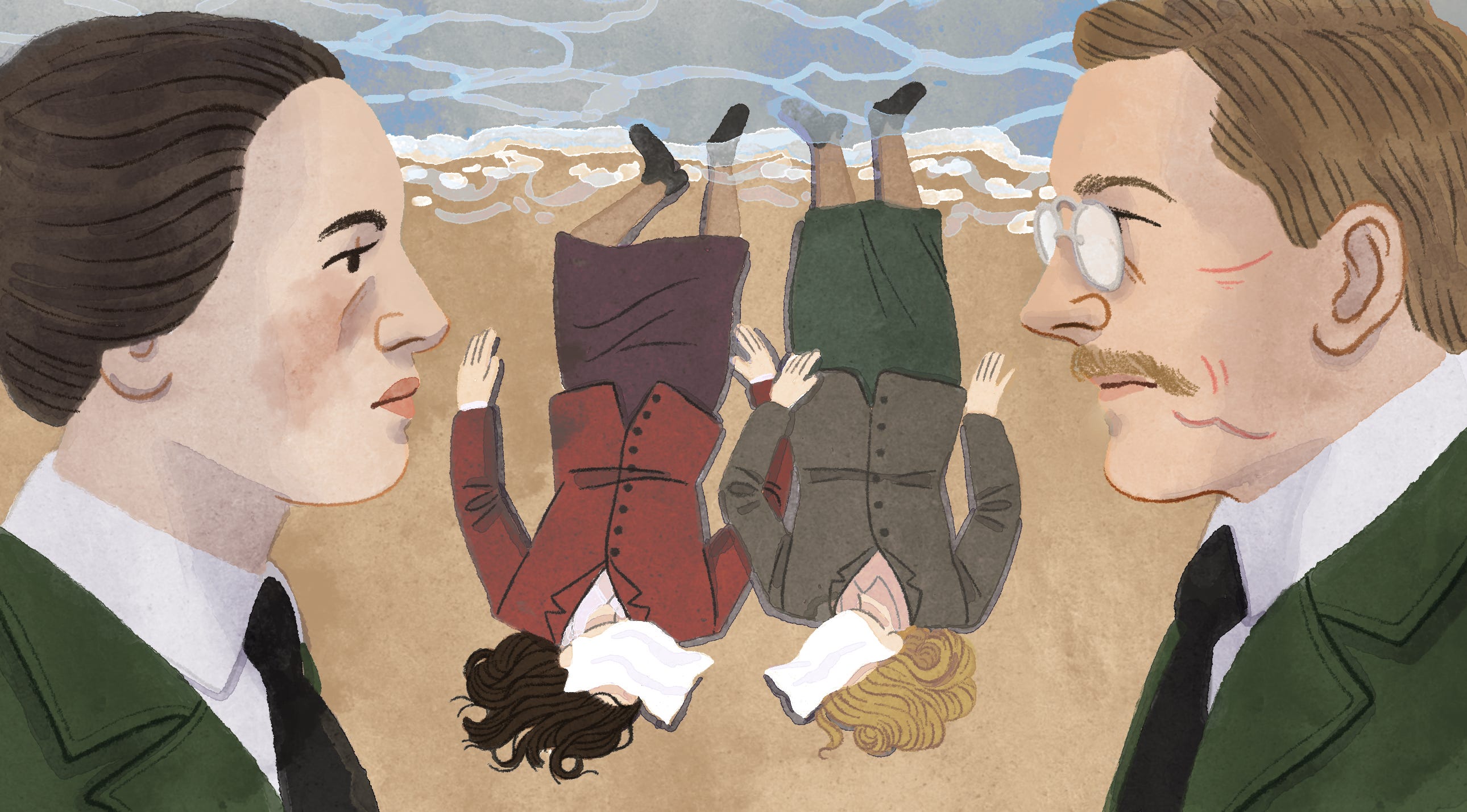
It’s a perfect summer day, one that brings tourists from the mainland to the small island of Pellworm off the German coast. Two women move across the grassy marshland. But they are so far away from Pellworm’s cafés and swimming spots that nobody would mistake them for tourists. Instead of bathing costumes, they wear their formal city clothes — long dark skirts, tight-fitting jackets, heavy shoes — out of place on a holiday island. They carry overnight bags in their hands, yet they are heading for the island’s most remote corner, where neither hotels nor ferries await them. There is something about the way they hold themselves. Something is not quite right.
Apart from a herd of sheep nearby and the seagulls above, they are alone. The sea stretches ahead of them, a calm blue. For the women, this is the perfect place to leave the intrigues, the fights, the accusations and the whispers behind. To forget about those they loved and those they hated. To end their story.
The taller of the two turns to her companion. She seeks out her hand, and their fingers intertwine. Together they lay down on the salt-crusted grass.
“The female inspector Dopfer and the female senior police officer Fischer, two unusually diligent officials, had left their place of work last week and, in a letter to deputy police president Dr Schlanbusch, announced that they planned to commit suicide on the North Sea island of Pellworm.”
—Article in the Vossische Newspaper, July 10, 1931
By the time the first blades of grass had grown on the hastily dug graves of Maria Fischer and Therese Dopfer, something far larger than them had ended. The deaths of these two women set off a dark swirl of cover-ups, accusations and intrigue that spread from harbor bars and backstreets all the way to the highest offices in the country.
In 1927, four years before their bodies would be found on the shores of Pellworm, Therese Dopfer and Maria Fischer arrived in Hamburg to join a new kind of police force. They were in their 30s; both were experienced social workers, both had recently received police training. For years, they had worked with children, young people and women in difficult circumstances, and a newly established female police division in Hamburg promised them a chance to put their skills to good use.
Dopfer and Fischer had met and become lovers six years earlier. They had been inseparable since, living and working together. Where one went, the other followed. Now they had moved to Hamburg, drawn there by the same person: Josephine Erkens.