Home / Foodservice News / Sauce Strategy: Building Flavor, Flexibility and Profit Into 2027
As we move into autumn and winter, we naturally begin thinking about braising, roasting and comfort foods. Roasted vegetables, roasted meats and soups all provide opportunities to bring seasonal flavor to familiar ingredients. A balsamic fig glaze can transform roasted vegetables. A red wine vinaigrette can become a marinade for pork or beef tenderloin. Butternut squash continues to have a place on fall and winter menus, while mustard applications fit naturally into Oktoberfest and other seasonal promotions.
The key is that an operator does not necessarily have to bring in an expensive new protein or a long list of additional SKUs to give guests something different. Sometimes the sauce can create the “new news.” We are also seeing operators embrace what I would call “plus one” or speed-scratch menu development. Start with a proven sauce or dressing and add one ingredient, seasoning or technique that makes it your own. An operator could add cranberry to barbecue sauce for a seasonal cranberry barbecue application. Wings might be seasoned first and then tossed in a sauce, creating another layer of flavor without requiring the kitchen to measure and build an entirely new sauce from scratch.
Not every operation has the labor, kitchen space or purchasing power to create everything from scratch. That does not mean the menu cannot feel unique and proprietary. Customers across the country enjoy working with our Ken’s culinary team because we can look at what an operator already has in the pantry and help build from there. That is especially valuable today because SKU consolidation is becoming increasingly important. The goal should be to make the existing pantry work harder.
Looking toward 2027, regional American and international flavors continue to give operators an opportunity to differentiate. Golden barbecue remains strong, and consumers are becoming more educated about the differences among regional barbecue styles. We are also seeing Cajun flavors appear in more places, from wing sauces and pizza applications to white barbecue-style sauces.
On the global side, Korean flavors continue to have staying power. They can be an approachable first step for an operator interested in adding a more international flavor profile. Gochujang-style applications can bring together heat, fermentation and umami, while Southeast Asian flavors can combine sweet, sour, spicy and savory notes. Latin American flavors are another area to watch. Chamoy, for example, brings together fruit with savory, sweet and sour characteristics. Fruit-forward heat also continues to work, whether that is mango habanero, spicy peach or another combination that gives guests something beyond straight heat. One thing I always encourage operators to think about is how they describe these flavors. Sometimes it is more effective to sell the flavor experience than to lead with a name guests may not recognize or know how to pronounce. Make the flavor approachable first.
Football has become more than a Sunday occasion for restaurants. Between Thursday night games, college football, Sunday schedules and Monday night, operators can promote football-related food for much of the week. That makes versatility especially important. Wings will always be part of that conversation, but sauces should not be developed only for wings. The same sauce may have an opportunity on chicken tenders, fries, cheese curds, burgers, sandwiches, flatbreads or another shareable.
Sauce flights are particularly interesting because they create variety without forcing an operator to create entirely new menu platforms. You can take guests from mild to wild, from cooling ranch all the way up to an intensely spicy sauce.
More importantly, I like to see an LTO that has the potential to become something bigger. If a sauce connects with the brand and resonates with guests, there should be opportunities to use it across multiple menu items and dayparts rather than limiting it to a single football promotion. That versatility also helps operators manage costs.
Bringing in a sauce is generally a much lower-cost entry point to menu innovation than bringing in a new protein. With protein costs remaining a concern, marinades and sauces can also help operators look at different cuts. Chicken thighs, for example, can deliver tremendous flavor and tenderness with the right preparation. On the beef side, skirt steak, flank steak, tri-tip, hanger, and other cuts can benefit from marinades that add flavor while helping produce a more tender eating experience.
Heat continues to be at the center of the conversation that surrounds a more complex flavor experience. There will probably always be a guest who wants the hottest wing in the building. But I believe the larger opportunity is moving toward more nuanced heat. Consumers increasingly want heat accompanied by something else: sweetness, fruit, smoke, acidity, fermentation, umami or sour notes. That is one reason international sauces are becoming so interesting. The pepper does not have to do all the work.
Any discussion of heat also has to include how beverage habits are evolving. With more guests choosing low-alcohol and alcohol-free options, restaurants are putting greater thought into mocktails. Today’s mocktails can have sweetness, acidity, sour notes and complexity that make them legitimate food-pairing beverages. That means tasting and testing the entire experience matters.
Gluten-free and allergen-conscious menu development is another area where operators need to be deliberate. The first step is knowing exactly what is in the product. The second is understanding how that product is handled in the kitchen. There is an important distinction between serving a guest who is avoiding gluten and serving someone with celiac disease or a serious food allergy. Cross-contact becomes critical, and both the back-of-house team and the guest need clear information about what the restaurant can and cannot safely accommodate. None of that means flavor needs to suffer. Chefs today have access to ingredients and techniques that allow gluten-free, dairy-free and plant-based applications to deliver great flavor.
As both a chef and food scientist, I am always interested in trends. But a trend has to survive the realities of a commercial kitchen. We still eat with our eyes first, and social media remains an important source of inspiration. In fact, I spend time looking at our customers’ social media pages because guests sometimes create their own combinations or “secret menu” items. If customers are building something themselves, that may tell us there is demand worth exploring. But ultimately, food has to be executable. It has to taste good, travel well when necessary, fit the labor model, meet cost targets and be repeatable shift after shift.
That is where our Ken’s culinary team can help. We like working hand in hand with operators to understand who their customer is, how that customer may be changing, what is already in the back of house and what the operation is trying to accomplish. From there, we can bring trend insights, menu ideation, recipe development, testing and the breadth of the Ken’s product line into the conversation. The goal is to build menu solutions together that make sense operationally and create something guests want to order again.
If you’re a restaurant or foodservice operator, chef, caterer, distributor or other industry professional looking to explore Ken’s products, request samples and see how they can work across your menu. Visit the Ken’s Foodservice Request a Sample page or contact Ken’s Foodservice Sales and Marketing at 800-633-5800, ext. 4724, to connect with the sales and culinary teams for help with applications, trends, menu ideas and product recommendations tailored to your kitchen, guests and operation.
For more inspiration, visit www.kensfoodservice.com, www.sbrfoodservice.com, and www.kogisauce.com to explore recipes and “Make It Your Own” resources.

Chris Gatto, Corporate Executive Chef (CEC), brings a unique blend of manufacturing expertise and operational insight to his role as Corporate Executive Chef, enabling him to craft culinary solutions that cater precisely to customers’ needs while ensuring they are practical for execution at the unit level.
With an Associate Degree in Culinary Arts, a Bachelor’s in Food Marketing, and a Master of Arts in Teacher Education, Chris combines a strong academic foundation with real-world experience. As a Certified Executive Chef with the American Culinary Federation and an active member of the Research Chefs Association, he remains at the forefront of industry trends and innovations.
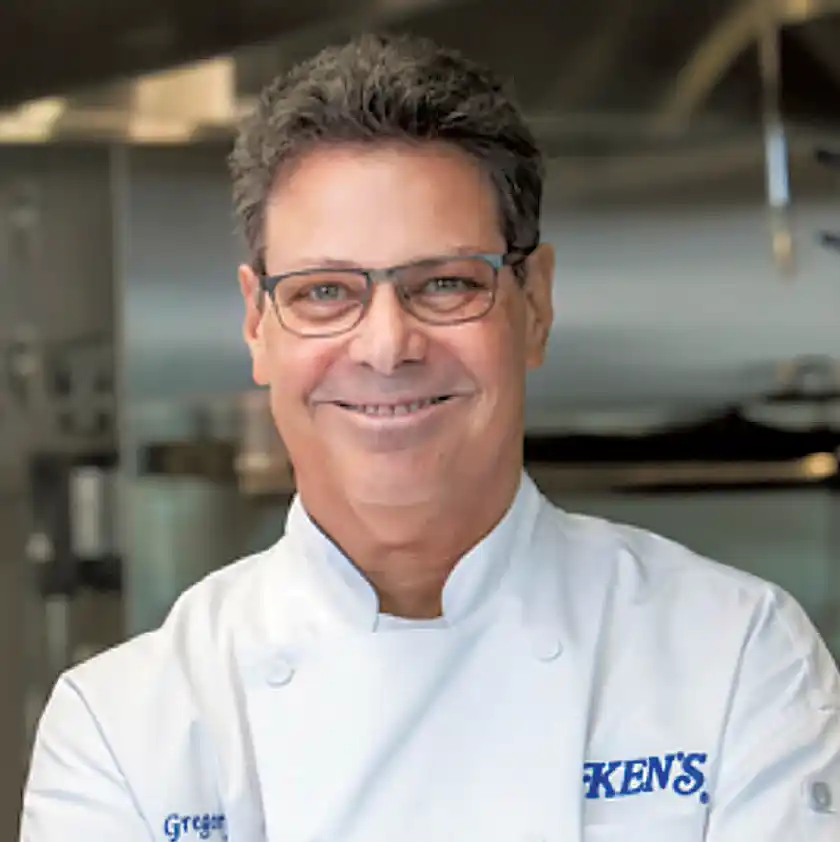
Gregory Schweizer, Corporate Executive Chef, is devoted to delivering high-quality culinary solutions through knowledge, strategy, and innovation.
His extensive training includes studies at the Culinary Institute of America (CIA), Le Istituto Culinario de Toscano, Halliburton Institute of Technology, Eckerd College Management Development Institute, Darden University, and the Applebee’s Leadership Institute.

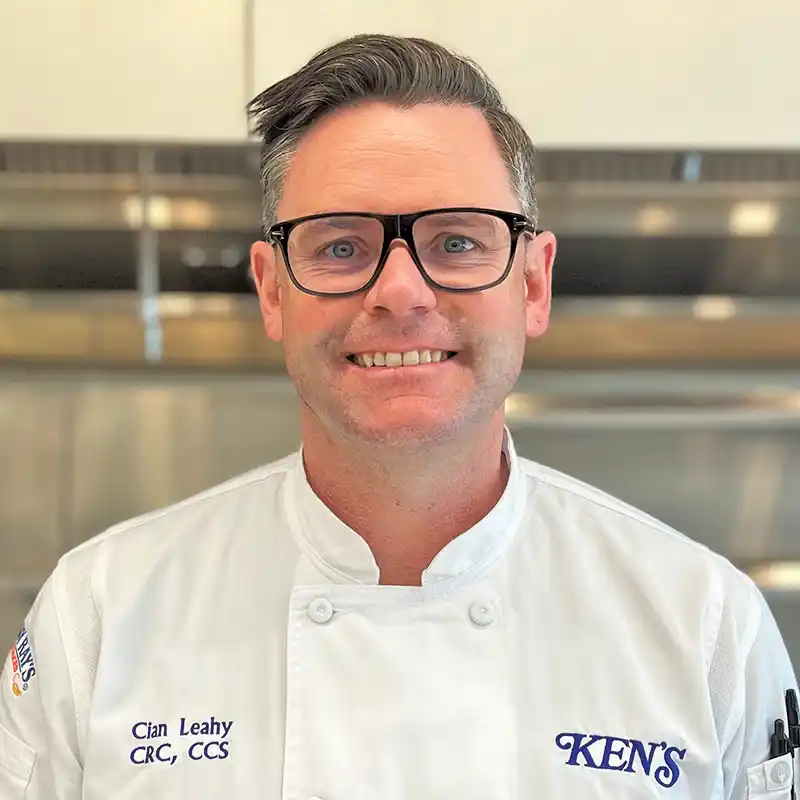
Cian Leahy, Corporate Executive Chef is, a Certified Research Chef (CRC) and Certified Culinary Scientist (CCS), blends fine dining roots with over 20 years in food manufacturing working with brands like Taco Bell, Subway, and Pizza Hut.
He holds degrees in Food Science and Culinary Arts and currently serves as Chair of the Certification Committee for the Research Chefs Association.