This post may contain affiliate links. Please read my disclosure policy.
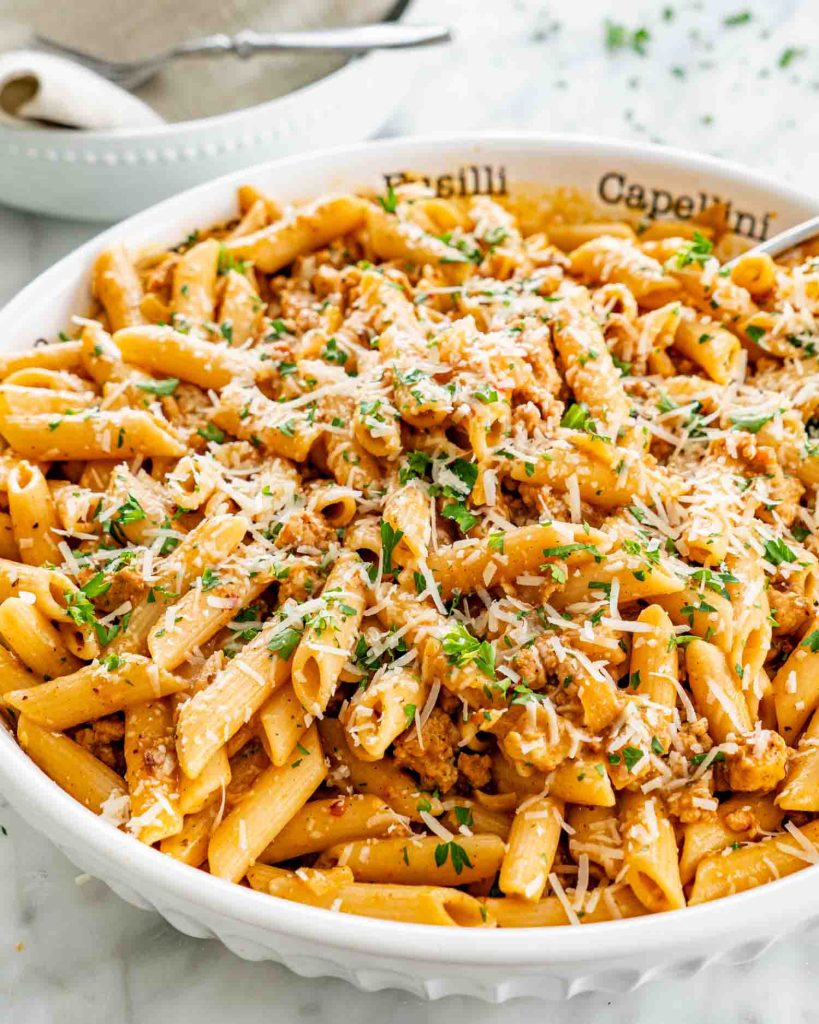
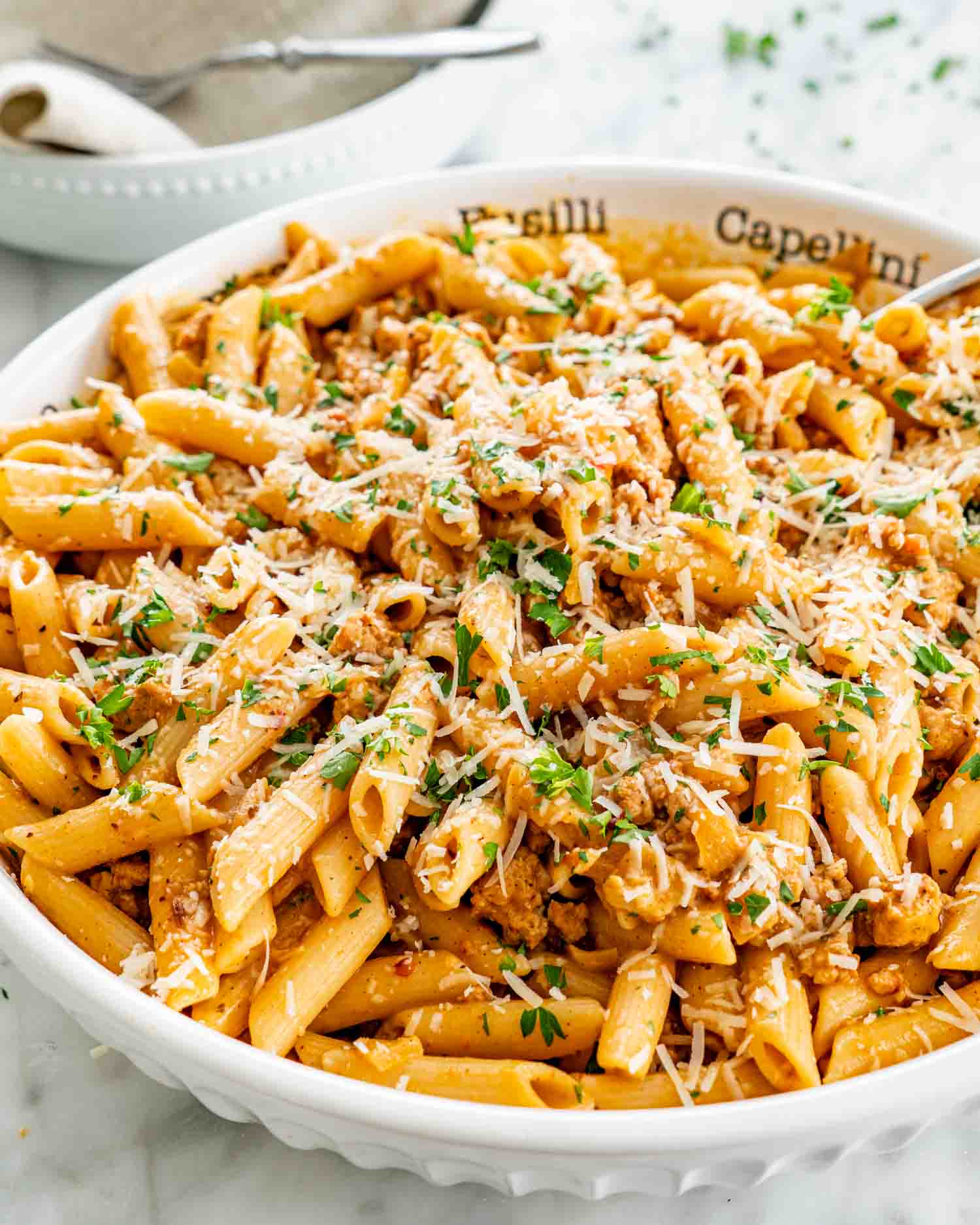
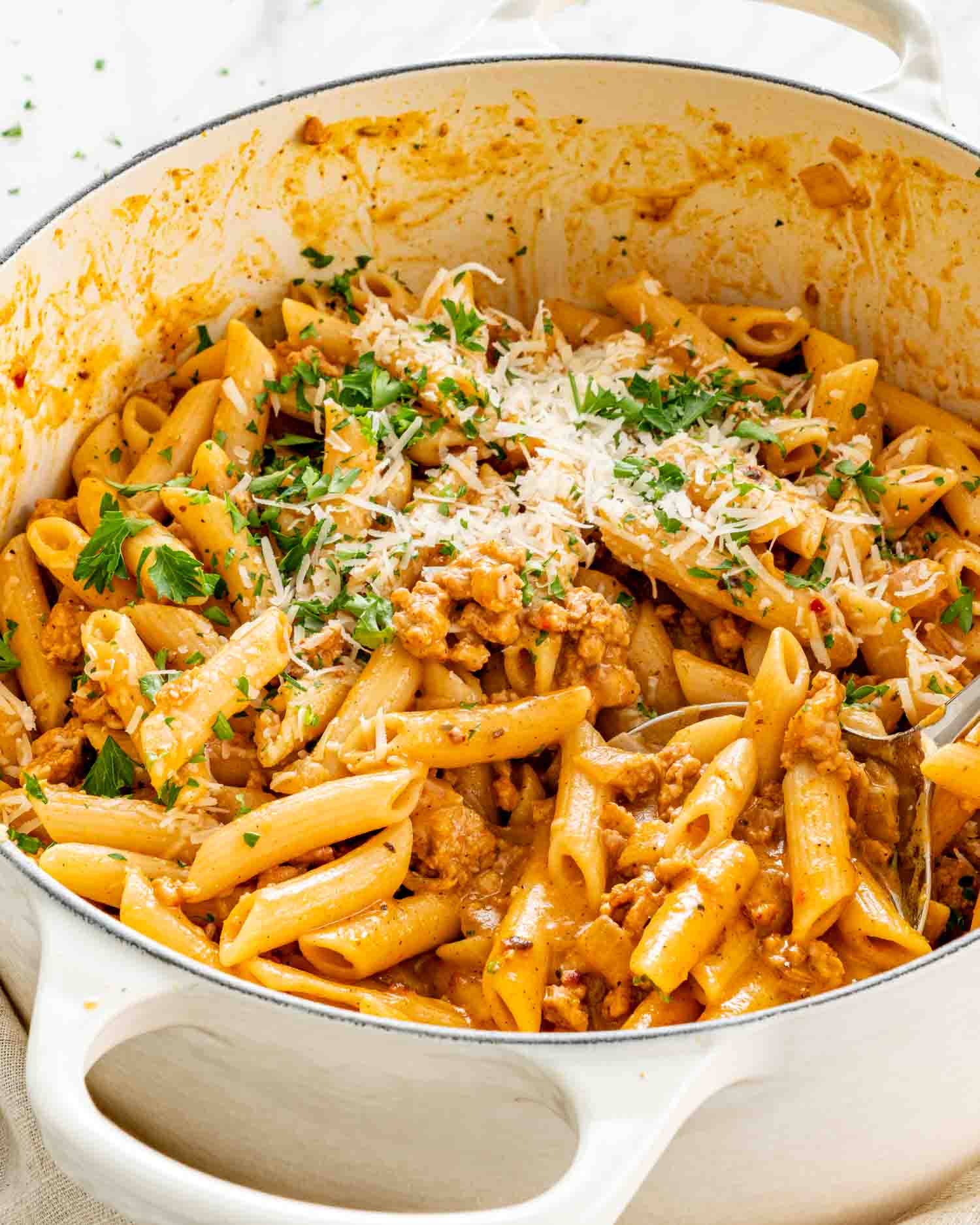
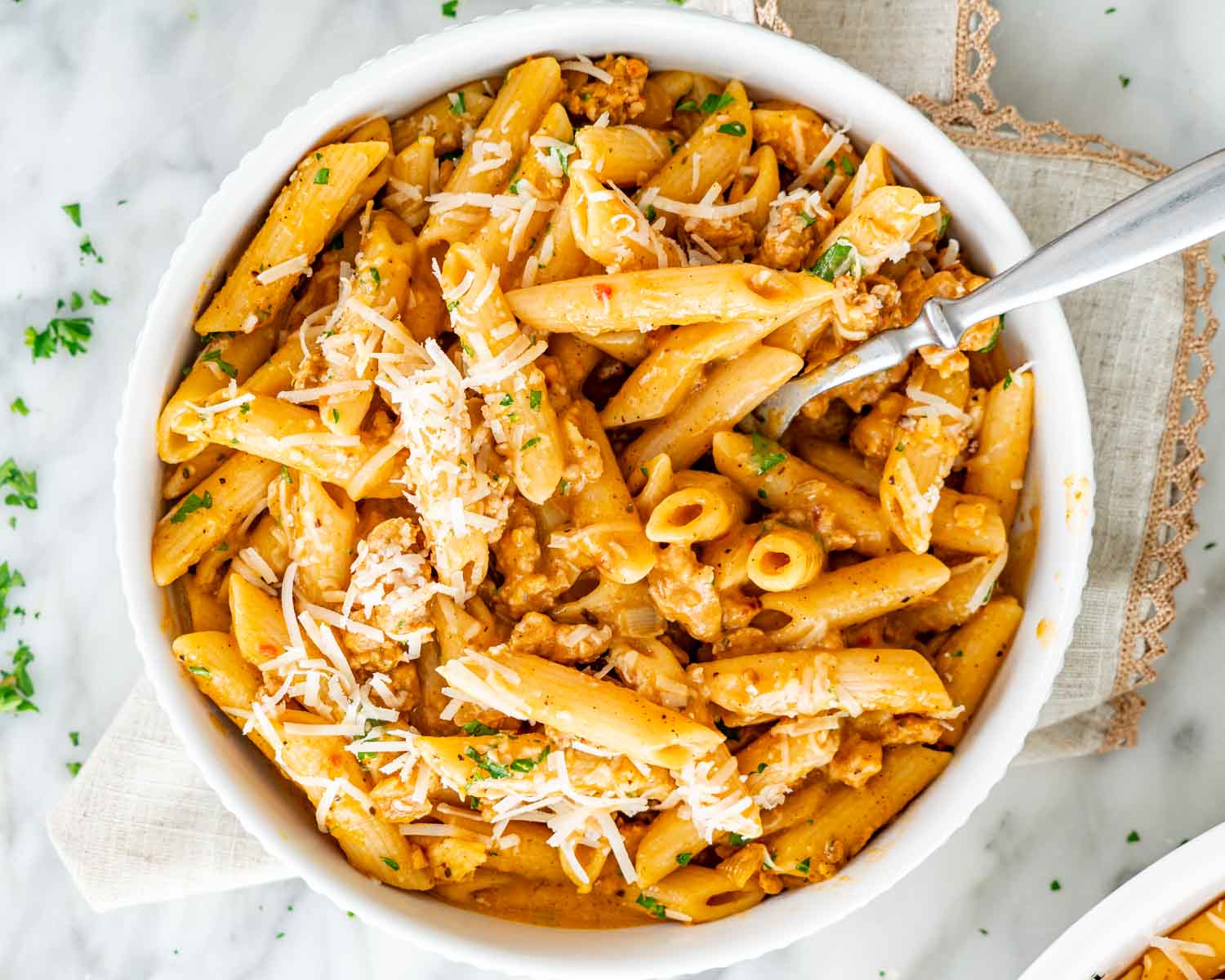
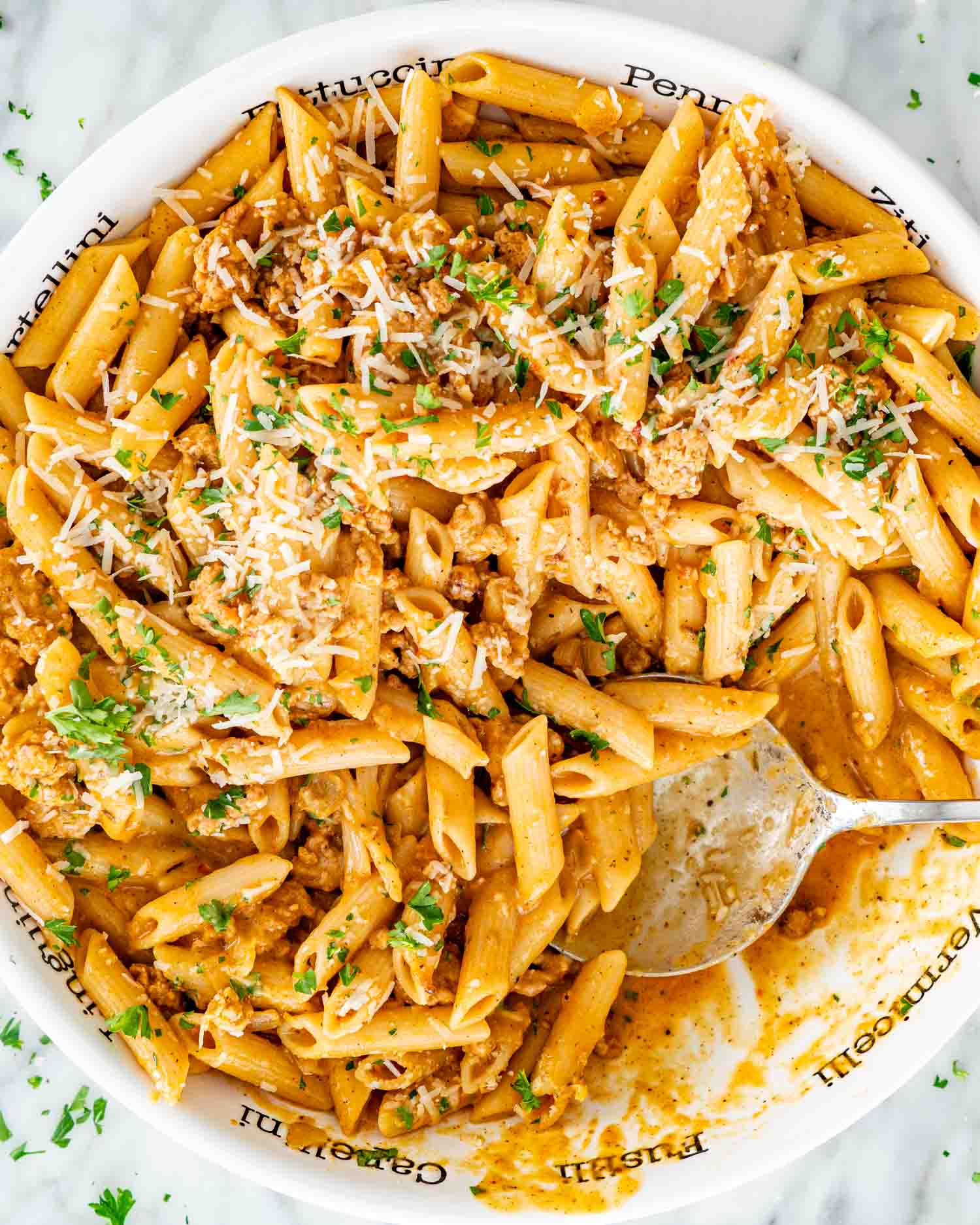
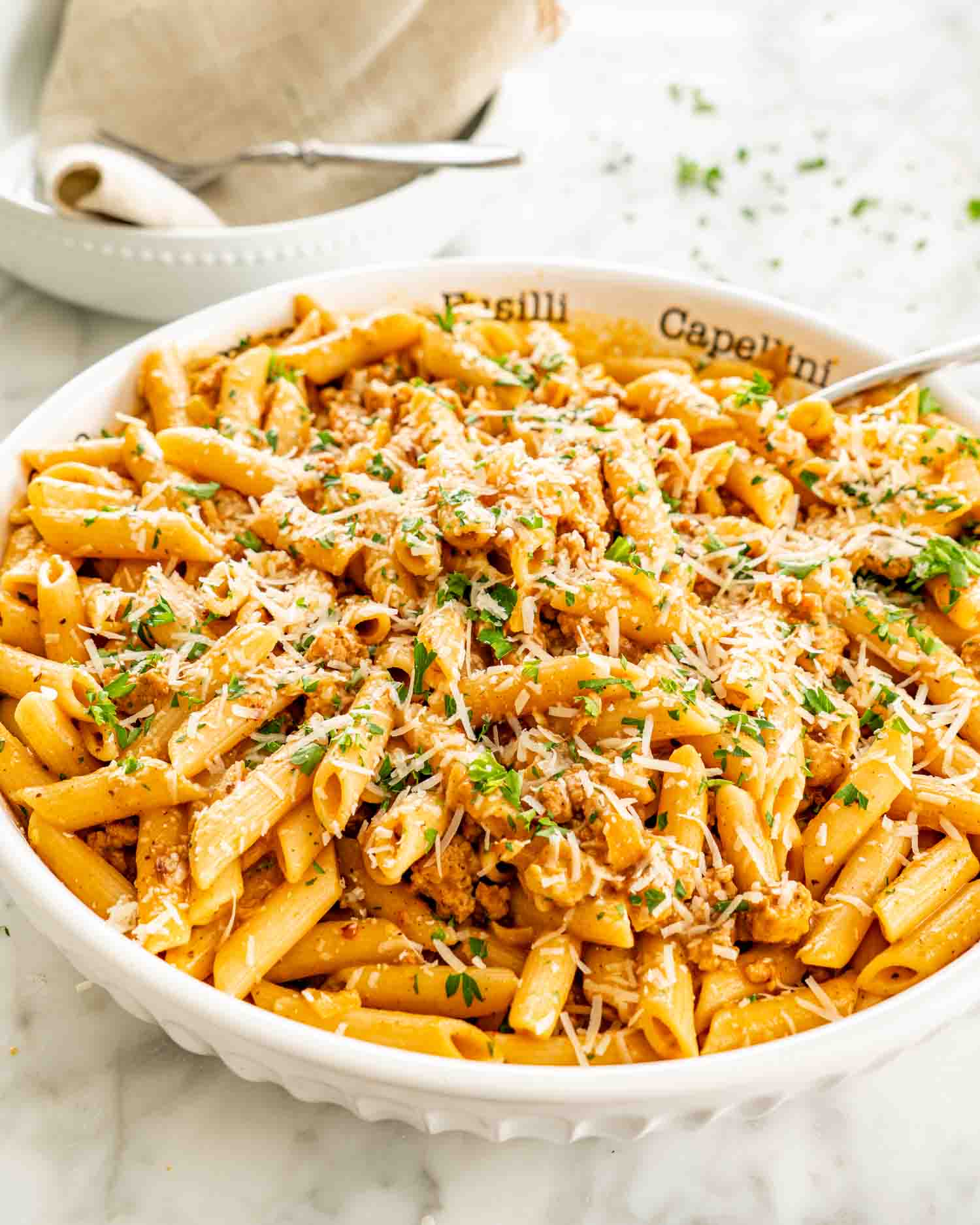
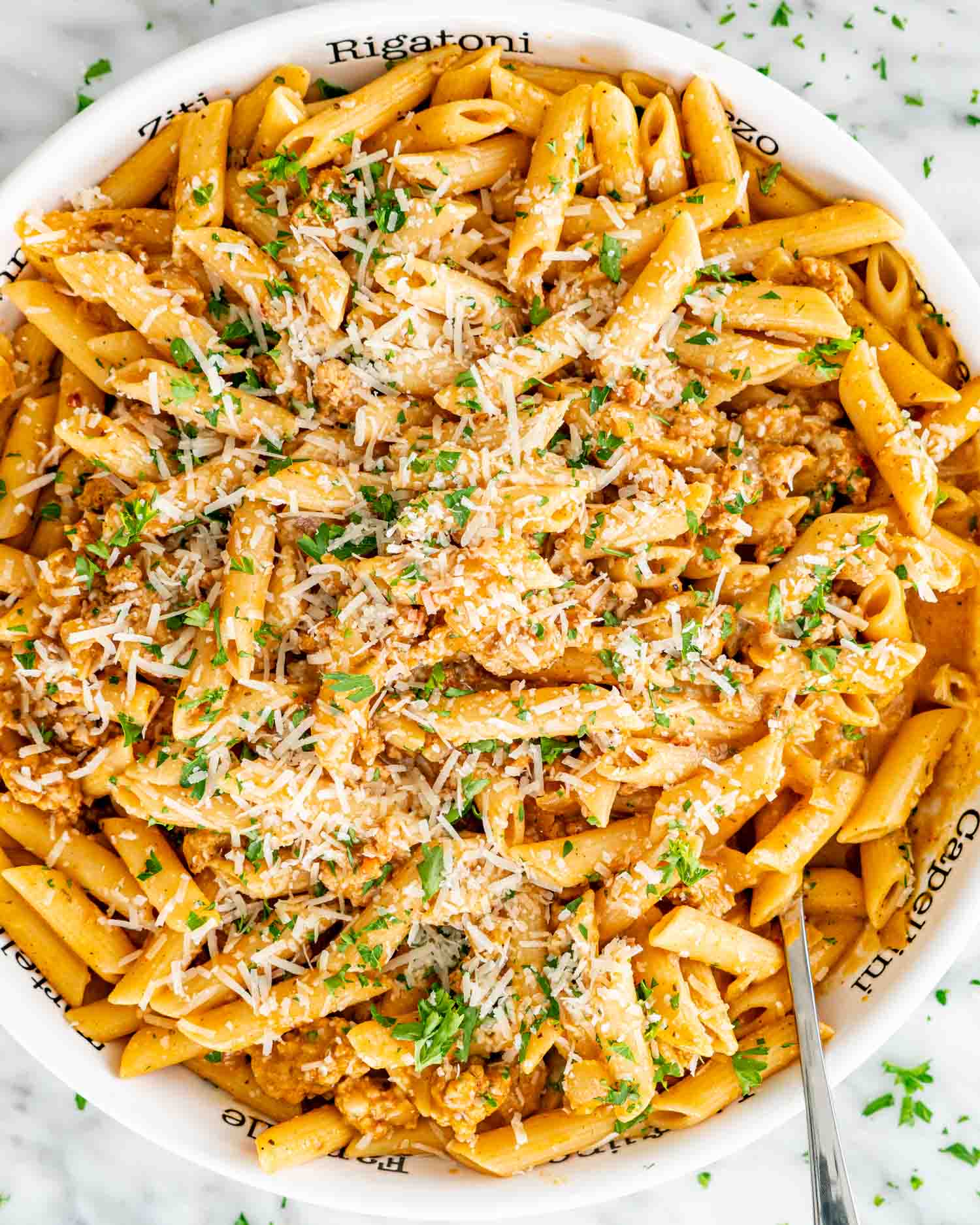
Soft rigatoni in a thick velvety pumpkin sauce, with browned Italian sausage in every bite and a whole cup of Parmesan stirred through it. This Pumpkin Sausage Pasta is on the table in 30 minutes, and 20 of those are just the pasta boiling. The first bowl always goes too fast.
Table of Contents
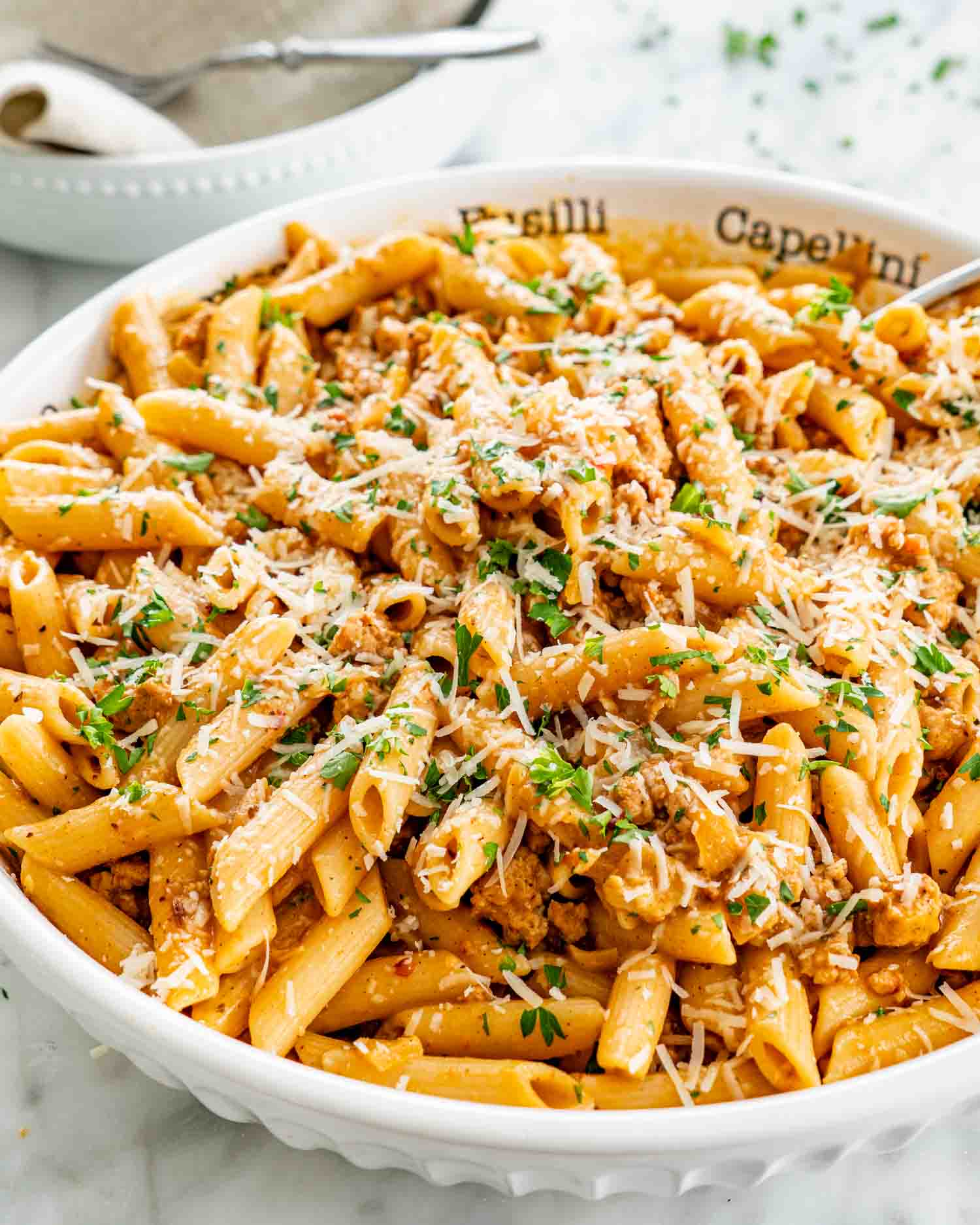
I love this Pumpkin Sausage Pasta more than is reasonable. Rigatoni in a thick velvety orange sauce, browned Italian sausage in every bite, a whole cup of Parmesan melted through it. It’s warm and savory and it tastes like the first properly cold evening of the year.
It’s rich, so a bowl goes further than you’d think. That has never stopped anyone from going back for seconds.
Now, the pumpkin. There’s 1 cup in the pan and all it’s doing is thickening the sauce, so completely that you only need ½ cup of cream. It isn’t in there to make anything sweet.
I know how pumpkin on pasta sounds. But look at what it’s up against: a pound of Italian sausage, a cup of white wine, a cup of Parmesan. Nobody has ever guessed pie.
There’s nutmeg and cinnamon too, which sounds like I’m talking about pie again. It’s ½ teaspoon and ¼ teaspoon, and what you get is a sauce warmer than a plain cream sauce, in a way you can’t quite put your finger on.
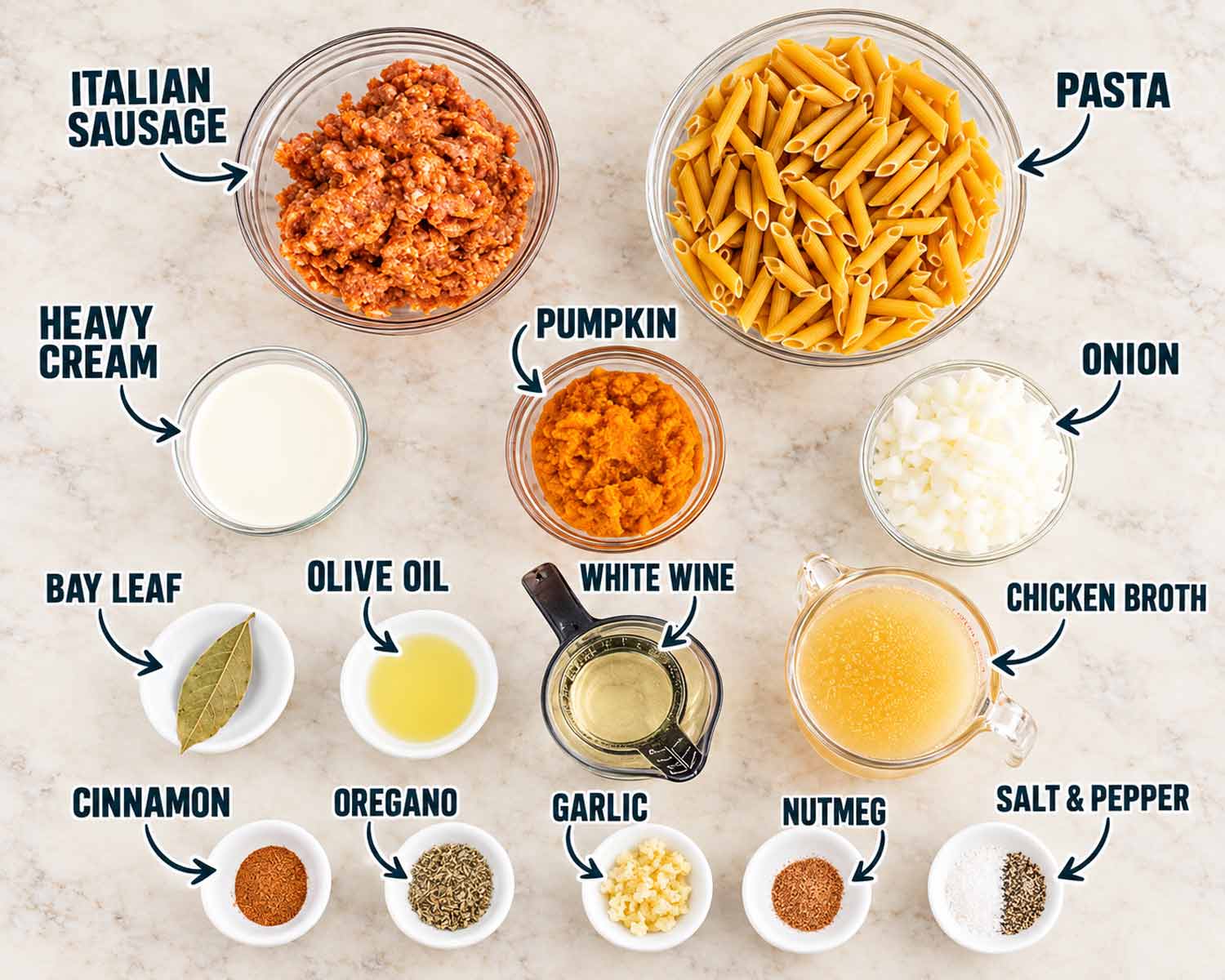
- Pasta (1 pound, uncooked): Any short shape with ridges or hollows. More on which ones below.
- Olive oil (1 tablespoon): Just enough to start the sausage. It renders plenty of its own fat after that.
- Italian sausage (1 pound, mild, casings removed): Squeeze it out of the casings and break it up in the pan. This is where most of the flavor in the dish comes from.
- Onion (1 medium, chopped): Goes in after the sausage so it cooks in the fat.
- Garlic (3 cloves, minced): In with the onion. Three cloves, minced fine.
- Nutmeg (½ teaspoon): A full half teaspoon, which is more than you’d put in most things. It’s the reason the sauce tastes like fall and not just like cream.
- Cinnamon (¼ teaspoon): A quarter teaspoon, and no more. This is the line between warm and dessert.
- Bay leaf (1): Goes in with the wine, comes out before the pasta does. If you forget it, somebody finds it on their plate and holds it up like evidence.
- Dried oregano (½ teaspoon): The savory anchor underneath the sweeter spices.
- Salt and pepper (½ teaspoon each): Go in with the spices. Taste again at the end, because a cup of Parmesan brings its own salt.
- White wine (1 cup): A dry one you’d actually drink. It reduces by half and takes the sharpness with it. There’s a substitute in the FAQ if you’d rather skip it.
- Chicken broth (1 cup, low sodium): Thins the sauce back out after the wine cooks down.
- Canned pumpkin (1 cup): Pure pumpkin, not pumpkin pie filling. A can holds about 1¾ cups, so you’ll have some left over. There’s a whole section below on that.
- Heavy cream (½ cup): Only half a cup, because the pumpkin is already doing most of the thickening.
- Parmesan (1 cup, freshly grated): Grated from a block, off the heat, at the very end. The pre shredded kind is coated in starch and it goes gritty in a sauce this thick.
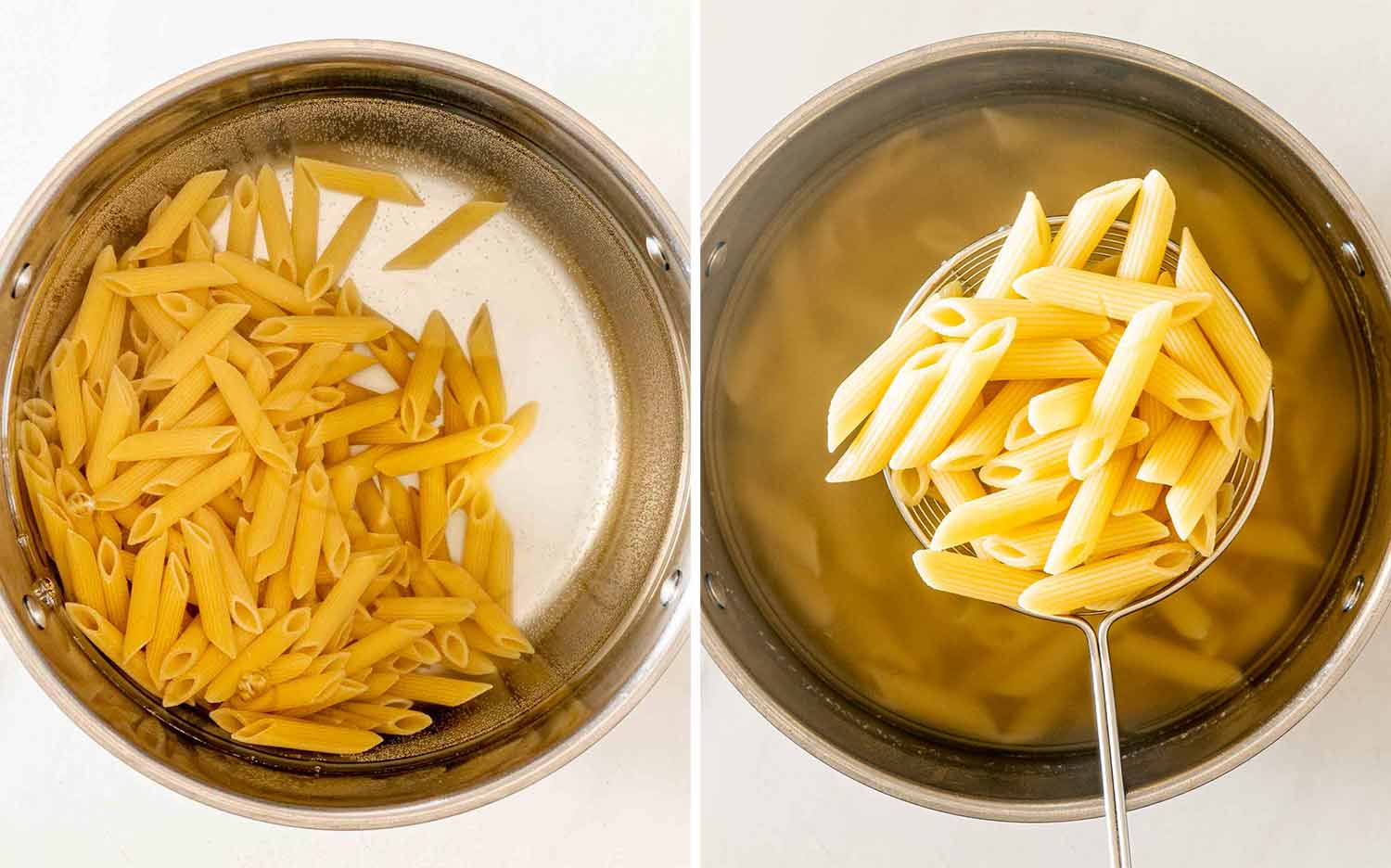
Boil the pasta: Bring a large pot of salted water to a boil and cook the 1 pound of pasta according to the package directions. Drain it and set it aside. Start this first, because the sauce comes together in roughly the time the pasta takes.
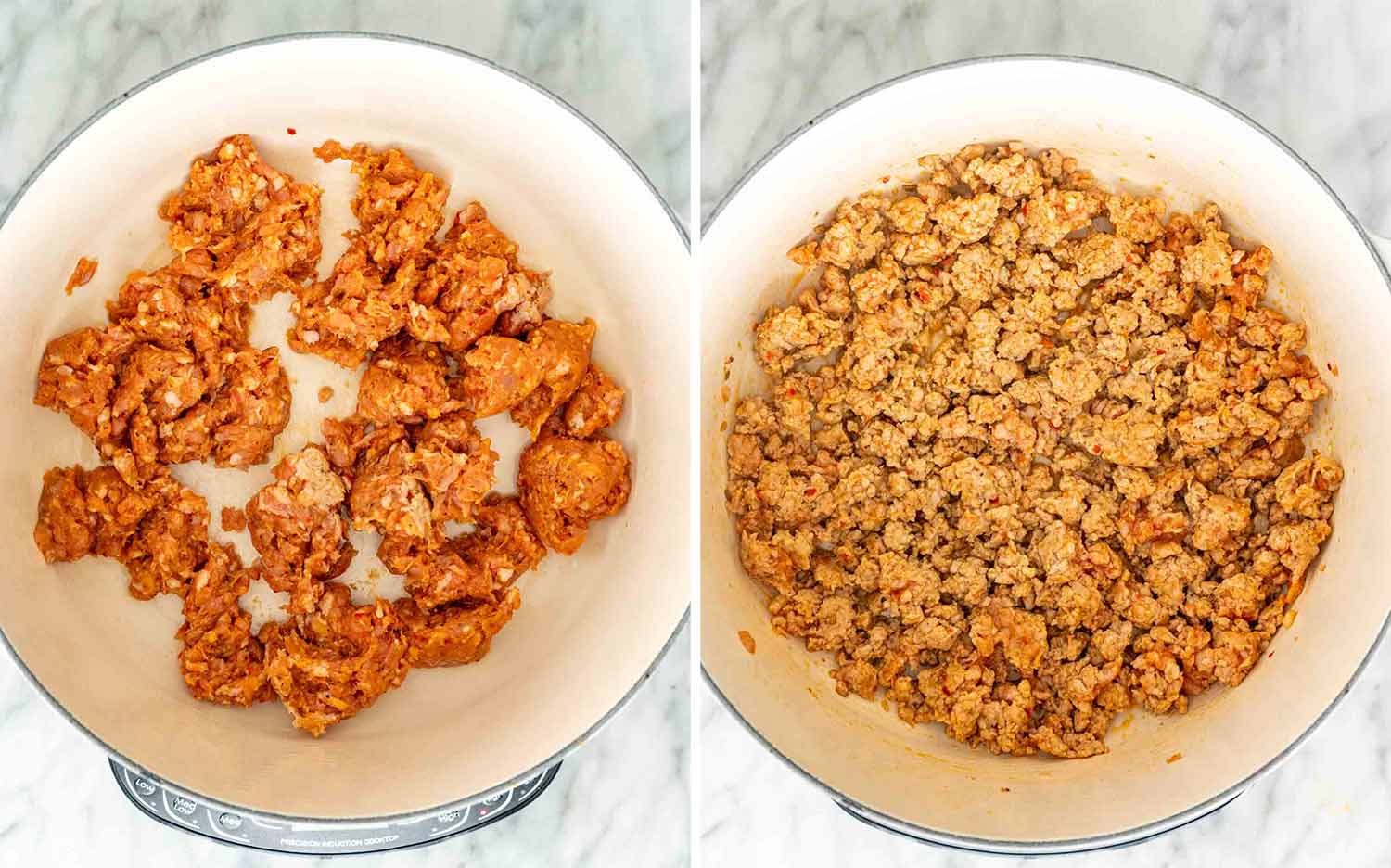
Brown the sausage: Heat the 1 tablespoon of olive oil in a large deep skillet or a Dutch oven over medium heat. Add the 1 pound of sausage and cook it, breaking it into pieces with a wooden spoon, until it’s browned. Don’t drain the fat. That’s flavor and the sauce wants it.
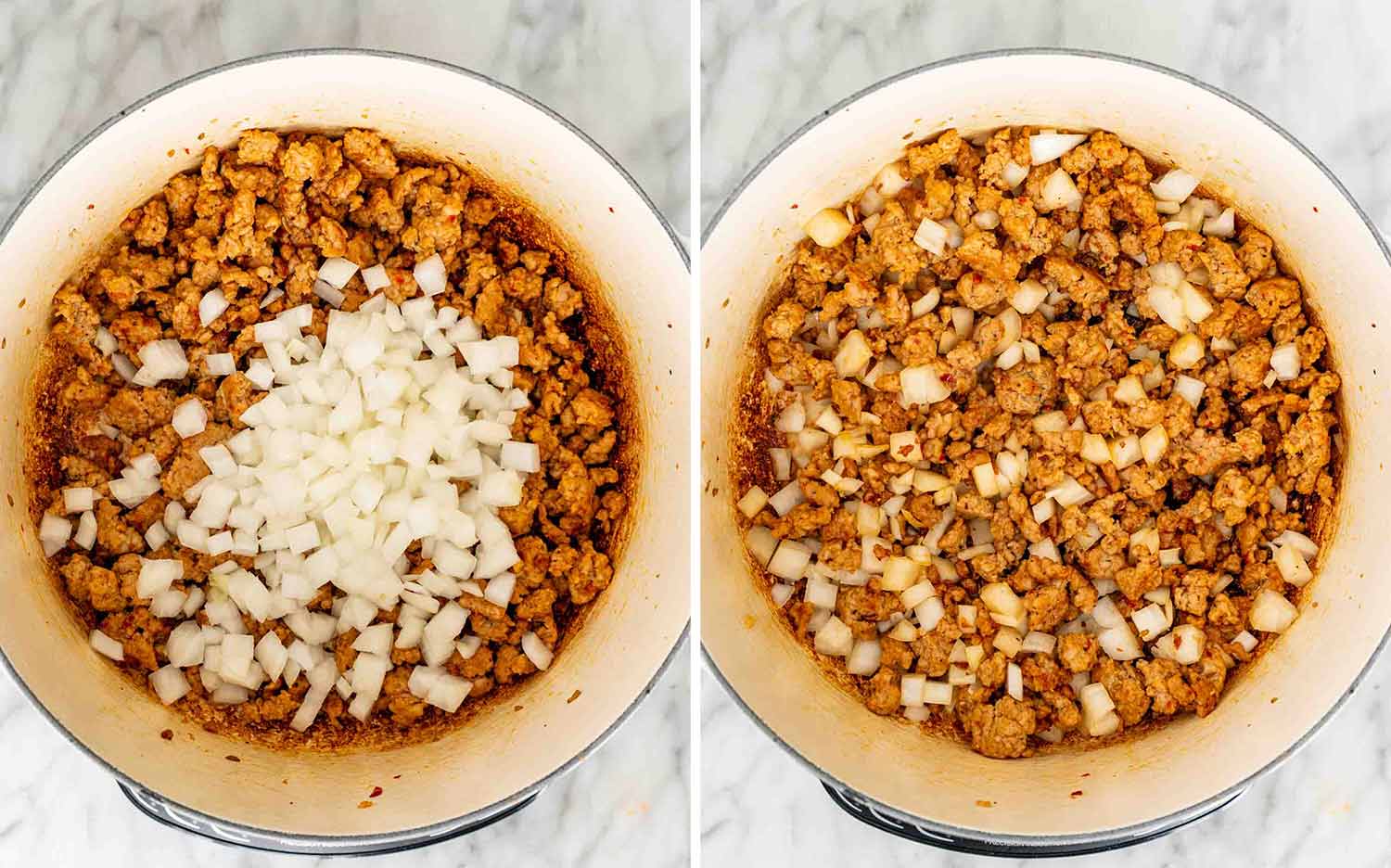
Soften the onion and garlic: Add the chopped onion and the 3 minced garlic cloves. Cook 3 to 5 minutes, until the onion is tender and translucent.
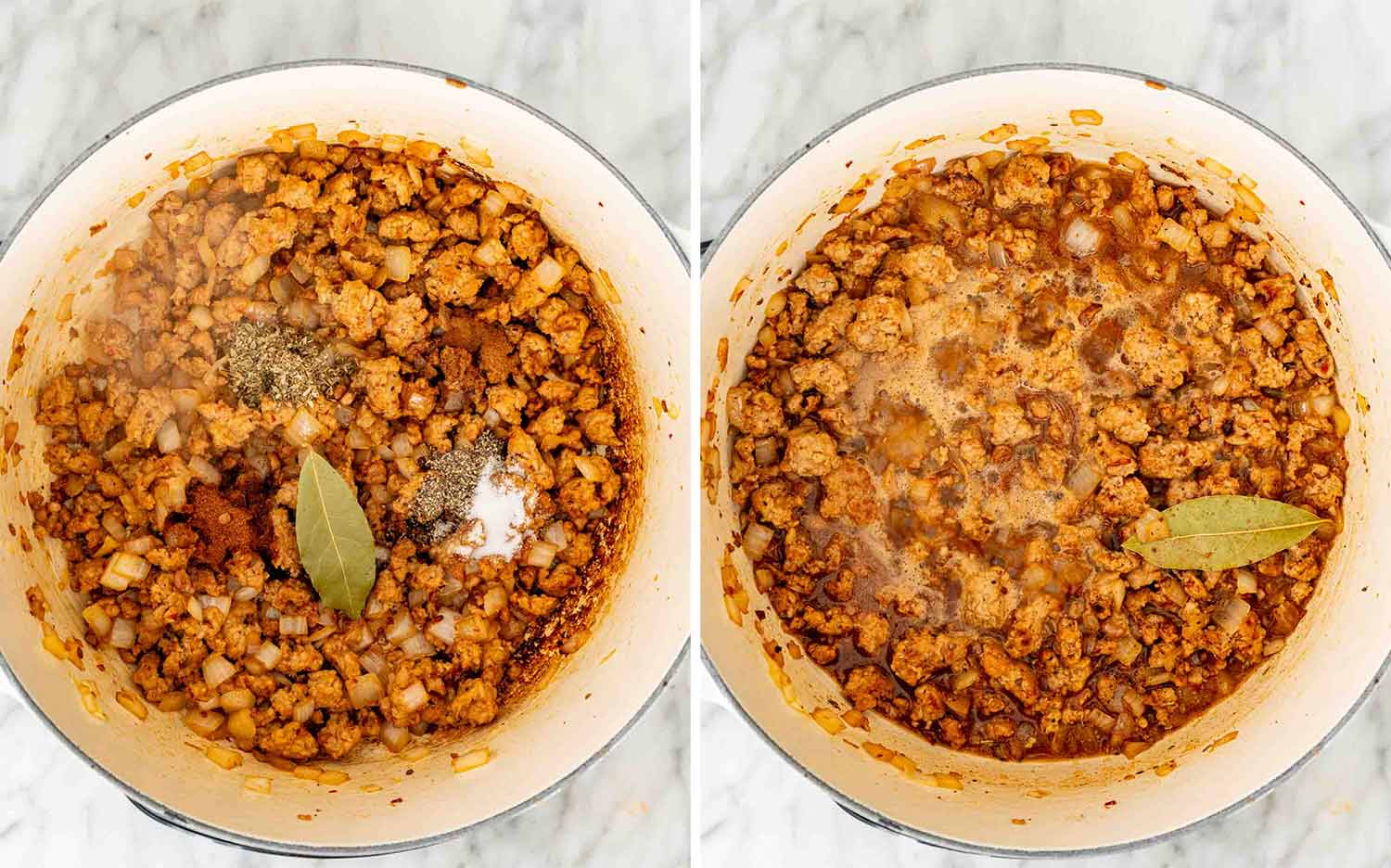
Spices, then wine: Stir in the ½ teaspoon of nutmeg, ¼ teaspoon of cinnamon, the bay leaf, ½ teaspoon of oregano, ½ teaspoon of salt and ½ teaspoon of pepper. Pour in the 1 cup of white wine and let it bubble down by half, about 2 minutes. The pan will smell sharp for a minute and then it won’t.
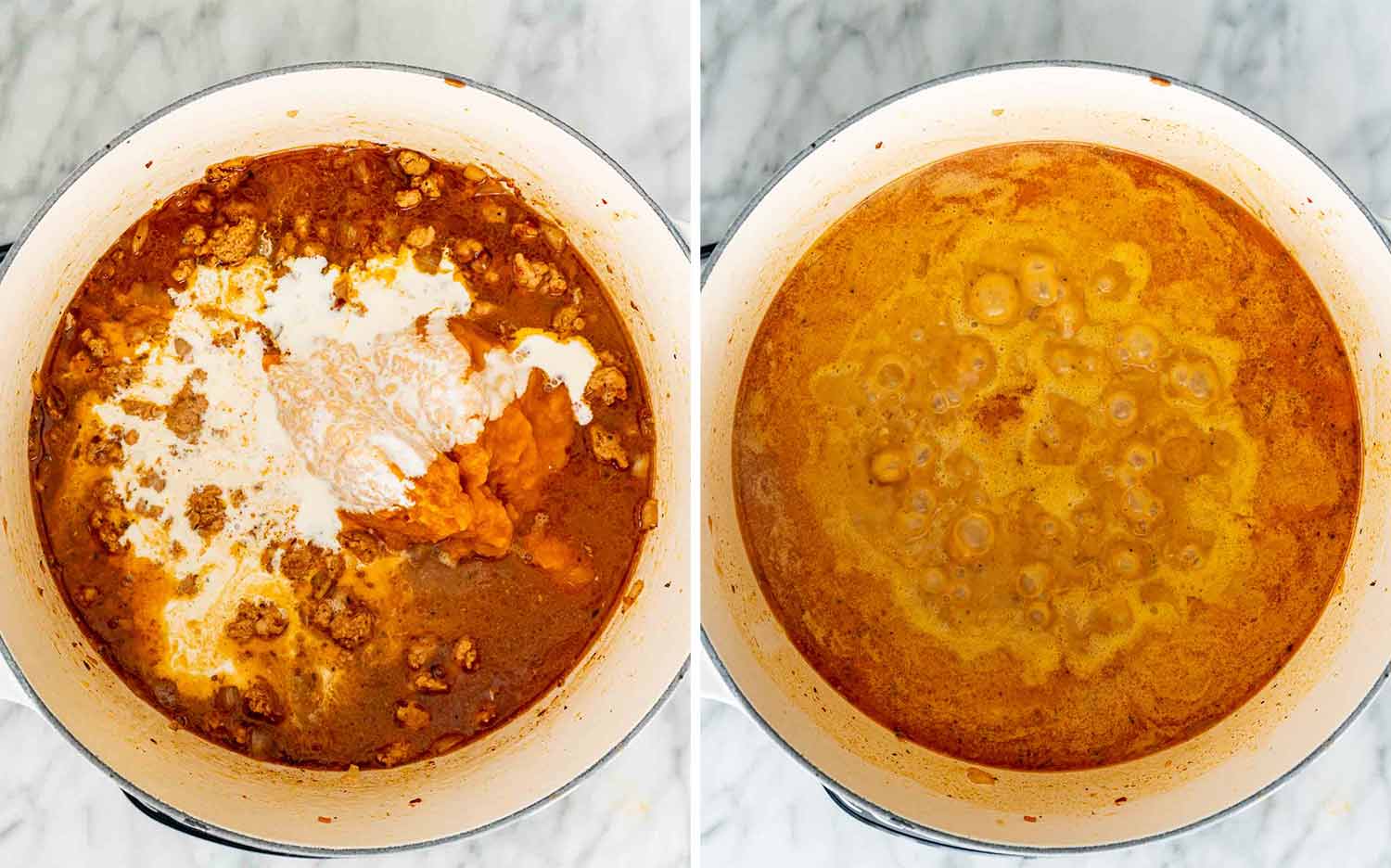
Build the sauce: Add the 1 cup of chicken broth, the 1 cup of canned pumpkin and the ½ cup of heavy cream. Stir it smooth and simmer about 5 minutes, until it thickens enough to coat the back of a spoon. Fish out the bay leaf.
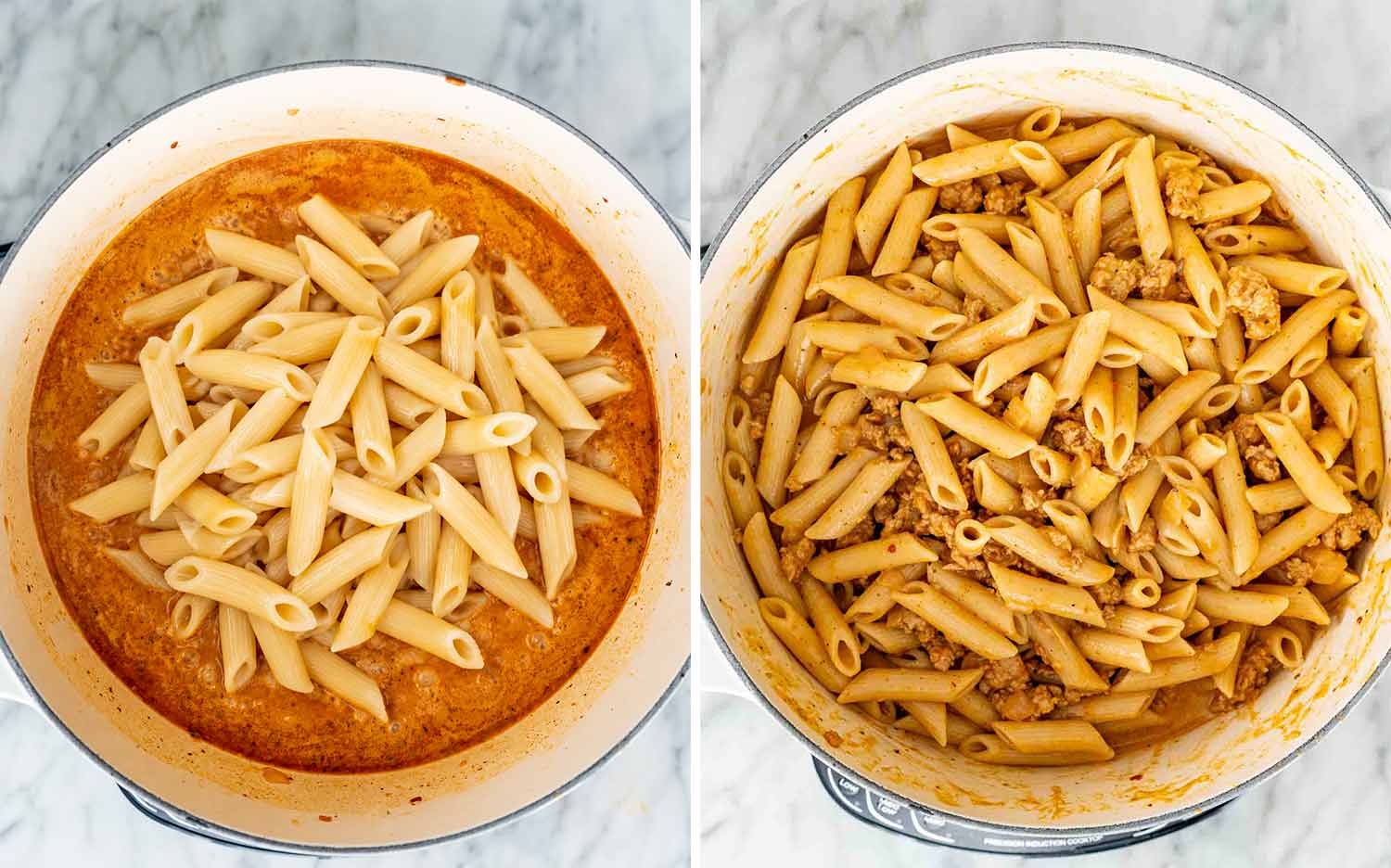
Toss and finish: Add the drained pasta to the pan and toss it over low heat for about 1 minute, until every piece is coated. Stir in the 1 cup of grated Parmesan off the heat and serve.
This sauce is thick, so you want a shape that holds onto it.
- Rigatoni is my first pick. The ridges grab the sauce and the tubes fill up with it.
- Penne works for the same reason and it’s what most people have in the cupboard.
- Bow tie, or farfalle, catches sauce in the folds and looks nice doing it.
- Elbow macaroni turns this into something closer to a baked pasta, which is not a complaint.
- Shells are excellent if you have them. Each one arrives holding a small amount of sauce.
What I’d skip is spaghetti and anything else long and smooth. A sauce this heavy slides off it and ends up pooled at the bottom of the bowl while the noodles sit on top, dry.
You can. It’s more work and the result is a little different, so here’s the honest version.
Cut a small sugar pumpkin in half, scoop out the seeds, and roast it cut side down at 400°F for about 45 minutes, until a knife goes through the flesh with no resistance. Scoop the flesh out and puree it until it’s completely smooth.
Then drain it. This is the part people skip. Fresh pumpkin holds a lot more water than canned, and if you put it straight into the sauce you’ll get something thin and watery. Sit the puree in a fine sieve for 20 or 30 minutes and let the water run out.
Use the same 1 cup. Fresh pumpkin tastes a little brighter and a little less concentrated than canned, so you may want a bit more salt at the end.
If you’ve got a sugar pumpkin sitting on the counter already, it’s worth doing. If you’re buying one specially, canned is genuinely fine and nobody at your table will know.
The recipe calls for 1 cup. A standard can holds about 1¾ cups. So every single person who makes this ends up with ¾ cup of pumpkin in a container in the fridge and no plan.
Here’s the plan.
Those three quarters of a cup will get you a third of a batch of Pumpkin Zucchini Muffins, or most of the way into Pumpkin Maple Cornbread, which takes ¾ cup almost exactly.
If you want to go the other direction and buy a second can on purpose, Pumpkin Pie Bars use a whole large can, and Pumpkin Cheesecake Brownies will take care of the rest of your fall.
Leftover canned pumpkin keeps 5 to 7 days in the fridge in a sealed container, or 3 months in the freezer. Freeze it in ¼ cup portions in an ice cube tray and you’ll thank yourself in November.
- Hot Italian is the swap I’d reach for first. Same amount, and it gives the sauce a background heat that works against the cream.
- Sweet Italian leans into the warm spices. If you like where the nutmeg and cinnamon are going, this takes it further.
- Chicken or turkey Italian sausage works and makes it lighter, but it renders much less fat. Add another tablespoon of olive oil at the start or the onion will stick.
- Breakfast sausage is surprisingly good here because it’s already seasoned with sage and pepper. Skip the oregano if you use it.
- Chorizo changes the dish completely and I’m not going to stop you. Use Spanish cured chorizo, sliced, and cut the salt back.
- Start the pasta water first. The sauce takes about 20 minutes and so does boiling a pound of pasta. Get the water on before anything else and the timing works itself out.
- Keep the sausage fat. It’s doing a lot of the seasoning in this sauce. Draining it off gets you a paler, flatter dish.
- Brown the sausage properly. Pale crumbled sausage tastes like pale crumbled sausage. Let it sit in the pan long enough to take some color before you start stirring.
- Let the wine actually reduce. Two minutes, until the volume is visibly halved. Pull it early and there’s a raw wine edge that sits on top of everything.
- Parmesan off the heat. A boiling sauce makes a grainy one. Pull the pan off, then stir it in.
- Taste after the Parmesan, not before. A cup of it changes the salt level more than you’d expect.
Sage, if you want it. My version uses nutmeg and cinnamon and no sage, which isn’t the usual route with pumpkin and sausage. If you want the more traditional savory version, 6 or 8 fresh sage leaves fried in the oil before the sausage goes in will get you there.
Spinach or kale. A few big handfuls stirred in at the end of step 5. It wilts in about a minute and makes the bowl look less entirely orange.
More heat. Half a teaspoon of red pepper flakes with the other spices, or switch to hot Italian sausage.
Mushrooms. Eight ounces sliced, cooked with the onion. They need a few extra minutes to give up their water.
Baked. Toss everything together, put it in a baking dish, top with more Parmesan and mozzarella, and bake at 375°F until it’s bubbling.
Toasted walnuts or pepitas. Scattered over the top for something crunchy.
This is a rich bowl, so what it wants next to it is something sharp and green. A simple salad with a lemony vinaigrette does more for the meal than another starch will.
Bread for the bottom of the bowl, obviously. Garlic Knots or Quick Yeast Dinner Rolls are both right.
Roasted broccoli or green beans if you want a vegetable with some char on it.
And if you’re after more similar pasta recipes, One Pot Sausage Pasta and Creamy Red Pepper Sausage Pasta are on Craving Home Cooked, and Creamy Parmesan Spaghetti and Creamy Garlic Parmesan Chicken Pasta are over on All My Cravings.
It keeps 3 to 4 days in the fridge in an airtight container. The pasta keeps drinking up the sauce, so by tomorrow it’ll be thicker and a bit drier.
Reheat it in a skillet over low heat with a splash of broth, cream or even water, stirring until the sauce loosens again. The microwave works if you go in short bursts and stir between them, but low heat on the stove is kinder to a cream sauce.
You can freeze it up to 2 months. It won’t come back quite the same, because cooked pasta softens in the freezer and cream sauces tend to separate. Thaw it in the fridge overnight and reheat it low with a splash of cream, whisking as it warms.
If you know in advance that you’re freezing some, freeze the sauce on its own and cook fresh pasta when you want it. That version comes back properly.
Before You Begin! If you make this, please leave a review and rating letting us know how you liked this recipe! This helps our business thrive & continue providing free recipes.
Italian sausage and a creamy pumpkin sauce tossed with a pound of pasta, on the table in 30 minutes. The pumpkin is in there for body rather than sweetness, so the sauce comes out thick and velvety on only ½ cup of cream. One pot for the pasta, one pan for everything else.
- 1 pound pasta (uncooked)
- 1 tablespoon olive oil
- 1 pound Italian sausage (mild, casings removed)
- 1 medium onion (chopped)
- 3 cloves garlic (minced)
- ½ teaspoon ground nutmeg
- ¼ teaspoon ground cinnamon
- 1 bay leaf
- ½ teaspoon dried oregano
- ½ teaspoon salt (or to taste)
- ½ teaspoon pepper (or to taste)
- 1 cup dry white wine
- 1 cup chicken broth (low sodium)
- 1 cup canned pumpkin
- ½ cup heavy cream
- 1 cup Parmesan cheese (freshly grated)
Before You Begin! If you make this, please leave a review and rating letting us know how you liked this recipe! This helps our business thrive & continue providing free recipes.
-
Bring a large pot of salted water to a boil and cook the 1 pound of pasta according to the package directions. Drain and set aside.
-
Meanwhile, heat the 1 tablespoon of olive oil in a large deep skillet or Dutch oven over medium heat. Add the 1 pound of sausage and cook, breaking it into pieces, until browned. Do not drain the fat.
-
Add the chopped onion and the 3 minced garlic cloves. Cook for 3 to 5 minutes, until the onion is tender.
-
Stir in the ½ teaspoon of nutmeg, the ¼ teaspoon of cinnamon, the bay leaf, the ½ teaspoon of oregano, the ½ teaspoon of salt and the ½ teaspoon of pepper. Pour in the 1 cup of white wine and simmer until reduced by half, about 2 minutes.
-
Add the 1 cup of chicken broth, the 1 cup of canned pumpkin and the ½ cup of heavy cream. Stir and simmer for about 5 minutes, until the sauce thickens enough to coat the back of a spoon. Remove and discard the bay leaf.
-
Add the drained pasta to the pan and toss over low heat for about 1 minute, until coated. Remove from the heat, stir in the 1 cup of grated Parmesan, and serve.
- Start the pasta water first. The sauce takes about as long as the pasta does, so getting the water on before anything else lines the timing up.
- Keep the sausage fat. It seasons the sauce. Draining it gives you a flatter dish.
- Parmesan off the heat. Stirring it into a simmering sauce makes it grainy. Pull the pan off first, and grate it from a block.
- Pasta shape: Rigatoni, penne, bow tie or shells. Something short with ridges or hollows. Long smooth pasta won’t hold a sauce this thick.
- Canned pumpkin: Use 100% pure pumpkin, not pumpkin pie filling. A 15 ounce can holds about 1¾ cups, so you’ll have roughly ¾ cup left over.
- No wine: Use another cup of chicken broth plus 1 tablespoon of white wine vinegar or lemon juice.
- Storage: 3 to 4 days in the fridge. Reheat on low with a splash of broth or cream. To freeze, freeze the sauce alone and cook fresh pasta.
Serving: 1servingCalories: 760kcal (38%)Carbohydrates: 65g (22%)Protein: 29g (58%)Fat: 39g (60%)Saturated Fat: 17g (106%)Polyunsaturated Fat: 4gMonounsaturated Fat: 16gCholesterol: 91mg (30%)Sodium: 1040mg (45%)Potassium: 579mg (17%)Fiber: 4g (17%)Sugar: 5g (6%)Vitamin A: 6782IU (136%)Vitamin C: 5mg (6%)Calcium: 267mg (27%)Iron: 3mg (17%)
Notice: Nutrition is auto-calculated for your convenience. Where relevant, we recommend using your own nutrition calculations.
Does it taste like pumpkin pie?
What can I use instead of the white wine?
Can I use pumpkin pie filling?
Can I use milk instead of heavy cream?
Why did my sauce go grainy?
Can I make it ahead?
Is it spicy?
How much pumpkin is in a can?