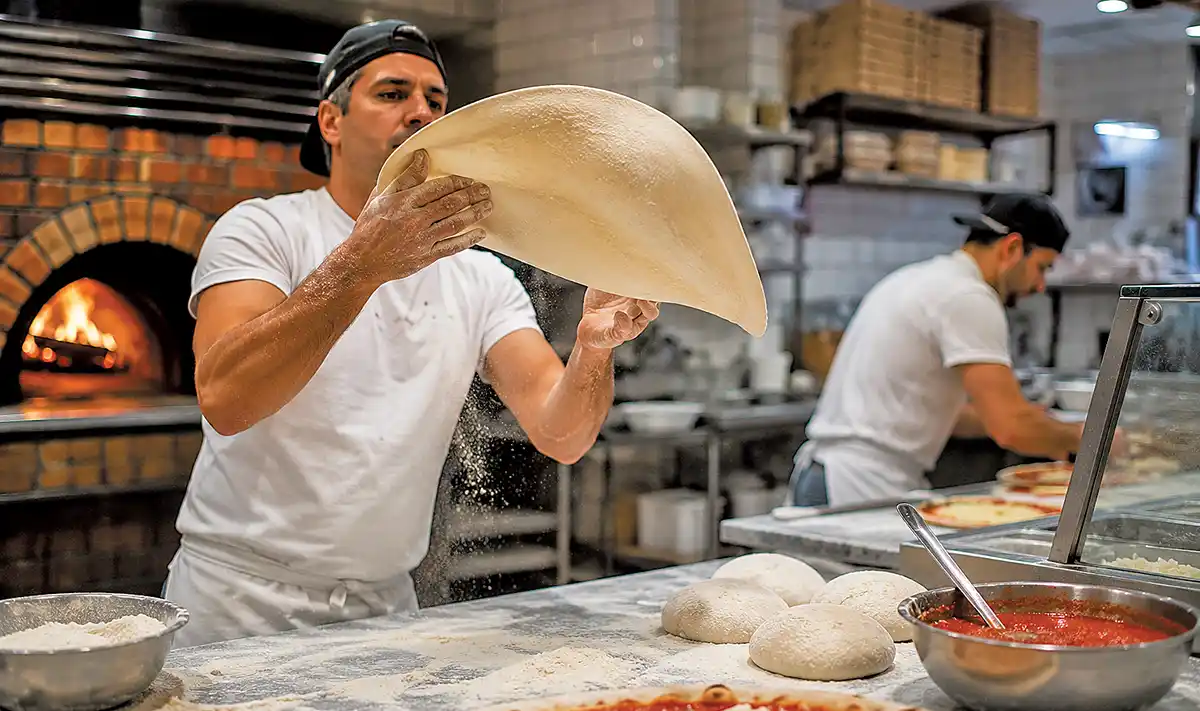

For generations, bromated flour has been a foundational ingredient in many New York pizza shops and bagel bakeries because it strengthens dough elasticity, improves oven spring and shortens production time. Operators have long relied on the additive to produce the chewy texture and consistency associated with traditional New York-style products, particularly in high-volume environments where speed and predictability are essential.
But growing scrutiny over the ingredient’s health risks has accelerated pressure for reform. Potassium bromate has already been banned or restricted in Canada, China, India and the European Union, while California is also moving toward restrictions. Supporters of the New York legislation argued the measure would align the state with broader international food safety standards.
The proposal has triggered mixed reactions throughout the restaurant and food manufacturing sectors. Some operators fear losing a core component of traditional dough-making systems, while others see the shift as an opportunity to modernize menus and improve product quality. “This is an earth-shaking event for New York pizza,” Scott Wiener, pizza historian and President of Scott’s Pizza Tours in Brooklyn, said. “That ingredient is part of the identity of the slice.” Wiener added that an estimated 80% of pizza and bagel shops in New York still relied on flour containing potassium bromate because the additive reduced rest time and helped operators maintain stronger, chewier dough products during heavy production cycles.
The concern extends beyond pizza. New York bagel operators have also depended on bromated flour to achieve the dense chew, crisp exterior and height customers expect. Operators transitioning away from the additive may need to alter fermentation schedules, hydration levels and proofing procedures while potentially increasing labor costs. “You could achieve that same bagel texture, but it’s a lot more work and it’s going to be a lot more expensive,” Jesse Spellman, second-generation owner of Utopia Bagels, said. Spellman noted his company had already begun experimenting with yeast concentrations and rise times ahead of a possible statewide transition.
Supporters of the legislation argued the operational challenges were outweighed by consumer health concerns. Research surrounding potassium bromate has linked the ingredient to cancer risks in laboratory animals, leading critics to question why the additive remains widely used in parts of the U.S. food system.
Assemblymember Anna Kelles of Ithaca, who sponsored the Assembly version of the bill, emphasized the public health focus behind the legislation. “This legislation restores transparency by requiring companies to make public the safety analyses they have already completed under federal standards,” Kelles detailed. “It also removes specific chemicals from the food supply that have established links to cancer, hormone disruption, and organ damage.”
Despite operator concerns, many pizzerias have already transitioned away from bromated flour voluntarily. Artisanal pizza shops and premium bakery operators increasingly market unbromated flour as part of broader clean-label and fermentation-focused menu strategies. Longer fermentation schedules and naturally developed dough systems have become selling points among consumers seeking higher-quality products with simpler ingredient statements.
Some operators that already completed the transition said the process was difficult but manageable. Long Island pizza operator Tori Tiso publicly discussed spending weeks adjusting fermentation methods and testing new formulations after abandoning bromated flour. Pennsylvania operator Bill Zonios similarly noted that removing potassium bromate required significant recipe adjustments and longer production times.
For independent operators, however, the transition may create new operational pressure at a difficult economic moment. Many restaurants continue to face elevated labor costs, higher insurance expenses and commodity volatility. Longer fermentation periods may require additional refrigeration, revised prep schedules and more skilled dough handling.
The legislation includes a phased implementation timeline intended to reduce disruption across the supply chain. Flour manufacturers and distributors would receive one year to transition existing inventory after the law takes effect, while restaurants would be allowed to use bromated flour products until bag expiration dates are reached.
That grace period could prove critical for distributors serving independent pizzerias and bakery operators throughout New York. Suppliers may need to increase inventory of unbromated flour products while also helping customers navigate recipe reformulations and production changes.
Foodservice consultants said the proposal could create new opportunities for supplier partnerships focused on culinary support and operational consulting. Dough transitions often require adjustments to hydration ratios, mixing times, proofing schedules and baking temperatures. Operators unfamiliar with unbromated flour systems may increasingly rely on distributors and manufacturer representatives for technical support.
“Consumer expectations around ingredient transparency are continuing to reshape the legislative landscape,” said State Sen. Cordell Cleare, who noted that growing public demand for cleaner labels and greater food awareness is helping drive momentum behind these initiatives. Cleare added that restaurant brands embracing cleaner ingredient programs early “may strengthen customer trust and premium positioning” as wellness-focused dining trends continue to expand across the foodservice industry.
The proposed ban may also influence institutional foodservice operations beyond independent restaurants. Schools, stadiums, healthcare facilities and contract dining providers serving pizza or baked products in New York could eventually need to reevaluate supplier specifications and purchasing standards. Commissary operations producing dough at scale may face additional complexity as they redesign formulas for consistency and volume production.
The ban on bromated flour could lead to the end of New York’s famous $1.00 pizza slice. Potassium bromate, once commonly used to strengthen dough and improve texture, is now being phased out because of health concerns linked to cancer risks. Pizza shops already facing higher costs for cheese, rent, labor, and ingredients must now adjust recipes and suppliers, adding even more expense. As operating costs rise across the city, many owners say the iconic dollar slice is no longer financially possible to keep selling.