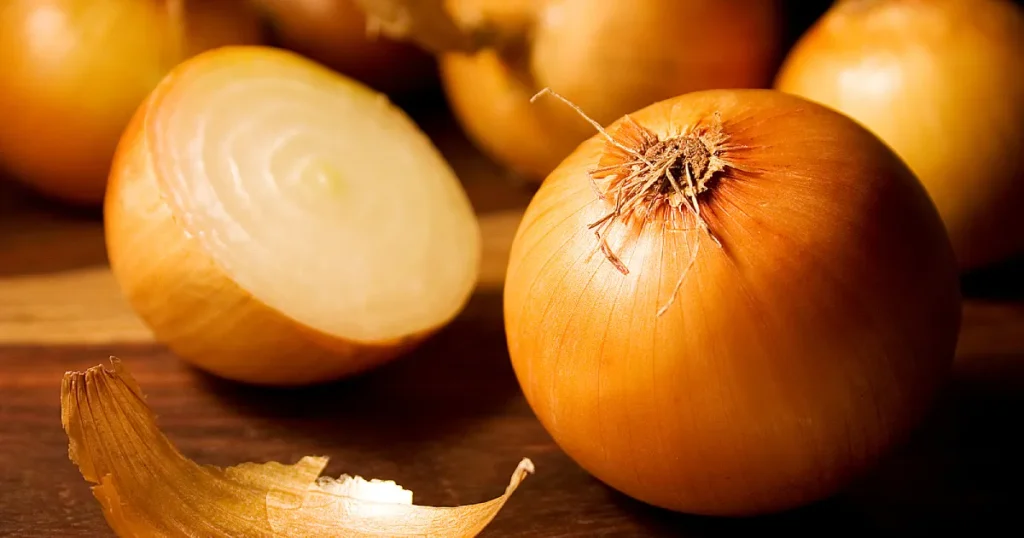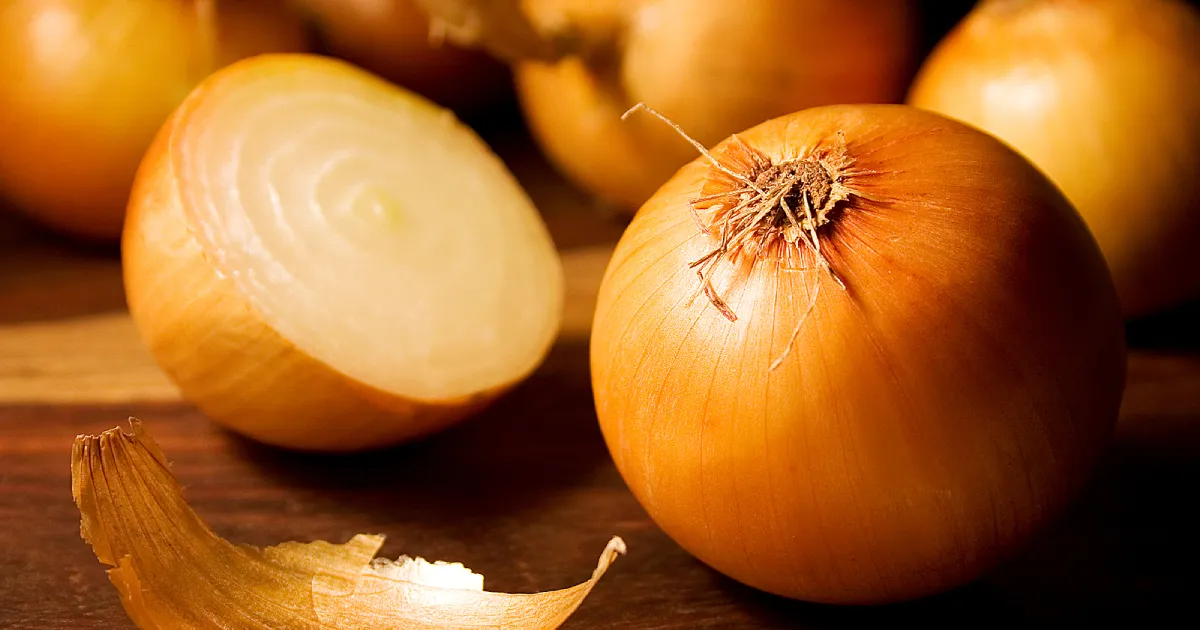
Onions are a popular bulb vegetable that belong to the allium family of vegetables. They provide a small amount of fiber, vitamin C, manganese, vitamin B6, folate, and potassium.
Perhaps more interestingly, onions are a rich source of sulfur compounds and flavonoid polyphenols like quercetin, both of which may have benefits for human health.
Scientific research has linked onion intake to a potentially lower risk of certain cancers, such as gastric cancer, and limited evidence suggests onion may help improve cholesterol. However, research is ongoing and these findings require further confirmation.
In this article, we explain relevant findings from high-quality scientific research on onions and explore onion’s full nutritional profile.
Potential Health Benefits of Onions
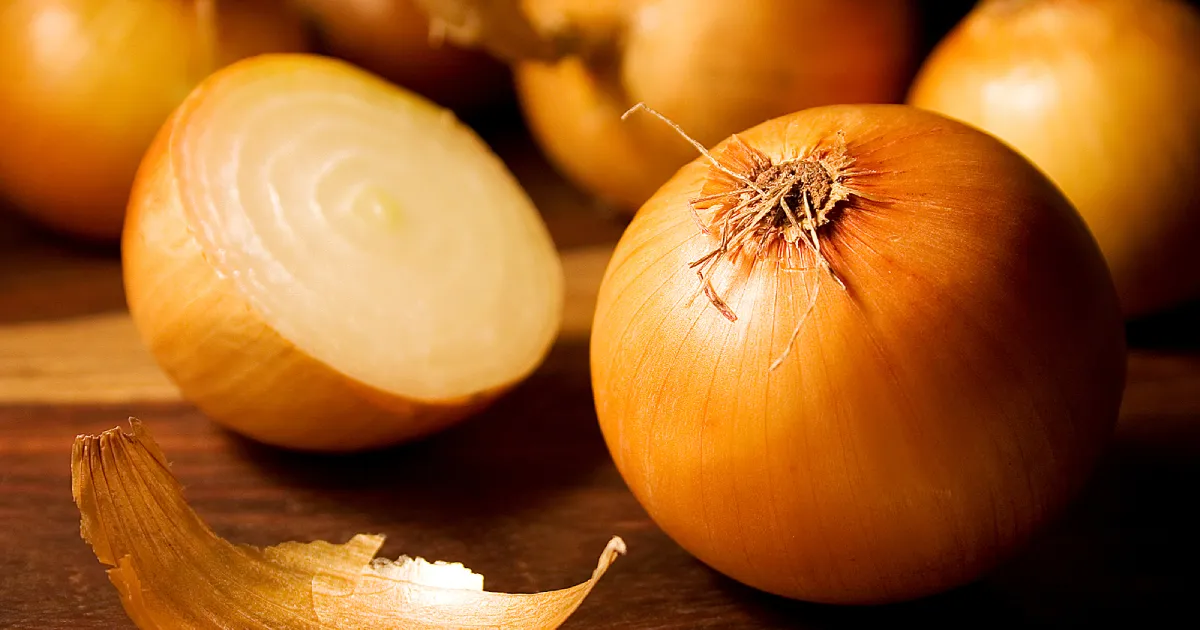
Most of the research on the health effects of onions has focused on the bioactive components they contain.
In terms of these bioactive compounds, onions contain organosulfur compounds including:
- Thiosulfinates
- Sulfides and disulfides
- Cysteine derivatives
These sulfur compounds have attracted significant attention in the scientific community, with cell studies finding they may have anticancer effects. In addition, onions are a notable source of flavonoid polyphenols like quercetin.
Onions and Cancer Risk
Two large meta-analyses which examined onion intake and cancer risk had the following findings:
- Upper aerodigestive tract cancer: A meta-analysis of twenty-five observational studies found that the highest intakes of onion compared to the lowest were associated with a 28% reduced risk of upper aerodigestive tract cancer.
- Gastric cancer: A meta-analysis of twenty-six observational studies found a link between onion intake and a reduced risk of gastric cancer. Based on data from 13 case-control studies, individuals with the highest intakes had a 45% reduced risk of gastric cancer compared to those with the lowest.
It is worth remembering that these were observational findings, which means that we can’t be certain that onion intake was the cause of the reduced risk. However, it does fit with findings from the wider research on allium vegetables as a whole, which include vegetables like garlic, leeks, chives, and scallions.
For example, a 2022 systematic review found that garlic intake was associated with a reduced risk of gastric cancer. Additionally, a 2023 observational study found that increased intake of allium vegetables was linked to a lower risk of gastric cancer.
What this means: Observational studies have found a link between onion intake and a lower risk of gastric cancer. We can’t be sure this is due to onions, but the data show that people who eat more of them have less risk.
May Have Benefits for Gut Health
A 2021 systematic review of 17 studies examined research on the effects of organosulfur compounds from onion on gut health.
Notably, the review found no clinical trials, which means that there is no strong evidence of health effects in humans.
However, cell studies and animal studies suggested that organosulfur compounds from onion may:
- Increase beneficial bacteria: This refers to the numbers of beneficial bacteria in the gut. It is thought that higher amounts of beneficial bacteria can have benefits for human health.
- Antibacterial activity: The compounds appeared to have an antibacterial effect against pathogens.
It is worth remembering that findings from cell and animal studies don’t prove that these effects will be seen in humans eating onions.
Better quality evidence from human trials is necessary to confidently claim that onions benefit gut health.
May Improve Cholesterol
A meta-analysis of ten randomized controlled trials assessed how onion may affect blood cholesterol levels.
The study involved 446 participants and found that:
- LDL-C: Onion supplementation significantly lowered low-density lipoprotein cholesterol (LDL-C) by an average of 6.64 mg/dL (0.17 mmol/L). LDL-C is commonly known as “bad cholesterol” and higher levels are associated with an increased risk of cardiovascular disease.
- Total cholesterol: Based on nine of the trials that recorded onion supplementation’s effect on total cholesterol, there was a reduction of 5.39 mg/dL (0.14 mmol/L).
However, many of these studies used onion extract supplements rather than actual onion. This makes it difficult to generalize the results to people simply eating onions as part of their diet.
That said, one of the included studies in the review was a pilot study where 24 participants consumed 100 ml of onion juice daily for eight weeks. In this small study, onion juice significantly reduced LDL-C and total cholesterol.
What this means: A reduction in LDL-C is seen in studies using onion juice and onion extract supplements in human participants. While whole onions may have a similar effect, there are no studies to confirm it.
Weight Management and Antiobesity Effects
A 2023 systematic review and meta-analysis of five randomized controlled trials investigated the potential antiobesity effects of onion.
The review found that onion supplementation modestly reduced body weight. Four of the five studies which used onion peel extracts had more pronounced effects.
Two important things to note about this review:
- Not whole onions: The trials the systematic review covered used onion extract supplements rather than whole onions. This means it cannot confirm that eating whole onions has the same effect.
- We generally don’t eat onion peel: Onion peels are extremely tough and practically inedible. It is thought that studies using onion peel had more significant effects because the peel contains more than 80% of the total flavonoid polyphenol content of an onion and it is particularly rich in quercetin.
What this means: Onion supplement products have shown antiobesity effects in human trials. However, this does not provide evidence for these effects from whole onion intake.
Can You Eat Onion Peel?
If the significant quercetin content of onion peel attracted your attention, you might have wondered about eating it.
As mentioned, the peel is tough and would be very difficult to actually chew; it wouldn’t be enjoyable nor would it be recommended.
However, it is possible to simmer the onion peel in soups, stews, curries, and stocks and later remove it before serving the dish. This is because quercetin is relatively heat-stable and water-extractable, so using the peels in this way will result in quercetin and other flavonoids transferring to the dish.
As an example, a study showed that over 50% of the flavonoids in onion leach into soup.
Potential Downsides
While onions are generally recognized as a healthy dietary addition, they can have potential downsides for a small proportion of people:
- FODMAPs: Onions contain a high amount of a short-chain carbohydrate called fructan. This makes them a food that contains FODMAPs, which stands for Fermentable, Oligosaccharides, Disaccharides, Monosaccharides, and Polyols. Humans lack the enzymes to digest fructans, so they pass to the bowel where gut bacteria ferment them, which can cause digestive issues for some people.
- Allergy: While true onion allergies are rare, a small proportion of people may be sensitive to them. A study involving 8109 patients at an allergy clinic found that 27 patients had a hypersensitivity to garlic or onions. This represents roughly 0.3% of participants, though it doesn’t establish how common onion allergy is in general.
Anyone experiencing any potential symptoms of allergy or gastrointestinal distress from onion should consult with their healthcare provider.
Onion’s Full Nutrition Profile
Let’s now examine all the nutrients that onions provide. In the tables below you’ll find the full nutritional profile for raw onions per 100g and per 110g medium onion. We have calculated and presented Percent Daily Values (% DV) where applicable.
We have focused on raw onions to keep the nutritional data accurate; sauteed onions have extra fat (and calories), but not everyone cooks onions the same way.
Nutrition data source: USDA – Onions, raw
Calories and Macronutrients
| Nutrient | Per 100g (% DV) | Per 110g medium onion (% DV) |
|---|---|---|
| Calories | 40 kcal | 44 kcal |
| Carbohydrates | 9.34g | 10.3g |
| Fiber | 1.7g (6%) | 1.87g (7%) |
| Sugars | 4.24g | 4.66g |
| Fat | 0.1g (<1%) | 0.11g (<1%) |
| Saturated fat | 0.04g (<1%) | 0.05g (<1%) |
| Monounsaturated fat | 0.01g | 0.01g |
| Polyunsaturated fat | 0.02g | 0.02g |
| Omega-3 | <0.01g | <0.01g |
| Omega-6 | 0.01g | 0.01g |
| Cholesterol | 0 mg (0%) | 0 mg (0%) |
| Protein | 1.1g (2%) | 1.21g (2%) |
Onions are primarily a source of carbohydrates, and they contain a small amount of fiber and protein.
Vitamins
| Vitamin | Per 100g (% DV) | Per 110g medium onion (% DV) |
|---|---|---|
| Vitamin A (RAE) | 0 mcg (0%) | 0 mcg (0%) |
| Vitamin C | 7.4 mg (8%) | 8.14 mg (9%) |
| Vitamin D | 0 mcg (0%) | 0 mcg (0%) |
| Vitamin E | 0 mg (0%) | 0 mg (0%) |
| Vitamin K | 0.4 mcg (<1%) | 0.44 mcg (<1%) |
| Thiamin (B1) | 0.05 mg (4%) | 0.05 mg (4%) |
| Riboflavin (B2) | 0.03 mg (2%) | 0.03 mg (2%) |
| Niacin (B3) | 0.12 mg (1%) | 0.13 mg (1%) |
| Pantothenic acid (B5) | 0.12 mg (2%) | 0.14 mg (3%) |
| Vitamin B6 | 0.12 mg (7%) | 0.13 mg (8%) |
| Folate (B9) | 19 mcg (5%) | 20.9 mcg (5%) |
| Vitamin B12 | 0 mcg (0%) | 0 mcg (0%) |
| Choline | 6.1 mg (1%) | 6.71 mg (1%) |
As the table shows, onions provide a modest amount of vitamin C, thiamin, vitamin B6, and folate. They are not a significant source of other vitamins.
Minerals
| Mineral | Per 100g (% DV) | Per 110g medium onion (% DV) |
|---|---|---|
| Calcium | 23 mg (2%) | 25.3 mg (2%) |
| Iron | 0.21 mg (1%) | 0.23 mg (1%) |
| Magnesium | 10 mg (2%) | 11 mg (3%) |
| Phosphorus | 29 mg (2%) | 31.9 mg (3%) |
| Potassium | 146 mg (3%) | 161 mg (3%) |
| Sodium | 4 mg (<1%) | 4.4 mg (<1%) |
| Zinc | 0.17 mg (2%) | 0.19 mg (2%) |
| Copper | 0.04 mg (4%) | 0.04 mg (4%) |
| Manganese | 0.13 mg (6%) | 0.14 mg (6%) |
| Selenium | 0.5 mcg (1%) | 0.55 mcg (1%) |
Onions provide a range of essential minerals, but mostly in small quantities.
Are Onions a Healthy Choice?
As shown in this article, onions contain small amounts of important nutrients like fiber, vitamin C, and B vitamins. However, most of the research on their potential health benefits has focused on their sulfur compounds and polyphenols.
While onions are associated with a lower risk of gastric cancer in multiple studies, this is observational research and cannot establish causation.
Based on the available evidence, it is reasonable to suggest that onions contribute beneficial compounds to the diet and may benefit human health, particularly as part of a nutrient-rich diet.
References
Full List of Scientific References
(Select to Expand)
(Select to Expand)
Related Posts:
Fresh vs. Frozen Fruit & Vegetables: Which Is Better…
33 Popular Types of Potatoes
Cauliflower: Nutrition Profile and Potential Health Benefits
Garlic: Nutrition, Health Benefits, and Downsides
Okra Nutrition: Potential Health Benefits and Full…
Sweet Corn: Nutrition, Potential Benefits, and Drawbacks