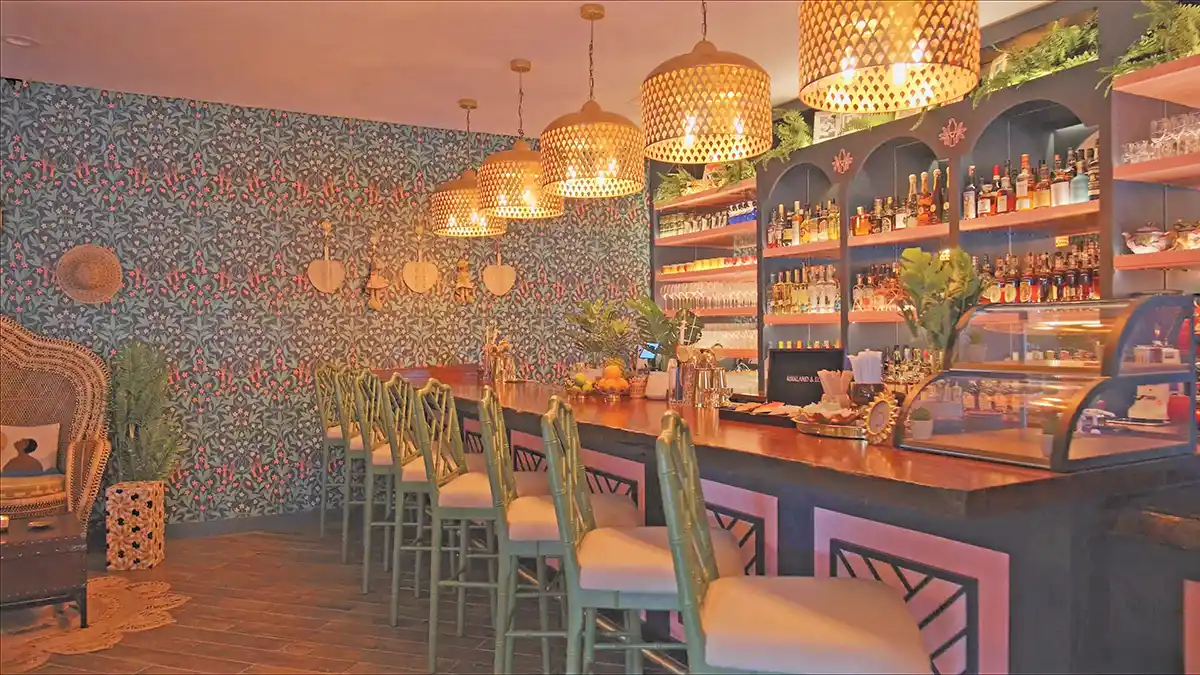

It was modeled after Bon Vivant, a bar Old Pal Hospitality opened in 2019 in Nassau. That bar catered to locals—and was named the 50th best bar in the world in 2026. But in Marina Village, The Dilly Club is catering to tourists. The Dilly Club took learnings from Bon Vivant and expanded its menu. While they put their customers first, they aren’t pandering to tourists. They follow industry trends, but decipher them through their own lens.
The result? An incredibly successful cafe and cocktail bar offering craft cocktails in the artisan desert of a resort village. I spoke to Anthony Major Smith, the VP of Operations for Old Pal Hospitality, about how he’s translated his acclaimed local bar, Bon Vivant, to a whole new consumer.

“This was meant to be a place where tourists can come and experience what the cocktail world is like in The Bahamas,” said Smith. They aren’t assuming that their customers know anything about cocktails. But they aren’t speaking down to them, either. They simply give them all the information they need to make a decision at their fingertips. “Their preferences are involved in the decision-making, but also they get as much information as they need to make a decision,” said Smith.
There’s a key at the front of the menu, with symbols indicating whether a cocktail is served sparkling, “up,” blended, or with cubed or crushed ice. Or, if a cocktail tastes sour, spicy, sweet, fruity, smoky, etc. The menu breaks down each ingredient in the cocktail and even includes a short write-up that describes the drink’s personality. It’s a menu the customer can explore at their own pace. And, if they still have questions, the friendly staff is there with answers and recommendations. And the in-depth menu isn’t just for the customer’s sake. It also helps train the staff. “It’s just about showing people what flavors that drink is going to hit, what sort of experience the drink is going to give you on the palate, and also helping the staff members be able to explain it as well,” Smith
explained.
For the managers of the Dilly Club, hospitality is the foundation; the technical skills come later. “A lot of people that were hired didn’t necessarily know what they were doing at first,” Smith explained. “The model was always to hire good people, and then we could turn ’em into bartenders later.”

By prioritizing personality and warmth over a stacked resume, they built a team that genuinely cares about the guest experience. “Some of them never bartended a day in their life, but they were just good people. They were kind people. They were good hospitality people. You know what I mean? It’s hard to teach that,” he said.
You can teach someone how to clarify a cocktail, but you can’t teach an ego to be humble or train someone to be
naturally welcoming.
The Dilly Club stays ahead of the curve, but they never adopt a trend just for the sake of it. “Every time we see something new, we’re like, okay, so how do we do this in our own way?” Smith said.
The goal is to utilize modern techniques like fat washing, clarifying, shrubs, and infusions, but ground them firmly in local culture. “We look to do different techniques… but not in a redundant way, not in a way that it’s like you just added that for shits and giggles,” he noted. “Industry relevance is very important. Using ingredients and techniques, and also spirits that are relevant in the industry, but also making it relevant to The Bahamas.”
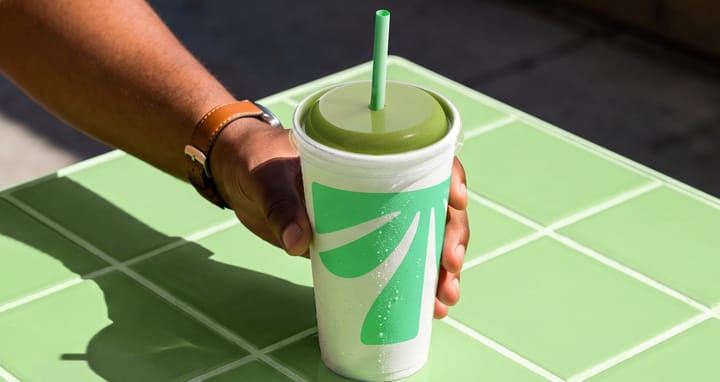
That means serving up beloved tropical classics like the Jungle Bird, Piña Colada, and Painkiller alongside eight different meticulously crafted frozen cocktails. It also means pushing the envelope with ingredients like matcha. Take their Wabi Sabi, for instance: a matcha-infused cocktail blended with mezcal, Yuzu Curaçao, orange, and lime that offers a beautifully smoky, vegetal, and citrusy flavor profile. Or their vibrant take on a mimosa, which swaps out standard orange juice for fresh passion fruit.

Part of what makes the Dilly Club work so flawlessly is that it refuses to be set in its ways. Management views the bar as a living, breathing concept, constantly learning from its past.
“We took the blueprint from Bon Vivant, which pretty much looks almost identical to the inside of this place, and took the dos and don’ts from Bon Vivant, what we did wrong then, and then made this,” Smith noted.
Adaptability is key to their daily operations. When Smith noticed that a single order for an espresso martini would set off a chain reaction across the room, he didn’t complain about the heavy lift—he leaned into it. “They were getting smashed with espresso martinis. We could sometimes sell 60 espresso martinis in a night,” he said.
Instead of letting it slow down service, he expanded the offerings into a dedicated menu section. “Now you’ve got a coconut one, a salted caramel one, a mezcal one…. And it was a hit, honestly,” Smith said. To support the overwhelming demand, they even invested in an espresso machine capable of pulling six shots at once—a massive operational upgrade for a venue pulling double duty as a cafe and a cocktail bar.
Ultimately, their success comes down to a simple formula: always trying new things, seeing what sticks, and being willing to pivot—while keeping the heart of Bon Vivant and the Dilly Club intact.