This story is part of our ongoing series From the Ground Up, a collaboration between Narratively and ScottsMiracle-Gro exploring the lives, memories, and connections rooted in the yards, fields, and green spaces we call home.
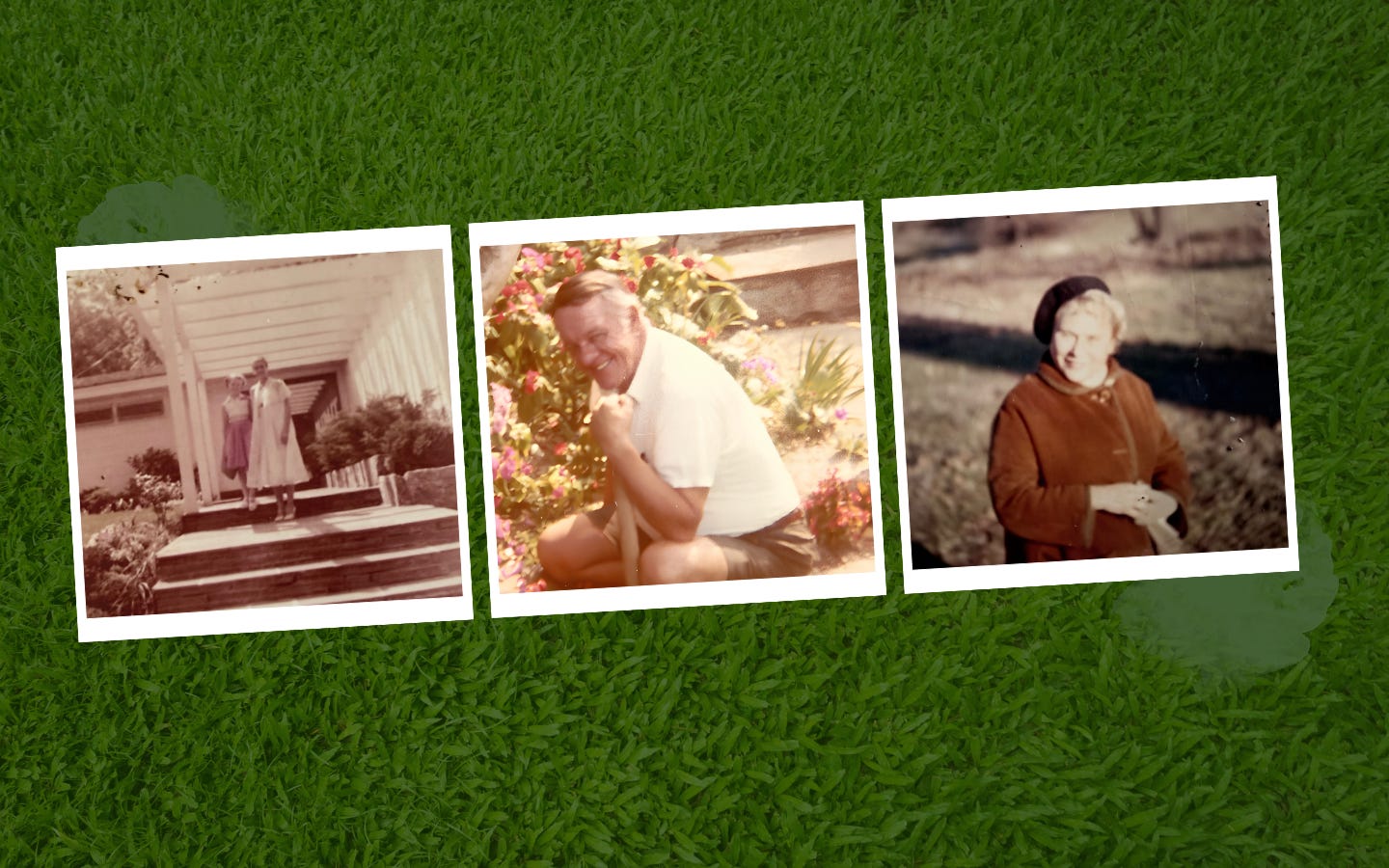
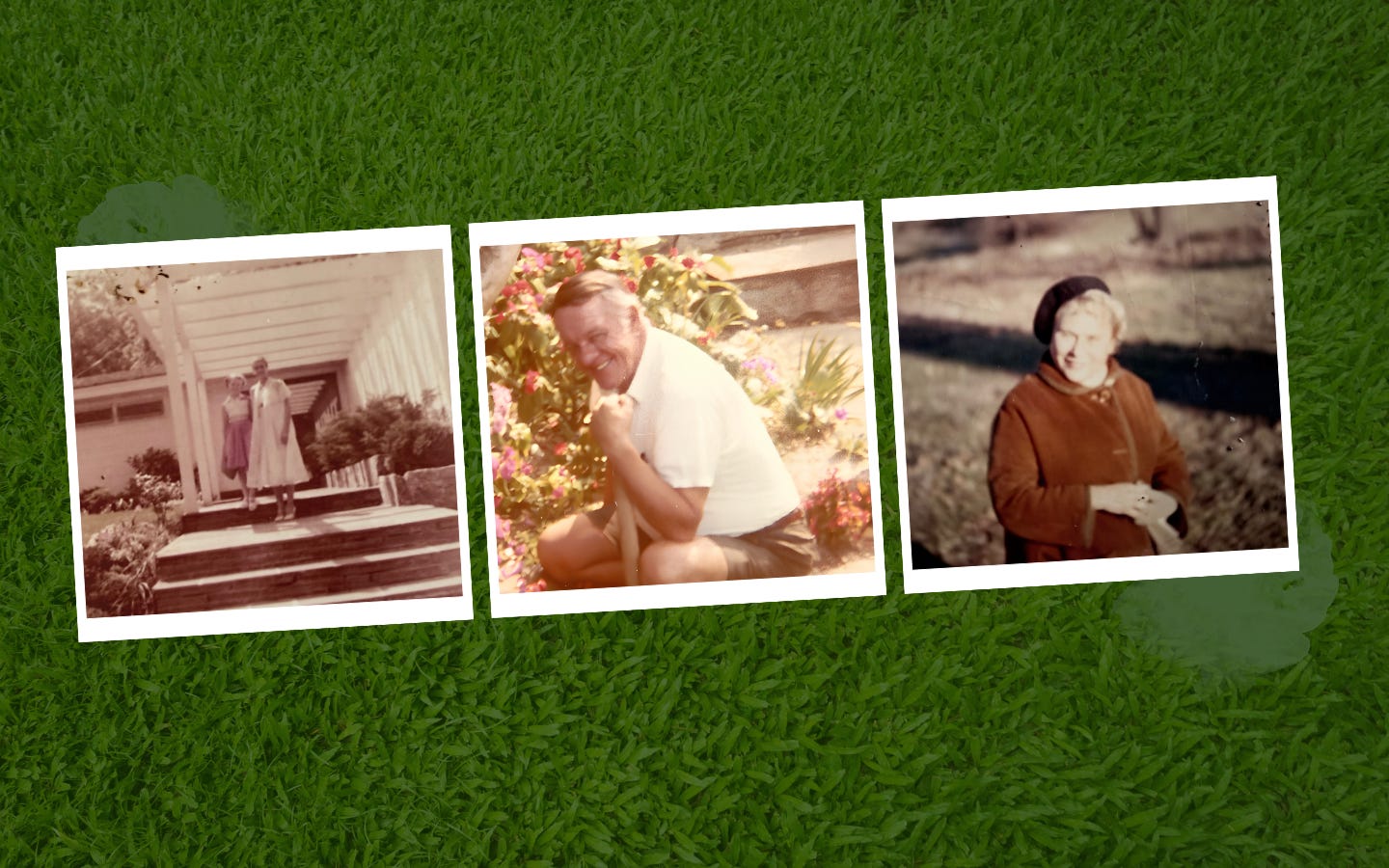
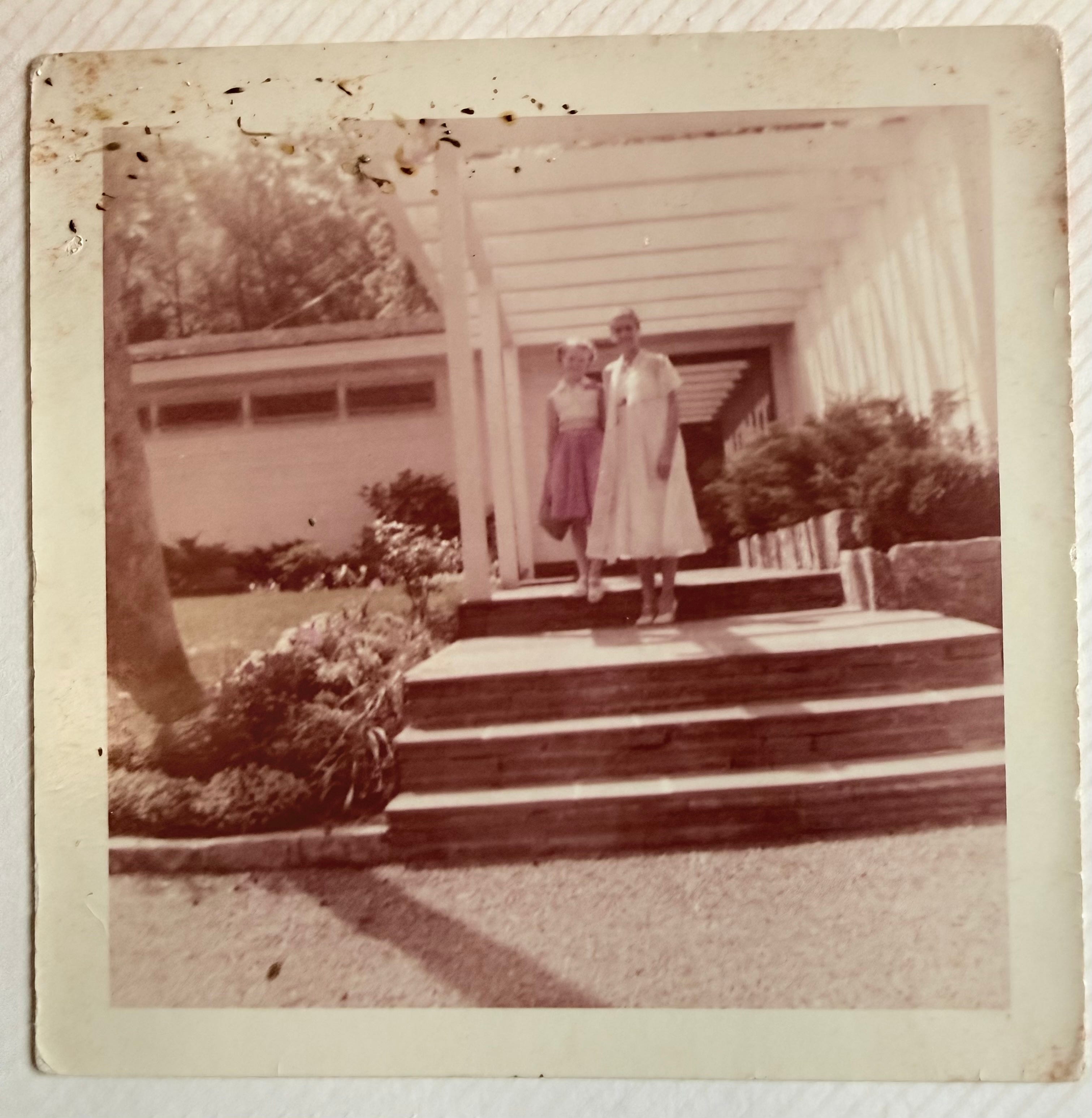
My father and mother met onstage at New York City’s famous Cherry Lane Theatre in 1941. After my sister and I were born, they decided to move out of the city to a small rented house in Sparta, a town in northwest Jersey where my aunt’s family had a summer house on Lake Mohawk. It was a pretty town 50 miles west of Manhattan, and my parents played golf, joining the postwar cocktail circuit of the early ’50s.
When they decided to buy property, it was on Stanhope Road, high above the lake on rolling, hilly terrain that climbed from the street up around the house they built all the way to the woods. At the time, it was all forest, but my father selected a dozen or more towering oak trees and cleared and graded the rest of the land into gentle hills.
He planted five acres of fine fescue grass, a carpet of green that stretched in all directions. It was a park-like setting where I invited my friends to come and play, and we would race our soapbox cars — built out of two-by-fours and steered with rope — and sled, throw footballs, softballs, and frisbees, play badminton, tetherball, tag and, really, any game as long as it involved rolling around in the grass. It was heaven. I’d often stumble out the kitchen door and see a herd of deer quietly munching grass, before they all turned up the white underside of their tails and pranced off into the woods. Did I mention my parents painted our house babypink? Outside there was gray flagstone then a green world as far as you could see.
You could just walk around and lie on the lawn anywhere, in the sun, in the shade. During the spring, little tiny yellow flowers, barely noticeable, sprang up and you could bury your nose in them and breathe in the sweet smell, or roll down the hill or just laze in the heat.
The grass was soft but had a layer of turf underneath so that it felt like a natural mattress. In the fall, we’d rake leaves into piles then jump into them and wrestle. We could act out fantasies, like pretending we were the Hardy Boys solving a mystery, or dress up like pirates wielding plywood swords and wearing scarves stolen from my mother’s dresser and knotted across our heads. Mom would shriek when she saw us. Or, we might be detectives drawing our cap guns from toy shoulder-holsters, or hula-hoopers or treasure hunters, or doers of inadvisable but deliriously fun things like launching plugs of grass and dirt at each other.
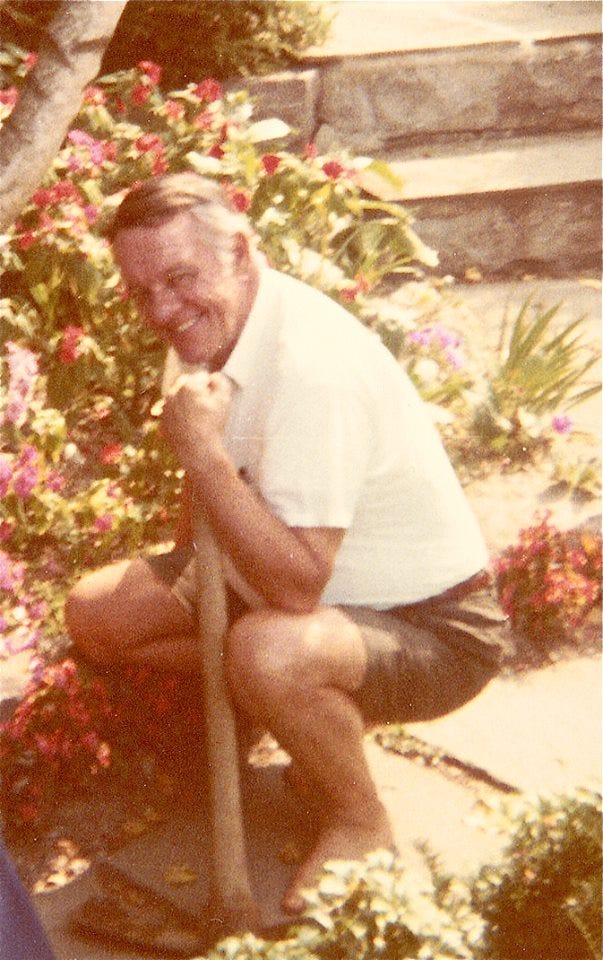
My father hired several young men in their early ’20s to cut the grass and tend to his flower beds, which burst with roses, zinnias, mums, petunias and geraniums, and accompanied flowering trees like dogwoods and my parents’ favorite, tree peonies. With two sisters, I was always bored for a male friend and often got into trouble trying to taunt these older guys to get their attention. When they started up the lawnmowers and began cutting the grass, I would run ahead of them and plant a golf ball under a leaf, and the rotary blade would shoot the golf ball out the side of the mower and startle the worker. One of these guys, Gary, who later became a cop, chased me down the front lawn and kicked me hard in the butt. Another worker, Bernard, was kinder when I began burying more hazardous objects; he quietly explained to me that they could actually break the mower or at least ruin the blade.
After my sister hit a softball into a bedroom window, Dad bought the lot next door and cleared another section of woods. There, he built a large baseball field with a regulation backstop behind the equipment sheds and his music studio, where a tall oak grew through a skylight. Each year on my birthday, I would host a game between the “Yankees” and “Dodgers,” and give out prizes. (I’d also cry inconsolably when my team lost, which would embarrass my father to the point of anger.) I grew up watching the Yanks on WPIX channel 11, saw Roger Maris hit his 61st home run in black and white, and the irony is I eventually moved to Los Angeles in my ’40s and became a Dodger fan and a Yankee-hater.
In this sweeping paradise of ours, I spent hours floating high above the grass on rope swings strung from a high beam stretched across the canopy of the oaks, or climbing in my choice of treehouses — the second of which my father built for me when he worried my own creation wasn’t safe enough. From these perches, where I felt safe and free and came to understand the importance of having an escape, I’d watch the sunset and the green grass go dark.
Temper and sensitivity aside, Dad was clearly an eccentric visionary — the type who would stand and sing “What Kind of Fool Am I?” in the middle of a restaurant. He even created a little three-par golf course for us to practice on. At the top of the grass carpet up by the woods, the young men worked tirelessly on a majestic rock garden, and to the left of it planted putting-green grass complete with a real cup and flag.
For a few Christmas seasons, Dad cut giant stars out of plywood, covering them with tin and giant, colored bulbs that he had hung up near the tops of the oaks. At night, you’d pass on Stanhope Road or pull into the driveway, and there was this spectacular light-show of stars flashing their colored lights above the house. It was exhilarating to me, and I revered Dad for it. That is, until a client of Father’s came for dinner, looked up, and said it looked like Luigi’s Pizza Palace! That was the last year of the star lights mounted in the trees.
Sometimes when I was playing outside in the grass, I could hear my father sing. This was clearly his escape, too. In addition to being a businessman, he sang opera with a small company in New York City and eventually started several theaters, ultimately taking a musical he had written to off-Broadway. That last venture unfortunately caused him to go bankrupt and my parents’ marriage ended shortly after. When my mother drove me to look at another house, she came back inconsolable. Nothing would ever compare to our utopia on Stanhope Road.
The last time I saw it, the house was no longer pink but painted brown and had fallen into disrepair.