Earlier this month, we published a piece by Kristi D. Osorio on our sister site Narratively Academy about what she’s learned about self-promotion after publishing her memoir, The Sound of Burning: A Mother, a Daughter, a Murder. Now, we’re bringing you an essay related to that book that offers a glimpse of what it often looks like behind the scenes of writing such a vulnerable memoir. Plus, we’ll be doing a live video reading of this piece followed by a Q&A with Kristi on Wednesday, November 11, at 7 p.m. ET. If you love this piece and want to hear Kristi read it out loud, or you have questions for her around it, please join us then via Substack Live!
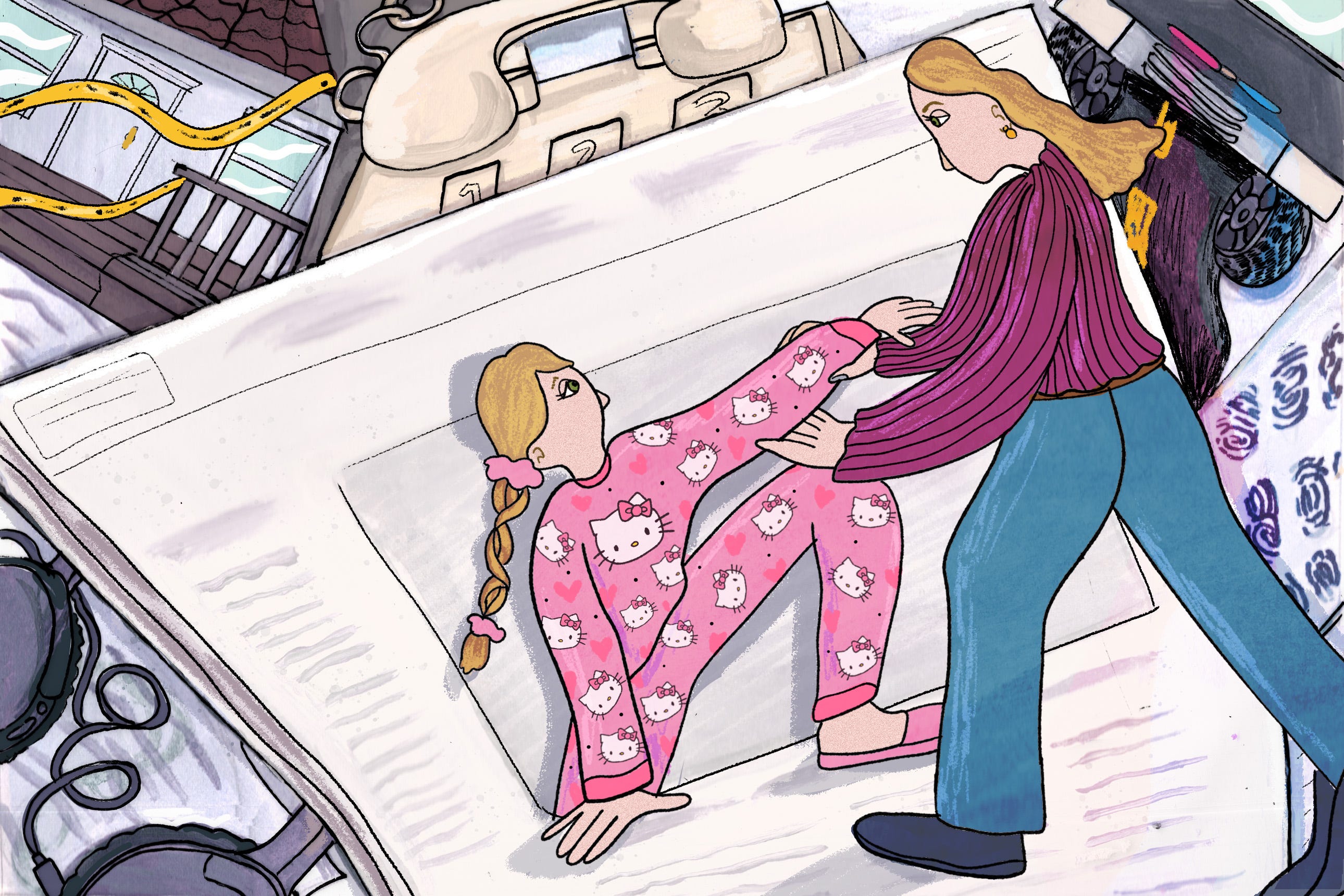
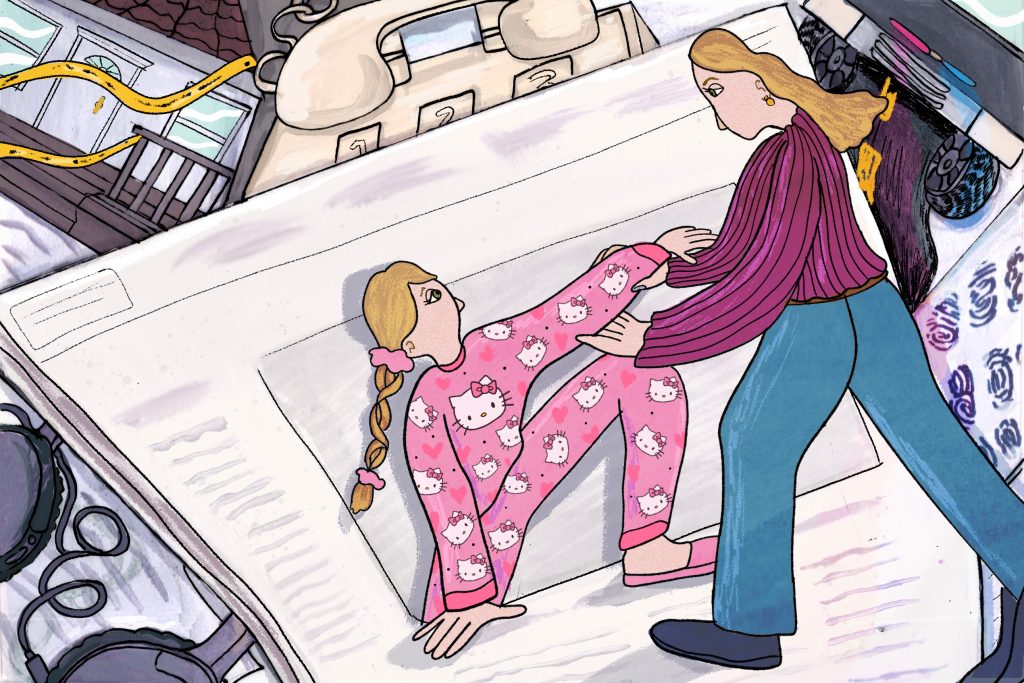
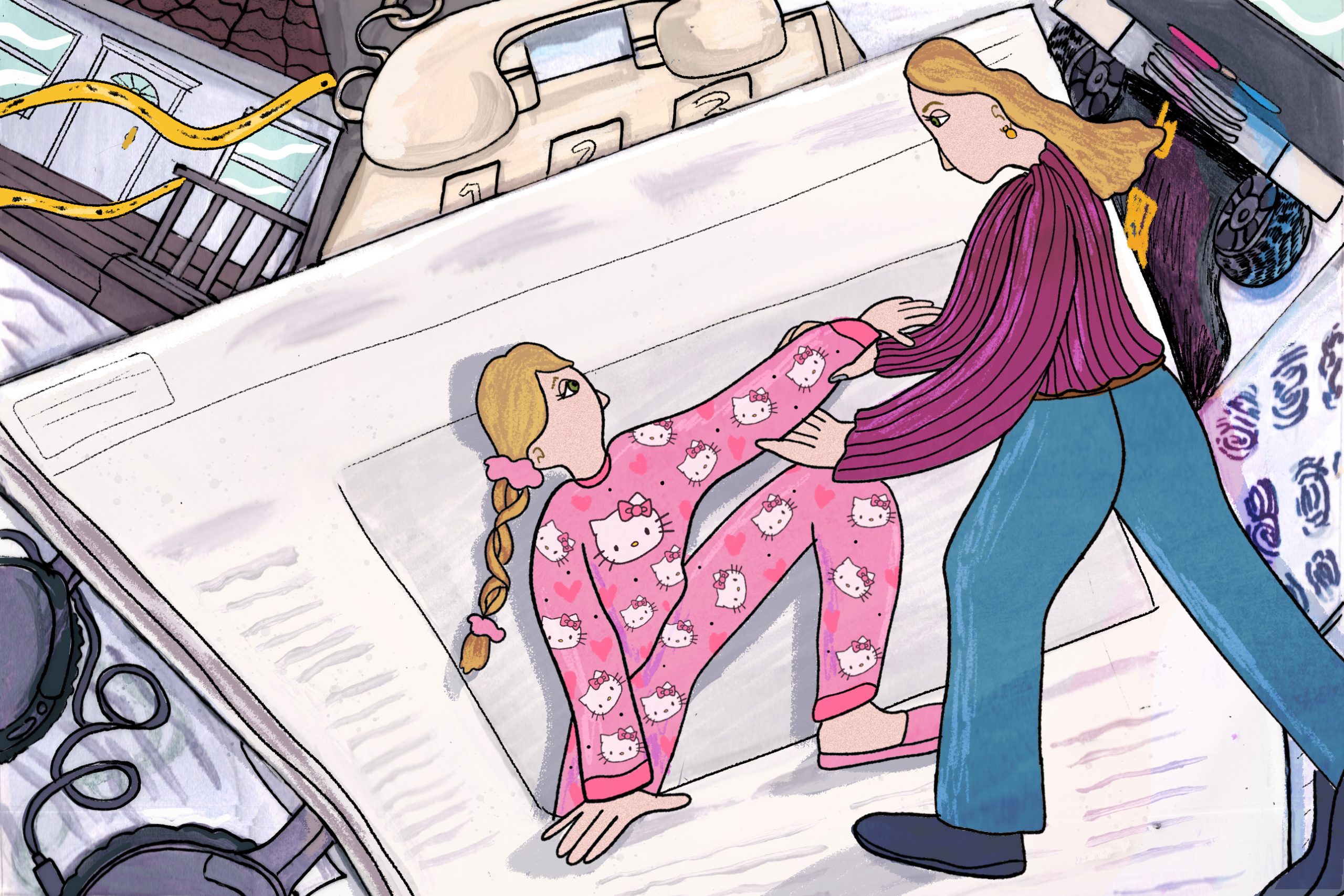
I started keeping a list of things the newspapers got wrong. In one article, they spelled my name Christy instead of Kristi. In another, they referred to me as a 16-year-old even though I was only 15. In yet another, they said that the murder had happened in Mom’s room, not my grandma Betty’s. What they got right were my pajamas, the Hello Kitty ones I’d worn to bed that night, before I knew what a scream really sounded like. Woman stabs mother while two kids sleep down the hall, is what they reduced it to. After it happened, I never wanted to look at the articles. I knew they existed because after I stopped going to school, a friend told me some asshole from my art class had taped Mom’s mug shot up on my locker.
It was just a joke, I was assured. Among the headlines were gems like: “Scene of Suspected Matricide” and “Mom Stabbed 20 Times.” Then, the following year, there was the image of my mother sitting at the defense table holding her head in her hands that haunted me for years. After the trial, there was the headline about her 15-year sentence, which, instead of using her name, simply referred to her as “Stabber.” When it was over, when she went to prison and the case was closed, there were no new articles. Reporters moved on to other crimes in the region, exploited other families for a good front-page story.
In college, two years after the murder, I started dating a boy who was in a band that was starting to take off online. I never told people about the murder, about Mom or Betty, especially not cute boys in cool bands. During winter break, we met for a virtual date on Skype, and he said a fun game would be to Google each other, see what came up. I told him I didn’t want to, that it would probably be pointless and embarrassing if anything even showed up at all.
“I’m typing you in,” he said in a singsong voice. I knew what he would see: the mug shot, the headlines, the “stabber.”
“Oh, um,” he said, when he’d obviously pulled up the results of the search. “Is this? Um. Actually, I have to go.”In my experience, that’s how people reacted when they found out something awful about you. They made it your problem and then they left.
When I started writing my memoir in 2014 during graduate school, I needed the articles, all of them. Not just the ones that showed up on Google, but the ones that were harder to find, too. It had happened in 2008, right on the cusp of the digital boom, so some of the reports had only appeared in print. Though I needed them for the writing, I wasn’t sure if I was actually ready to face them. The articles I had lived in shame about since they were published, the nauseating headlines I’d worked hard to avoid all those years.
I posted on Facebook asking if any of my friends from my old high school could help me with some “research” for a “project.” After the murder, after I moved away to a different state, lots of classmates friended me on social media, even people who’d bullied me or people I’d never talked to in my life. Sometimes they messaged me to say they were sorry. A girl I’d sort of known back then offered to get me what I needed through the local university’s library database. She emailed them to me in a zip file that I couldn’t bring myself to open for weeks. She didn’t make it weird, didn’t say anything about the content in the file. I was grateful.
The first few times I tried to read the articles, they were just as bad as I’d imagined. I couldn’t stomach the words on the screen. I couldn’t bear the sight of my mother, the murderer, the descriptions of my murdered grandmother. The way other people talked about my brother and me, the things we’d said in police interviews that we thought were private. In one article, a reporter called Mom “pretty,” said her face was a “perfect oval.” There was a picture of our house cordoned off with yellow caution tape, and I physically couldn’t look at the windows to Betty’s room where she died. Everything in that file made me feel sick, made my ears hot with anxiety. I’d start to feel like I was there again, listening to the screams, calling 911 and giving the dispatcher the wrong address. A few weeks later, when I requested the trial transcripts from my mom’s attorney, the same thing happened. I tried to read through all five spiral-bound binders after they were delivered to my apartment in an unceremonious cardboard box, but I could never make it through. It happened once more when I called the police department to ask for any records related to the case. They sent over a few files, but I never opened them. It was too much, too painful, too triggering.
It wasn’t until eight years later, and 15 years after the murder, that I could finally face the articles and the transcripts. I was 30, no longer the teen girl in embarrassing pajamas holding the house phone to her ear with a trembling hand. By then, I had given up on my book half a dozen times, decided I just couldn’t do it. The story wasn’t worth telling. When I finally went back and read them, really read them in their entirety, no hands covering my eyes, no reading through the spaces between my fingers, I was able to finish writing. Reading through those pages, I had to watch my 16-year-old self testify, wearing a striped Hollister button-down, low-rise jeans and flip-flops from Old Navy. At one point, I was asked to repeat what I heard my brother say to the 911 dispatcher when he was told to check Betty’s pulse. Before I answered, I turned to the judge and asked, “Am I allowed to say bad words?” When he nodded, I told the jury, “He said, ‘There’s fucking blood everywhere.’”
By the time I finished writing, it had been more than 11 years since I first got the emailed zip file from my high school friend. I decided to include quotes and even entire passages from the articles, police reports and transcripts in the book to show what it had looked like to have my story told for me. When I submitted the final manuscript to my publisher, I learned I would need to obtain copyright permission to reprint the articles, and maybe even excerpts from the trial transcripts and police reports.
“I have to buy back my own trauma?” I scoffed to my husband as I sent request after request to the newspaper offices, licking another envelope to send out another check in the mail. The irony was that many of the records I was paying for contained errors and got key information, like my age and my name, wrong, so I was paying for somebody else’s version of my trauma. What I tried to remind myself was that these articles, which erased my and my family’s identity and agency, would help me restore our humanity through my own writing.
The process to get the permissions took months. Months of sleepless nights wondering if I’d have to go back and rewrite entire sections if I couldn’t get the permissions, or if I’d get in trouble for using the material later.
“Please consider granting me permission free of charge, or at a reduced fee,” I wrote in my requests, many of which went unanswered until I sent another and then another. I scoured years-old Reddit threads for anything that could help. It varied by state, some said. It depended on how long ago the crime happened. Some were certain I’d have to pay the police department for copyright permission, while others were sure that the content was considered public record.
Aside from getting permission to reprint the newspaper articles, there were still some police records that were missing. Tracking down the records I needed from the police department had been difficult enough the first time, and afterward I hoped I would never have to contact them again. Over the years, I pictured some mysterious back room in the station full of folders and boxes containing my interrogation transcripts, my fingerprints, even the pajamas I was made to change out of in exchange for a jumpsuit like the one Mom would wear on her way to the county jail.
Instead, when I called the police station to ask for the files I still needed, I was told by an apathetic woman — who I’m almost certain went to my high school — that most of the physical files no longer existed. They only lived on in digital folders, she explained. Still, she agreed to send them to me: the last batch of my interrogation transcripts, all of the police reports from that night, even the autopsy report — records I had never seen before, and some I wish I’d never seen at all. My entire interrogation file was redacted since I was a minor at the time, so I wasn’t even allowed to read my own words, my own truth about what I’d seen that night.
After I contacted the courthouse where I testified a year after the murder, the clerk told me I’d have to get permission in writing from the court reporter who’d since retired.
The crime happened 17 years ago, I pleaded. Isn’t it public record?
Late one night, I received an email from an unfamiliar address informing me that I had permission to quote from the transcripts. The court reporter had emailed me directly and signed off by telling me to have a good evening. I didn’t have to pay for my own testimony after all. When I saw her name in my email, so intimate, I wondered if she ever thought about me, or about other minors involved in the trials she recorded. Did she remember the red-cheeked teen girl who asked if she could say a curse word, or was I just one out of hundreds or thousands of kids she’d entered into the record?
The painful moments tucked away in those files reminded me of a fact I felt had been ignored from the moment the police responded to my 911 call: I was a child. I was innocent. I had done nothing wrong. I didn’t know a reporter would have access to my police interviews, to the things I said while my grandmother lay dead in her bedroom. The way I’d felt all these years was as if my mother’s mug shot had been taped across my face, and I would always have to answer for what she’d done. That was the lens through which I’d experienced the world, even formative experiences like what could have been a harmless date on Skype. Everything was stained with shame.
For years, I struggled to separate myself from that teen girl trapped in the pages of a newspaper, inside some court transcript. For years, I thought maybe it would be easier to stay stuck, remain that girl people can read about in a cruel headline but never really know. But the girl I was then didn’t deserve to be preserved in the record that way forever, never allowed to grow up, forced to stay in that room where it happened, making an endless 911 call.
After all the checks were mailed, the permission emails received, the costs of buying my trauma logged in an Excel sheet, I started to feel a small sense of ownership over the things that happened to me. I’ll never get those Hello Kitty pajamas back, wherever they are, but there is proof they existed in these records. Finally, as I allow my book to take on a life of its own now that it’s been published, I can put the files away and end 18 years of being haunted by the past. I was the one who walked into that room and watched my family, my whole life, break open. Not Christy with a CH and a Y. Not some 16-year-old in a living room instead of a bedroom, in a town with another name than mine. My grandma died in the worst possible way. My mother went to prison. But I am allowed to move on. I just had to buy my old self back to start.
Kristi D. Osorio is the author of The Sound of Burning: A Mother, a Daughter, a Murder. She is the winner of the 2023 Indiana Review Creative Nonfiction Prize and the Sonora Review “Mercy” Contest in nonfiction. Follow her newsletter, The Chat Room, where she records and publishes interviews.
Jesse Sposato is Narratively’s executive editor. She has also written about feminism, friendship, culture and parenting for a variety of outlets, including Vanity Fair, InStyle, Slate, HuffPost, Memoir Land, The Rumpus and more. She is currently working on a collection of essays about coming of age in the suburbs, discovering punk rock and being boy crazy.
Jane Demarest is an illustrator based in Philadelphia. Some of Jane’s clients include McSweeney’s, Courtney Barnett, Field Meridians, Off Assignment, Phish and Wilco. Their work has been recognized by the American Illustration Awards.