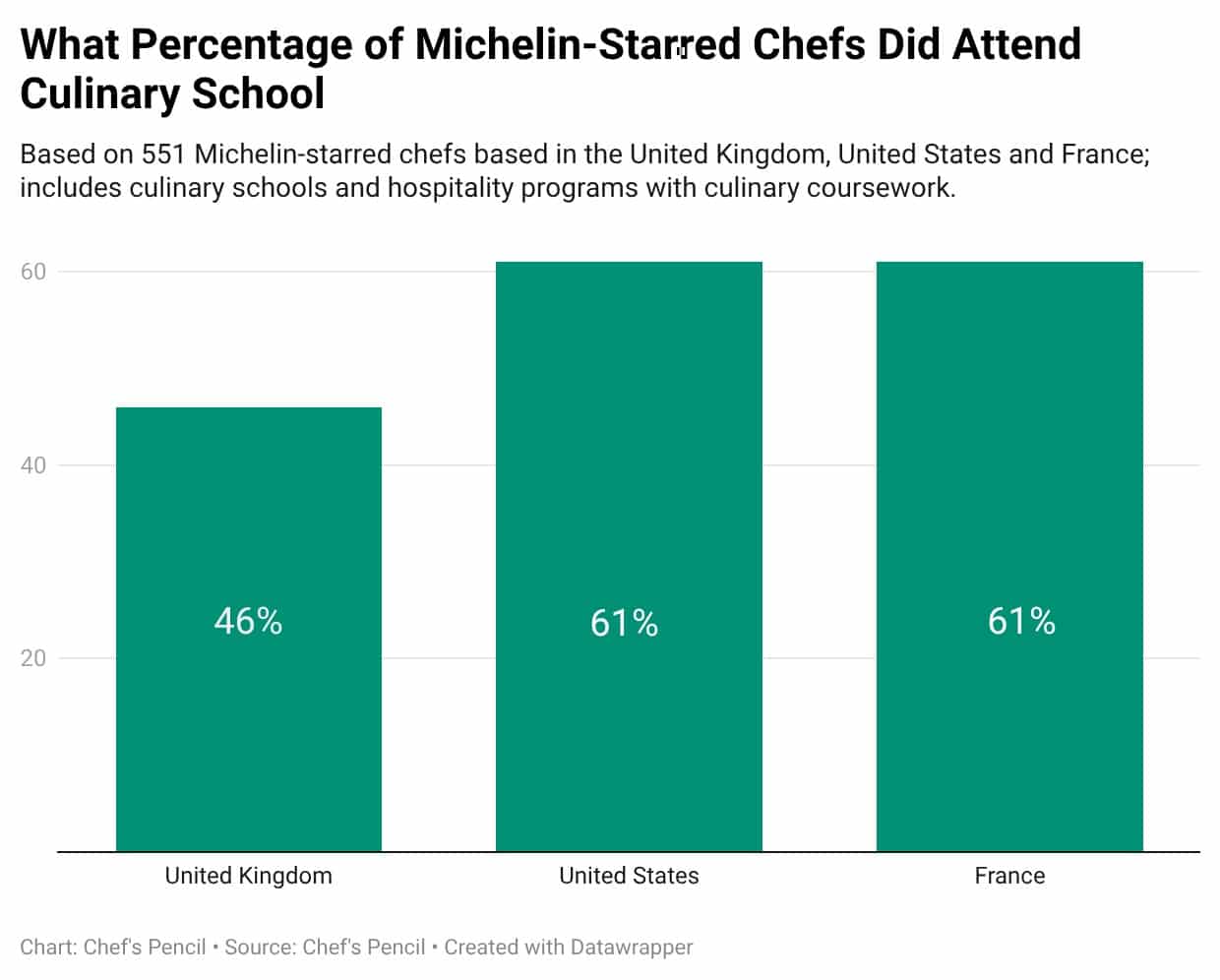
In the UK, Chef’s Pencil previously found that a majority of Michelin-starred chefs developed their careers through apprenticeships and hands-on kitchen experience rather than formal culinary education. France, however, maintains a far more structured and institution-driven culinary system.
61% of France-based Michelin chefs attended culinary school
In fact, 61% of France-based Michelin chefs attended culinary school, a figure almost identical to what Chef’s Pencil previously found in the United States. This suggests that despite their very different culinary cultures, both countries place similarly strong emphasis on formal culinary training as a pathway into elite professional kitchens.

This difference reflects broader cultural and educational traditions. France has long invested in vocational culinary education through public hospitality schools, lycée hôtelier programs, and elite culinary institutions that combine technical training with apprenticeships and professional placements.
For many French chefs, culinary school is not simply optional as it is considered a standard foundation for entering serious professional kitchens. At the same time, practical experience still plays a critical role. Even chefs who attend formal schools typically spend extensive time in apprenticeships, internships, and kitchen brigades early in their careers.
Among all the schools analyzed, one institution stood far above the rest: FERRANDI Paris, with 22 Michelin-chef alumni among the 181 chefs analyzed.
FERRANDI Paris is widely regarded as one of the world’s most prestigious culinary schools, producing a remarkable number of Michelin-starred chefs and culinary entrepreneurs. Known for its rigorous technical training and strong industry integration, the school has built close ties with some of France’s top restaurants and luxury hospitality groups. In addition to its Paris campus, the institution also operates regional campuses across France, including locations in Bordeaux, Rennes, Dijon, and Saint-Gratien, helping extend its influence throughout the country’s culinary education system.
Other schools with multiple Michelin-chef alumni include Lycée Hôtelier Jeanne et Paul Augier (Nice), Lycée Hôtelier de Bonneveine (Marseille), and Institut Paul Bocuse (Lyon). Various regional lycée hôtelier institutions across France were also highly represented.
Unlike the UK system, where public vocational colleges dominate Michelin-chef pathways, France’s model blends elite private culinary schools with state-funded hospitality institutions that are deeply integrated into the country’s apprenticeship culture.
Many chefs also attended local lycée hôtelier schools, which form the backbone of French culinary education. These public hospitality high schools combine classroom instruction with practical kitchen and restaurant training from an early age.