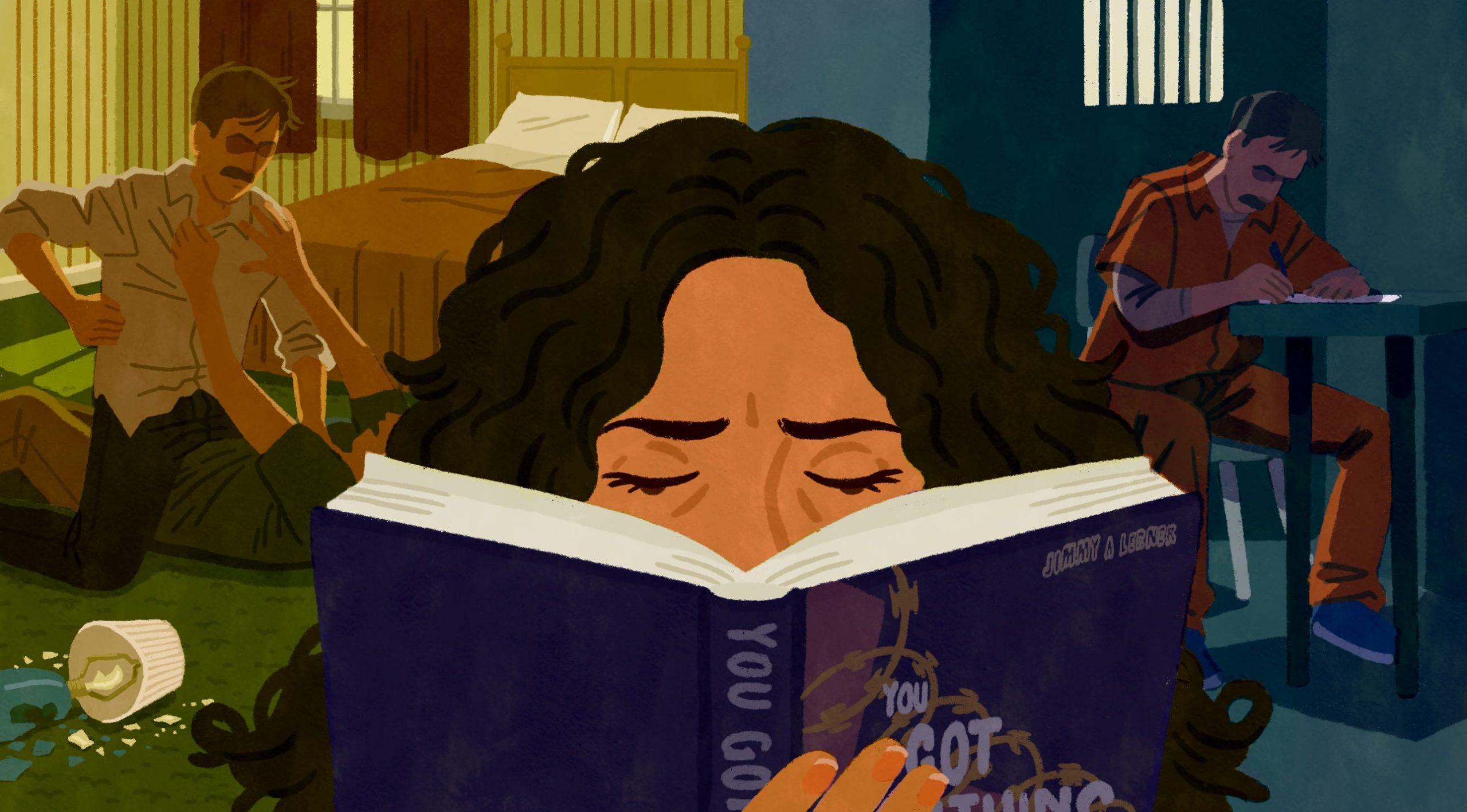
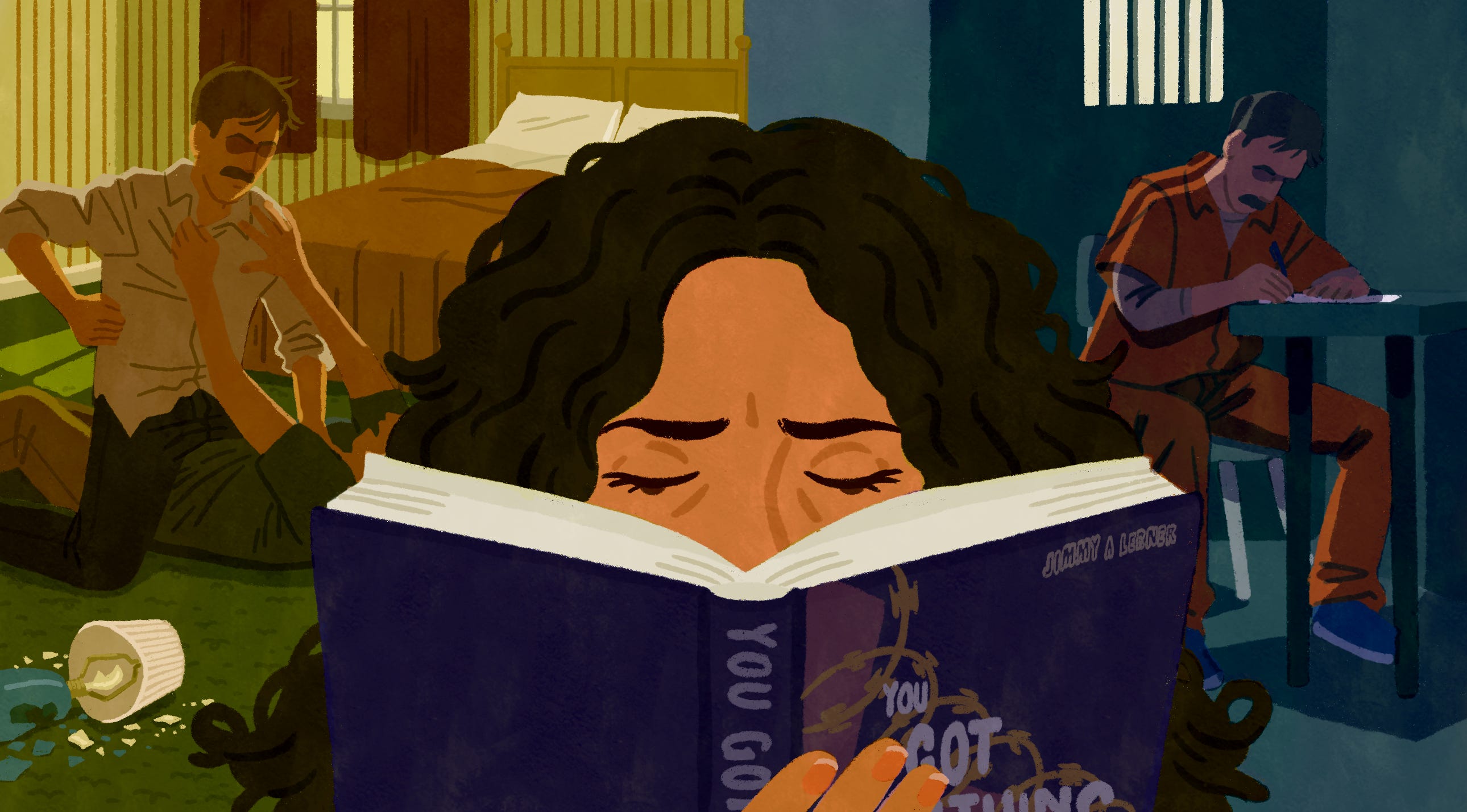
Police arrived at the Sundowner Hotel and Casino in Reno, Nevada, at a quarter to 9 a.m. on Monday, November 10, 1997. The body of 45-year-old Mark Slavin lay in the rear bedroom of room 2017, a laundry bag tied over his head, a belt around his neck and a red Swiss Army knife near his non-dominant hand.
Mark had been brutally beaten and his face was stained with dried blood. His “badly disfigured” nose had pieces of bone protruding from its bridge. Both of his eyes were blackened and swollen shut, and lacerations and abrasions were found along his shoulder, neck, jaw and face. The shapes of his belt — a turtle and a steer’s head — were imprinted on Mark’s neck.
Detectives believed that the crime scene had been staged. Police reports detail bloody drag marks on the hotel carpet and suspicions that the knife did not appear to be in Mark’s possession during the altercation, but was placed after his death.
Mark, long known as “Buzzy” to his friends and Uncle Mark to me, was a lifelong partier enamored with coke, quaaludes and other delicacies. Yet his death came as a great shock — Buzzy was never violent and hadn’t been in the company of any particularly shady associates for years.
Mark Slavin wasn’t actually my uncle, but one of my father’s closest friends and a regular presence in our lives. A few weeks before his death, Mark met my father, brother and me at the now-defunct diner chain Coco’s in Danville, California — just a couple miles north of where my family lived. I was 9 years old and don’t remember much about the dinner itself — it wasn’t abnormal for Mark to meet us, especially if my mom wasn’t around — but I do recall an unusual vibe as I ate what was probably a plate of chicken fingers and a half-diet, half-regular Coke.
There was something both rushed and final about that encounter at Coco’s. My child brain barely registered it, but years later I can feel the off-kilter EQ in my bones.
“He was definitely high. He seemed very animated, and he was happy,” my dad, David Lipsky, recalls of that night at Coco’s. “He’d just come from a job interview or something.”
We never saw Mark again.
Police immediately arrested Jimmy Lerner — a 46-year-old suburban father of two who had most recently been promoted to strategic planning manager for Pacific Bell — for murder. Jimmy later described Mark Slavin as “practically [his] best friend,” but had left Buzzy in anything but a friendly state. Per The New York Times Magazine: “Lerner, who like Slavin had taken an assortment of cocaine and prescription drugs, had in effect tortured his friend.…Lerner’s main injuries, by contrast, were badly swollen hands. His jeans were covered with blood.”
In the months that followed, detectives interviewed Jimmy and Mark’s family, friends and colleagues to piece together the events and personalities that led to the deadly altercation. Buzzy was buried and his community grieved, the sting of his unexpected loss fading as the years went on.
Jimmy Lerner would come back into our lives years later to offer another gut punch — this time, with the release of a “memoir.” You Got Nothing Coming: Notes From a Prison Fish arrived shortly after Jimmy was released from a relatively short prison sentence. It was praised for its deft blend of humor, verisimilitude and visceral description of life behind bars; his own “outsider” status in this world made the narrative even more palatable. The book haunted my family for years — not only because Jimmy seemed to be profiting off Uncle Mark’s death — but because he had changed the narrative. Over 400-plus pages, Jimmy Lerner transformed himself from a cruel killer to the real victim in a series of unfortunate events. The book’s mischaracterizations, fabulations and misconstructions were almost as vile as the murder itself. For decades, I’ve wondered: How did this book possibly get published?
Mark Slavin was born in 1952, and though he grew up four blocks from my father in the southeast Brooklyn neighborhood of Canarsie, then a largely Jewish enclave, the two didn’t become close until they were teens, around 1968. Mark was a class-clown type, generally well-liked and a good talker, my father reflects. “Mark brightened my day on many occasions. He was very funny, but somebody who I wouldn’t necessarily take a lot of advice from.”
Mark was always into drugs, and once gave my dad acid in the middle of the school week without his consent. “If everybody was doing, like, one of something, he would do five of something,” Dad says. That attitude likely rankled Mark’s parents. His father was “pretty easy on smacking kids around,” he recalls, adding that Mark “would fight with his mother all the time. He loved her very much…but there was a lot of mayhem in the house. It seemed caused by him.”
Mark convinced my dad to join him out in California in the early 1980s. They lived together for a brief period and also held sales jobs at the same company. Toward the end of the decade, Mark reconnected with his high school sweetheart, Karen, a no-nonsense lawyer, and they wed. They never had children

While Dad and Mark spoke multiple times a week and hung out as often, Buzzy’s attitude changed after Karen died of cancer in 1993. “He would sort of go into this void. I guess he was in a really dark place,” Dad reflects, adding that Mark might have been taking Karen’s cancer drugs. “It was difficult, at times, for him to see my happy family and two wonderful children…because he was by himself.”
Though a couple years older than Mark, Jimmy Lerner shared a similar history — they were both Jewish and from Brooklyn — a fact that would bond them decades later. After serving in the Army in Panama, driving a taxi and other vocations, Jimmy spent nearly two decades working as a marketing executive for Pacific Bell. He was married for 14 years before divorcing from his wife, and he had two daughters. Crucial to the events that would unfold in Reno, Jimmy was an alcoholic.
Of course, I didn’t know anything about this as a child. I just understood that Mark was different from other adults in my life. He didn’t have a family I’d met; he smoked cigarettes (sometimes with me in the car, occasionally with the windows up, which I hated); and he lived alone in an apartment I thought was sad. But he and my dad shared a long history and, perhaps a testament to the budding journalist in me, I was curious about this guy who presented an alternative to the suburban parents I knew.
By all accounts, Jimmy first encountered Mark at an Alcoholics Anonymous meeting in Danville in the mid-to-late ’90s. In You Got Nothing Coming, Jimmy describes his alcoholism with great relatability and self-deprecating humor. His local AA meetings are filled with an appealingly diverse cast of characters, while Jimmy is a semi-reluctant participant in the controlled chaos. The memoir finds him as an unwitting sponsor to a character based on Mark.
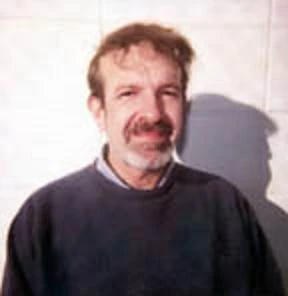
Mark often said he was an alcoholic, “but that was bullshit,” Dad remembers. “He was not a teetotaler, but he barely drank. But I guess when he would decide to go to meetings, they were AA meetings for the most part, rather than NA meetings.
“Mark told me that there’s a whole undercurrent or subculture in the suburbs — in Danville in particular — where like-minded druggies would go and drink and talk about where they’re going to score some drugs,” Dad continued.
One of Mark’s tried-and-true methods for scoring involved going to the hospital, where he’d lean on a motorcycle accident from a few years back in which he hyperextended his leg. “He was messed up and that was his excuse — that he was in so much pain, he needed painkillers,” Dad, a motorcyclist himself, says. “I don’t doubt that it was a serious accident…but it took years for him to finally admit that he was high when it happened.”
Despite his lifelong drug use, Mark was a good salesman and incredibly lucky. Whether in the medical products he sold — including pharmaceuticals, contact lenses and, later, anal probes — or in his ability to get out of a jam. “He was like a cat with nine lives,” Dad notes. “He just always landed on his feet.”
It’s hard to imagine that my father — an “enthusiastic follower” by his own description, a fun but stubborn and risk-averse person by mine — would maintain a friendship with someone who was often wild and plain messy, especially as his family grew. But Dad and Mark had grown up together. Both Brooklyn Jews, they knew each other’s friends and family. When Mark wasn’t “acting bizarre,” as my dad says, his good qualities shined through.
“He was a very good-natured person,” Dad says. “He was very smart. He was able to present himself in a way that was very normal. He was a very high-functioning addict.
“When he was completely messed up, I had zero tolerance for that.”
But Mark had other friends to use or binge with.
Mark and Jimmy were “running buddies” (Dad’s term for druggie friends) for the brief time they knew each other — which Dad estimates as less than two years. While Dad and Mark had other friends in common, he can only recall meeting Jimmy once. Dad sized Jimmy up when the three of them took a memorable trip to CompUSA to buy their first PCs in 1994 or 1995.
“He looked kind of like a scummy guy. I just didn’t trust him,” Dad says.
His gut feeling was soon validated. “The shitshow that went down in that Comp USA was unbelievable,” Dad recounts. Jimmy and Mark were screaming at the sales clerks, demanding a deal for the number of computers they were buying.
After that incident, “I said, ‘Mark, I’m telling you as a friend, you need to stay away from this guy. He’s trouble.’ I just sensed there was something very violent, because during that whole PC purchase, Jimmy made Mark’s antics look mild. He was just somebody that kind of scared me. I couldn’t wait to get done with that acquisition and never see this guy again.”
Dad had another run-in with Jimmy about 10 days later, when he called asking to buy some Vicodin. Dad told Jimmy that they weren’t for sale, and that he used them for his acute back pain. “Jimmy didn’t take no for an answer” and continued to get agitated, increasing his offer price from $1 to $10 per pill.
“I said, ‘Jimmy, I’m not selling them for any price. Please don’t ever call me again.’” Dad hung up and called Mark to chew him out. The interaction only magnified Dad’s uneasy feelings about Jimmy’s character.
On Friday, November 7, 1997, Dad left our house to cool off after a fight with my mom. He drove toward Mark’s house, which was tucked away off a rural road in Danville, but Mark didn’t answer the door. Dad was surprised — Mark hadn’t said anything about leaving town — and turned back home to smooth things out with his wife.
Dad still hadn’t heard from Mark on Monday when his phone rang at work. It was Jamal Makeba, Mark’s housekeeper/caretaker. In a “completely surreal” turn of events, Jamal said Mark had been murdered by Jimmy.
“I didn’t know Jamal had my phone number,” Dad remembers. We’re poolside at his home in Danville — five miles and nearly 30 years from where we last saw Mark at Coco’s. “I don’t remember the exact words he said, but the way he said it was like, he was telling a joke — like Jimmy killed him with humor. It took a couple of moments for me to realize…it was complete disbelief. It was so bizarre.”
In the coming days, Reno detectives came to the Bay Area to interview Dad and other of Mark’s friends and associates. They shared the series of events that led to the murder: Mark and Jimmy went to Reno to gamble and decided to use Mark’s leg injury to score drugs at a local hospital. When that attempt was unsuccessful, Jimmy went into a rage.
“It was a very bad murder scene. It took over two and a half hours for Mark to die. They said it was just absolutely brutal,” Dad says solemnly.
Jimmy told officers the long fight happened in “sessions,” where they would grapple, scream, then pause and talk, then start over again.
By all published accounts, the incident was out of character for Jimmy. “He was never violent, ever,” Jimmy’s ex-wife, Lydia, told SFGate in 2002. “He’s not that kind of man.”
“Dilbert” cartoonist Scott Adams, who worked with Jimmy while at Pac Bell, is quoted with disbelief in the same article. “I was in the cubicle right next to him, and [Jimmy] was always a character, but I didn’t expect this.”
Jimmy Lerner was charged with “open murder,” (meaning the degree was undecided), and incarcerated at Washoe County Jail; You GotNothing Coming describes several agonizing days confined to a suicide watch cell in county jail in nothing but a paper suit. While the memoir details an immediate transfer to prison, records show Jimmy was in fact released on bail in Reno. During this time, Jimmy’s “other misadventures,” per The New York Times Magazine, almost led to the revocation of his bail. He hired escorts to dance for him in a rented hotel room, and asked several of the women to procure prescription drugs.
Jimmy pled down to manslaughter, avoiding a possible death sentence, and was sentenced to two-to-12 years. The sentence was later informally disputed by then-Washoe County District Attorney Richard Gammick, who told TheTimes that “the senior attorney who handled the case should not have accepted a plea of manslaughter.”
‘’I consider what Mr. Lerner got to be a sweetheart deal,” he told TheTimes in 2002. ‘’I have seen nothing that justifies in my mind why this was reduced from a murder case.’‘
Mark was buried in New Jersey, next to his wife.
It was already a horrible year for my father. That February, his mother died after a short battle with pancreatic cancer. In December 1997, after returning from his best friend’s funeral, he was fired from his job.
By the time Jimmy Lerner was released from prison two and a half years later on January 2, 2002, he was a man anew: reborn as a celebrated author and memoirist.
Jimmy Lerner wrote what would become You Got Nothing Coming “in an 8-by-6 concrete-and-steel box,” sending four pages at a time to a friend on the outside. Writing was his salvation. Per the book’s foreword, Jimmy wrote “because I was afraid and lonely and thought I might lose my mind.…I wrote to literally save my life.”
“Some days I wrote just to escape the madness and mayhem and misery all around me,” he continued. “There were times when the writing allowed me to fly over the guntowers and razor-wire fences. Those were good times. There came a day when I found myself writing because I felt that not writing could lead to madness.”
Eventually, Jimmy sent a hand-typed query letter to Brian DeFiore, then a relatively new book agent based in New York. “I don’t think I’ve ever responded to such a letter before or since, but that letter from Jimmy had a voice to it that was captivating,” DeFiore says. “He really knew how to write and describe the story of someone who really seemed like such a fish out of water in the prison system that I was curious to read more.”
DeFiore wrote to Jimmy in prison, asking to see his manuscript.
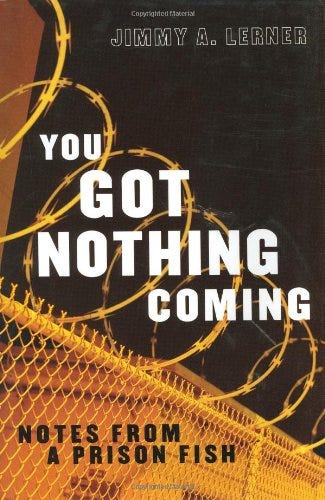
You Got Nothing Coming: Notes From a Prison Fish was initially pitched as a fictionalized version of true events but arrived on bookshelves as true nonfiction. The book detailed Jimmy’s incarceration with an occasionally self-effacing, absurdist view that lent both to his status as a “fish” (a prison newcomer) and that of a fish out of water: an average, upper-middle-class suburbanite who landed in jail due to a series of unfortunate events. Per TheTimes, Jimmy was “a civilized business executive living among illiterate felons.” This cosmic misfortune wasn’t so much Jimmy’s fault, but the circumstantial result of being in the right AA meeting at the wrong time.
Constructed in thirds — the first two parts taking place inside prison, the final third a flashback — Jimmy spun yarns about his fears, interactions and assimilation into the system as an “OG” (original gangsta). A great deal of the narrative centered on Jimmy’s interactions with Kansas, his burly Nazi cellmate who ran a drug operation. Jimmy dealt with him the only way he knew how: using marketing skills honed at work. “I needed rapport, even though I despised him.…But that never stood in my way before at Pac Bell,” he told SFGate.
The final third of the book detailed Jimmy and Mark’s respective downfalls: Jimmy, a hapless office cog who, despite being smarter than many of his colleagues, was laid off. He was on the wagon, then got divorced, and began the not-too-slow slide back into drinking. Mark’s avatar, Dwayne Hassleman, weaseled, berated, intimidated and manipulated Jimmy into becoming his AA sponsor and friend. Dwayne’s work situation was dubious, his family life even more so. An equipment accident in a warehouse left him with a shoulder injury that he played up to score pain meds.
There were some major inconsistencies about the level of truth in You Got Nothing Coming, and, more than 20 years after the book was published, memories about whether those inconsistencies were public knowledge among editors and potential agents are murky. The lede for David D. Kirkpatrick’s 2002 reportage notes that “last January, New York publishing houses received a pitch for an unusual ‘fictionalized’ memoir.” Agent Brian DeFiore told me that he warned Jimmy against the format: “There’s no such thing…it’s either a novel or it’s a memoir.”
DeFiore said he told Jimmy to remove the fiction and circle back. “What he then delivered to me, he told me, was nonfiction, was a memoir,” he recalls. Per TheTimes, Jimmy sent Random House (the parent company of Broadway Books), a lengthy list of altered facts. “He said that he had disguised some identities and places, but otherwise removed the fiction.”
One of the most notable fictions that remains in the book is Jimmy’s depiction of “Dwayne Hassleman,” a representation that changes much more than merely Mark Slavin’s name. In the book, Hassleman is huge: “taller than me, about six-three…with brown hair clipped short, practically military style,” Jimmy details in You Got. “Easily over two hundred pounds, mostly muscle, Dwayne was not a stranger to the gym.” When Hassleman flies into a rage — which happens with increasing regularity throughout the narrative due to substance, rejection, suggestion that he’s a closeted homosexual or an angry reaction to Dwayne perving on Jimmy’s daughter’s tween soccer teammates — Jimmy refers to him as “the Monster.”
Broadway Books editor Gerry Howard found Jimmy’s manuscript to be an immediately gripping and powerful narrative. “It gave a very, very vivid picture of life behind bars,” recalls Howard, who retired in 2020 after 46 years in publishing. “Whatever else you want to say about Jimmy Lerner — and there is a lot more to be said — the guy can write.”
Before Howard could make an offer, Broadway Books’ lawyers convened to discuss their liability around Son of Sam laws — state-based statutes that prevent a criminal from profiting from media based on their crimes. Nevada and New York each had laws on the books, but considering the majority of the work was about the penal system and not the crime itself, You Got was given a “cautious green light,” Howard remembers.
Broadway Books did not, however, research the facts of Jimmy’s case or crime.
Jimmy Lerner was still incarcerated when his manuscript was purchased, making for a unique and “rather complicated” editing dynamic. Jimmy would call Gerry Howard collect at 3:30 p.m. each week, and they would go over pages and revisions by phone. Over time, Howard and Jimmy developed something of a friendship (“put that in quotes,” Howard instructed me). They would continue their weekly phone calls even after the editing process was complete. Howard called those events “Tuesdays with Jimmy,” after the popular book Tuesdays with Morrie, which was released the same year Jimmy got locked up.
“An editor and author, when it’s working as it should, may not be friends, but they’re connected in a shared enterprise,” Howard tells me, reflecting on his relationship with Jimmy. “You, as an editor, want the writer and the book to succeed, and the writer wants to be cooperative with the editor, who, in a lot of respects, controls the fate of that book. So it’s a close collaboration that can, at times, turn into a friendship. It’s an intimate relationship.”
Much like Mark, Howard identified with Jimmy. They were both from Brooklyn and Jimmy had an accent, “so his voice probably, on some subliminal level, influenced me,” Howard says, “because he sounded like the people I grew up with.”
It was this relationship between Gerry Howard and Jimmy Lerner that particularly interested journalist David D. Kirkpatrick. The former New York Times reporter recounts his interest in You Got, noting its “deadpan style” and “sociological look at prison life that you don’t often get.”
Kirkpatrick had been working at TheTimes for a couple years by the time You Got Nothing Coming came across his desk. He had connected with Howard previously and, in our conversation, reflected on the parallels in all of their lives.
“The work you do in a company, the work you do to get by in prison, the work you do as a book publisher, it’s all about sales. It’s about bonding with people, and it’s about creating an image,” Kirkpatrick says. “That’s what makes the book work, and that’s what made [Jimmy’s] relationship with Gerry Howard work.”
You Got Nothing Coming: Notes From a Prison Fish was released in 2002 — shortly after Jimmy Lerner was released — and made an immediate splash. The book was a contemporary corollary to Jack Henry Abbott’s In The Belly Of The Beast and could even be viewed as a precursor to Orange Is The New Black. Jimmy soon sold the rights to Phoenix Pictures. He went on a book tour, appeared on CBS and public radio and was interviewed by The Guardian.
“I do regret killing the Monster every day and endlessly think about how I could have handled things differently,” he told The Guardian in 2002. “However, I don’t regret a bit the time I spent in jail. It’s probably the best thing that happened to me.…There was some painful introspection and I felt that I did have an opportunity to turn my life around rather than to seek new bottoms.”
‘’He is turning into a personality, actually,” Howard told Kirkpatrick, per TheTimes. “One senses that he is beginning to refine a persona for public consumption.’‘
Today, David D. Kirkpatrick is a Pulitzer Prize-winning journalist, author and staff writer for The New Yorker whose work sits at the intersection of politics and international policy. In 2002, one of his first stories for The New York Times Magazine took him to a hotel restaurant in Reno. The Guardian article — which was published one week before Kirkpatrick’s piece and similarly details a meeting in a Reno hotel cafe — describes Jimmy Lerner, then in his early 50s, as “tall, slight and dressed in a thin grey suit.…His hair and moustache are Brillo pad grey and his eyes crinkle into perfect semi-circles when he smiles. He has been out of jail for just a few weeks yet looks remarkably wholesome…[with] no evidence of emotional distress.”
Kirkpatrick recalls sitting face-to-face with Jimmy, wondering and then asking how he was able to overcome the Monster in that Reno hotel room. Jimmy offered that he had changed some of Dwayne’s characteristics, and that his actual victim was quite small. Still, he insisted, “it is 90 percent accurate.”
“At that moment, I was like, That’s a big change. It changes the whole crux of the book,” Kirkpatrick tells me. “His degree of culpability is really central to the effectiveness of this narrative about prison life, and his degree of culpability depends on the details of that conflict. If [Jimmy] was not actually fighting a much bigger assailant who was seriously threatening him, what’s really going on here?”
Kirkpatrick realized he was no longer going to write the author-editor buddy story he had in mind. “I would have called the DA in all cases, but in my memory, it’s that pivotal moment when I thought to myself, I’ve got to get some police records.“
It turns out more than a few things in You Got Nothing Coming were distorted or completely fabricated. Beyond more reasonable changes like the creation of composite characters or altered names, Jimmy had completely fictionalized events and facts throughout the book.
“You’re playing fast and loose with the reader’s trust when you say some of this happened, and some of it is fictionalized,” Gerry Howard says emphatically. “I was working on the assumption that everything that was in there was true, was based on fact. The version of what happened in that room [where Mark Slavin was murdered], absent other evidence, belongs to the person who’s still alive. So that’s where the matter of trust comes in. Trust is either accurately or inaccurately placed.”
The Nevada Department of Corrections took issue with some of Jimmy’s recollections: According to Reno News & Review, officials contested the book’s assertion that rehabilitation and training programs in the prison were nonexistent, denied that most inmates had shivs and noted that no inmate had committed suicide during Jimmy’s incarceration. (You Got details the death of fellow fish Bobby-Boy, who hanged himself after being repeatedly raped by his cellmate.) While it’s a gruesome indictment of the penal system, I believe those issues pale in comparison to the liberties he took with the description of his victim.
Mark Slavin did not remotely resemble Dwayne Hassleman. “The Monster was in reality a shrimp,” Kirkpatrick wrote. Mark was slight, 5 feet 4 inches tall and 133 pounds — half a foot shorter and nearly 40 pounds lighter than Jimmy at the time. “I would beg Mark to go to the gym with me, and he would never go,” Dad recounts with a chuckle.
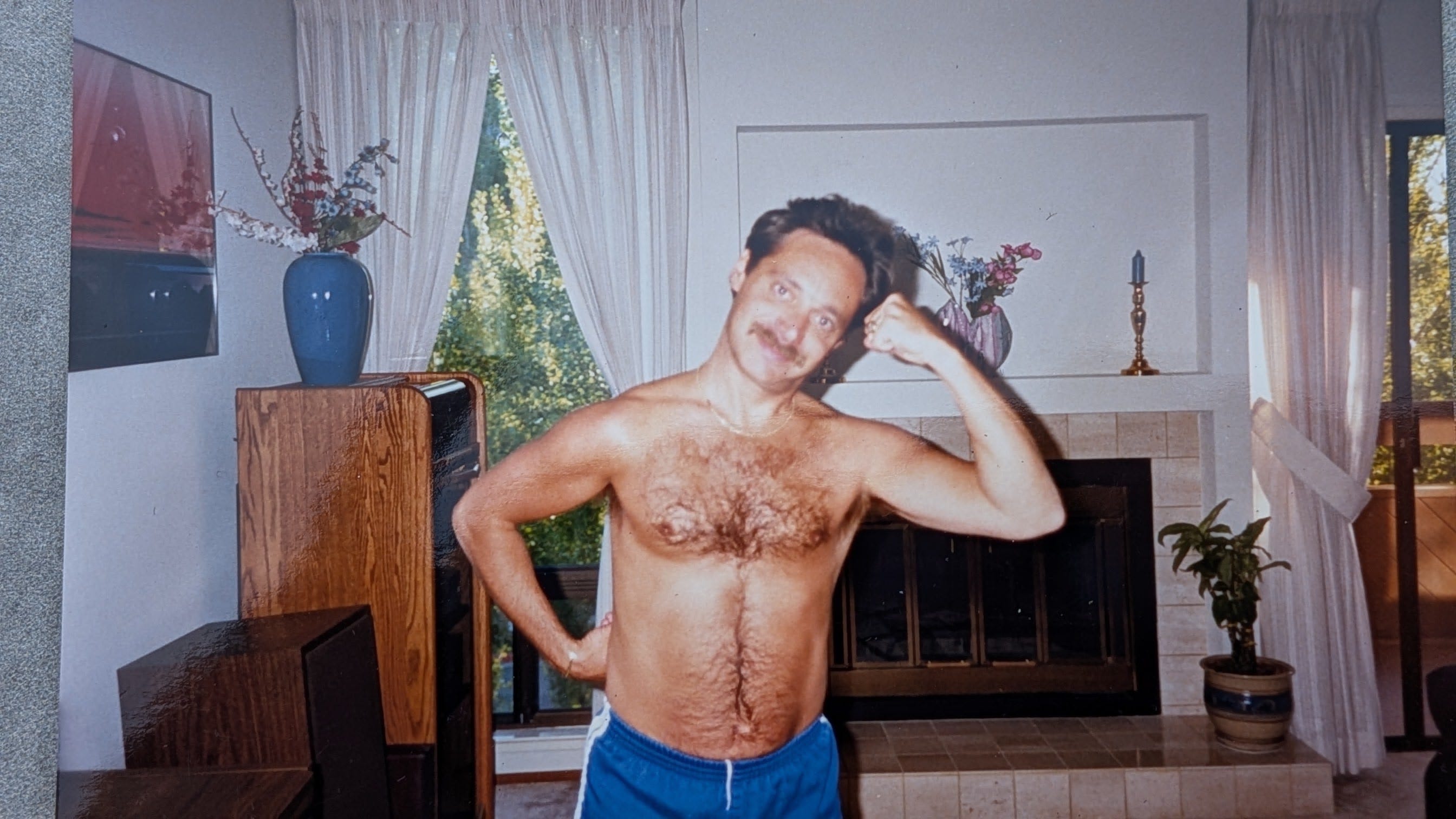
There were other inaccuracies: Mark and Jimmy didn’t live across the street from each other as detailed in the book; Mark didn’t have a large knife or gun collection (just two guns, Dad and another friend remember); he never wore Army fatigues as Dwayne constantly did; he didn’t have two cars repoed.
Dad doesn’t remember how he found out about You Got, but recalls feeling both flabbergasted and enraged. “When I heard how he portrayed Mark as this giant, it was just so absurd. He was half the size of Jimmy. It was just maddening. It was just outrageous,” Dad says. “There was, all of a sudden, this grapevine of people talking.” Mark’s sister, Donna Seres (who I was unable to reach during this reporting process), told Kirkpatrick: “To see this man profiting — it is killing me.”
While Kirkpatrick was compelled to dig for the truth, publishers “do not, nor are required to, fact-check the books that they get,” Gerry Howard tells me. “In retrospect, I really should have on my own, or have gotten someone else to, take a closer look at the particulars of Jimmy Lerner’s crime.”
Kirkpatrick’s article was published in The New York Times Magazine on March 31, 2002, with the headline “The Talented Mr. Lerner.” Both a review of the book and a profile of Jimmy the author-cum-con man, the reportage detailed the life of a man who lied about pertinent details of a murder (and possibly his incarceration) to make a name for himself as a memoirist. “The Talented Mr. Lerner” exposed the ways You Got was likely born from fraud, then baked in a lack of moral conviction.
Kirkpatrick realized his article “was going to be very damaging for Jimmy Lerner and probably somewhat humiliating for Gerry Howard.”
“It was like, What the fuck Jimmy,” Howard says.
Kirkpatrick gave Howard a few days’ notice that an unflattering article about his author was forthcoming, and recalls Howard’s response as “mature and self-possessed and responsible.” Howard was, indeed, embarrassed. “It was a bad Sunday. The two weeks, three weeks after weren’t so hot either,” he recalls.
Jimmy, on the other hand, “was defensive and said that the argument in the article was not 100 percent correct,” Brian DeFiore remembers. “But it was very unclear, at that point, to all of us, what was true and what wasn’t.”
While some of the shifts seemed natural enough — Jimmy changed the site of the murder from Reno to Las Vegas — Gerry Howard had occasionally wondered about the veracity of Jimmy’s primary story. How did Jimmy — himself not a big man — take down a hulking monster? In hindsight, Howard believes he was manipulated by a con man. “I smelled that too. I wasn’t born yesterday, and I was from Brooklyn,” he says. “I should have listened to that little tickle in the back of my head back then.
“I entered into the whole editor-author transaction in good faith and wanting to be on my author’s side,” Howard adds. “And I feel I was, to put it mildly, led astray in that and been made to look a bit like a stoop by my best instincts as an editor.”
As they finished the editing process, Howard offered to write a letter to the Nevada parole board. Although Jimmy declined the offer, Howard now says, “I absolutely would not have done it after the facts of the killing emerged.”
Memoir scholar Tahneer Oksman, an author and associate teaching professor of Journalism at Northeastern University – New York City, notes that all memoirists make editorial decisions about their stories. “You’re always selecting the story you want to tell, and what you leave off is just as important as what you’re including,” she says, adding that memoir becomes “a way to explore the limits of knowledge, including self-knowledge.”
She adds that memoir often becomes a means of exploring “the way that we piece together events in our personal lives.” At best, memoirs reflect a larger truth beyond the author’s own experience — which requires self-reflection on the part of the memoirist. In You Got, Jimmy “doesn’t take any responsibility,” Oksman says.
“I mean, he names the guy the Monster and he builds this narrative where he’s the victim,” she continues. “There’s almost this inevitability narrative, like, This guy was so nuts, and he was so out of control, and I just had the really bad luck of being next to him.”
Rather than take true ownership of Jimmy’s actions, You Got traffics in stereotypes and makes the narrator a drone who’s pulled along by life. “There’s not a lot of intentionality, which is sort of fascinating because he writes this 400-page memoir, which is a lot of initiative, and that’s maybe the only thing he takes some credit for,” Oksman says. “In everything else, he’s really making himself into an observer.”
Adds Kirkpatrick: “If Jimmy Lerner was hiding materially his degree of culpability in the crime, then the whole book begins to seem like kind of a whitewash. And then you get into all the moral issues attendant upon profiting off of a crime.”
In his memoir, Jimmy confronts Dwayne at their hotel room after an unsuccessful drug-seeking mission at a local hospital. Dwayne has stolen his keys, and told attendant police officers that Jimmy threatened to kill him. The final, fatal confrontation occurs after Dwayne insinuates that he would kill Jimmy’s daughters while they camped in Lake Tahoe:
Bare-chested and screaming, the Monster burst through the door and crashed into me like a linebacker on a steroid rage, knocking me halfway across the room and against the wall beside the big-screen TV. I got to my feet slowly and watched the Monster take a few steps back and pull out a knife from the ankle sheath. His bare chest was like the heaving hull of a small ship, knotted and building with ropes of muscle.
Now fully the Monster, Jimmy depicts Dwayne raving in rage, slashing his knife through the air and nearly missing Jimmy’s face. His Monster then pushes Jimmy against a wall as he whips his big brass belt buckle in the air, splitting Jimmy’s right eyebrow and nose. Eventually, Jimmy “pounded the Monster’s face, delivering a whirlwind of blows…until the Monster fell back hard.”
In seconds I had the cowboy belt cinched around the Monster’s neck, eagle buckle tight under his throat as I pulled the makeshift noose—tight. The Monster tried scuttling ass-backward on the thick, blood-soaked carpet. With one powerful wrenching motion, using both hands, I broke the Monster’s neck. It made a sickening cracking sound, like a rotted branch being snapped from a tree by a vengeful wind.
I read this scene on a New York subway car — maybe a line my dad, Mark or Jimmy had taken once upon a time — and the matter-of-fact nature of it sickened me. As I tossed the book into my tote and hurried from my seat to a cross-platform transfer, I felt ashamed of the way I casually absorbed this fictionalized scene about the very real death of someone I once knew. This should not be a commute read, but it probably was for many people in 2002.
While no one can know the full truth about what transpired between Jimmy Lerner and Mark Slavin at the Sundowner Hotel in November 1997, Jimmy’s version of the altercation began on Sunday night when Mark wanted money for drugs and then attacked Jimmy. They tussled and “I just grappled him down and sat on him.’‘ Jimmy told police, again per Kirkpatrick’s report, that Mark tried to steal his knife and came at him swinging a belt; Jimmy sat on him again. This time, Jimmy wrapped a belt around his neck.
Jimmy told Kirkpatrick in 2002: “I said [to Mark], ‘I’m going to cut your air off for a while, OK? When you get tired of that, you shake your head and let’s call an end to this stupid thing ’cause this is ridiculous.’” When Mark began reaching for the knife again, Jimmy put a plastic laundry bag over his friend’s head and tightened the belt. Mark died in that state.
The Reno Police Department’s Records Division provided me with 298 pages of arrest reports and investigation documentation, detailing the disturbing crime scene, hectic events leading up to the murder and interviews with Mark and Jimmy’s friends, family and colleagues. The documents tell a much different and more complicated story.
Mark’s body was found by two maids doing a routine cleaning at 8:30 a.m. They also encountered a bloody sheet and pillow in the outer room. By that time, Jimmy had left the room for the casino. The report notes that “Lerner made no attempt to explain why he had not summoned medical personnel or previously notified authorities during the lengthy time frame between the altercation’s end and the arrival of the same personnel.”
When police arrived on scene, they found two phone books strewn on the hotel room floor, each open to the attorney section. Reports note “the sheets and blankets of the bed were in disarray” and a large amount of blood splatter was present in the corner of the room, as well as on the furniture and the carpeted floor. Mark’s body — shirtless, in black jeans with no belt, white socks and brown shoes — lay east of the bed; his legs were bent at the waist and a clear plastic bag was over his head and a belt around his neck.
An autopsy concluded that he died from strangulation, but had also suffered substantial blunt force trauma to the head and face. Jimmy was reported with a swollen right hand, a laceration on the bridge of his nose and swelling of the upper nose and lip area.
Mark, a lefty, lay dead with a knife in his right hand — another sign that something was amiss. Detectives later interviewed a Saint Mary’s Hospital security guard, who was present during Jimmy and Mark’s altercation earlier on Sunday. He testified that Jimmy was in possession of a knife, and that Mark had told him he was afraid of Jimmy, who was angry that he wasn’t able to score. Police reports also detail inconsistencies in where exactly this pocket knife was during the altercation — Jimmy initially noted that he had packed up all his belongings to leave before the confrontation. “How did Slavin get Lerner’s knife, if all of his belongings were packed into his suit case [sic]?” Detective Mike Whan wrote.
Jimmy had called friend and fellow AA member Ray Salo after the murder, noting that Mark had “made future threats to injure his daughter and burn down his house” (per a police report). Salo recounted that Jimmy made “absolutely no mention” that Mark was armed with a knife. Jimmy had “painstakingly described the entire incident and how he had knocked the victim down twice before using the belt and plastic bag on him,” Salo told authorities, while Jimmy did not offer “any sense of remorse or regret for what had happened.”
You Got Nothing Coming is “literally taking a crime and then almost dancing on the grave [of the victim],” Tahneer Oksman opines. “It’s making a mockery of memoir too, but also of what Jimmy had done and his responsibility as a human to another human.”
Dad doesn’t recall which portion of You Got he read — he didn’t want to buy the book and couldn’t bring himself to give Jimmy his time — but was surprised when I recounted that the altercation resulted from Mark allegedly threatening Jimmy’s daughters. He just couldn’t see it happening.
But Mark did have a temper that showed up throughout his life. Dad first saw it as a teenager, when Mark unexpectedly arrived at a friend’s house ready to fight him. Dad didn’t experience it as an adult, though Mark’s housekeeper, Jamal Makeba, recounted multiple arguments between Mark and Jimmy.
Jamal told the authorities that Mark and Jimmy had a serious argument after Mark allegedly informed Jimmy’s wife that he was a drug addict. In the 10 days prior to the murder, both were “totally out of their minds” and had been continually using drugs. While there had been numerous arguments, Jamal said none were physical.
“Did Mark have a large personality? Without a doubt. He was somebody that in a social situation you knew he was in a room. He didn’t go quietly,” Dad says. “Who knows exactly what went down. All I know is that Jimmy committed a most brutal murder of Mark and no matter how antagonistic Mark was, if he was that night — it’s possible he was, but I could bet my bottom dollar Jimmy was right there with him being antagonistic — but to kill somebody? I mean, you punch him in the face, knock him out. But to spend two and a half hours killing somebody…if the role was reversed, Mark didn’t have that level of rage.”
Jewish faith dictates a burial should happen within 24 hours of death, or as soon as possible, and Mark’s house was still an active crime scene when Dad arrived looking for a suit to bury his best friend in. Accompanied by police, Dad pressed play on Mark’s answering machine and heard three recordings. One was from a picked-up phone call prior to the Reno trip in which a very stoned Mark begged Dad to share the number of a headhunter for himself and for Jimmy. Mark called into his machine two additional times that weekend — both recordings picked up the sound of Mark getting hit by Jimmy. It was an added insult to an irreparable injury: Days before he was murdered, Mark wanted to help his assailant get a job.
After You Got was published, Dad went on a mini writing campaign to clear Mark’s name. He doesn’t remember who he wrote to or what he said, but I have a strong memory of my dad furiously typing in our den, beneath the fluffy blue floral curtains my mom made when she briefly took up sewing. David Kirkpatrick’s article made Dad feel somewhat vindicated, and he eventually put down his pen. “I didn’t want to get too consumed with this thing,” he says. “It happened. It was horrible.”
Jimmy addressed the controversy outlined in “The Talented Mr. Lerner” in a paperback edition of You Got, offering an apology and a mea culpa to his readers. “I was not trying to produce a sterile collection of journalistic ‘facts’ but, rather, trying to convey the emotional truth by engaging and telling a good story,” he wrote in an author’s foreword. While his victim “seemed larger than life when he was trying to kill me,” Jimmy conceded that he should not have significantly altered Mark/Dwayne’s physical description.
“By making the villain physically huge, and by omitting or altering some of the detail of the fight, I was able to present myself as a far braver, stronger and more heroic person than I really was — or am,” he wrote.
Gerry Howard doesn’t recall why a paperback was published as the book sold only decently, though I speculate it was the only vehicle in which Jimmy could address his wrongs. “I don’t dismiss the emotional truth explanation or exception to fact. But it can’t be applied indiscriminately as a get out of jail free card for any memoirs, and is flagrantly not applicable in Jimmy Lerner’s case,” he tells me. “There are Band-Aids and there are full body bandages. This probably falls somewhere in between.”
Kirkpatrick was unaware of Jimmy’s paperback edition note, but considered it to be self-serving — particularly so since he did not update the text in the rest of the book. “It suggests a degree of bad faith and a lack of self-awareness that detracts from the book,” he says. “It’s deeply, deeply unattractive to have killed a man and then lied about it completely, in a way to enrich yourself and diminish your responsibility.”
Multiple people interviewed for this story noted a bit of irony: If Jimmy would’ve told the truth, You Got would’ve still been compelling.
“There was a lot of power in the story that he told about a very talented, energetic, hustling fellow who had a lot of the qualities for success in life, but he got mugged by his demons, particularly his drug and alcohol proclivities. The sense of a middle class person of substance, sliding, sliding, sliding, sliding, sliding downhill was very convincing. The depiction of life in the prisons was very convincing, very detailed, very you’re there in that lockup,” Gerry Howard says. “He just played unforgivably fast and loose with the truth of the most regrettable thing he ever did in his life, and it’s just really stupid of him. If he had been candid and truthful about that act of manslaughter, he still would have had a very good book.”
Brian DeFiore concurs, adding that he was saddened by the situation. “Clearly it demonstrated that there was a flaw in Jimmy’s personality that didn’t allow him to tell the full truth about the situation. I think if he had…it probably would have been a very successful book, and his extraordinary voice as a writer would have been recognized.”
The trail ends here, mostly. Gerry Howard’s career wasn’t hurt and, in 2022, he received the Biographers International Organization’s Editorial Excellence Award; Brian DeFiore continues to work as a literary agent; David D. Kirkpatrick worked for TheNew York Times for 22 years. Jimmy Lerner didn’t publish anything of note and mostly fell into obscurity. He died in 2008.
A few years after You Got was published, another memoir published by Doubleday (where Broadway Books was initially an imprint) would come under scrutiny: James Frey’s A Million Little Pieces. While that tale of addiction and rehabilitation was a massive hit — due in no small part to Oprah Winfrey — Frey’s success was short-lived after it surfaced that he fabricated many of the memoir’s key details.
In high school, I was one of a dozen student journalists who participated in a publishing/externship program with Bay Area News Group. My single contribution to the program, published in the Contra Costa Times, was a story about Son of Sam laws with loose reference to my Uncle Mark’s story. Little did I know this very law had already made its way through Nevada’s Supreme Court.
“This is a major case,” former Nevada Supreme Court Justice Bill Maupin tells me, “one of the most important cases ever decided by the Nevada Supreme Court when it comes to an articulation of doctrine.”
Maupin is referring to Seres v. Lerner, which came to Nevada’s highest court in 2004 after Mark’s sister, Donna, sought to recover proceeds from You Got to establish a trust. She had previously (and unsuccessfully) sued Jimmy after the wrongful death statute of limitations expired. Eventually, the case was dismissed based on a 1991 Supreme Court ruling that deemed New York’s Son of Sam laws overbroad and a violation of the First Amendment.
When Donna Seres’ appeal was heard in Nevada, “the court was hot,” Maupin recalls. “We were all really well briefed going in, probably more so than 95 percent of the cases.…I think both lawyers in the case look back on this argument as a very important experience in their career.”
The case was not “a slam dunk in favor of Mrs. Seres,” Maupin adds, though “the public is very interested in the ability to stifle the incentive for people to commit crimes.”
The court unanimously voted in favor of Jimmy, and Maupin spent over a week locked in his study writing the opinion. He asserts that the decision did not reflect the court’s opinion about the crime itself, but about Jimmy’s First Amendment rights. Because the court found Nevada’s own Son of Sam statute (first passed in 1981) unconstitutional, it was immediately stricken from state law.
While the ruling ultimately doesn’t prohibit someone from trying to “execute on proceeds,” Maupin’s opinion does note that only “one-third [of the book is] about the felony resulting in imprisonment,” and that the existing state law “achieves the compelling state interest of preventing a felon from profiting by commission of a felony.…it does so by chilling the incentive to create expressive conduct that has little or no relationship to the exploitation of criminal misdeeds.”
I reached out to Jimmy Lerner’s family as part of my reporting. His ex-wife passed away less than six months before my call; one of his daughters answered her listed phone number. We chatted and texted, but neither of the Lerner daughters agreed to an interview. I wonder how hearing from me made them feel, whether it caused any emotional upheaval or if they are used to hearing from reporters in the years since their father was first incarcerated.
The daughter I spoke to told me informally that only a high school teacher ever mentioned her father; she wasn’t bullied or looked down upon. We are about the same age and I remember high school vividly; I was glad to know that this person who could’ve been my peer didn’t experience significant fallout. I would’ve liked to speak with Jimmy’s daughters further, though, on the record.
I’m lucky that my own dad is still around — he’s talkative, with a sharp recollection for everything but what he went into a given room to retrieve — and willing to open up an old wound. He told me that our interviews for this article unlocked a lot of memories, and he’s been thinking about Mark more often.
We spent Dad’s most recent birthday enjoying Mediterranean food and reminiscing about his salad days with Buzzy. Dad’s eyes light up talking not about the murder or the drugs, but their many, many “capers”: decades worth of insane coincidences and adventures, impossible stories and near-misses. I don’t think he’ll ever fully find closure — he, like I, can really hold onto a grudge — but in writing this, I hope I’ve helped lighten his emotional load just a bit.
Of course, there’s also a journalistic angle at play. In a society where facts mean different things to different people, I can use my platform to speak truth to power and bring some posthumous justice to my Uncle Mark. How’s that for something coming?
Jessica Lipsky is a California-based journalist, editor and copywriter whose work has appeared in The New York Times, the Los Angeles Times, Poynter, Columbia Journalism Review and Wax Poetics, among other publications. She is the author of It Ain’t Retro: Daptone Records & the 21st Century Soul Revolution (Jawbone Press, 2021) and a staff member at the Recording Academy.
Brendan Spiegel is Narratively’s co-founder and editorial director.
Claire Wyman is a Brooklyn-based illustrator. She likes to pet dogs and bake too much banana bread.