This post may contain affiliate links. Please read my disclosure policy.
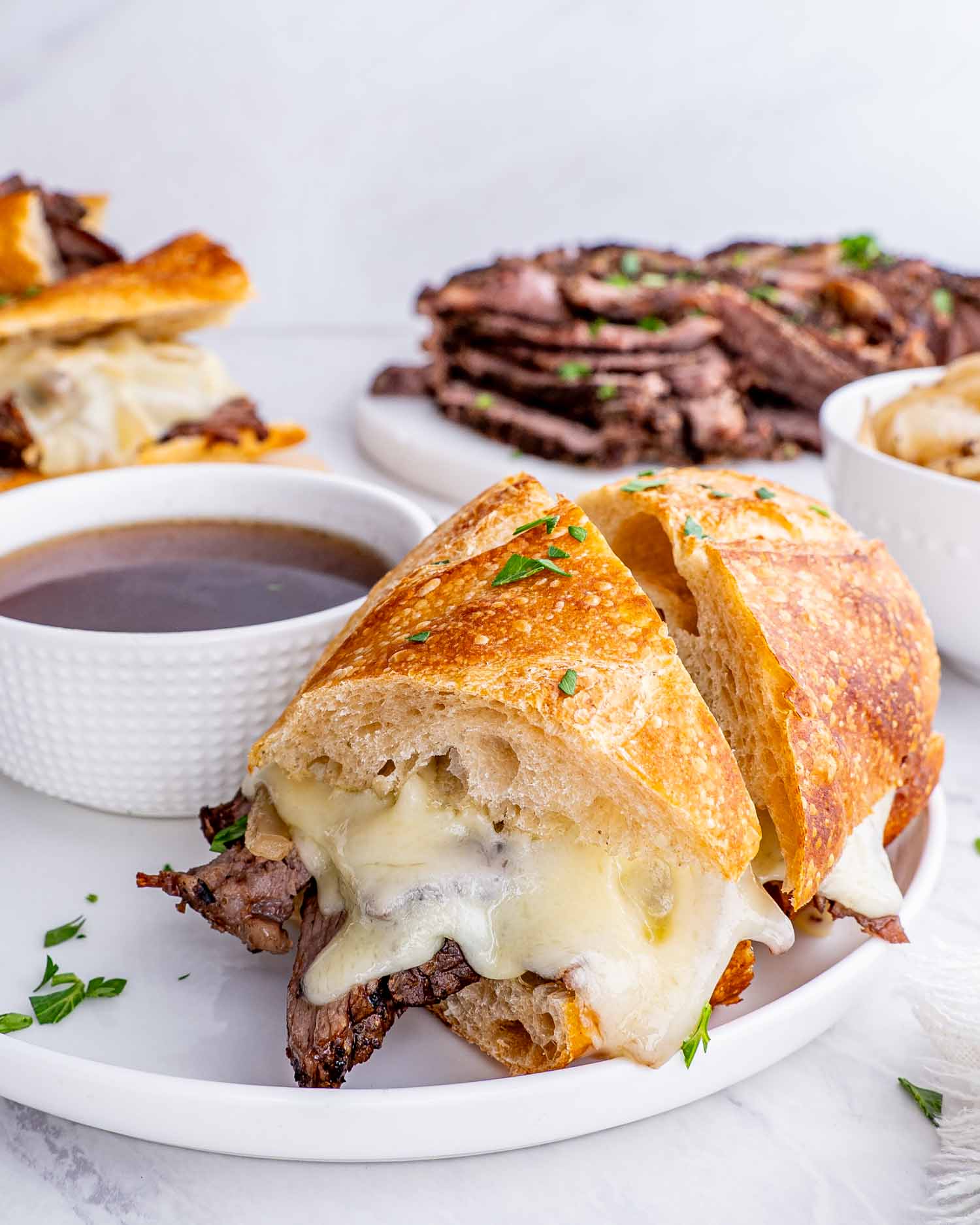
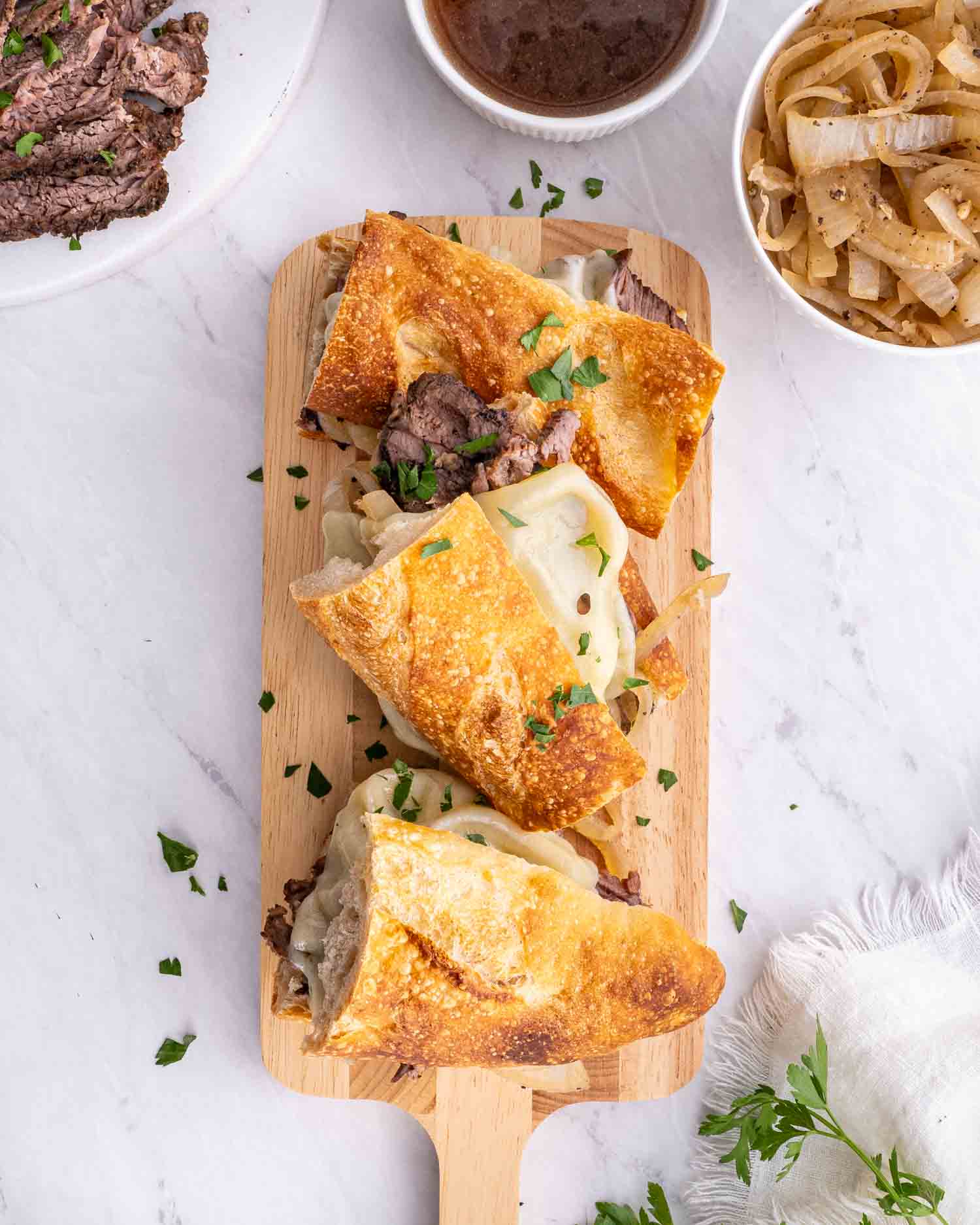
The best part of a French Dip is the dunking and I think we all know it. The au jus comes free with the recipe, since it’s just the liquid the beef has been happily sitting in for a few hours. Slice the beef thin, pile it on a crusty roll, and get dipping.
Table of Contents
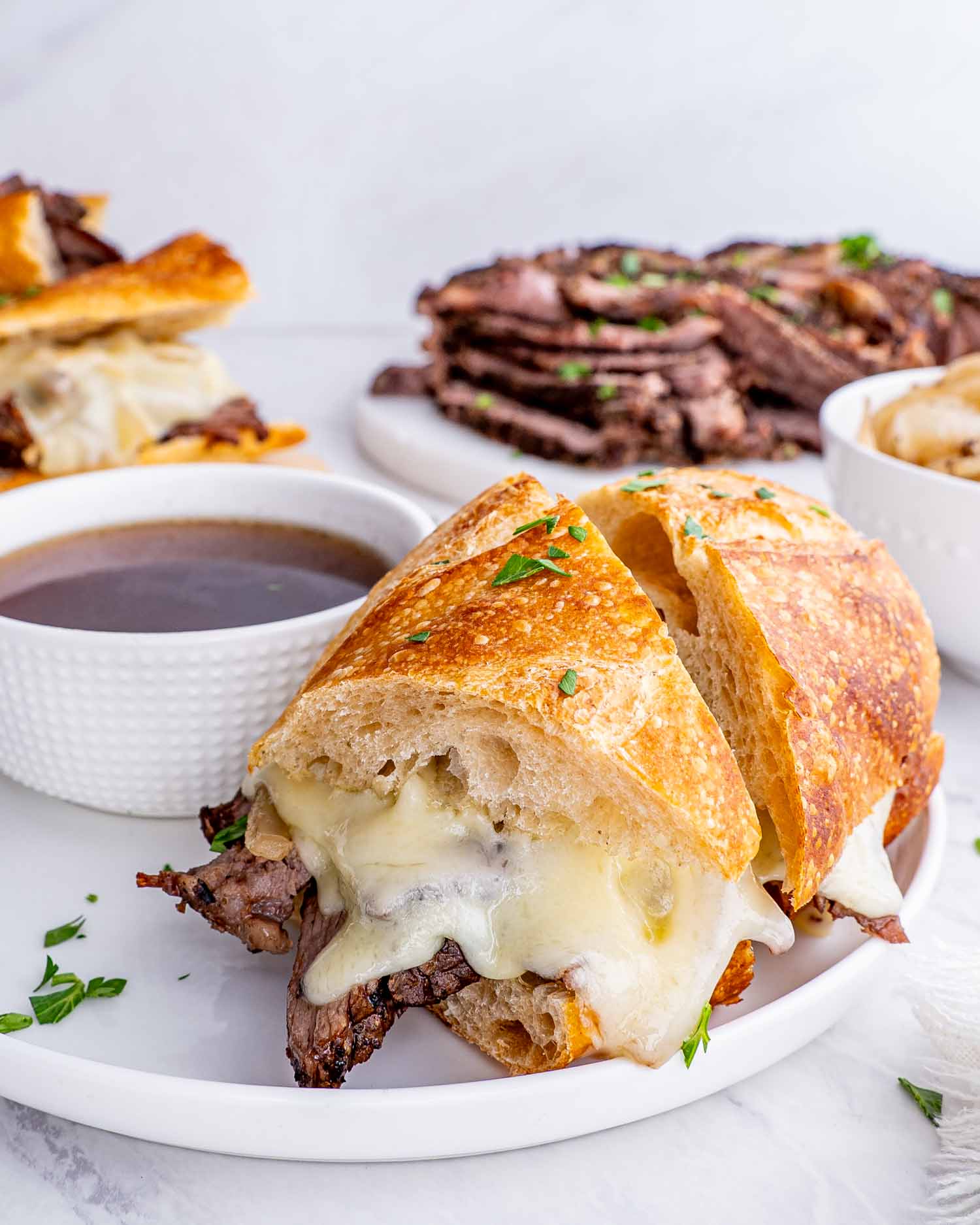
Nobody orders a French dip for the sandwich.
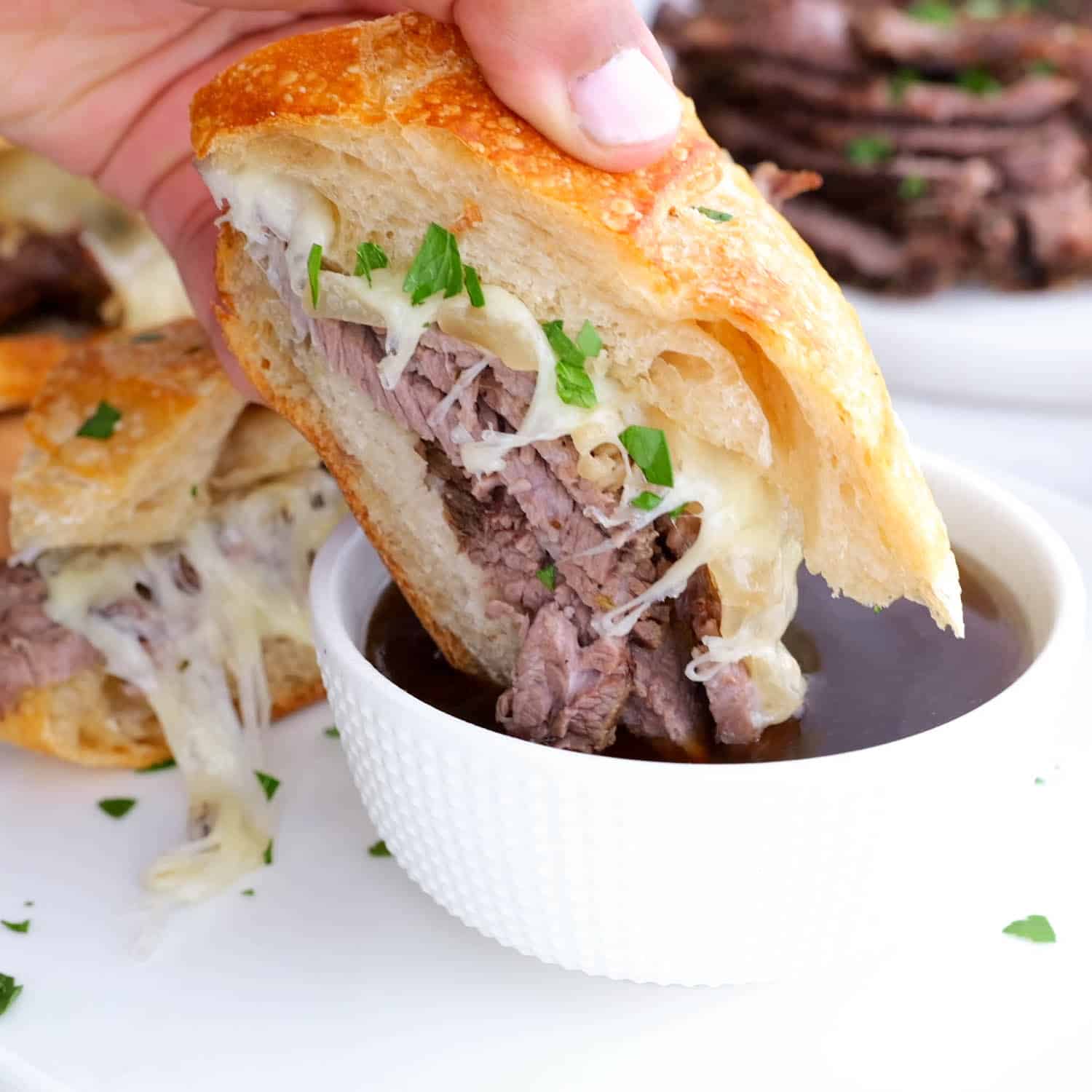
I mean, obviously you eat the sandwich. But the reason this thing exists, the reason you’d choose it over a roast beef sandwich, is the ritual. The dip. That moment of lowering half a sandwich into a bowl of dark beefy liquid and pulling it out slightly soggy and completely wonderful.
Which means the au jus is the recipe, and everything else is supporting it.
Here’s the good news: you get it for free. The beef cooks in seasoned broth for a few hours, and what’s left in the slow cooker afterward is au jus. You strain it, you pour it into little bowls, done. No packet, no thickening, no gravy pretending to be something it isn’t.
Two Los Angeles restaurants have been arguing about who invented this since about 1908, and both of them are still open and still claiming it. Philippe’s says a cook dropped a roll in the drippings by accident. Cole’s says they did it first for a customer with sore gums. Neither has ever conceded and I find that delightful.
Au jus is French for “with juice,” and that’s genuinely the whole concept. It’s the cooking liquid, strained. Nothing more.
- It is not gravy. No flour, no cornstarch, no roux, nothing to thicken it. Au jus should be thin enough to pour and thin enough that a sandwich dipped in it comes out wet rather than coated. If yours is thick, you’ve made gravy, which is delicious and is a different sauce.
- It is not beef broth either, though that’s where it starts. Broth is the base. Au jus is what happens after 4 hours of a seasoned roast sitting in that broth, with the onions and garlic and Worcestershire and the browned bits off the beef all working into it. The difference is significant and it’s why the packet version tastes like a shortcut.
- And it should taste strong. Almost too strong on its own, actually. It’s being diluted by a whole sandwich the moment it’s used, so a perfectly balanced au jus tastes like nothing once there’s bread in it. Taste it and if it seems slightly aggressive, you’re right where you want to be.
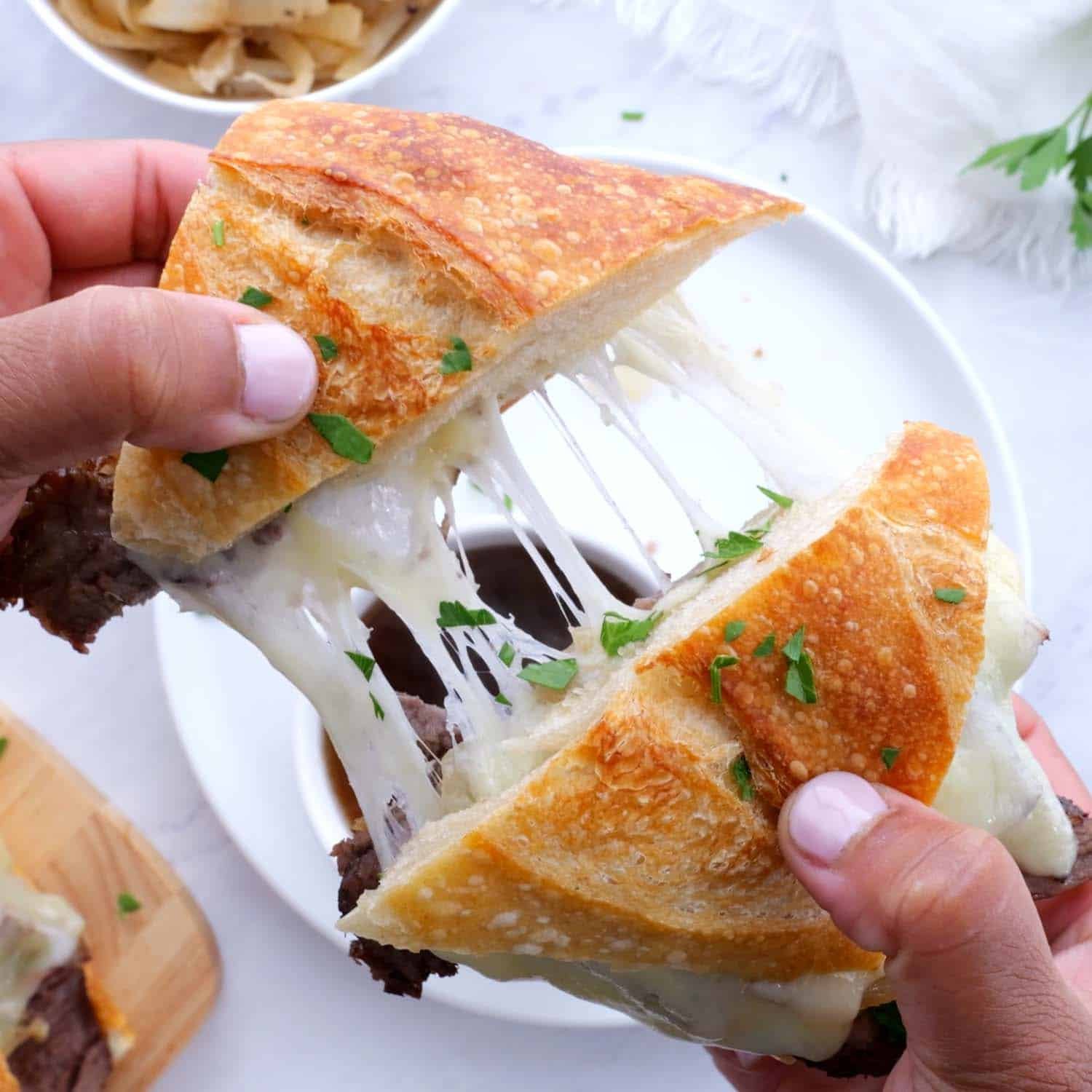
The base recipe gives you a good au jus. These are the things that take it further.
- Sear the beef properly and don’t waste the fond. Those browned bits stuck to the skillet after searing are pure flavor, and if you tip the beef into the slow cooker and put the skillet in the sink, you’ve thrown away the best part. Splash a little of the beef broth into the hot pan, scrape it loose, and add that to the crock.
- Use low sodium broth. This reduces for hours and salt concentrates as it goes. Regular broth plus Worcestershire ends up somewhere you can’t come back from.
- Worcestershire is important. It’s fermented anchovy, tamarind, and vinegar, which means it’s bringing acid and umami rather than just salt. A quarter cup sounds like a lot in a 3 cup base. It isn’t.
- Add a herb sprig. Thyme or rosemary in the slow cooker, pulled out before serving. It gives the au jus a savory backbone that’s hard to identify and easy to miss when it’s absent.
- Skim the fat. After straining, let it settle a couple of minutes and spoon the fat off the top. A little fat is good. A slick of it makes the dipping unpleasant.
- Taste it before you serve it. After hours of reducing it may want a splash more Worcestershire, or a pinch of salt, or a little more broth if it’s gone too concentrated.
This happens to everyone and there’s an easy answer nobody mentions.
Eight sandwiches drink more au jus than 3 cups of broth produces, especially if people are enthusiastic dippers. You’ll be halfway through dinner watching someone scrape the bottom of the bowl.
Stretch it. Add another cup of hot beef broth to whatever’s left in the slow cooker, along with a good splash of Worcestershire, and let it warm through. It’ll be slightly less concentrated than the original but nobody will notice once there’s a sandwich in it.
Or plan ahead. Use 4 cups of broth instead of 3 when you set it up. You’ll get more au jus and the beef doesn’t mind at all.
And make more than you think. Half a cup per person is generous, a third of a cup is stingy. Err upward, because leftover au jus keeps for days and warmed leftover beef sitting in it is the best sandwich you’ll have all week.
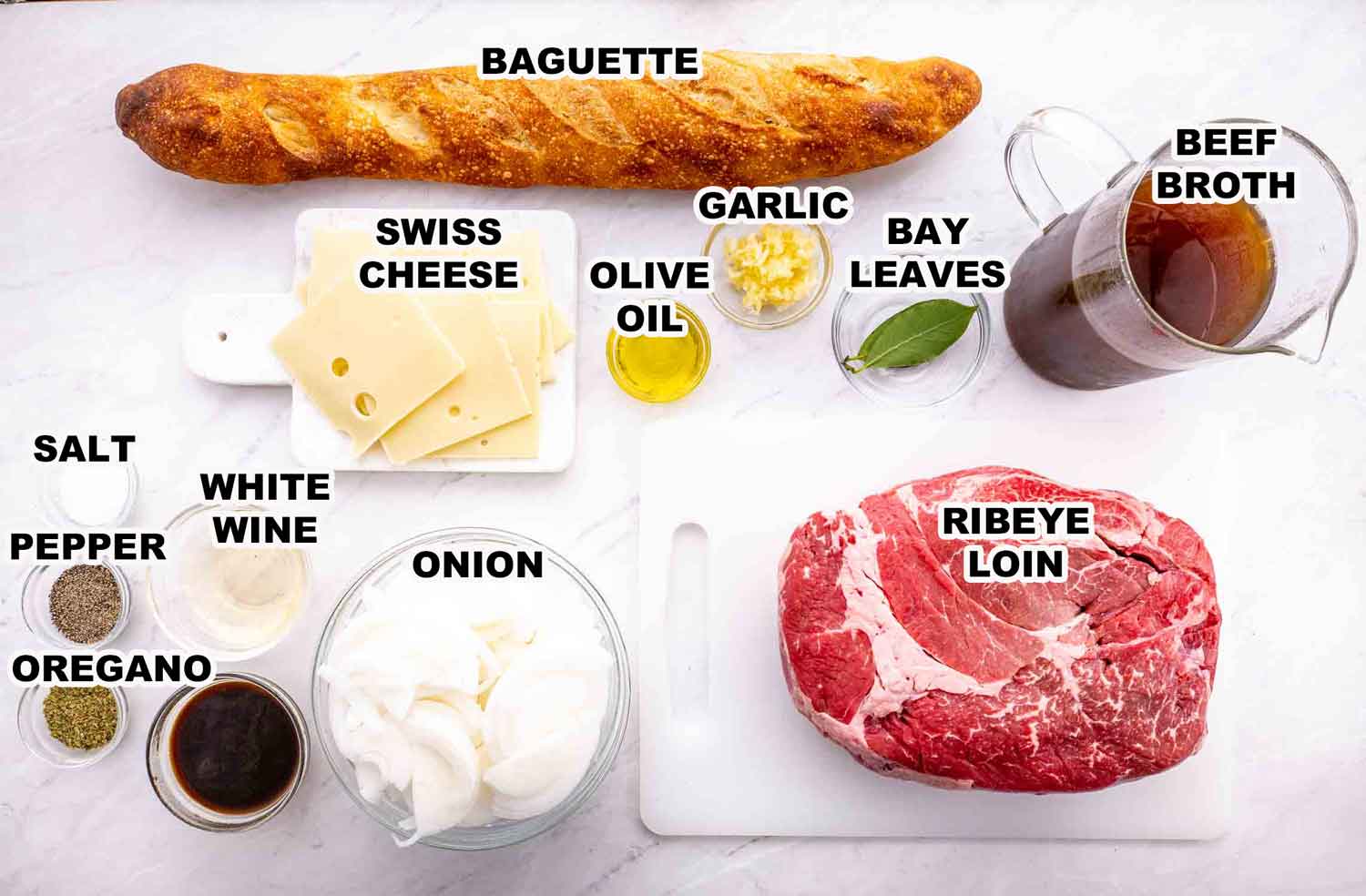
- Beef (4 pounds, ribeye loin or sirloin): This recipe cooks the beef to medium rare and slices it thin, so you want a cut that’s good at that. Ribeye is rich and forgiving and it’s what I use. Sirloin is leaner and cheaper and works well. If you’d rather have shredded beef, use chuck roast, but cook it differently, and there’s a note on that below.
- Salt (2 teaspoons) and black pepper (2 teaspoons): A full 2 teaspoons of pepper on 4 pounds of beef is right. It’s forming a crust, not seasoning a soup.
- Dried oregano (1 tablespoon): Rubbed on with the salt and pepper. Thyme or rosemary work just as well.
- Olive oil (1 tablespoon): For the sear. Any neutral oil is fine.
- Onions (2 large, sliced): These go in the slow cooker and come out sweet and jammy, and they’re as much a part of the sandwich as the beef. Slice them thick enough that they hold together.
- Garlic (10 cloves, minced): Ten sounds excessive. Over 4 hours it mellows into something soft and sweet and it’s a big part of why the au jus tastes deep.
- Bay leaves (2): Background savoriness. Fish them out before serving.
- Worcestershire sauce (¼ cup): See above. This is doing real work in the au jus.
- White wine (¼ cup): Adds acidity and lifts the whole thing. Sauvignon Blanc or Pinot Grigio. Extra beef broth if you’d rather skip it.
- Beef broth (3 cups, low sodium): The base of your au jus, so low sodium really matters. Use 4 cups if you want more to dip with, and you probably do.
- Crusty rolls (8): This bread has a job and most bread can’t do it. You need a firm crust and a tight crumb that goes soft when dipped without disintegrating. See below.
- Swiss cheese (8 slices, optional): Melts beautifully and the nuttiness works against the beef. Provolone and Gruyère are both excellent here.
Worth thinking about for 10 seconds, because the wrong bread turns dinner into a mess.
What works: a crusty roll, a French baguette cut into lengths, a ciabatta roll. You want a real crust and a relatively tight crumb. When it hits the au jus the outside softens and the inside holds, which is exactly the texture you’re after.
What doesn’t: soft hamburger buns, brioche, anything squishy. They collapse on contact. Sliced sandwich bread is worse still.
Toast the cut sides. Thirty seconds under the broiler, or in a dry pan. It gives the bread a bit of armor against the au jus and it’s the difference between a sandwich that holds up and one that gives up halfway through.
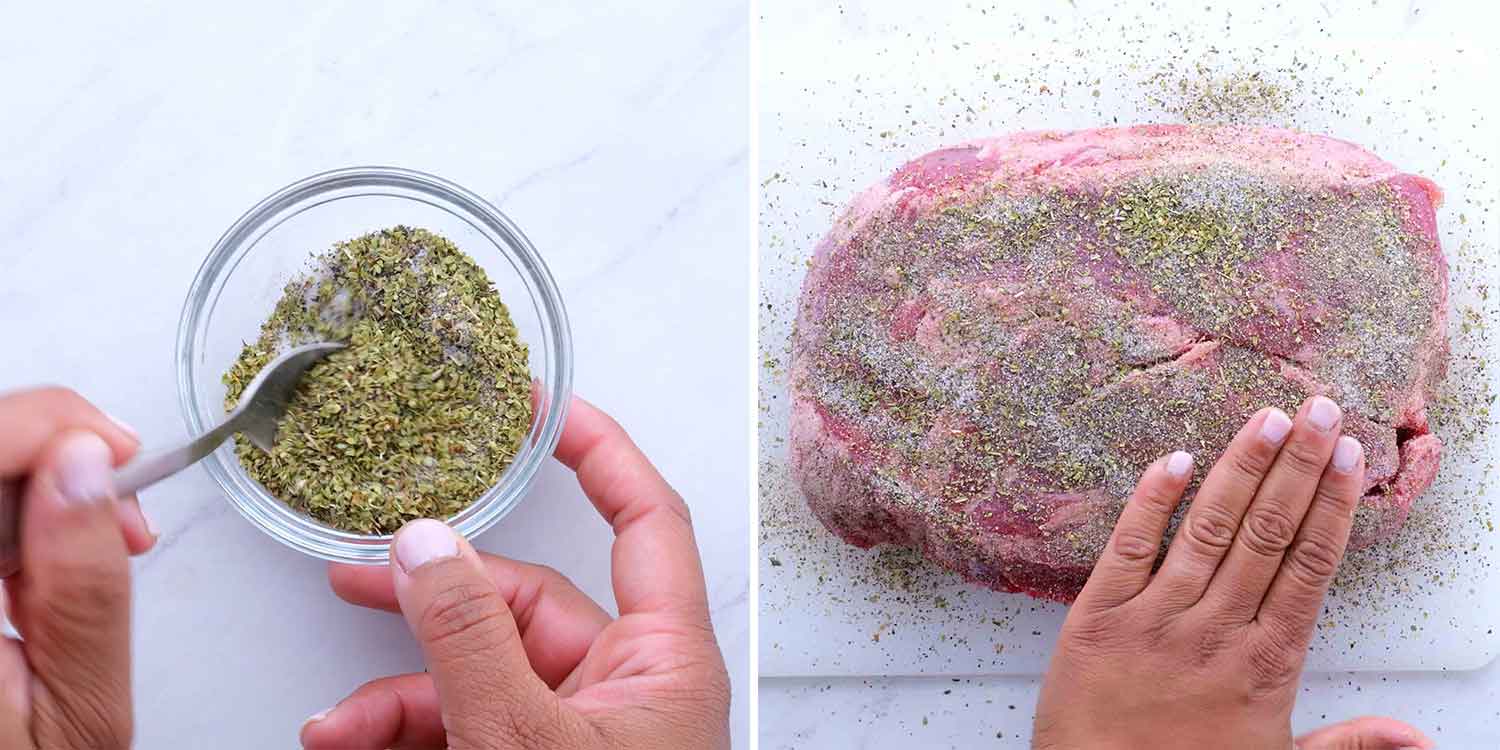
Season the beef. Tie it with kitchen twine if it’s a floppy shape, which helps it cook evenly and slice cleanly. Mix the salt, pepper, and oregano and rub it all over.
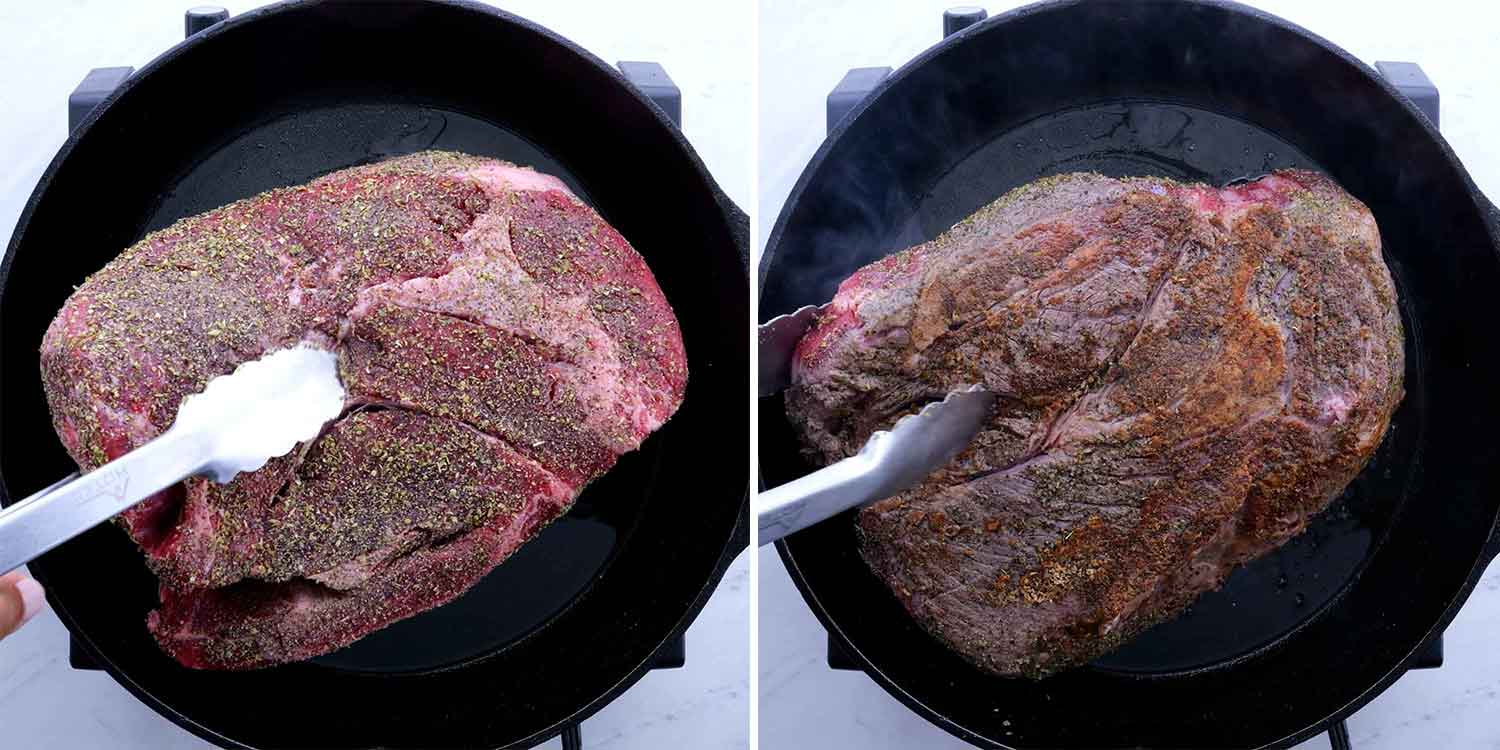
Sear it hard. Olive oil in a large skillet over medium high, then brown the beef on every side until there’s a real crust. This is where a lot of the flavor comes from, both in the beef and later in the au jus. Give it proper color rather than a quick pass.
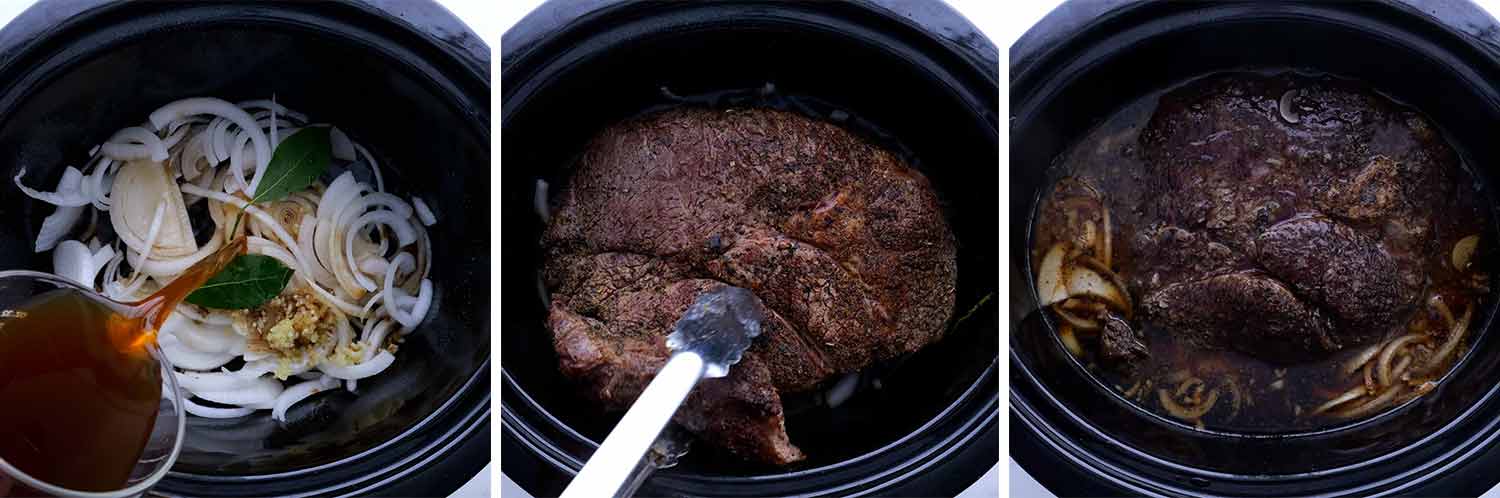
Load the slow cooker. Sliced onions, garlic, bay leaves, Worcestershire, white wine, and beef broth. Stir, then nestle the seared beef in and spoon some of the liquid over the top.
And scrape the skillet. Splash a bit of the broth into the still hot pan, scrape up every browned bit, and tip it into the crock. Ten seconds, and it’s the difference between good au jus and very good au jus.
Cook it. High for 2 to 3 hours or low for 4 to 6. You’re aiming for 130 to 135°F for medium rare or 145°F for medium. Check it, because slow cookers vary and 4 pounds of beef is a lot to get wrong.
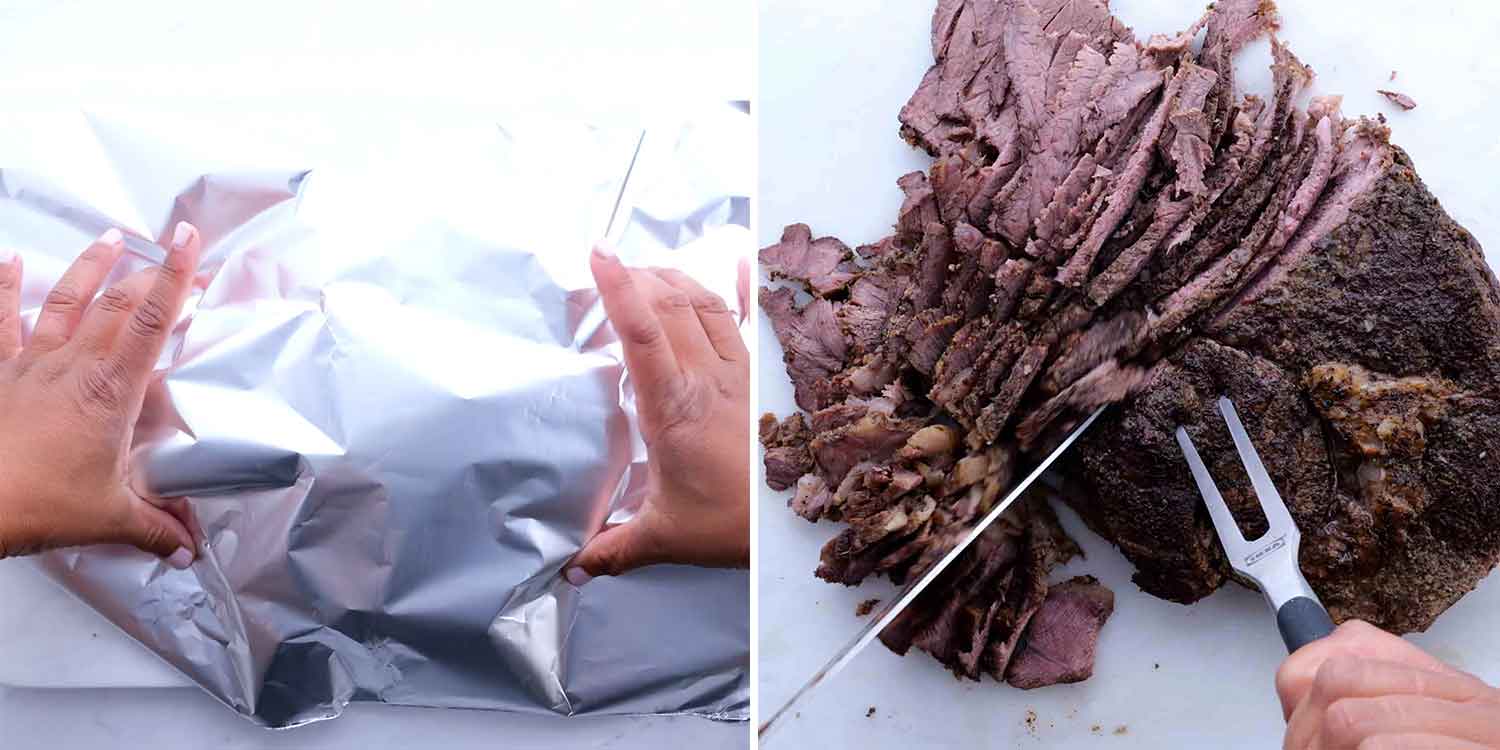
Rest the beef. Onto a board, tented with foil, 10 to 15 minutes. Don’t skip this or the juices run out onto the board instead of staying in the meat.
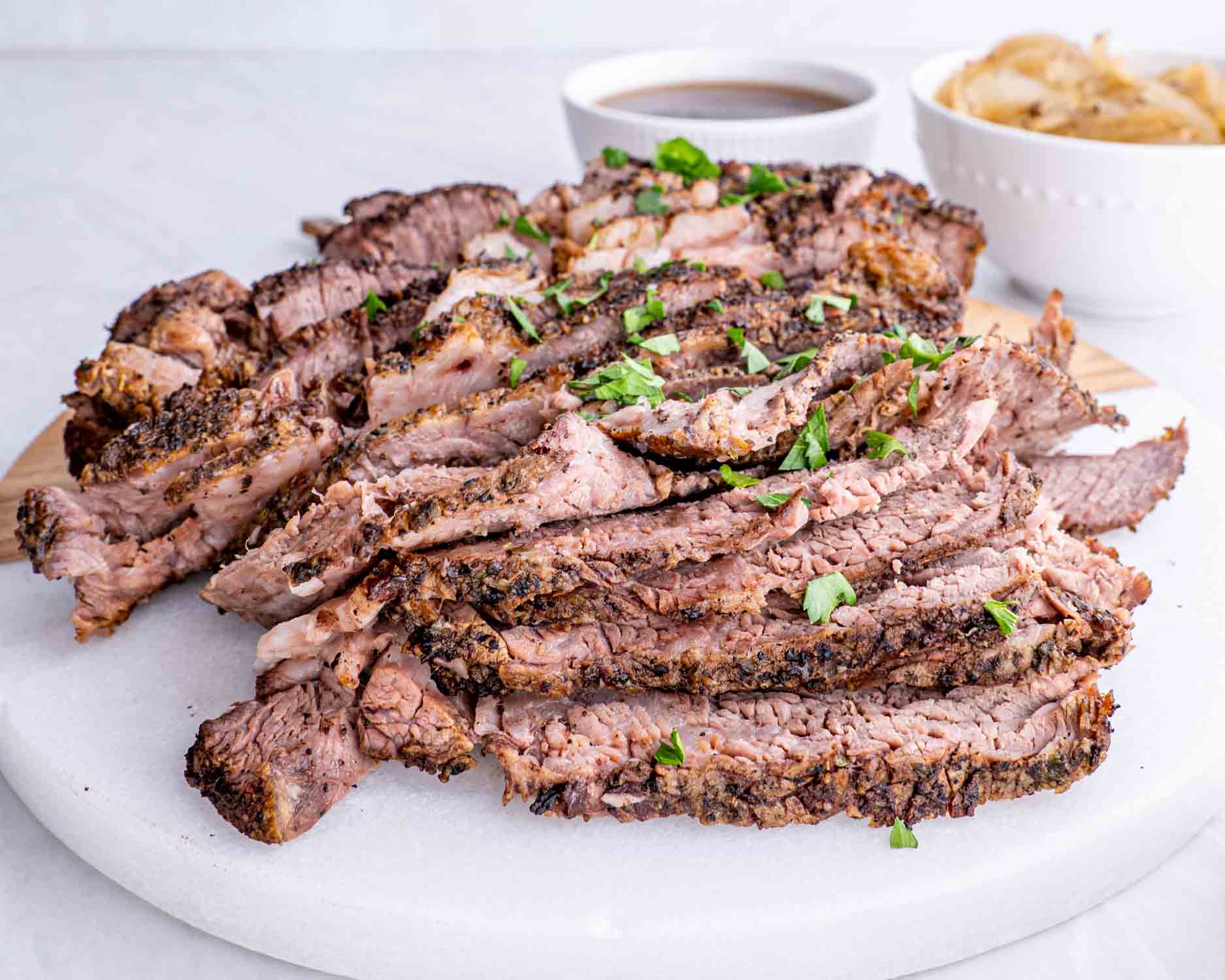
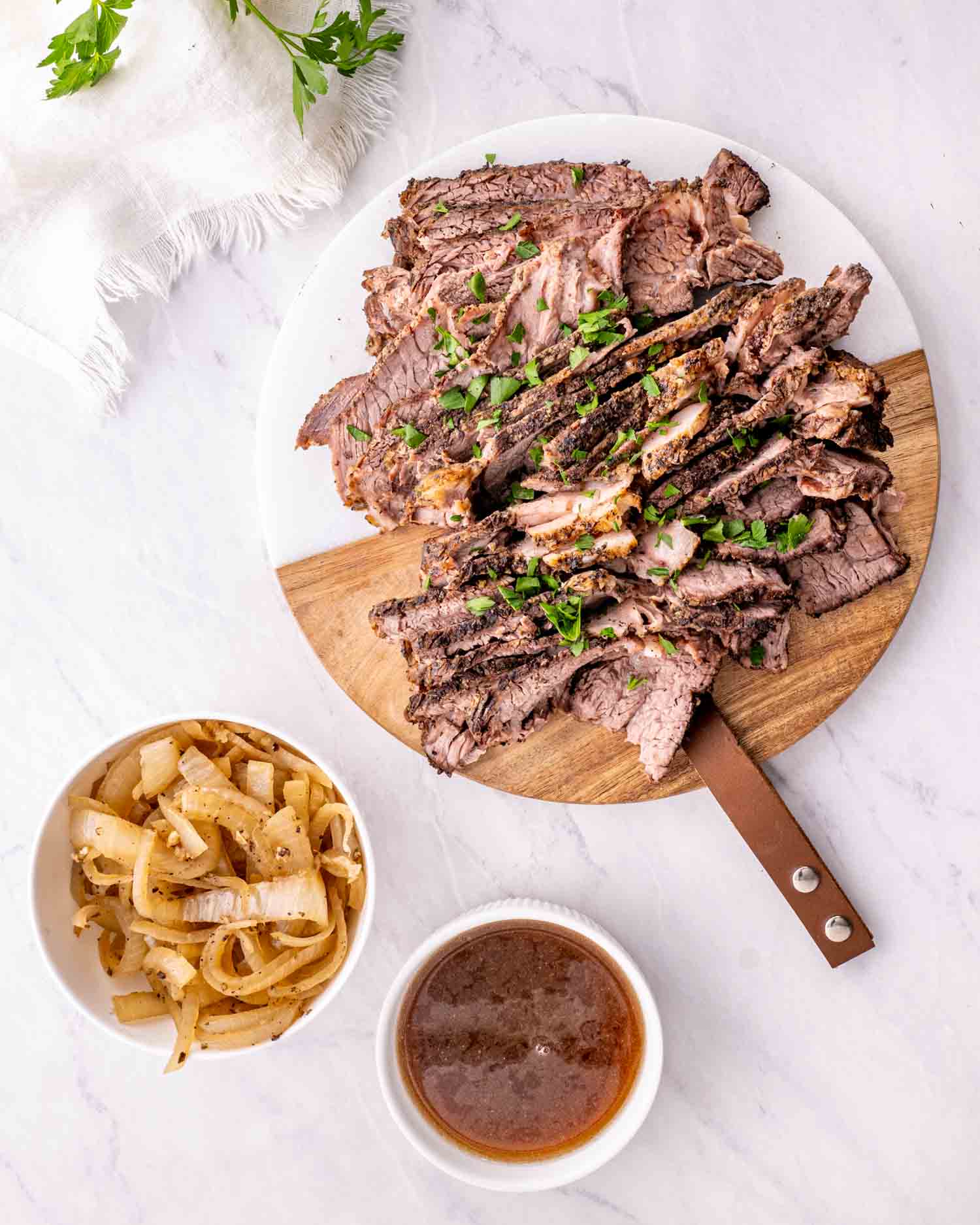
Slice thin, against the grain. As thin as you can manage. Thin slices are what make a French dip feel like a French dip rather than a roast beef sandwich, and cutting against the grain shortens the fibers and makes every bite tender.
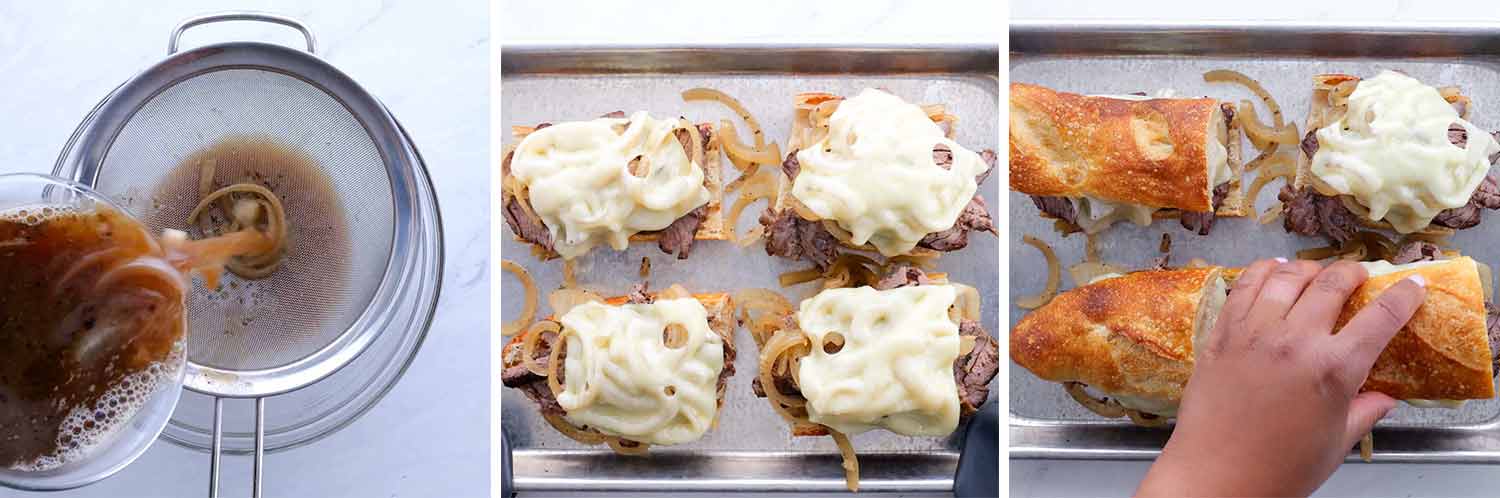
Strain the au jus through a fine mesh strainer. Keep the onions, they’re going on the sandwiches. Discard the bay leaves. Let the liquid settle a minute and spoon the fat off the top.
Build them. Beef piled on the rolls, onions over the top, Swiss if you’re using it. Under the broiler for a minute or two to melt the cheese and toast the bread.
Au jus in bowls on the side, one per person, and don’t be stingy.
- The beef is tough. Almost always a cut mismatch. This recipe is written for ribeye or sirloin cooked to medium rare and sliced thin. If you used chuck roast and pulled it at 135°F, that’s why. Chuck needs 6 to 8 hours on low until it shreds, not 4 hours to medium rare. Different dish, different timing.
- The au jus is weak. Usually regular broth instead of low sodium, so you’ve had to hold back on seasoning. Or the fond got left in the skillet. Add a splash more Worcestershire, a pinch of salt, and remember it should taste slightly too strong on its own.
- The au jus is greasy. Skim it after straining. Let it settle for a minute and spoon the fat off the surface.
- The sandwich fell apart. Wrong bread, or you didn’t toast it. Soft buns can’t survive a dip. Crusty roll, cut sides toasted.
- The beef is dry. Overcooked, or sliced without resting. Check the temperature rather than the clock, and give it the full 15 minutes before the knife goes near it.
- You ran out of au jus. Everyone does. Add another cup of hot broth and a splash of Worcestershire to what’s left in the crock.
- The slices are thick and chewy. Sharpen your knife and slice against the grain. Thin is the entire point.
Shredded, not sliced. Use a 4 pound chuck roast and cook it on low for 6 to 8 hours until it pulls apart with a fork. Completely different texture, equally good, and more forgiving if you’re not watching the clock.
Instant Pot. Sear on sauté, then pressure cook for about 45 minutes with a 10 minute natural release for medium. Adjust for how you like it.
With peppers. Sautéed bell peppers and onions together turns it into a Philly leaning version.
Horseradish. A smear of horseradish cream on the roll before the beef. Sharp against all that richness and very good.
Different cheese. Provolone melts beautifully and Gruyère is a genuine upgrade if you’re spending the money.
Caramelize the onions first. Slower and sweeter than letting them soften in the crock, and worth doing if you have the pan out anyway from searing.
This is a rich sandwich with a bowl of beef liquid next to it, so keep the sides light and sharp.
A simple tossed salad with a properly acidic dressing does more than you’d expect. Coleslaw works. Skillet green beans if you want something warm.
Fries are the obvious move and I won’t pretend otherwise, though between the bread, the beef, and the dipping you may not need them.
Pickles on the plate. Dill, sharp, cold. They cut straight through.
Make ahead: this is a good one to cook a day early. The beef slices more cleanly when it’s fully cold, and the au jus is arguably better after a night in the fridge. Warm the beef gently in the au jus before assembling.
Fridge: beef and au jus in separate containers, 4 days. Store them separately or the beef keeps absorbing and goes soft.
Freezer: 3 months, and freeze the au jus alongside the beef. Cool everything completely first, and portion it so you’re not thawing the lot for 2 sandwiches.
Reheating: warm the beef in the au jus over low heat. It’s the only method worth using, because it keeps the meat moist rather than drying it out. Toast the rolls fresh.
Leftover au jus is genuinely useful on its own. Over mashed potatoes, as a base for a quick gravy, or poured over rice.
Before You Begin! If you make this, please leave a review and rating letting us know how you liked this recipe! This helps our business thrive & continue providing free recipes.
This French Dip makes its own au jus. The beef slow cooks in seasoned broth with onions, garlic, and Worcestershire, and what’s left in the crock at the end is the dipping sauce. Slice the beef thin, pile it on crusty rolls, and don’t be stingy with the au jus.
- 4 pound ribeye loin (boneless or sirloin)
- 2 teaspoons salt
- 2 teaspoons black pepper
- 1 tablespoon oregano
- 1 tablespoon olive oil
- 2 large onions (sliced)
- 10 cloves garlic (minced)
- 2 bay leaves
- ¼ cup Worcestershire sauce
- ¼ cup white wine
- 3 cups beef broth (low sodium)
- 8 crusty rolls (or French baguette)
- 8 slices swiss cheese (optional)
Before You Begin! If you make this, please leave a review and rating letting us know how you liked this recipe! This helps our business thrive & continue providing free recipes.
-
Tie the beef with kitchen twine if needed. Combine the 2 teaspoons salt, 2 teaspoons black pepper, and 1 tablespoon dried oregano in a small bowl and rub the mixture generously over the beef on all sides.
-
Heat the 1 tablespoon olive oil in a large skillet over medium high heat. Sear the beef on all sides until a deep brown crust forms.
-
Add the 2 sliced onions, 10 cloves minced garlic, 2 bay leaves, ¼ cup Worcestershire sauce, ¼ cup white wine, and 3 cups beef broth to the slow cooker and stir. Nestle in the beef and spoon some of the liquid over it.
-
Splash a little of the broth into the hot searing skillet and scrape up the browned bits, then add that to the slow cooker.
-
Cover and cook on HIGH for 2 to 3 hours or LOW for 4 to 6 hours, until an instant read thermometer reads 130 to 135°F for medium rare or 145°F for medium.
-
Transfer the beef to a cutting board, tent with foil, and rest for 10 to 15 minutes.
-
Strain the liquid from the slow cooker through a fine mesh strainer, reserving both the liquid and the onions. Discard the bay leaves. Let the liquid settle for a minute, then spoon the fat off the top. Taste and adjust the seasoning.
-
Slice the beef as thin as possible, against the grain.
-
Toast the cut sides of the rolls under the broiler. Pile on the beef, add the reserved onions and a slice of Swiss cheese if using, then return to the broiler for a minute or two until the cheese melts.
-
Serve immediately with the au jus in individual bowls for dipping.
- The cut matters. This recipe cooks the beef to medium rare and slices it thin, so use ribeye or sirloin. If you’d rather have shredded beef, use chuck roast and cook it on LOW for 6 to 8 hours until it pulls apart.
- Low sodium broth. This reduces for hours and salt concentrates. Regular broth plus Worcestershire ends up far too salty.
- Deglaze the skillet. Those browned bits are the best flavor in the au jus and it takes 10 seconds to rescue them.
- Make extra au jus. Use 4 cups of broth instead of 3. Eight sandwiches go through it faster than you’d expect.
- Skim the fat after straining. Let it settle a minute and spoon it off the surface.
- Slice thin, against the grain. Thin slices are what make this a French dip rather than a roast beef sandwich.
- Toast the rolls. It gives the bread some armor against the au jus.
- Ran out of au jus? Add another cup of hot beef broth and a splash of Worcestershire to what’s left in the crock.
Originally published May 2019.
Serving: 1sandwichCalories: 652kcal (33%)Carbohydrates: 29g (10%)Protein: 54g (108%)Fat: 35g (54%)Saturated Fat: 15g (94%)Polyunsaturated Fat: 3gMonounsaturated Fat: 17gTrans Fat: 2gCholesterol: 172mg (57%)Sodium: 1323mg (58%)Potassium: 1153mg (33%)Fiber: 2g (8%)Sugar: 3g (3%)Vitamin A: 193IU (4%)Vitamin C: 5mg (6%)Calcium: 267mg (27%)Iron: 7mg (39%)
Notice: Nutrition is auto-calculated for your convenience. Where relevant, we recommend using your own nutrition calculations.
What is au jus?
Can I make au jus without the drippings?
What’s the best cut of beef?
Why is my au jus weak?
How much au jus do I need per person?
What bread should I use?