For many convenience retailers, the answer is automation.
Automated foodservice equipment can help simplify preparation, reduce the amount of hands-on attention required from employees, improve safety, and deliver greater consistency from one order to the next. In a fast-paced convenience store environment, where employees are often responsible for several tasks at once, those benefits can make a significant difference.
Unlike a traditional restaurant, convenience store employees may be managing the register, stocking merchandise, assisting customers, cleaning, and preparing food during the same shift. Adding a traditional commercial fryer to that list can create additional demands on employees.
Automated equipment helps reduce those demands.
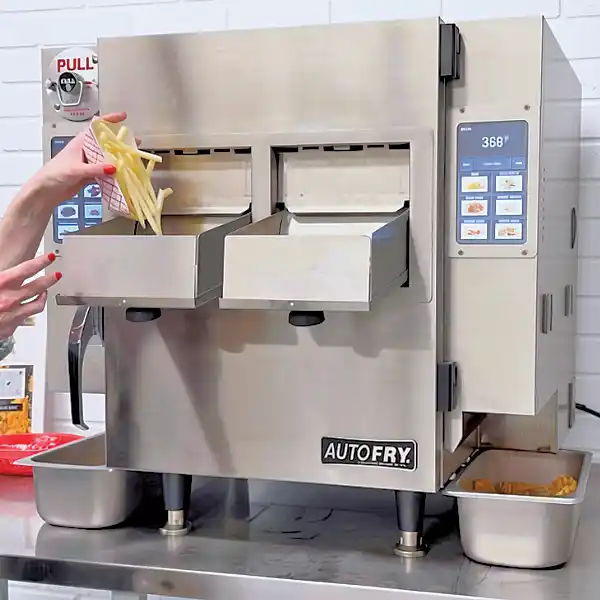
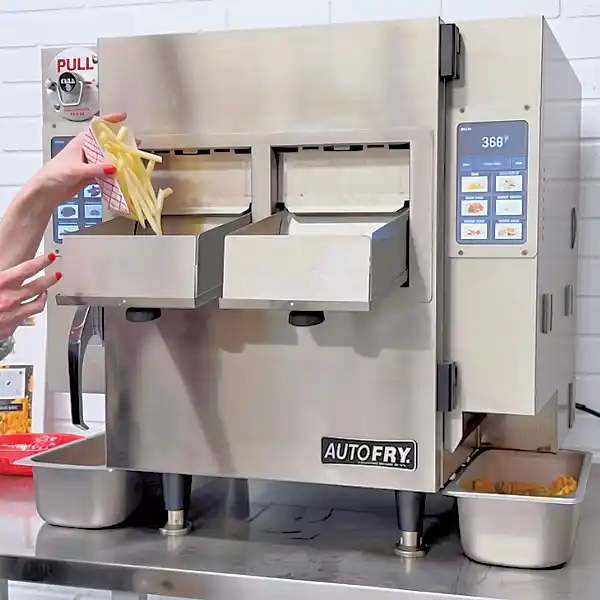
AutoFry® is a fully enclosed, automated, ventless commercial fryer designed to simplify fried food preparation. Rather than requiring an employee to constantly monitor an open fryer, AutoFry automates key parts of the cooking process while keeping the hot oil contained inside the cooking chamber.
For convenience store operators, this can provide several operational advantages:
- Less hands-on attention: Employees can start a cooking cycle and continue with other responsibilities instead of standing over a fryer throughout the cooking process.
- Simplified training: Automated cooking programs help make operation easier to learn, which can be particularly valuable for businesses managing new or less experienced employees.
- Greater menu flexibility: Operators can add popular fried foods such as french fries, chicken tenders, mozzarella sticks, onion rings, appetizers, and other favorites without creating a traditional fry station.
- Better use of available space: Ventless equipment can provide opportunities for locations where installing a traditional hood and ventilation system may be difficult or impractical.
Automation is not simply about saving time. It can also play an important role in creating a safer foodservice
environment.
Traditional frying requires employees to work around exposed hot oil. In a busy store, that can introduce risks associated with splashing, spills, and accidental contact.
AutoFry takes a different approach. The frying process occurs within a fully enclosed cooking chamber, helping separate employees from the hot oil during normal operation. AutoFry units also incorporate an ANSUL® fire suppression system as part of their safety design.
This is especially important in convenience stores, where food preparation often takes place near other store activities. Creating separation between customers, employees, and the cooking process can help operators build a foodservice program that fits more comfortably into the overall retail environment.
A successful foodservice program depends on more than simply getting food out quickly. Customers expect the fries they order today to taste like the fries they enjoyed during their last visit.
Automation can help make that consistency easier to achieve.
AutoFry features SimpliFry™ Technology, which uses heat and time compensation intelligence to automatically adjust cooking time based on the amount of product being prepared during a fry cycle.
That can help remove some of the guesswork from frying. Instead of relying entirely on individual employee experience, operators can establish repeatable cooking processes that support consistent results across shifts and locations.
For multiunit convenience store operators, that repeatability can become even more valuable. A standardized cooking process can help support the same customer experience whether someone visits one location or another.
To learn more about how ventless kitchen equipment can benefit your business, visit mtiproducts.com today!