This story is part of our ongoing series From the Ground Up, a collaboration between Narratively and ScottsMiracle-Gro exploring the lives, memories, and connections rooted in the yards, fields, and green spaces we call home.
I dash through the rain, my boots slapping the grass as I head toward the walled garden. It is a dreary morning, but my spirits soar when I see the Elizabethan Tower rising in the near distance. My long-held dream is finally within grasp.
I am on my way to meet the Assistant Head Gardener about volunteer opportunities at Sissinghurst Castle Garden in Kent, England. Ever since I was young, helping my mother tend her roses at our suburban home near San Francisco, I have always wanted to be an English gardener. Working alongside like-minded souls who exult in using their hands to create beauty from nature, I’ve dreamt of days filled with pruning perennials with the scent of lavender and damp earth wafting through tall yews.
Lately, though, a demanding career as a research scientist in the U.S. had stolen untold hours from my gardening time, and my life felt increasingly out of balance. I wasn’t the only one who noticed. While I was presenting at a conference in Montana last year, a woman asked me afterward if I had hobbies outside of work. “I used to garden,” I said with a faint smile. My empty response haunted me for weeks.
After a particularly unsatisfying day of meetings, I went online to the National Trust site and started dreaming. The Trust is a nonprofit overseeing some of the most historic cultural places in Britain. While America’s pastime is baseball, England’s is gardening: The age-old tradition of creating natural landscapes with winding pathways, abundant borders, and rolling green lawns with a bench for taking a rest.
My application was a stroke of defiance. I went right for the top and requested a volunteer position at Sissinghurst, one of England’s premier gardens. The celebrated five-acre garden was created by author Vita Sackville-West — known for her lyrical essays about gardening and the rhythms of seasons — with her husband, Harold Nicolson, in the 1930s. It is considered a masterpiece of artistic garden design, and what drew me to Sissinghurst was its ten “garden rooms” crammed with free-flowing, romantic plantings among the ruins of a dilapidated Elizabethan Manor House.
I didn’t exactly fit the bill for volunteering at a world-famous garden though: I was an amateur gardener from Northern California with a modicum of basic horticultural skills. Why would they want me? Why would they bother to respond? And yet, they did.
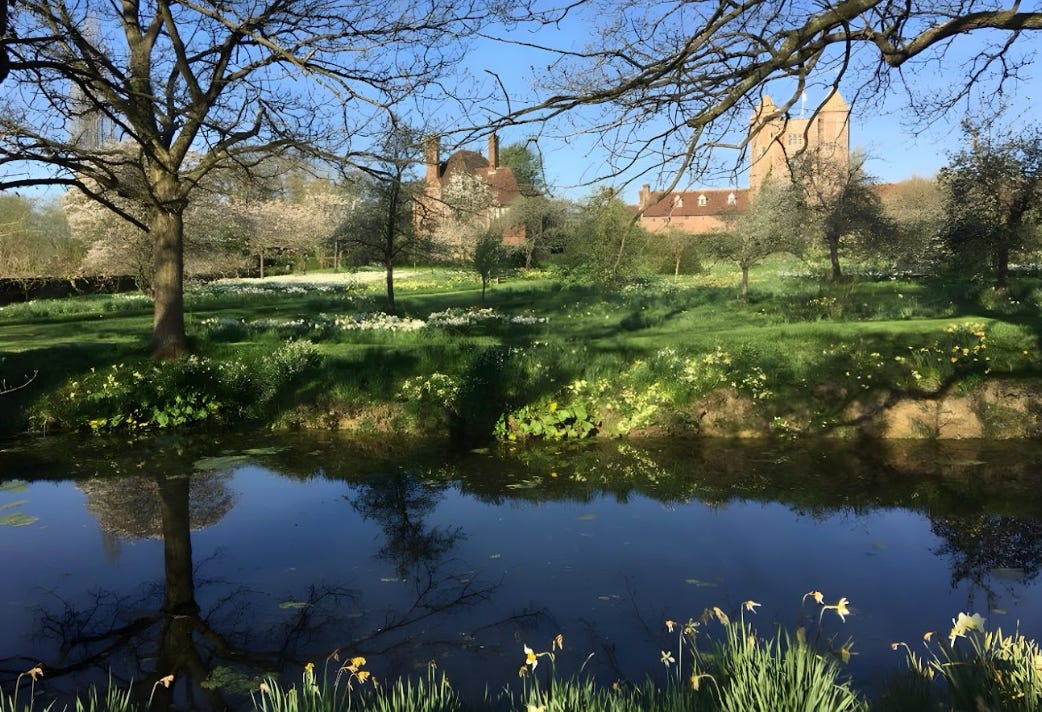
The volunteer coordinator emailed me saying I should pop in for a chat to determine what projects were available next year. I immediately booked a room at the garden’s Farmhouse a few months later because I was going to be abroad lecturing. With a dream at stake, I can be as tenacious as a garden slug.
A research colleague laughed loudly and slapped his knee when I told him about my upcoming trip, “Why in the world would anyone travel all the way to England to pull someone else’s weeds?”
Two months later, I was on my way in a torrential rainstorm to meet Wendy Tremenheere, the Assistant Head Gardener. Wendy invited me into a small room near the arched entrance. She offered me a cup of tea while she pried open a tin of biscuits. We sat across from one another at a worn oak table as the rain beat against the window. Wendy, a respected horticulturist, was a small woman in her fifties. Fidgeting with the pages of my application, she cleared her throat and began.
“How’s your knowledge of English weeds?” Her eyebrows were slightly raised as she took a sip of tea.
The question hit me, and I blinked twice. Was this a formal interview? If it was, I was unprepared and had no idea what to expect. I felt my jet lag gnawing at me and a headache coming on. Had Wendy heard my stomach growl? I decided to punt.
“Dandelions are sure a bother in the garden this spring, aren’t they?”
It was a safe bet, since I’d seen a couple of dandelions growing in the small garden at the Farmhouse. Then, before Wendy could ask me another question, I pivoted to something about boxwood blight, which I’d read about in a recent article.
Wendy launched into a discussion about the garden’s initiative to replace infected hedging. I mentioned gardeners in California stopped overwatering to keep blight from thriving. Wendy nodded in agreement. Was I gaining her respect as a worthy volunteer?
The headache disappeared, and I reached for a shortbread and took a gulp of tea.
“Okay, that ought to do it, we’ll see you next spring,” Wendy said with a tight smile.
“Brilliant!” I said and laughed.
As I walked out, Wendy gave my elbow a light pat and said, “And, oh, one more thing, remember, you’ll never be English, don’t even try.”
I smiled politely, wondering if her remark was meant to knock me down a peg or two.
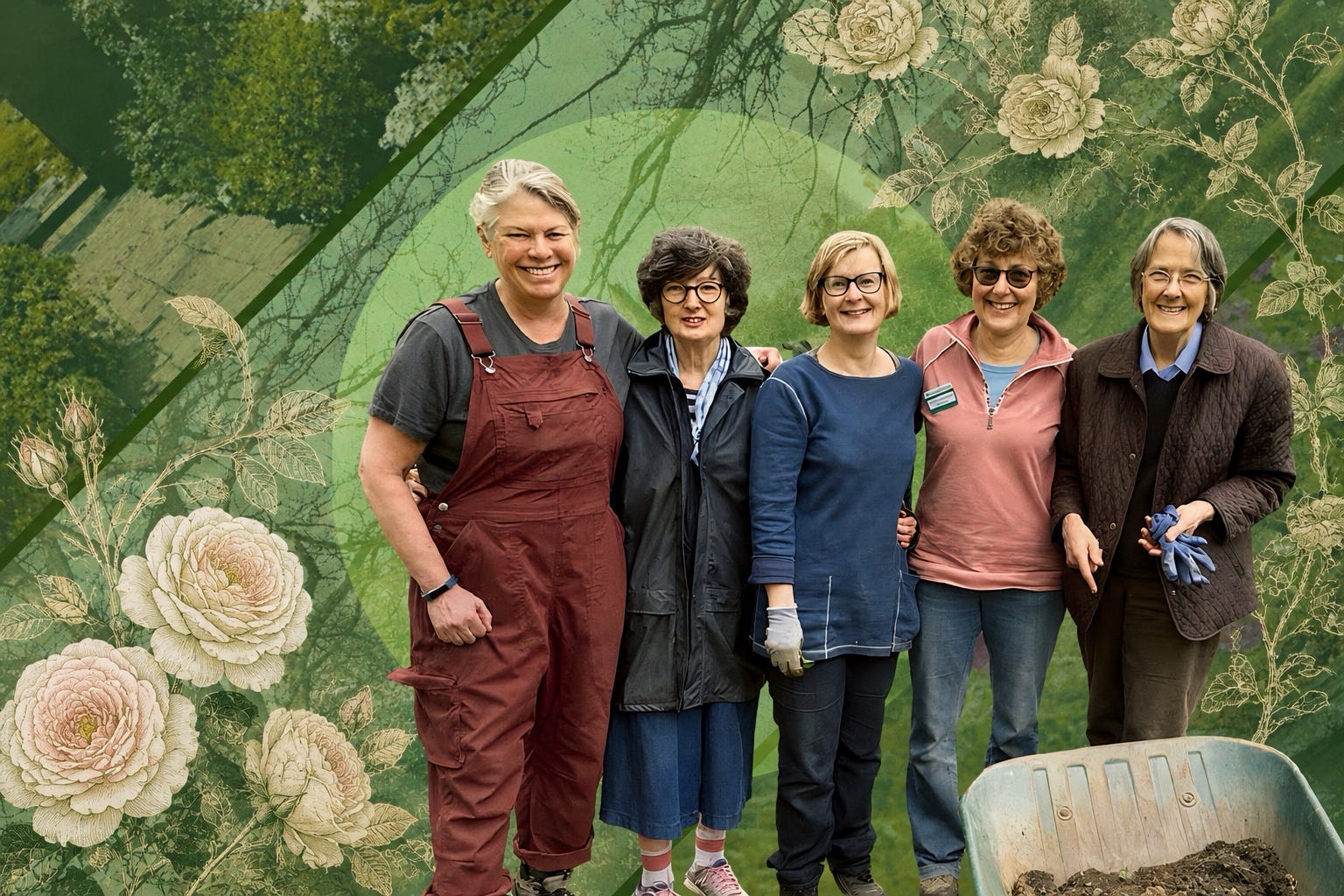
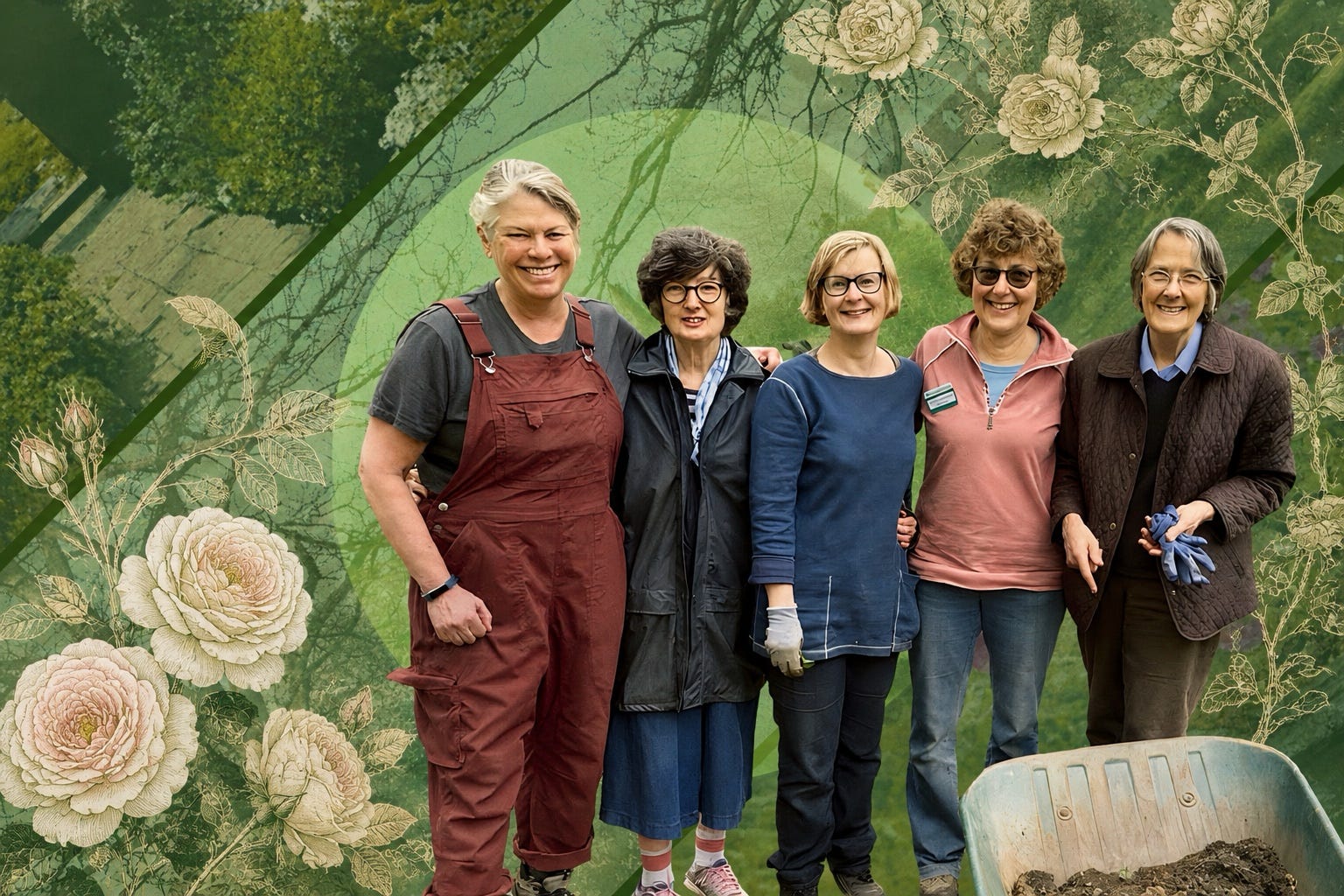
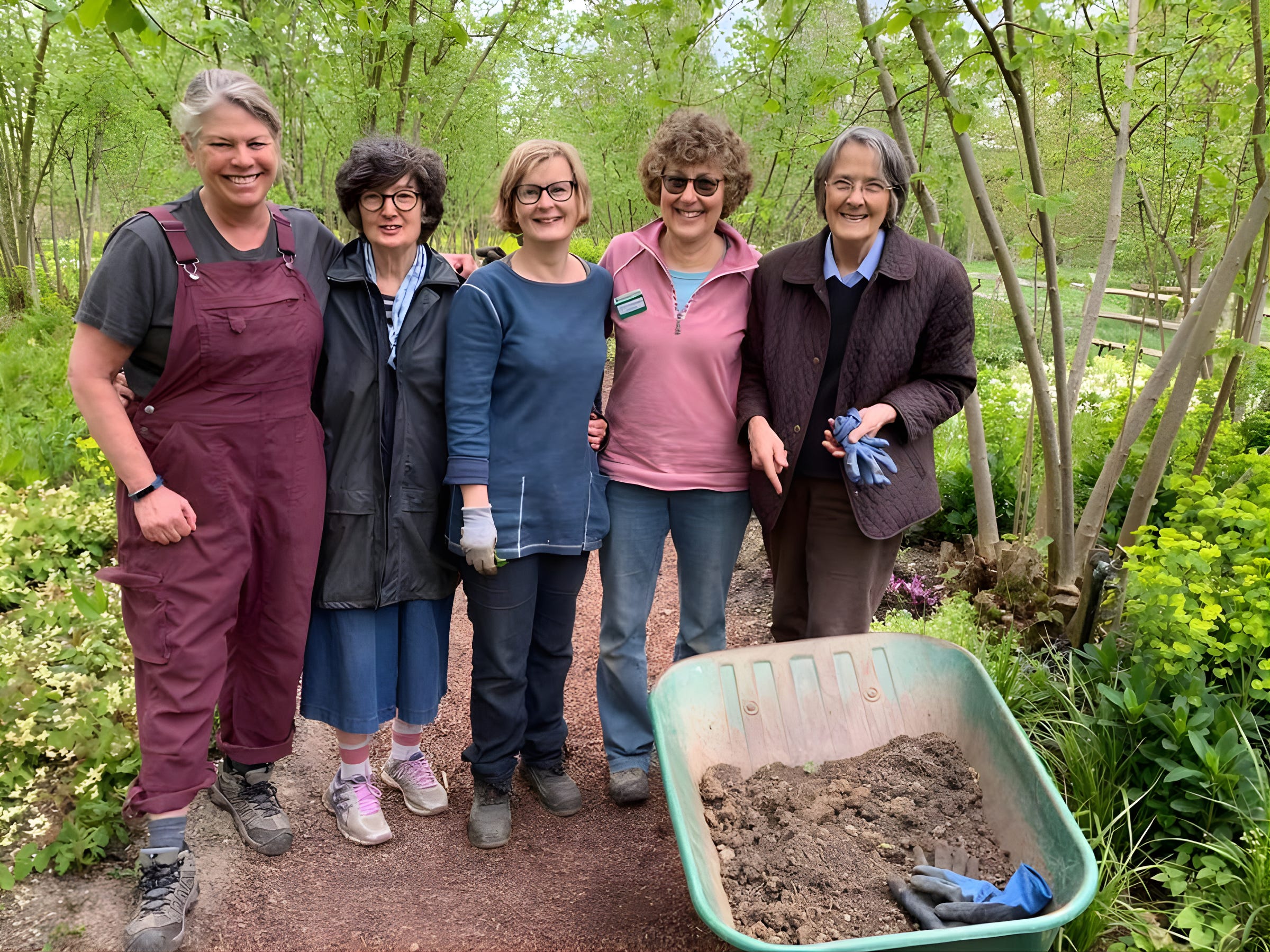
I returned to Sissinghurst and spent three springs volunteering, their first American on the team. The garden work was strenuous and the rainy weather grueling, but my days were filled with joy, kinship, and lighthearted banter.
The first task Wendy assigned me was weeding the White Garden with Josh, the full-time gardener who maintained the crowning glory of Sissinghurst. Throngs of visitors descended every day to see the most imitated garden room in the world with its bowers of fragrant white roses and borders filled with soothing white, gray, and silver foliage spilling onto pink brick pathways.
While Josh and I tossed white alyssum seeds in beds to fill vacant spots where soil showed through, he turned to me with a good-natured grin, and said, “Get ready, here it comes.”
A visitor sauntered toward us, a camera slung around his neck, and said to Josh in a booming voice, “Say mate, would you mind coming over to my house when you’re done and cleaning up my garden, too?” He laughed loudly and then moved on.
Once he was out of earshot, Josh leaned over and whispered to me, “See, there’s always someone who just can’t resist!” We chuckled and returned to sowing seeds.
On other days, I practiced my skills of making a perfect snip to remove a spent bloom, so a passerby could never tell I’d been there. I learned how to make a wattle of woven hornbeam branches for knitting trellis fencing together. I spent two weeks deadheading more than 11,000 daffodils Vita had planted in her pear and apple orchard to immortalize spring. I planted a flat of viola starts, propagated on site and aptly called ‘Vita’, a worn trowel fitting snugly in my hand as I scooted rich soil aside and placed each seedling in a small hole to ensure that delicate magenta blooms would thrive in the Lower Courtyard.
My time at Sissinghurst taught me life isn’t about waiting for dreams to happen, it’s about cultivating them into coming true. After spending days working side by side with fellow gardeners, building trust and rapport, Sissinghurst became my English home — even if I’d never be English. Volunteering gave me a new perspective about the hopefulness green spaces and community can stir.
Even though I no longer travel to Sissinghurst each spring, gardening is part of my daily life again. I volunteer at a local botanical garden as a citizen scientist monitoring how star magnolias are growing in light of climate change. I take gardening courses to learn more about planting native species for saving water and creating habitat for bees, butterflies, and songbirds. And, I tend perennials and climbing roses in my own backyard, carrying memories of rainy English afternoons with beds brimming in a haze of pink, white, blue, and lilac blooms.
I can’t say it any better than Vita herself: “No gardener would be a gardener, if he did not live in hope.”