This post may contain affiliate links. Please read my disclosure policy.
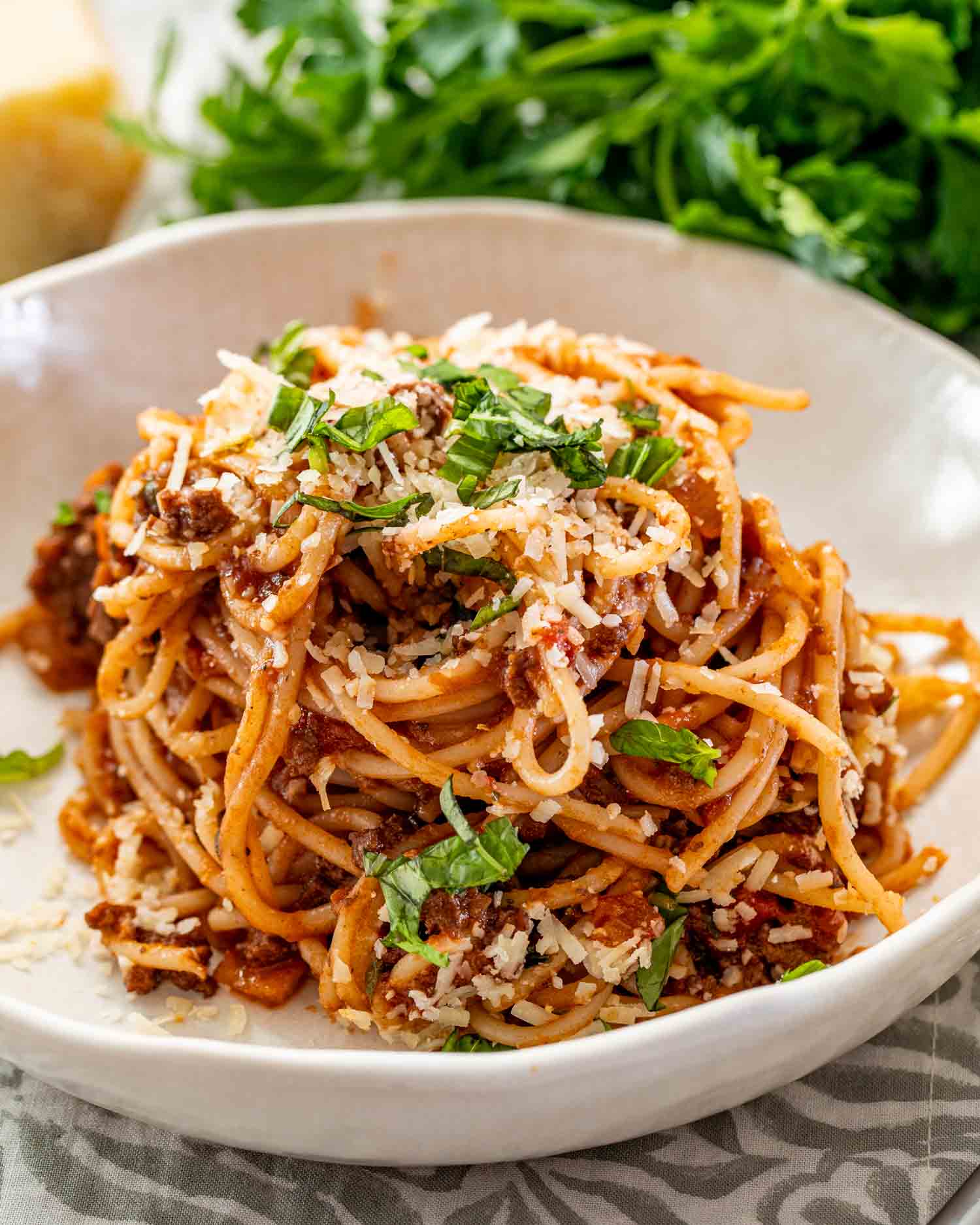
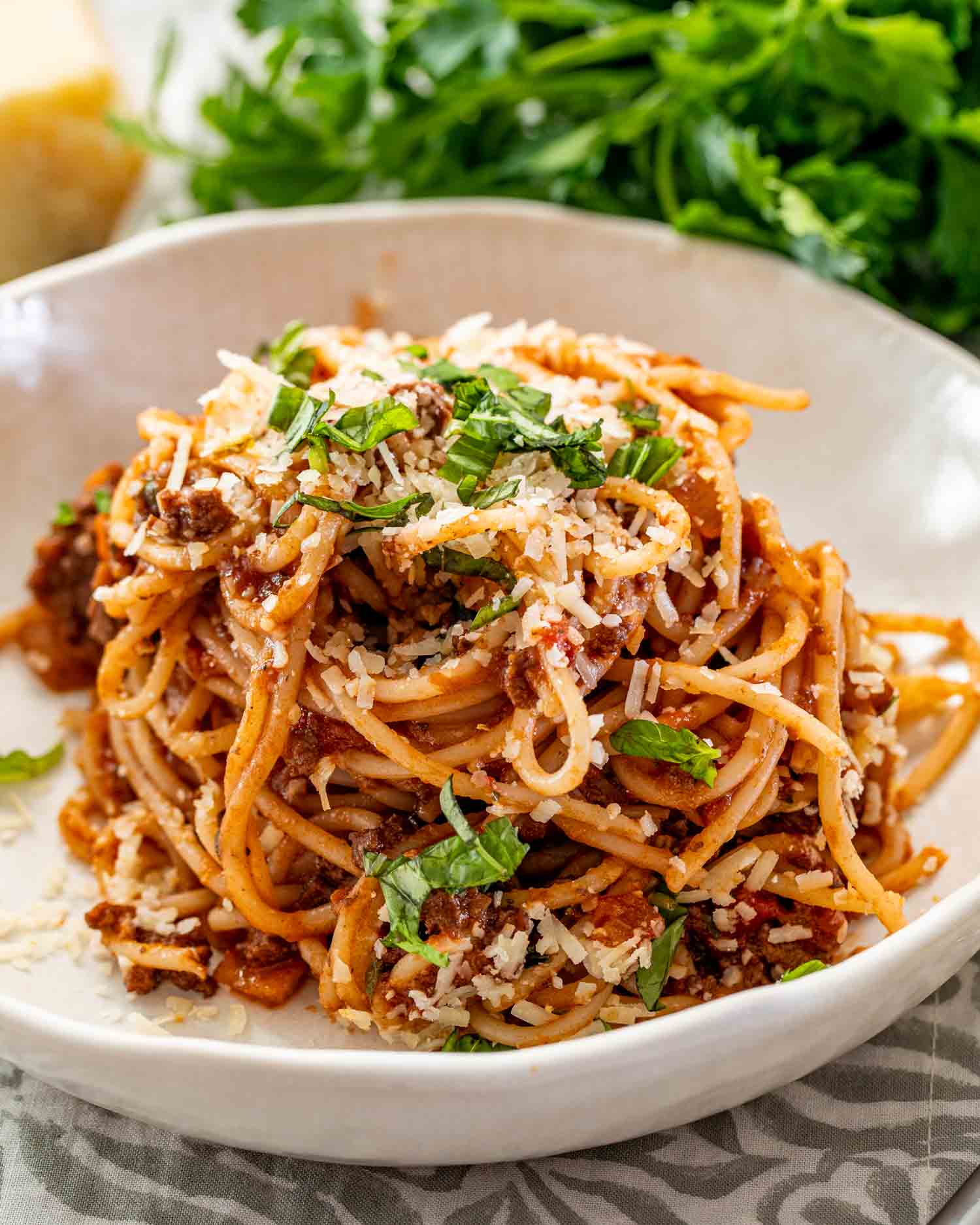
This Creamy Spaghetti Bolognese is a rich meat sauce with a splash of heavy cream stirred in at the end, which is the thing that makes it. The cream rounds out the tomatoes and turns the whole sauce silky. It’s on the table in about an hour and it’s the version my family asks for.
Table of Contents
Somebody is going to tell me cream doesn’t belong in bolognese.
It does, and I can prove it. The classic version from Bologna has milk in it, simmered right into the meat, and it’s been that way for a very long time. Dairy in a bolognese isn’t a shortcut or a modern liberty, it’s the original.
I use heavy cream instead of milk and I add it at the end rather than the beginning, which gives you the same effect with less time. It softens the acidity of the tomatoes, it makes the sauce cling properly to the spaghetti, and it turns something sharp into something you want a second bowl of.
The rest is straightforward. Brown the beef, soften the onion and garlic, cook the tomato paste for a minute, deglaze with wine, add tomatoes, simmer. About an hour start to finish and most of that is the pot doing its thing.
It’s also better the next day, which is the case with every meat sauce and still surprises people.
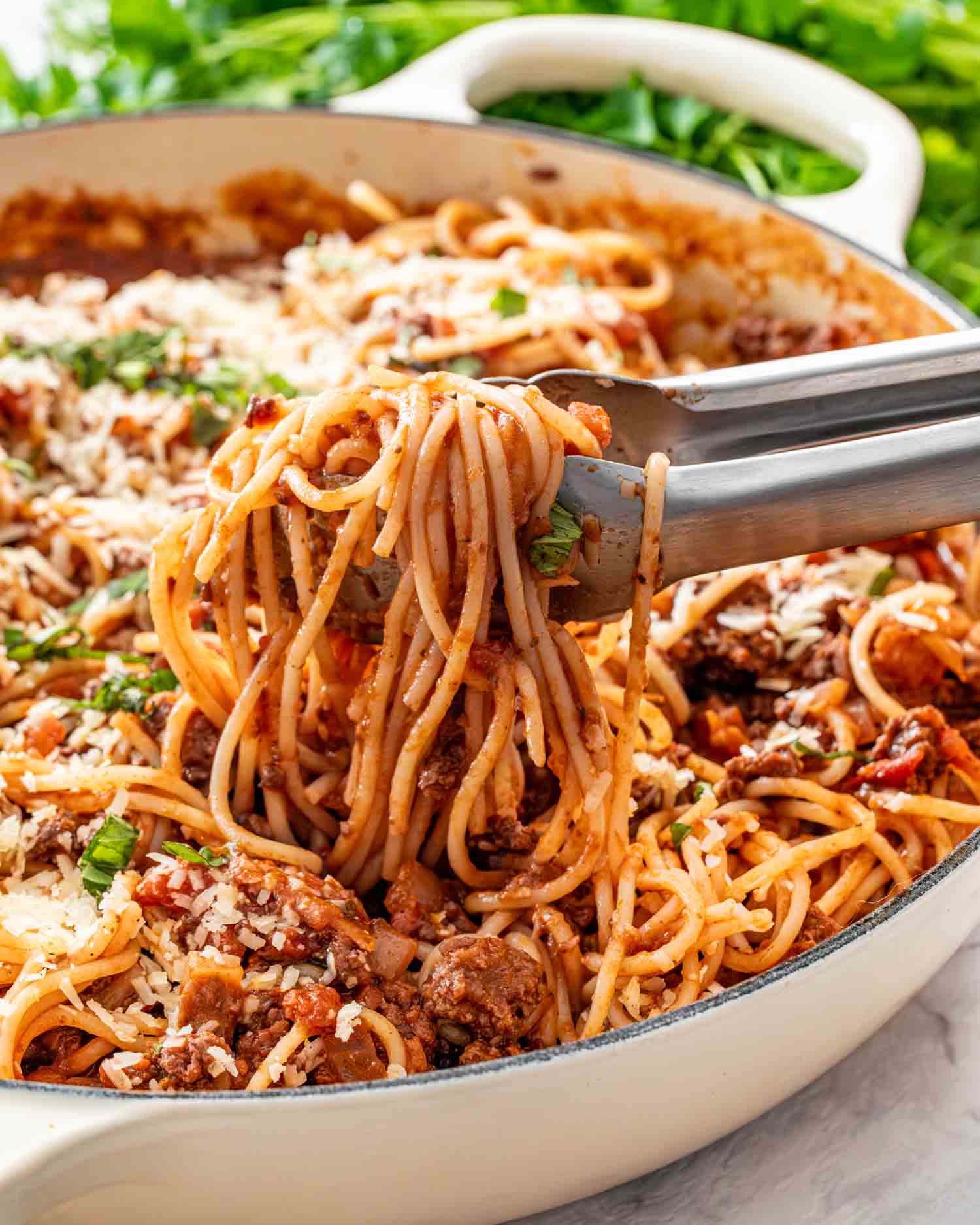
This is the bit worth knowing, because it explains what the cream is actually doing.
Dairy is traditional. The classic ragu from Bologna simmers milk into the meat early on. The lactose in it does two things: it tenderizes the beef, and it takes the hard edge off the tomatoes. That’s not a modern addition, it’s how it’s always been made.
Cream does the same job faster. More fat, less water, so you get the smoothing effect in a splash stirred in at the end instead of a long simmer at the start. Same destination, less time on the stove.
What it fixes. Tomatoes are acidic, and a tomato heavy sauce can taste sharp and thin, especially if the tomatoes weren’t great. A quarter cup of cream rounds all of that off. The sauce goes from red to a deeper orange, it thickens slightly, and it coats the pasta instead of pooling at the bottom of the bowl.
Add it at the end, off the boil. Cream can split if you boil it hard, so stir it into a sauce that’s simmering gently rather than bubbling aggressively.
Can you skip it? You can, and it’s still a good sauce. It’ll just be sharper and less rich, and you’ll taste the tomatoes more. I wouldn’t, but it’s your dinner.
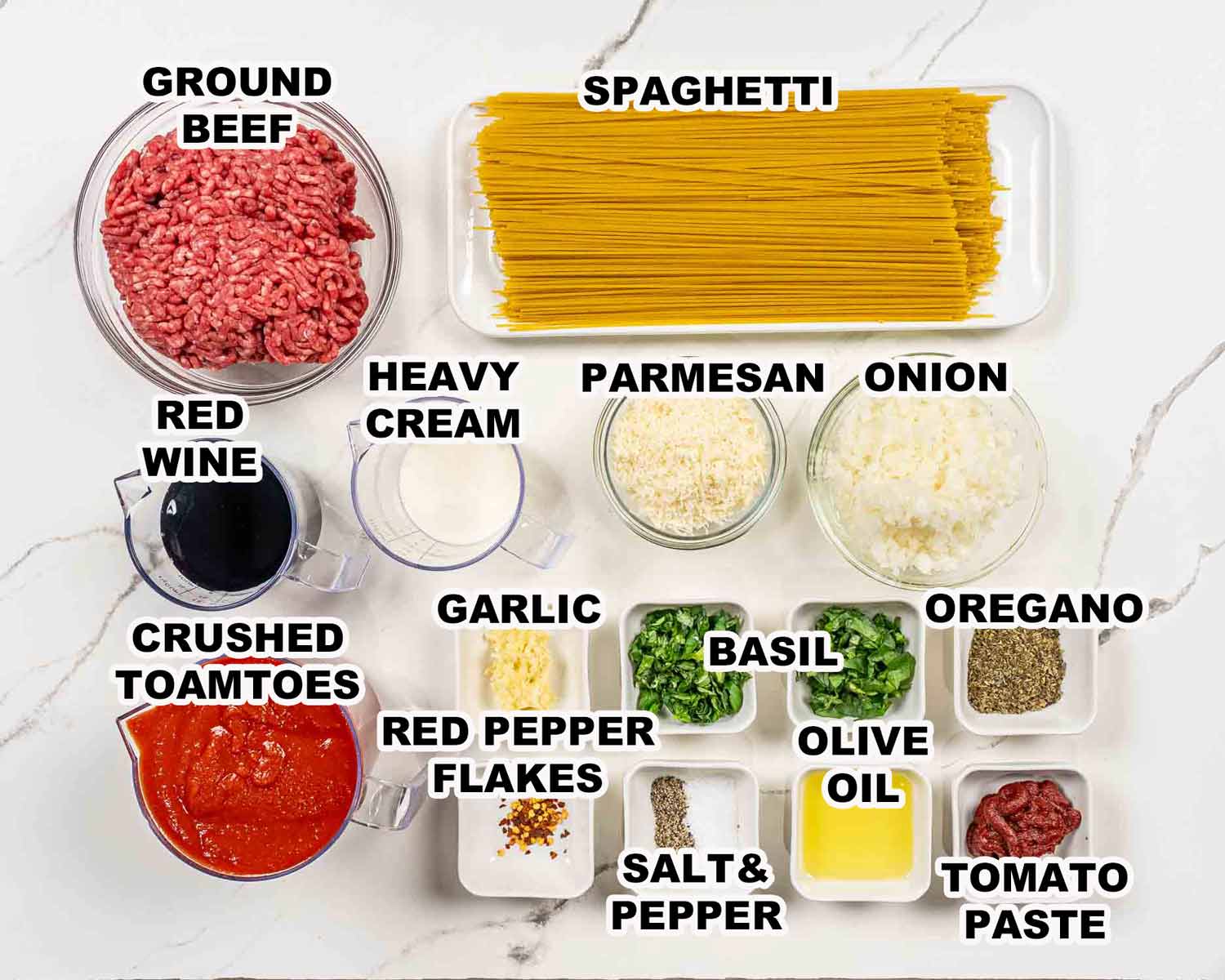
- Spaghetti (1 pound): Salt the water properly, and I mean properly. It should taste like the sea, not like faintly savory water. And save a cup of the starchy cooking water before you drain, because it’s the thing that fixes a sauce that’s gone too thick.
- Olive oil (2 tablespoons): For browning the beef. Nothing fancy required.
- Ground beef (1 pound, extra lean): Extra lean works well here and means less grease to pour off. Don’t cook it past the point where the pink disappears, since it keeps cooking in the sauce for another 20 minutes. Break it up properly as it browns so you get fine crumbles rather than lumps.
- Onion (1 large, chopped) and garlic (4 cloves, minced): Give them a real 3 minutes until the onion is soft and translucent. If they still look raw when the tomatoes go in, they’ll taste raw at the table.
- Dried oregano (1 tablespoon) and red pepper flakes (¼ teaspoon): A tablespoon of oregano sounds like a lot and it’s seasoning a whole pound of beef and a big can of tomatoes. The pepper flakes are for warmth rather than heat, so bump them up if you want it to actually bite.
- Tomato paste (2 tablespoons): Let this cook in the pan for a full minute before any liquid goes in. It caramelizes slightly and goes from bright and raw to deep and savory, and that minute gives you a lot of the flavor people associate with a much longer simmer.
- Red wine (1 cup): Use something you’d happily drink. It deglazes the pan and brings an acidity the sauce needs. Cook it down until most of the liquid has gone, which takes about 5 minutes, or you’ll taste raw alcohol. Beef broth works if you’d rather skip the wine.
- Crushed tomatoes (28 ounce can): This is most of your sauce, so the quality genuinely matters. Cheap watery tomatoes give you a thin sauce and no amount of simmering fixes it. San Marzano if you’re feeling generous.
- Fresh basil (2 tablespoons chopped, plus more to garnish): Goes in with the tomatoes and again at the end. If all you have is dried, use half the amount and add it with the tomatoes only.
- Salt (½ teaspoon) and pepper (½ teaspoon): Season in layers rather than all at once. A little after the beef, a little with the tomatoes, then taste at the end. Much easier than trying to rescue an oversalted sauce.
- Heavy cream (¼ cup): The whole point. See the section above. Half and half works and gives you a slightly less rich result. Skip it and you’ve made a good tomato meat sauce, just a sharper one.
- Parmesan (½ cup, grated): Grate it yourself. Pre grated is coated with cellulose to stop it clumping in the bag, and that same coating stops it melting into the sauce the way you want.
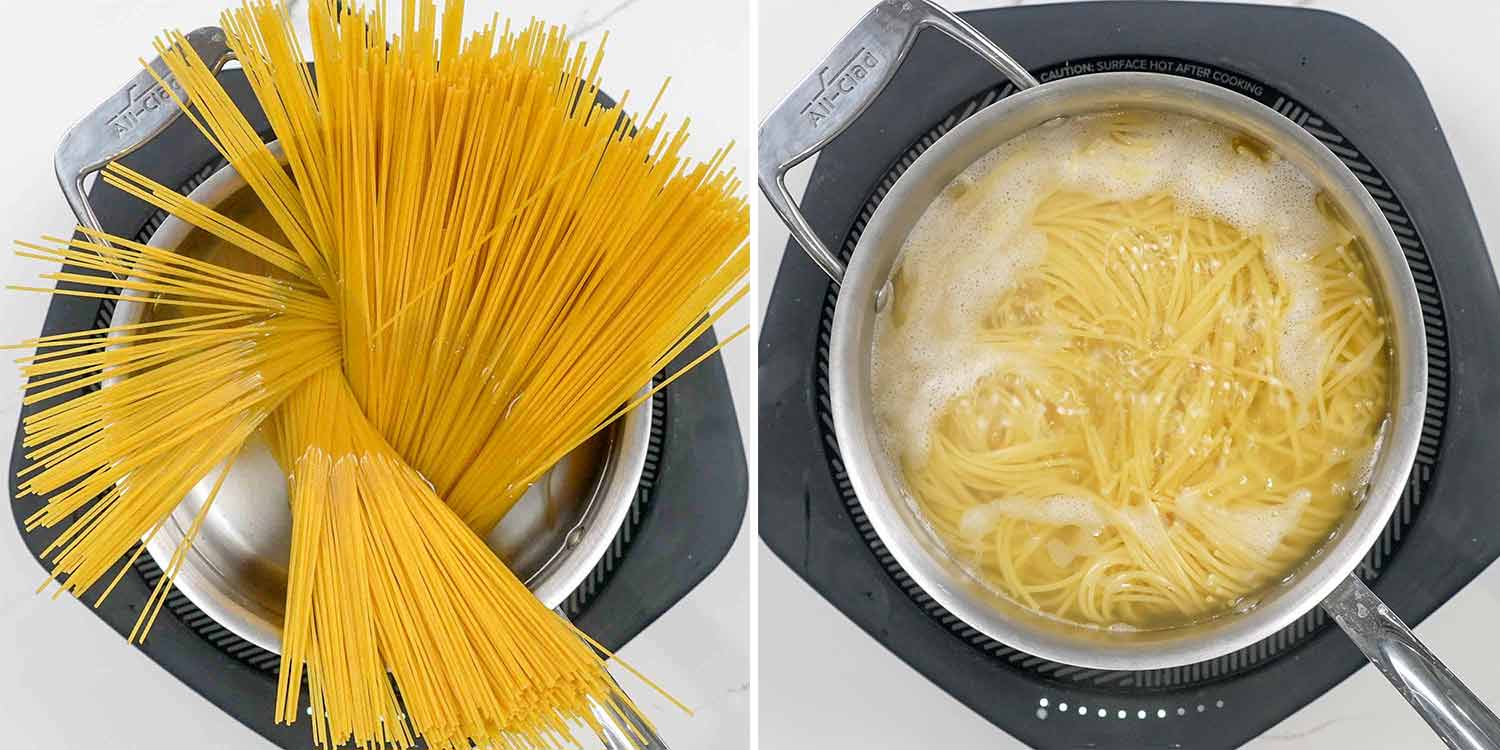
Get the pasta going. Salted boiling water, cooked to al dente. Before you drain it, scoop out a cup of that starchy water and set it aside. Two seconds now, and it’s the thing that saves you if the sauce tightens up later.
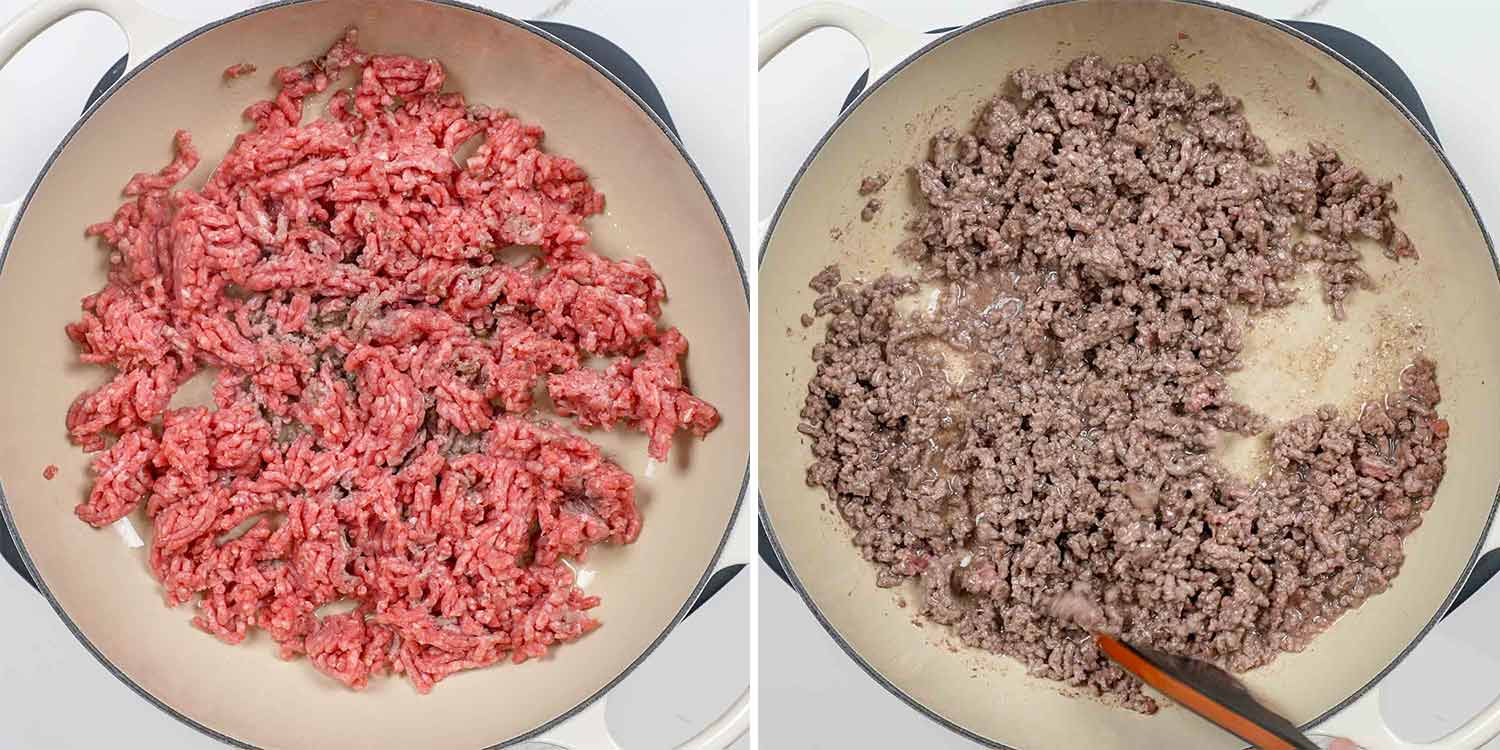
Brown the beef. Olive oil in a large skillet or Dutch oven over medium high, then the beef, broken up as it cooks, about 3 minutes until there’s no pink left. Nobody wants meatball sized lumps in a bolognese.
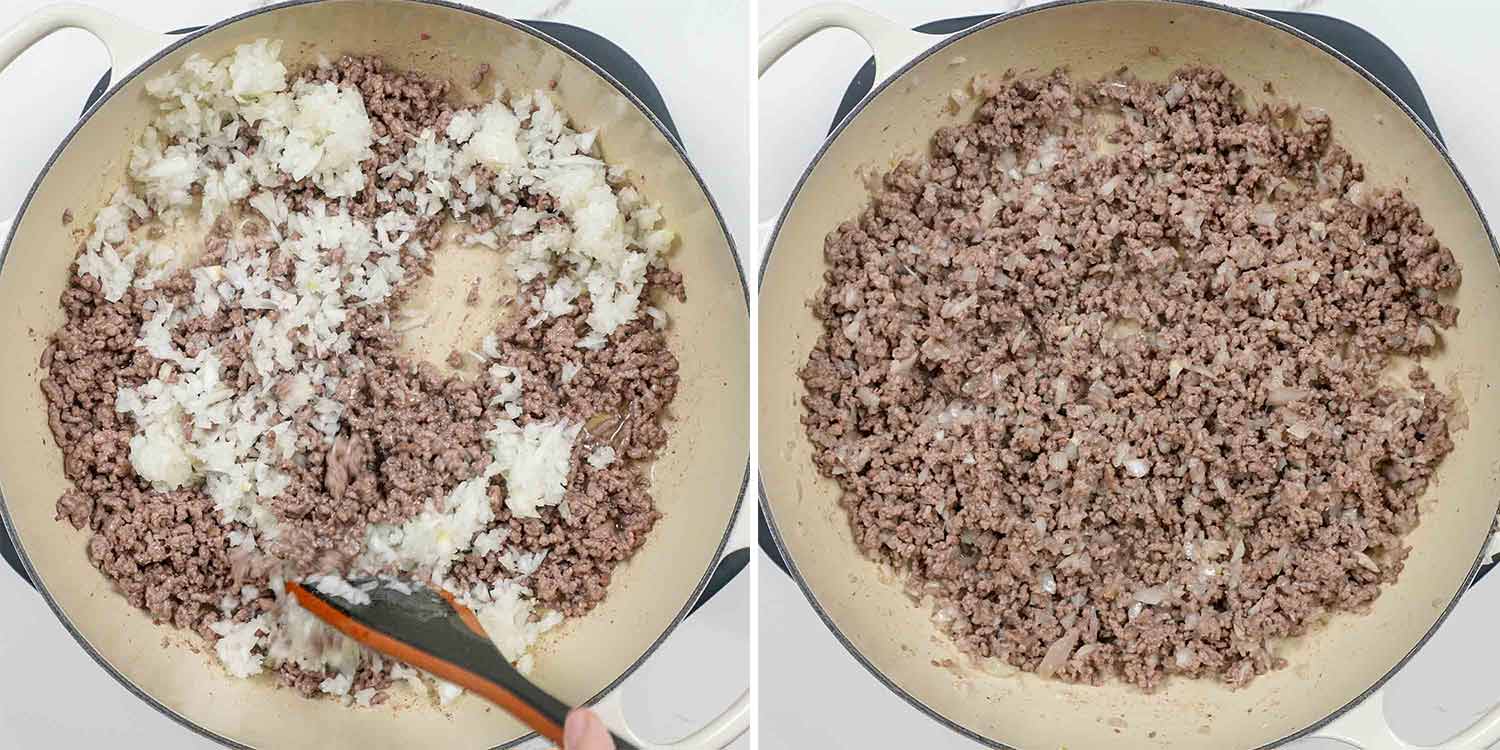
Soften the onion and garlic. Straight into the same pan for another 3 minutes, until the onion has gone soft and translucent.
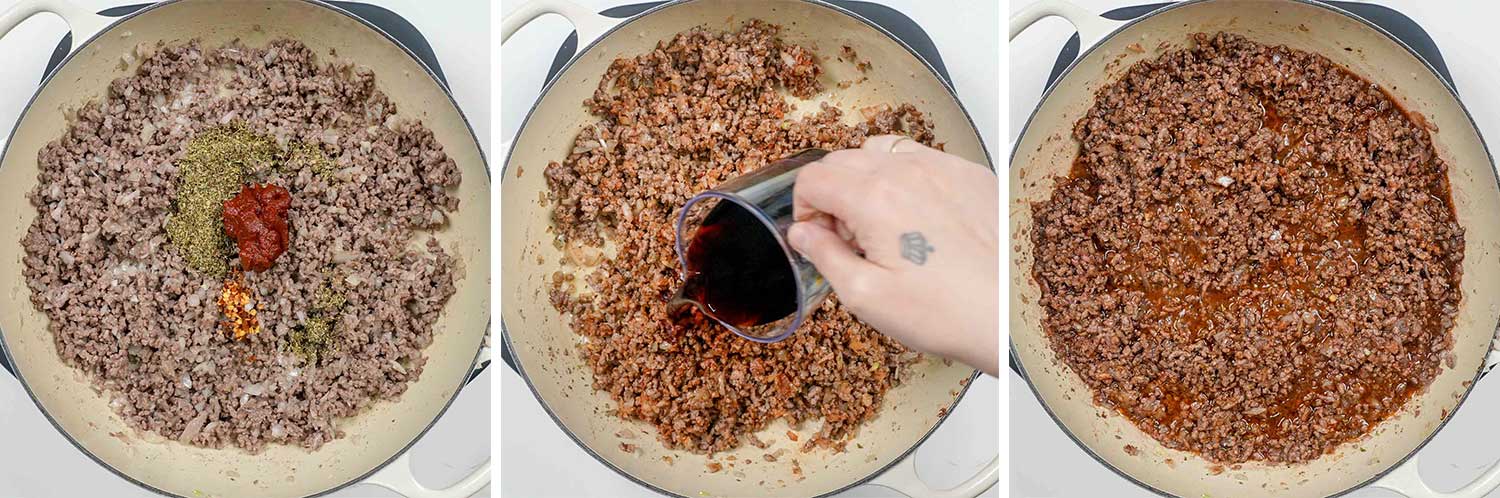
Cook the tomato paste. Oregano, red pepper flakes, and tomato paste in, and give the paste a full minute of stirring before anything wet arrives. It’ll darken and the smell changes noticeably. This is the cheapest flavor in the recipe and it’s the step people skip.
Wine in. Pour it in and let it bubble for about 5 minutes until most of the liquid has cooked off. You’re after the flavor it leaves behind, not a boozy sauce.
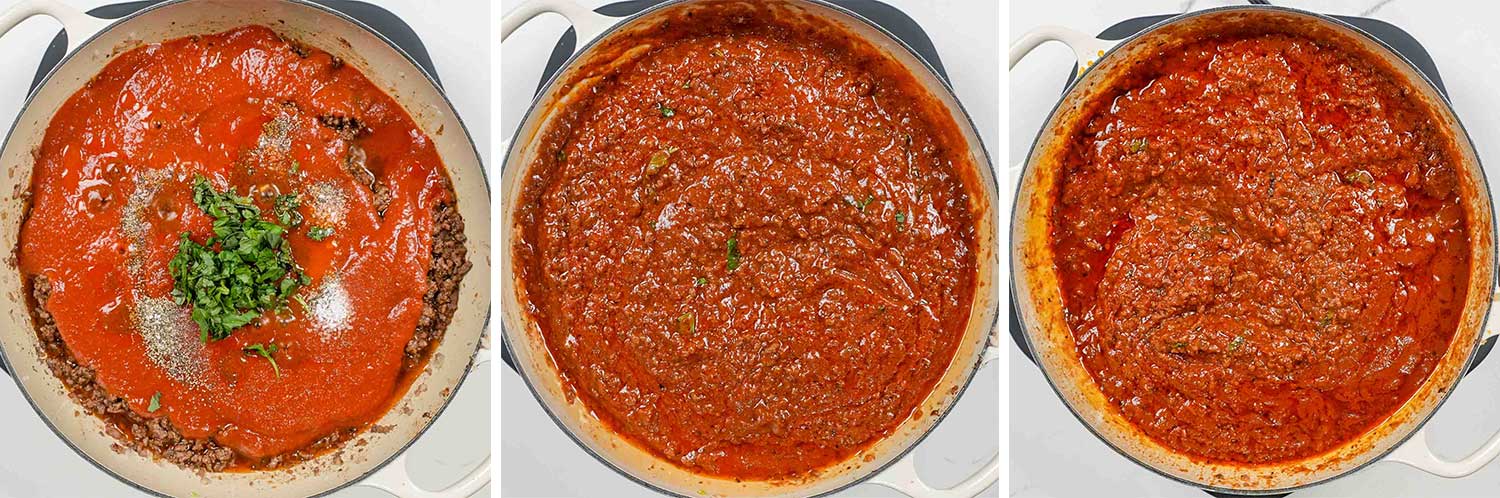
Tomatoes and simmer. Crushed tomatoes, basil, salt, and pepper. Bring it up to a boil, then drop to medium low, cover, and let it go 20 minutes. Longer is better if you’ve got the time, and 45 minutes makes a noticeably deeper sauce.
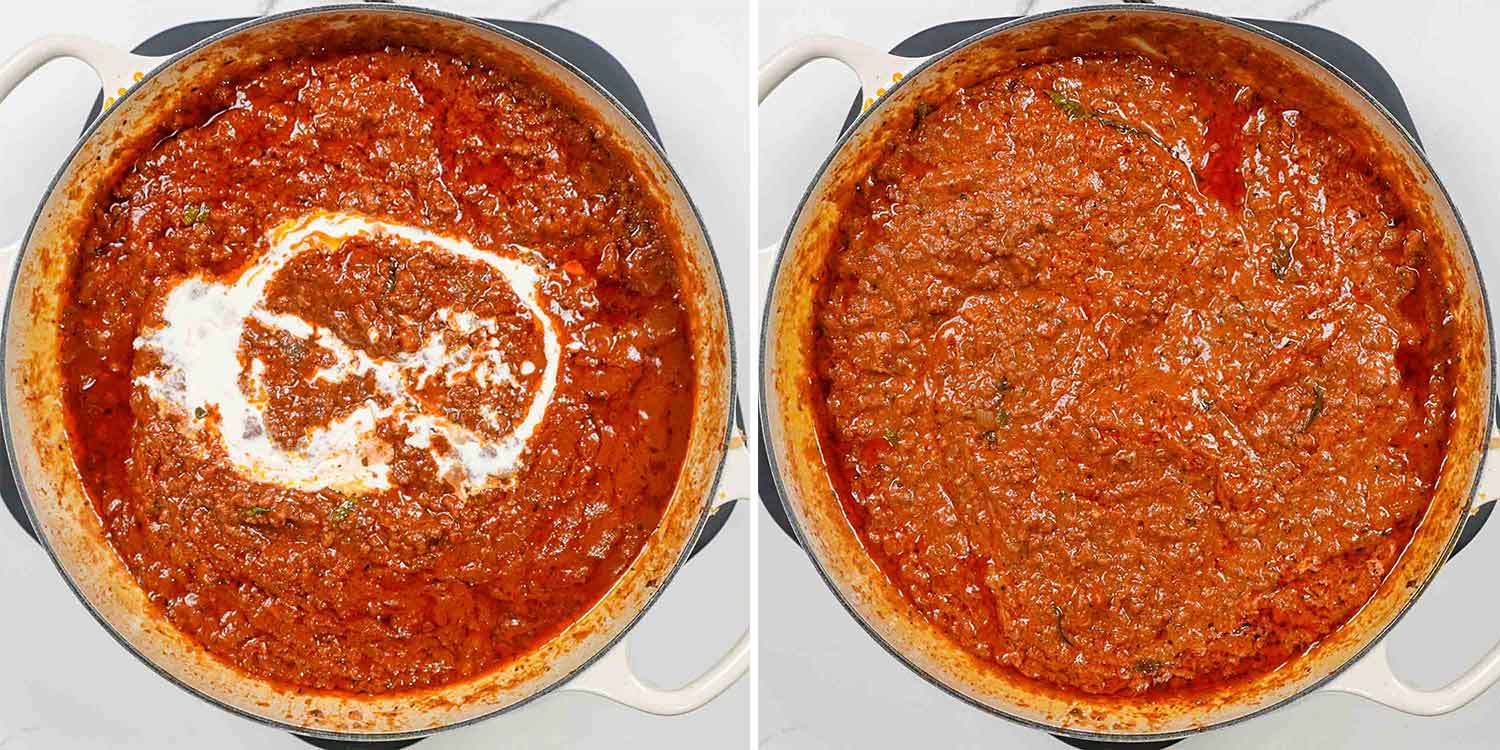
Now the cream. Stir in the heavy cream with the sauce at a gentle simmer, not a hard boil, since boiling cream can split. You’ll see it go from red to a deeper orange and thicken slightly. Taste and adjust the seasoning here, because 20 minutes of reducing changes everything.
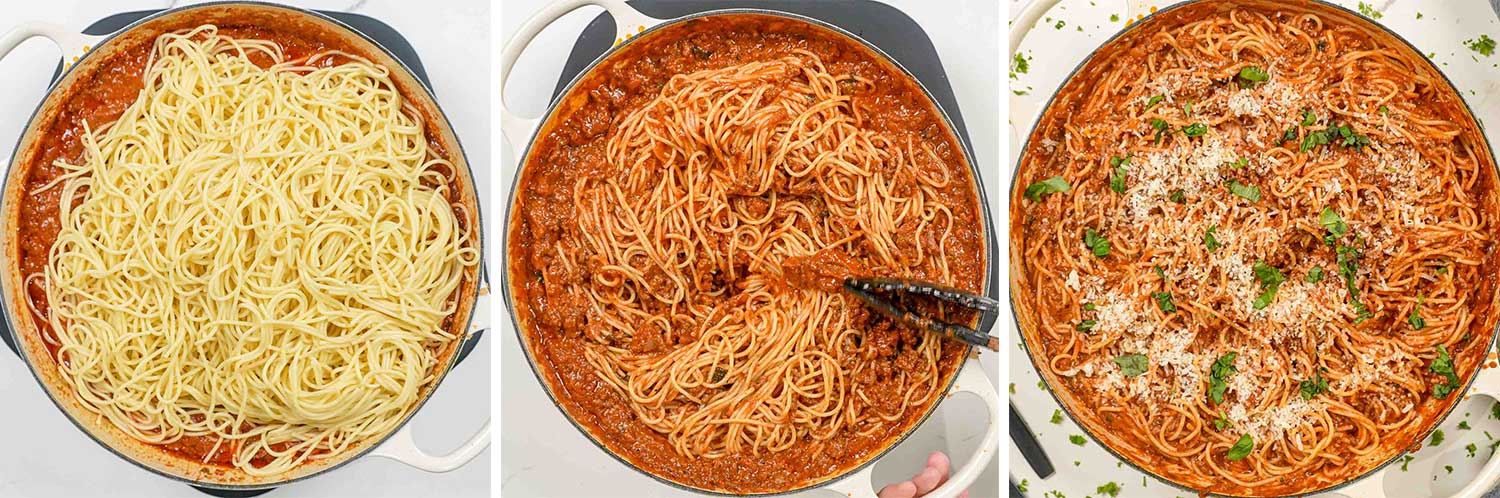
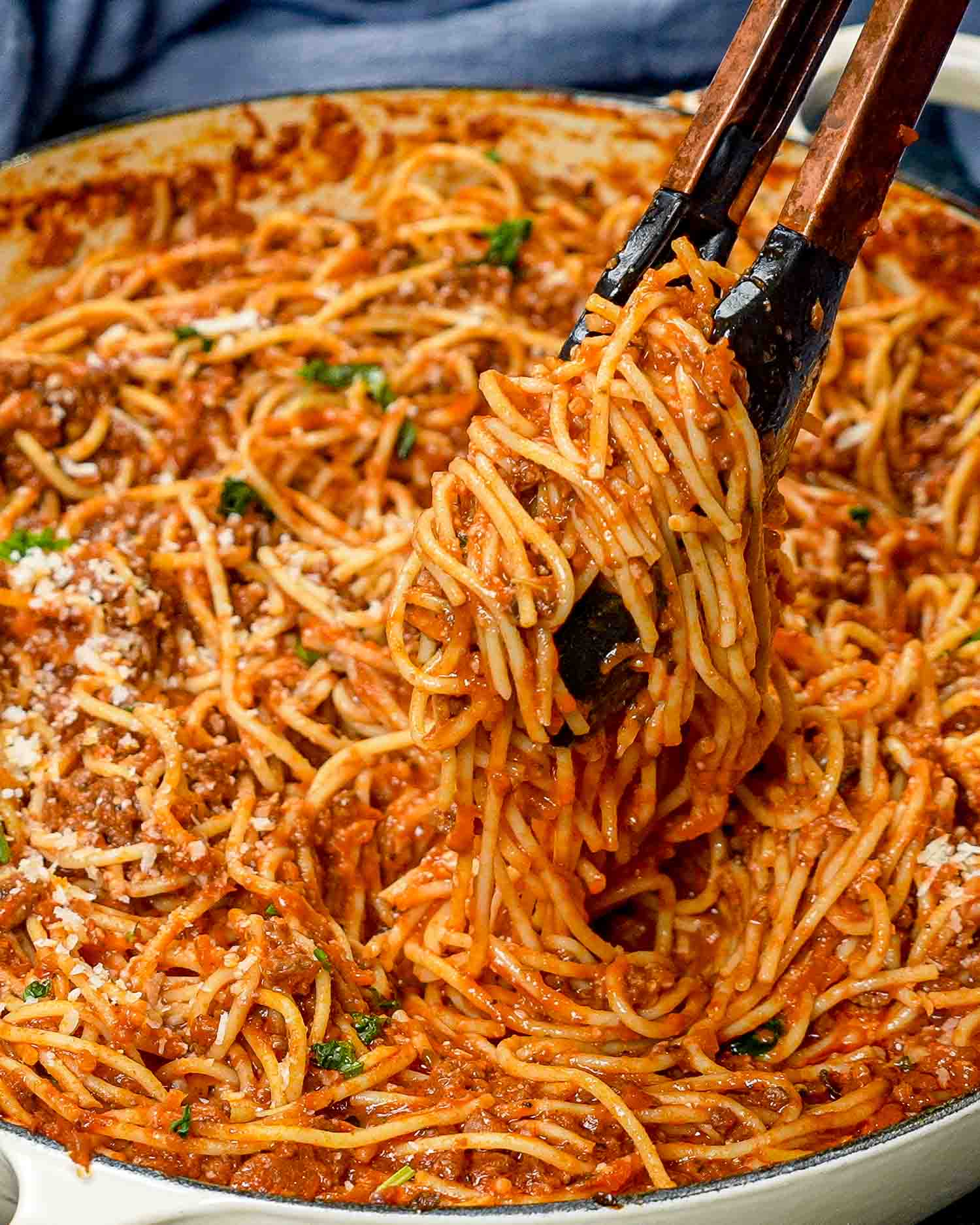
Bring it together. Spaghetti into the pot and toss until every strand is coated. If it’s too thick, add the pasta water a splash at a time until it loosens.
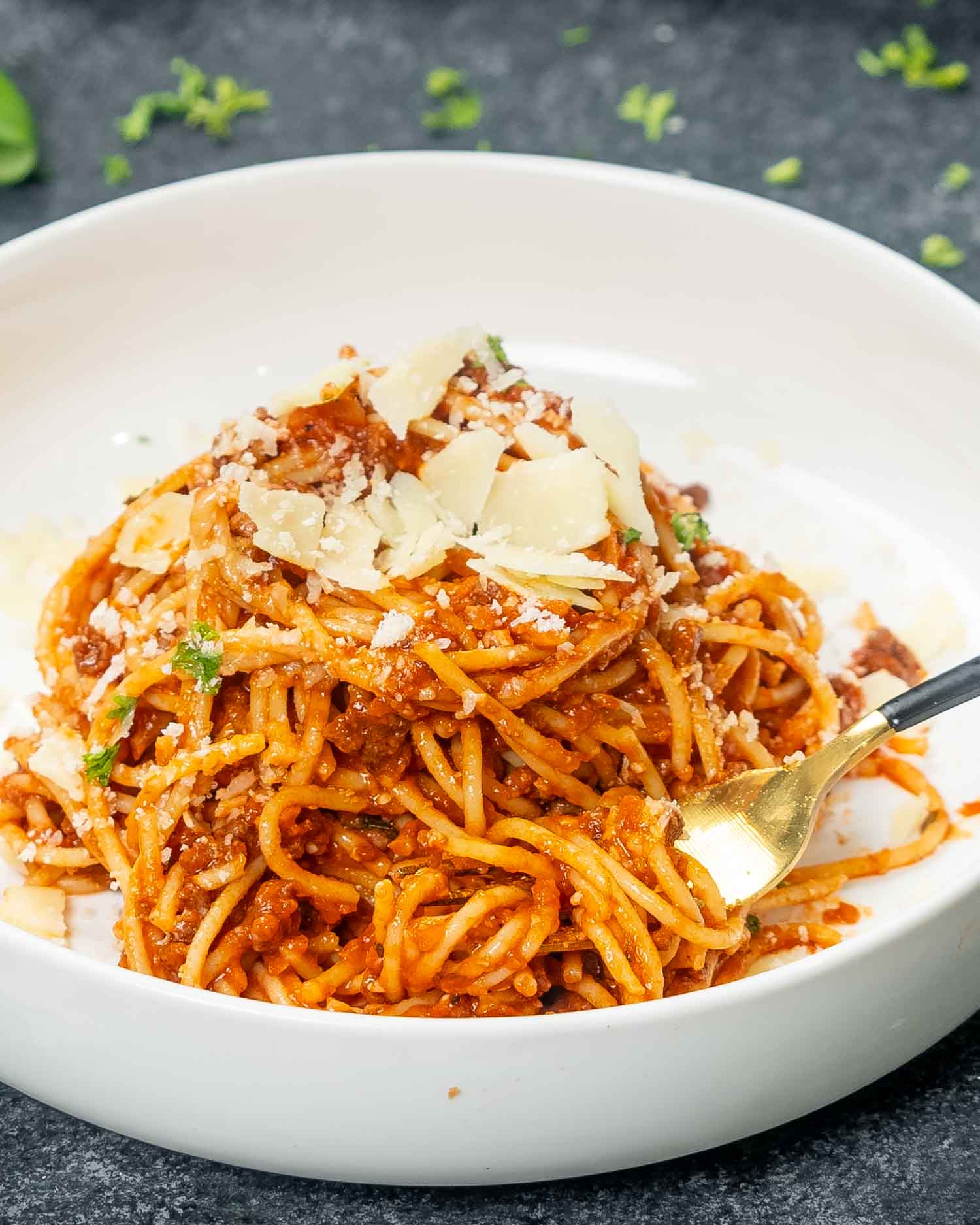
Let it sit a minute before serving. The pasta drinks in a bit of sauce and it clings much better than if you ladle it over at the last second. Parmesan and basil on top, and eat it.
- Salt the pasta water like you mean it. It’s the only chance the pasta itself gets seasoned.
- Save a cup of pasta water. It fixes a thick sauce in a way plain water can’t.
- Give the tomato paste a full minute. It’s where the slow cooked flavor comes from without the slow cooking.
- Cook the wine down properly. Five minutes, until most of the liquid has gone.
- Season in layers. After the beef, with the tomatoes, then again at the end.
- Add the cream at a simmer, not a boil. Hard boiling can split it.
- Don’t rush the simmer. Twenty minutes is the minimum. Forty five is better if you have it.
- Rest the pasta in the sauce for a minute before serving so it soaks some up.
Twenty minutes gets you a very good weeknight sauce. If you’ve got a Sunday afternoon, here’s what a longer version looks like.
- Add carrot and celery. One finely chopped carrot and one stalk of celery with the onion. That’s the classic soffritto and it brings a background sweetness that balances the tomatoes.
- Simmer for 90 minutes instead of 20, uncovered for the last 30 so it reduces properly. The beef goes softer, the sauce goes deeper, and it stops tasting like separate ingredients.
- Add the cream earlier. With a long simmer you can stir the cream in at the halfway point and let it cook into the sauce rather than sitting on top of it.
Same recipe, different afternoon. I make the 20 minute version far more often and I’m not going to pretend otherwise.
- With pancetta. Four ounces diced and crisped before the beef goes in. Very traditional and it adds real depth.
- Beef and pork. Half a pound of each instead of a full pound of beef. Pork brings fat and sweetness.
- Hidden vegetables. Grated carrot, finely chopped mushroom, or zucchini all disappear into the sauce. Add them with the onion.
- Spicier. Take the red pepper flakes up to a full teaspoon, or add a diced chili with the garlic.
- Different pasta. Spaghetti is what most of us grew up with. Tagliatelle is what they’d use in Bologna and it holds the sauce better. Rigatoni and penne both work too.
- Baked. Toss the sauce and pasta together, top with mozzarella, and bake at 375°F for 20 minutes.
What To Serve With Spaghetti Bolognese
Spaghetti Bolognese is a full meal on its own, but the right side dish can turn it into a proper feast.
Make ahead: the sauce is better on day 2, so making it a day early is an upgrade rather than a compromise. Cook the pasta fresh when you’re ready to eat.
Fridge: 4 days in an airtight container. Store the sauce and pasta separately if you can, because pasta sitting in sauce overnight goes soft and swollen.
Freezer: freeze the sauce on its own for up to 3 months. Don’t freeze it with the pasta, since spaghetti comes out of the freezer with a texture nobody enjoys. Portion it before freezing rather than one large block.
Reheating: gently on the stove with a splash of water or broth to loosen it. Go easy on the heat, because a sauce with cream in it can split if you blast it.
Before You Begin! If you make this, please leave a review and rating letting us know how you liked this recipe! This helps our business thrive & continue providing free recipes.
This Creamy Spaghetti Bolognese has a rich meat sauce finished with a splash of heavy cream, which rounds out the tomatoes and makes the whole thing silky. On the table in about an hour, and it’s even better the next day.
- 1 pound spaghetti (uncooked)
- 2 tablespoons olive oil
- 1 pound ground beef (extra lean)
- 1 large onion (chopped)
- 4 cloves garlic (minced)
- 1 tablespoon oregano (dried)
- ¼ teaspoon red pepper flakes
- 2 tablespoons tomato paste
- 1 cup red wine
- 28 ounces crushed tomatoes (1 can)
- 2 tablespoons fresh basil (chopped)
- ½ teaspoon salt (or to taste)
- ½ teaspoon pepper (or to taste)
- ¼ cup heavy cream
- ½ cup Parmesan cheese (grated)
- 2 tablespoons basil (chopped, for garnish)
Before You Begin! If you make this, please leave a review and rating letting us know how you liked this recipe! This helps our business thrive & continue providing free recipes.
-
Cook the 1 pound spaghetti in generously salted water according to package instructions, until al dente. Before draining, reserve 1 cup of the pasta water.
-
Heat the 2 tablespoons olive oil in a large skillet or Dutch oven over medium high heat. Add the 1 pound ground beef and cook for about 3 minutes, breaking it up as you go, until no longer pink.
-
Add the 1 chopped onion and 4 cloves minced garlic and cook for another 3 minutes, until the onion has softened.
-
Add the 1 tablespoon dried oregano, ¼ teaspoon red pepper flakes, and 2 tablespoons tomato paste. Stir and cook for a full minute, until the paste darkens slightly and smells rich. Pour in the 1 cup red wine and cook for about 5 minutes, until most of the liquid has cooked off.
-
Add the 28 ounces crushed tomatoes and 2 tablespoons chopped basil, then season with the ½ teaspoon salt and ½ teaspoon pepper. Bring to a boil, then reduce the heat to medium low, cover, and simmer for 20 minutes.
-
Reduce the heat so the sauce is at a gentle simmer, then stir in the ¼ cup heavy cream. The sauce will deepen in color and thicken slightly. Taste and adjust the seasoning.
-
Add the cooked spaghetti to the pot and toss until every strand is coated, loosening with the reserved pasta water if needed. Let it sit for a minute, then top with the ½ cup grated Parmesan and the remaining 2 tablespoons basil.
- The cream is the point. Add it with the sauce at a gentle simmer, not a hard boil, since boiling can split it. It softens the acidity of the tomatoes and makes the sauce silky.
- Cook the tomato paste for a full minute before adding liquid. It’s where a lot of the slow cooked flavor comes from.
- Save the pasta water. A splash loosens a sauce that’s tightened up and helps it cling to the spaghetti.
- Tomatoes. Cheap watery crushed tomatoes give you a thin sauce and simmering won’t fix it.
- Season in layers, after the beef, with the tomatoes, and again at the end.
- Grate your own Parmesan. Pre grated is coated with fillers that stop it melting properly.
- Longer is better. Twenty minutes is the minimum. Add a chopped carrot and celery stalk with the onion and simmer 90 minutes for a deeper sauce.
- Storage: fridge up to 4 days, sauce and pasta stored separately. Freeze the sauce alone for up to 3 months.
Originally published January 2020.
Serving: 1servingCalories: 618kcal (31%)Carbohydrates: 72g (24%)Protein: 31g (62%)Fat: 20g (31%)Saturated Fat: 8g (50%)Polyunsaturated Fat: 2gMonounsaturated Fat: 8gTrans Fat: 0.5gCholesterol: 66mg (22%)Sodium: 606mg (26%)Potassium: 984mg (28%)Fiber: 6g (25%)Sugar: 10g (11%)Vitamin A: 688IU (14%)Vitamin C: 16mg (19%)Calcium: 206mg (21%)Iron: 5mg (28%)
Notice: Nutrition is auto-calculated for your convenience. Where relevant, we recommend using your own nutrition calculations.
Frequently Asked Questions
Why add cream to bolognese?
Can I leave the cream out?
Do I have to use wine?
Why is my sauce thin?
Can I simmer it longer?
What pasta is best?
Can I freeze it?