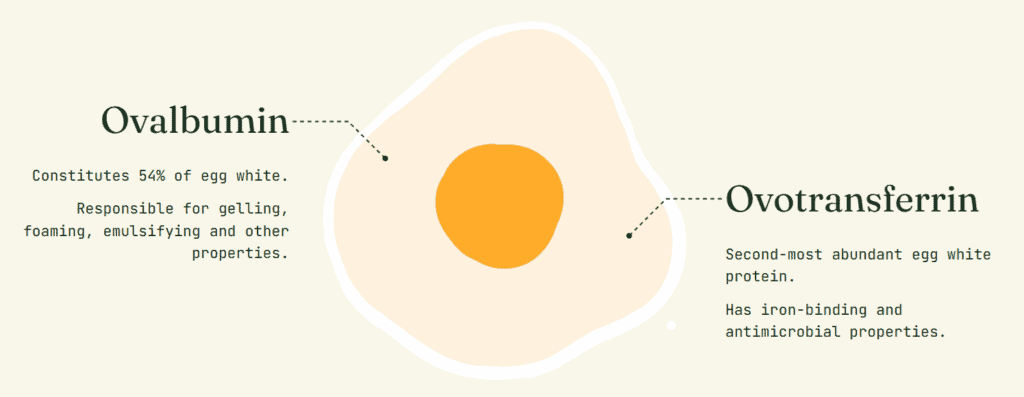
Researchers at Cranfield University in the UK are working with Exeter biotech startup HyphaPro to find out whether engineered filamentous fungi can produce ovotransferrin through precision fermentation. Ovotransferrin is a protein found in egg white.
“We need to explore new ways to produce valuable proteins without putting additional pressure on our traditional food systems”
Ovotransferrin binds iron and has antimicrobial properties, and is used in dietary supplements and functional foods. Supply currently depends on hen eggs. According to the university, that leaves it exposed to bird flu outbreaks, rising costs and environmental pressures.
The team will grow specially engineered fungal strains in controlled tanks to test whether they produce ovotransferrin. The goal is a proof-of-concept production process that could later be scaled up and developed commercially. If the method works, the researchers say it could be extended to other high-value proteins.
Dr Abhishek Baghela, Senior Lecturer at Cranfield, leads the project with support from Lecturer Dr Carla Cervini. The work is based at the university’s Magan Centre of Applied Mycology (MCAM), which Cranfield set up with £7.2 million from Research England’s Expanding Excellence in England fund. HyphaPro director Dr Andrew J. Foster is the industry partner.
Dr Baghela said, “As demand grows for sustainable ingredients, we need to explore new ways to produce valuable proteins without putting additional pressure on our traditional food systems.”

The project is funded by the National Alternative Protein Innovation Centre (NAPIC). In September, the centre awarded more than £1 million to 33 collaborative projects in its second round of Collaborative Programme Funding, and HyphaPro’s work with Baghela’s group was among them. The value of this individual grant and the project timeline have not been disclosed.
HyphaPro opened its first laboratory at Exeter Science Park in January and has worked on fungal production of both ovalbumin and ovotransferrin.
The most advanced companies in precision-fermented egg proteins have concentrated on ovalbumin, the main protein in egg white. But, ovotransferrin goes into a different set of products, mainly supplements and functional foods, so the Cranfield project is a test of whether fungal fermentation can supply a second egg protein to those buyers.
“Through this project we aim to demonstrate the potential of fungal precision fermentation to manufacture high-value functional ingredients. It’s an exciting opportunity to bring together fungal biotechnology and food sciences to develop new approaches for the alternative protein sector,” concluded Dr Baghela.