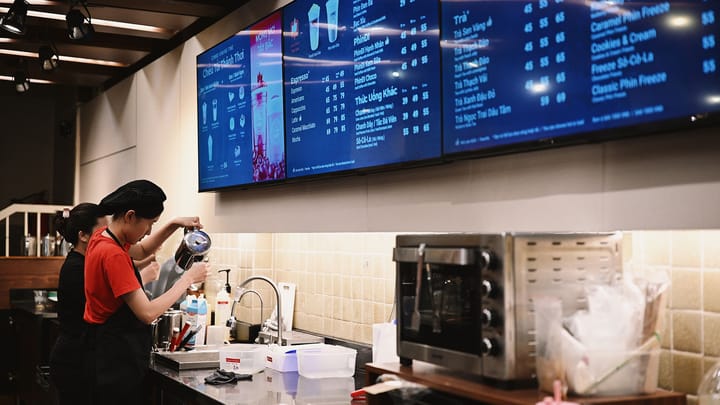
Start with the relationship between front of house and back of house. During a dinner rush, seconds matter. If the host stand suddenly takes a 12-top, the kitchen, bar, and manager all need to know immediately. Without a direct communication channel, somebody has to leave their position, find the right people and repeat the same information. By then, the restaurant is reacting instead of preparing.
Two-way radios can change that equation. The host can communicate the change instantly so the kitchen can anticipate the order, the bar can prepare for additional volume, and the manager can adjust the floor. Everyone gets the same information at virtually the same time.
But speed alone is not enough. We coach restaurant and foodservice operators to think about closed-loop communication. When an important message is sent, build a culture in which somebody acknowledges that it was received. It can be as simple as a quick verbal confirmation. The technology delivers the message, but the operating behavior makes sure the message becomes action.
That same discipline can help multicultural staffs. In kitchens where several languages may be spoken, long explanations during service can create confusion. Standardized terminology, short phrases and agreed-upon codes can make urgent communication easier to understand. Technology should never replace training or human interaction, but it can help a diverse team stay connected.
Operators also need to understand the difference between communication that is urgent and information that can wait. Distinguishing between the two can sometimes be challenging in a fast-paced environment. Restaurants already have scheduling apps, group texts, digital logs, and training platforms. Those tools are useful for schedules, documentation, and longer-term training. But when a guest is waiting, an item is 86’d, a spill needs immediate attention or a manager is needed at the door, employees should not have to open an app and hope somebody sees the notification. That is where hands-free and instant-response communication has become increasingly important.
At Midland, one thing we heard repeatedly from hospitality customers is that traditional radio setups could be inconvenient for servers. Wires running through uniforms or equipment clipped to a belt can get in the way when an employee is moving through a dining room. That feedback helped shape ClipTalk, our new wearable mini two-way radio. It is designed to be small, lightweight and discreet, clipping directly onto the employee so they can stay connected without carrying a traditional radio on a belt or dealing with wires through their clothing.
ClipTalk includes Active Noise Cancelation (ANC), VOX hands-free capability, and crystal-clear sound. Its mobile app lets managers add, remove, and group devices. For an operator, communication can be organized around how the restaurant actually works — hosts, managers, kitchen teams, runners, or other groups can be structured around the information they need.
I also remind managers not to use real-time communication for everything. A radio is the right tool for something that needs to happen now. It is not the right place to coach an employee through a long-term performance issue or discuss a trend that should be addressed with the whole team.
If the problem is urgent, communicate it during service. If it is a pattern — something the team can improve across every shift — capture it and address it in a pre-shift or post-shift meeting. That separation keeps immediate communication focused while supporting staff development.
Remember too that communication has to move both ways. Leadership needs a fast way to get information to frontline employees, but those employees are closest to many real problems. Servers, cooks, bartenders, and runners often see process issues before management does. The strongest communication cultures give them a way to speak up and know they will be heard.
Finally, measure the impact. Look at guest complaints, order mistakes, food waste, response times, staff retention and recurring service bottlenecks. Communication can feel intangible until you connect it to operating results. Once you do, it becomes clear that better communication is not simply about getting a message from Point A to Point B. It is about building a restaurant that reacts faster, works together more effectively and delivers a more consistent guest
experience.
For operators interested in reviewing their communication setup or learning more about Midland business radios and ClipTalk, visit us at MidlandUSA.com and use the Business Sales or BizTalk product-expert contact options. Or call us at 816-241-8500.

Lisa Pruetting is a product management professional with Midland Radio Corporation, a Kansas City-based communications company founded in 1959. A graduate of Park University, she focuses on developing communication products that meet the real-world needs of customers working in demanding, fast-paced environments. Her customer-first approach centers on listening to users and translating their feedback into features that improve clarity, mobility and ease of use. In hospitality, Pruetting helps restaurant and foodservice operators understand how immediate voice communication can support coordination among front-of-house, back-of-house, management and support teams. Her work includes Midland’s BizTalk business-radio line, introduced in 2017 for restaurants, hotels and other commercial operations, as well as ClipTalk, a compact wearable two-way radio unveiled in 2026. Pruetting continues to connect product design with the daily communication needs of frontline teams across hospitality, retail, events and other
industries.