Having started in kitchens at 13, I learnt the practical side of cooking from a young age. It allowed me to appreciate the camaraderie of a brigade and the passion of a single person to spark something inside me. Studying culinary arts management alongside working in professional kitchens gave me a broader understanding of the industry, from the creativity and technicalities of cooking to the management and leadership required to run a successful kitchen.
Every kitchen I`ve worked in has given me something different, whether that’s technical knowledge, an appreciation for produce, an understanding of hospitality or a different way of approaching food.
One of the biggest lessons I’ve taken with me is that there is no single formula for creating a great restaurant. The food needs an identity, but that identity has to be supported by the people behind it, the standards they uphold and the experience they create for the guests and that all starts in the culture of the team.
You begin to understand the value of restraint, of knowing when something needs more and, perhaps more importantly when it doesn’t.
I’ve also learnt that you never really stop learning. As you progress through your career your understanding of food changes, and things that once seemed important can become less so. You begin to understand the value of restraint, of knowing when something needs more and, perhaps more importantly when it doesn’t. I think those experiences have helped shape the way I approach Rosina, taking what I`ve learnt from different environments and applying it to something with its own identity.
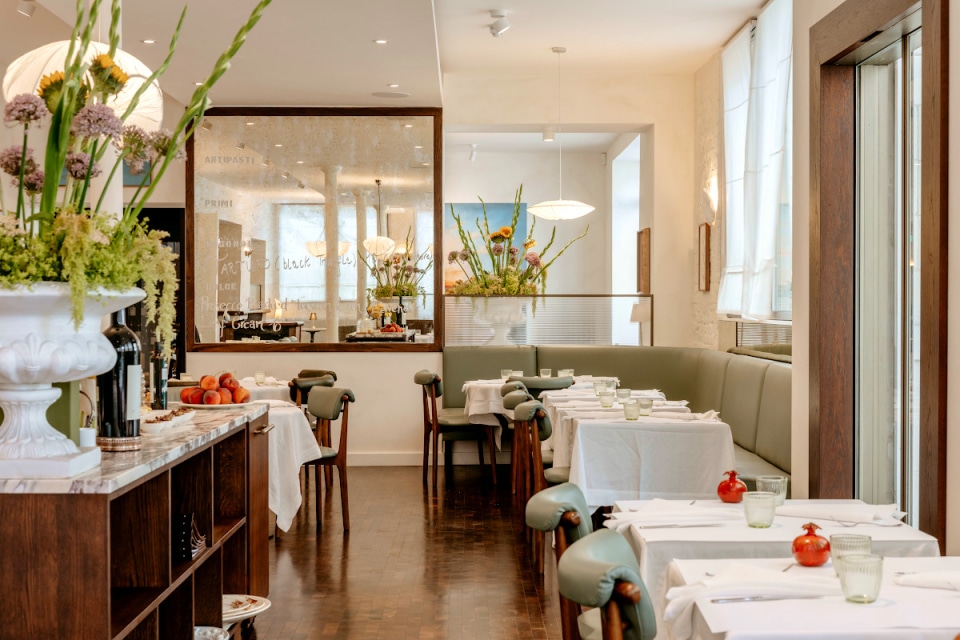
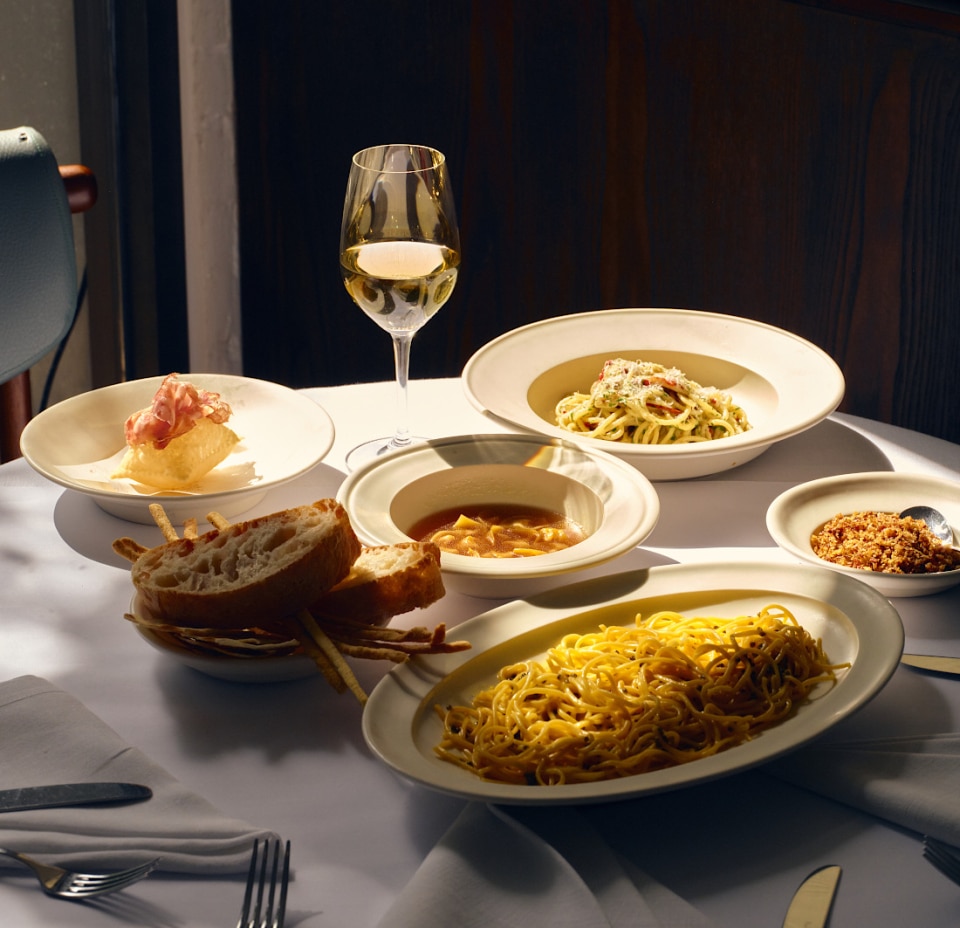
The original vision for Rosina has outgrown itself, and that’s happened quite organically, without us necessarily intending it to. We wanted to create a restaurant that felt incredibly accessible from the guest’s perspective, somewhere that wasn’t daunting in its approach, its food or its service, but that still offered something distinctive and exciting. For me it’s about creating something that belongs in the neighborhood while also being groundbreaking in how we interpret and present Italian food to the Wandsworth community.
It’s the marriage of exceptional producers, ambitious chefs and genuine hospitality, delivered in its purest form. We want people to feel comfortable coming in for a simple pasta and a glass of wine, but equally, we want to give them a reason to come back and explore something they might never have tried before. Ultimately, I’d like Rosina to be a restaurant that people feel belongs to them, while still challenging their expectations of what an Italian neighborhood restaurant can be.
It’s fascinating how dramatically Italian cooking changes throughout the regions. I’m particularly interested in the contrast between the northern and southern regions. In the north, you have the richness of butter, rice, filled pasta and slow cooked dishes, while further south champions reliance on vegetables, olive oil, seafood and the intensity of the ingredients themselves. It matters to me more about understanding why its food has developed the way it has, the climate, the landscape, the produce and the history all influences how people cook. It helps keep our identity clear.
Simplicity is probably one of the hardest things to achieve consistently because there’s nowhere to hide.
I’ve always thought of it as the same pursuit, but in reverse. Throughout your career, you learn techniques, develop new flavour combinations and explore increasingly complex ways of presenting food. Eventually you begin to realise that the real challenge can be taking all that knowledge and knowing what to leave out.
When a dish only has a few ingredients, every single one has to justify its place. The quality of the produce, the seasoning, the temperature, the texture and the timing all become much more exposed.