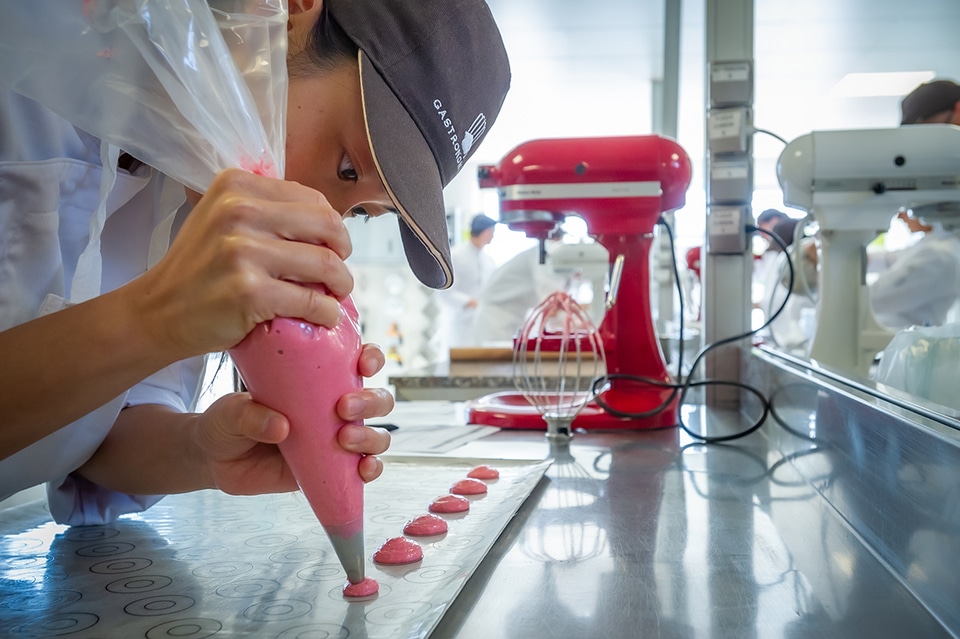
If your dream of studying French cuisine includes Mediterranean sunshine, beautiful beaches, colorful local markets, and a relaxed Southern French lifestyle, Gastronomicom International Culinary Academy is an especially appealing choice.
Located in the South of France, the school offers international students the opportunity to immerse themselves in French culinary traditions while enjoying one of the country’s most attractive regions. Beyond the classroom, students can explore local food markets, discover regional specialties, and experience the Mediterranean way of life. It’s an inviting setting in which to learn, particularly for those planning to spend several months or even a full year in France.
Another major advantage is that cooking and pastry classes are taught in English, so students don’t need to speak French before enrolling. Courses range from short, two-month programs in cuisine or pastry to longer programs that combine culinary training, French lessons, and professional internships.
The seven-month program includes 12 weeks of cooking or pastry classes and French lessons, followed by a four-month internship. Students looking for more comprehensive training can choose the one-year program, which covers both cooking and pastry, with 24 weeks of classes followed by 24 weeks of professional experience.
The curriculum covers everything from classic French starters, fish, meat, and sauces to artisan breads, viennoiserie, cakes, plated desserts, and chocolate. The one-year program is particularly attractive for students who want to develop skills in both savory cooking and pastry before deciding which direction to pursue professionally.
Student feedback is another encouraging reason to consider Gastronomicom. The school reports consistently high satisfaction levels among its international students. According to its published figures, 92.6% of international students earned their training certificates in 2024–25. More than 90% of respondents to its satisfaction survey also reported being satisfied or highly satisfied with several aspects of their experience, including the instructors’ professional expertise and availability, course duration, and administrative organization.
These are school-reported figures rather than independently verified results, but they offer a positive indication of the student experience, particularly for international applicants considering studying abroad for the first time.
Affordability adds to the appeal. Gastronomicom is among the more accessible private culinary schools in this guide, with substantially lower advertised fees than some of the intensive programs and diplomas offered by FERRANDI and Le Cordon Bleu. The programs differ in duration, teaching hours, and qualifications, so direct price comparisons have their limitations. Nevertheless, for students seeking English-language culinary training, professional experience, and the chance to enjoy life in Southern France, Gastronomicom offers an attractive combination.
Published fees: A two-month cooking or pastry course costs €5,100, while combining both subjects costs €6,900. The seven-month program with French lessons and an internship is €9,800, and the one-year cooking, pastry, French, and internship program is €19,000. These prices include enrollment fees; accommodation is charged separately.
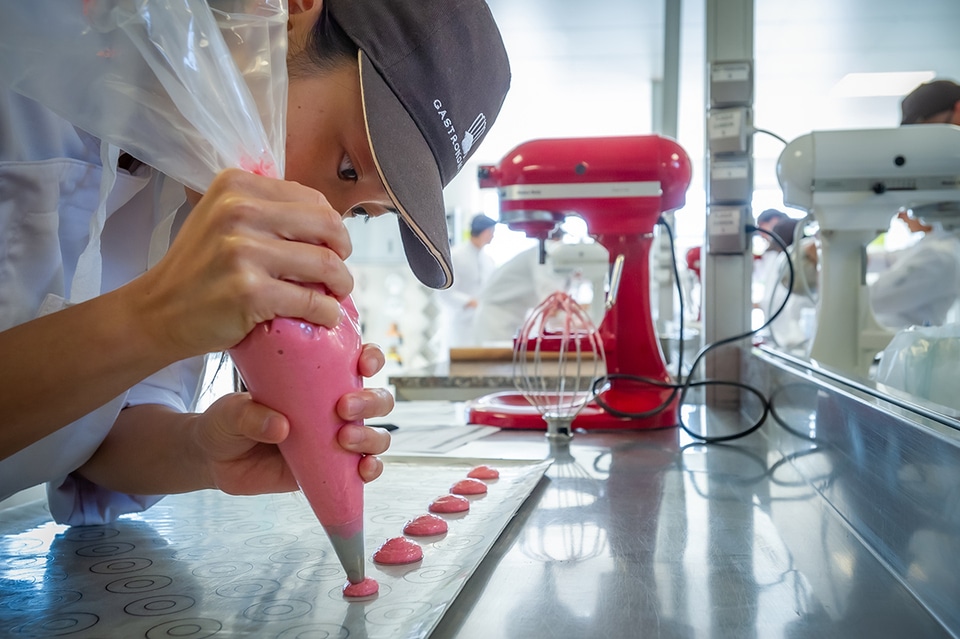
For aspiring chefs drawn to Paris, FERRANDI offers a compelling combination of practical training and an established place in French culinary education. Its reputation also has a distinctive connection to our own research: 22 of the 181 France-based Michelin-starred chefs studied by Chef’s Pencil had attended FERRANDI, more than any other institution in the sample. That finding reflects alumni backgrounds and not the likelihood that any particular student will achieve Michelin recognition.
For English-speaking applicants, the Intensive Professional Program in French Cuisine is a particularly relevant option. It runs for 16 weeks, with an optional three-month internship, and is taught in English. Guest chefs may demonstrate in French with translation, and course materials are provided in English.