Last Updated: November 19, 2026
Quick Summary
To season food without salt, add acid such as lemon juice or vinegar, then build depth with fresh or dried herbs, garlic, onion and umami-rich blends. Taste as you go, adding one element at a time: acid first, then aroma, then umami. Salt-free seasoning works by recreating the savory lift salt provides.
- Add acid like lemon juice or vinegar to brighten a flat dish.
- Add dried herbs early with fat and heat; add delicate fresh herbs at the end.
- Cook garlic and onion gently until soft and fragrant to avoid bitterness.
- Taste after each addition, adding acid, then aroma, then umami.
- Start with half the salt in a recipe and replace the volume with a salt-free blend.
Want bold flavor without the salt?Savory Spice makes small-batch, salt-free blends in Denver, CO, for everyday cooking.
Table of Contents
- Why Salt-Free Seasoning Works: The Flavor Basics
- Brighten Every Dish With Citrus and Vinegar
- Build Depth With Fresh and Dried Herbs, Garlic and Onion
- Best Salt-Free Seasonings to Keep on Your Shelf
- How to Flavor Chicken Without Salt
- Mix Your Own Salt-Free Seasoning Blend Recipe
- Your Next Step: Taste, Adjust and Cook With Confidence
- Frequently Asked Questions
Most home cooks reach for the salt shaker out of habit, and the food often tastes flat without it. Salt is not the only way to make a dish taste alive. At Savory Spice, we spend our days blending salt-free seasonings, and a few smart moves can make a meal taste bold, bright and deeply satisfying. This guide shows you exactly how to season food without salt, using ingredients you may already have in your kitchen.
Why Salt-Free Seasoning Works: The Flavor Basics
Salt does two jobs at once. It makes food taste more savory, and it lifts the other flavors already in the pan. You can recreate both jobs with other tools.
Think of flavor as four building blocks:
- Acid brightens and wakes up heavy dishes
- Aromatics like garlic and onion add roundness
- Herbs and spices add color, scent and character
- Umami gives a deep, savory backbone
When a dish tastes flat, one of these is usually missing. Add a little acid first. If it still tastes flat, add more aromatics or umami before you reach for salt.
Brighten Every Dish With Citrus and Vinegar
Acid is the fastest way to fix a bland dish. A squeeze of lemon or a splash of vinegar makes flavors pop, and it often tricks the palate into tasting more seasoning.
Try these simple options:
- Fresh lemon or lime juice over grilled fish and vegetables
- Orange zest stirred into rice, couscous or a pan sauce
- Apple cider vinegar or rice vinegar in marinades and dressings
- Balsamic vinegar reduced into a glaze for pork or chicken
Add acid at the end of cooking. Heat can dull its fresh taste.
Build Depth With Fresh and Dried Herbs, Garlic and Onion
Herbs and aromatics give food its personality, but the difference between flat and vibrant often comes down to how you deploy them. Dried herbs are concentrated and need fat and heat to bloom, their flavor compounds are oil-soluble, so cooking them briefly in oil or adding them to a simmering stew unlocks aroma that tossing them in at the end never achieves. Fresh herbs are the opposite: their volatile oils evaporate with heat, so add delicate ones like basil, dill, and parsley at the very end, off the heat.
Aromatics like garlic and onion build the savory foundation. Cook them gently in oil until soft and fragrant, garlic sliced thick and cooked low won’t burn, while onion sweated until translucent adds a sweetness that makes a dish feel complete. The mistake most cooks make is rushing this step over high heat, which browns the outside before the inside softens and leaves a bitter edge.
Use this pairing guide to match herbs and aromatics to what you’re cooking:
- Roasted vegetables: rosemary and garlic; thyme and onion; smoked paprika and cumin
- Fish and seafood: dill and lemon; parsley and garlic; fennel seed and orange zest
- Chicken and poultry: thyme and onion; sage and black pepper; tarragon and mustard powder
- Beef and lamb: rosemary and garlic; oregano and cumin; black pepper and bay
- Grains and rice: bay leaf and onion; cumin and garlic; saffron and lemon zest
- Soups and stews: thyme and onion; bay and black pepper; smoked paprika and garlic
- Sauces and dressings: basil and garlic; dill and mustard; tarragon and shallot
Our Bohemian Forest blend layers mustard and herb notes that suit poultry and root vegetables. Keep dried herbs in airtight jars away from heat and light.
Best Salt-Free Seasonings to Keep on Your Shelf
A well-stocked spice shelf makes salt-free cooking easy. These are the blends we reach for most often in our own kitchens:
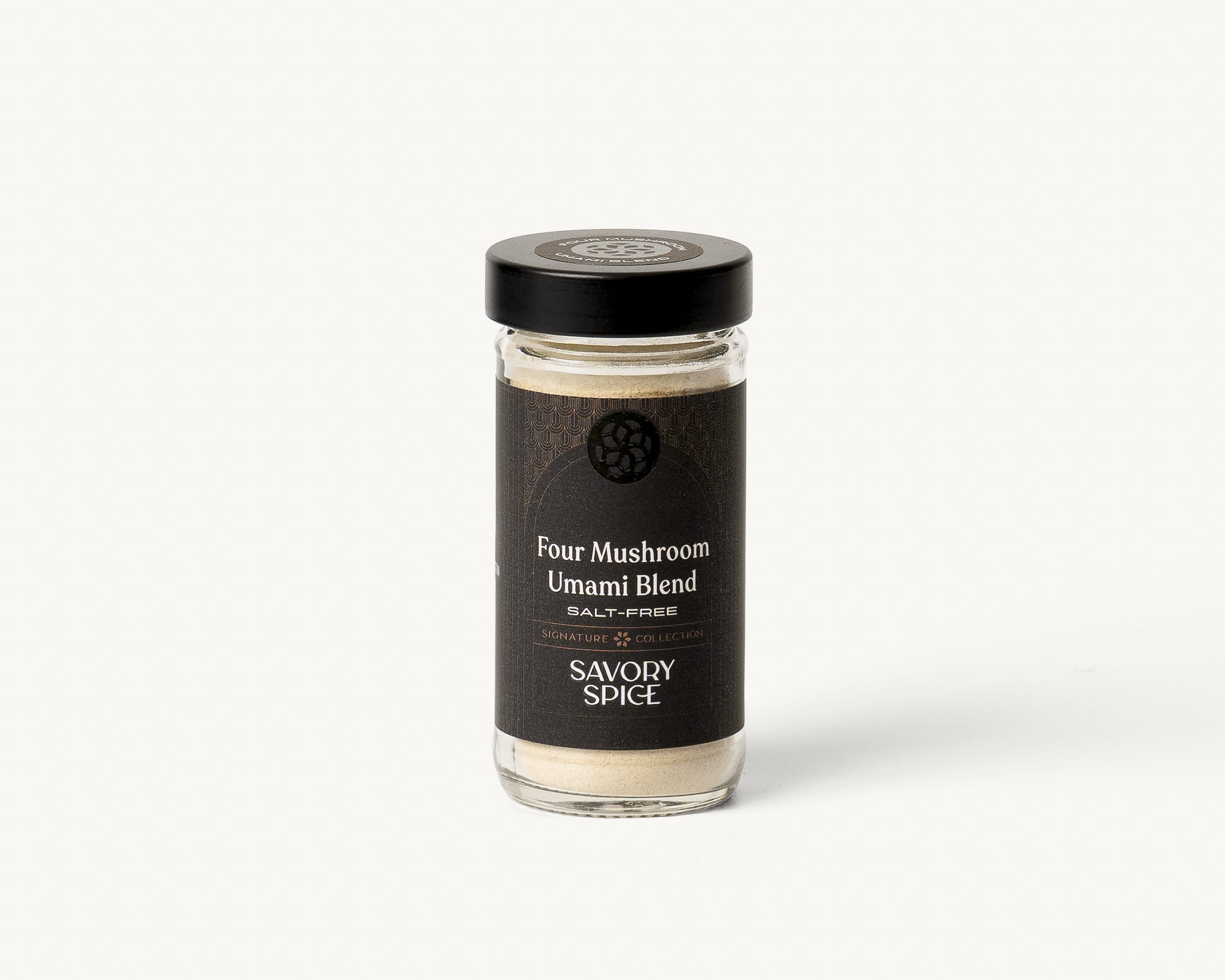
- Four Mushroom Umami Blend (Salt-Free): delivers savory depth to soups, sauces, omelets and roasted vegetables
- Medium Chili Powder (Salt-Free): brings moderate heat and smoky depth to chili and braises
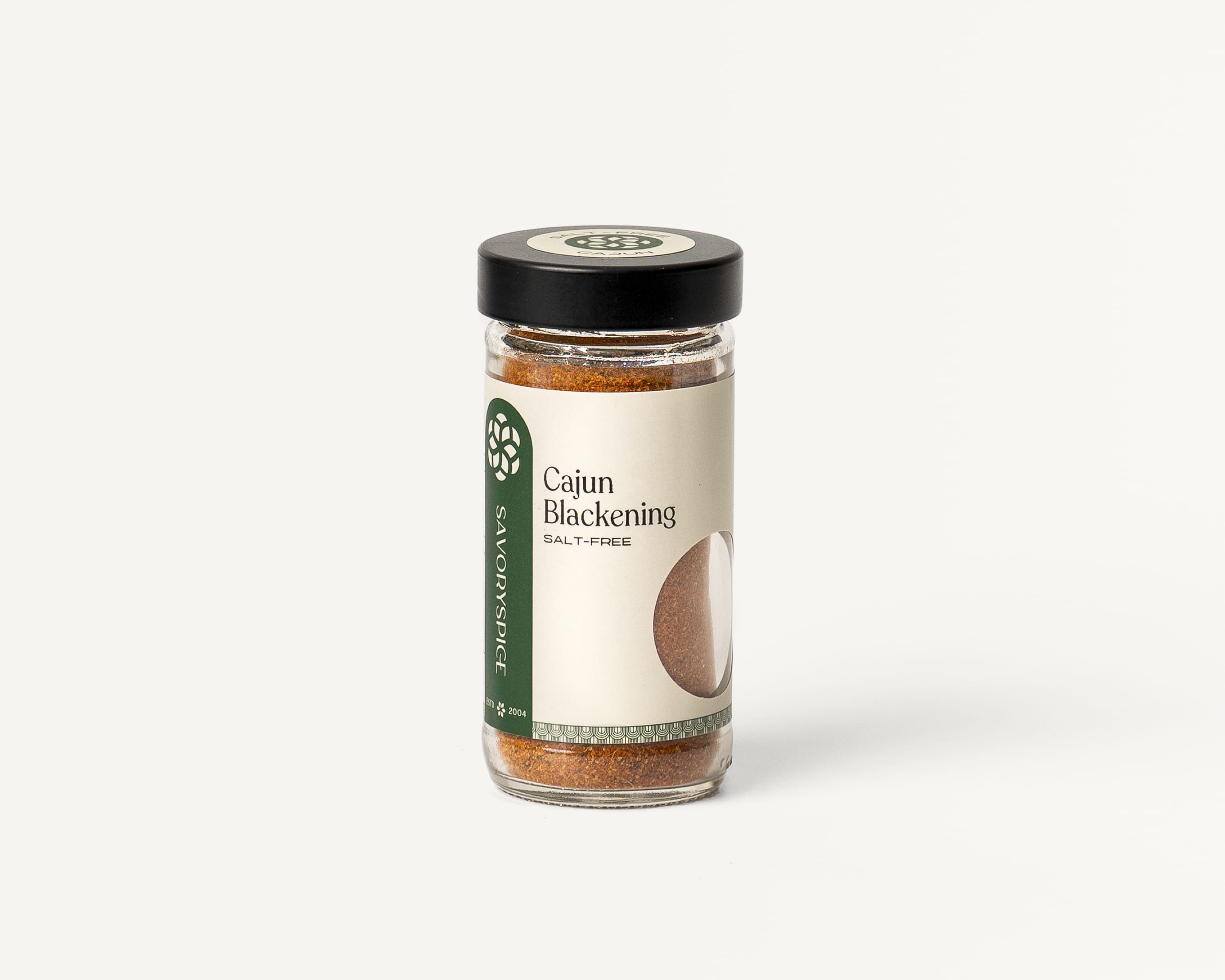
- Cajun Blackening (Salt-Free): works on fish, chicken, steak and fries
- Bohemian Forest (Salt-Free): a mustard and herb rub that suits poultry and root vegetables
Here is a quick look at the salt-free blends the article recommends and what each one suits.
| Blend | Best for | Key note |
|---|---|---|
| Four Mushroom Umami Blend (Salt-Free) | Soups, sauces, omelets, roasted vegetables | Savory depth |
| Medium Chili Powder (Salt-Free) | Chili and braises | Moderate heat, smoky depth |
| Cajun Blackening (Salt-Free) | Fish, chicken, steak, fries | Bold, spiced crust |
| Bohemian Forest (Salt-Free) | Poultry and root vegetables | Mustard and herb notes |
How to Flavor Chicken Without Salt
Chicken is mild, which makes it a great canvas for salt-free seasoning. Build layers rather than relying on one blend.
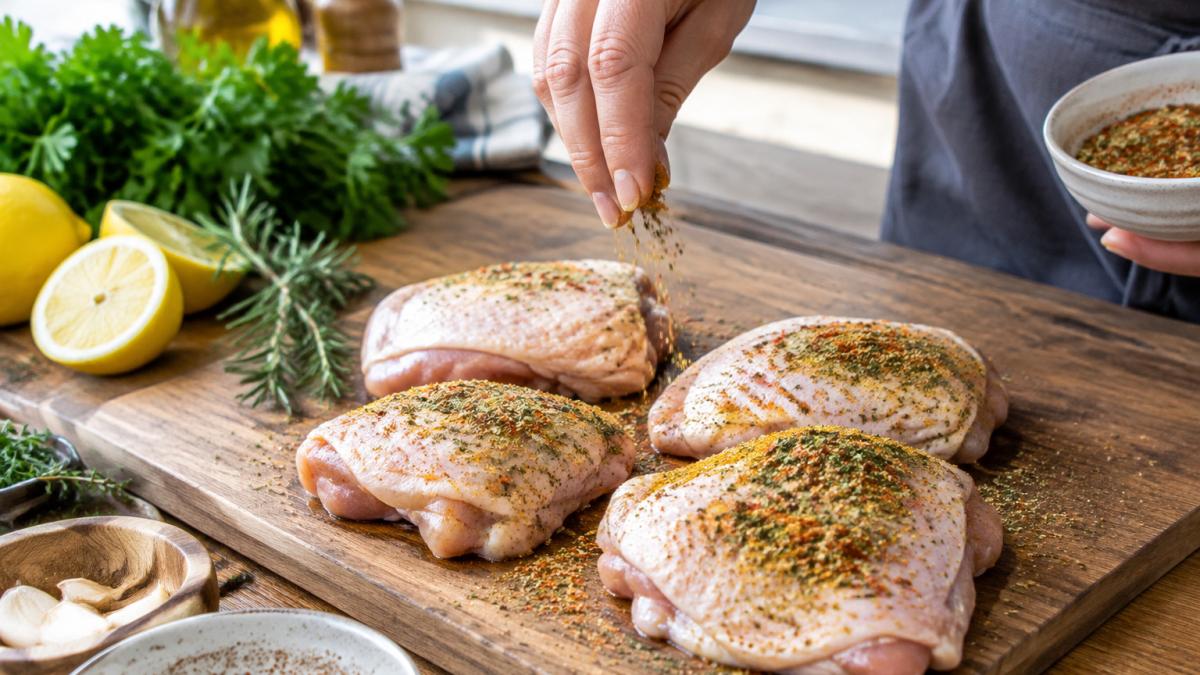
- Dry the chicken well. Pat it dry so the seasoning sticks.
- Add a fat. Toss the chicken with olive oil so the spices cling.
- Season generously. Use a salt-free blend such as Cajun Blackening or Bohemian Forest.
- Add acid. Finish with lemon juice or a splash of vinegar after cooking.
- Rest before serving. Let the chicken sit five minutes so the juices settle.
Watch out: if you use a salt substitute, check the label first. Ask your doctor before using one.
Mix Your Own Salt-Free Seasoning Blend Recipe
Making your own blend lets you control the flavor, and a repeatable tasting method turns guesswork into confidence. Start with this balanced base blend:
- 2 tablespoons garlic powder
- 2 tablespoons onion powder
- 1 tablespoon dried thyme
- 1 tablespoon paprika
- 1 teaspoon black pepper
- 1 teaspoon dried oregano
- 1 teaspoon lemon zest, dried
Mix everything in a bowl, then store in an airtight jar. Use about one teaspoon per pound of meat or vegetables as a starting point.
The tasting method that makes it work: Taste the dish before serving, then add one element at a time in this order, acid first (a squeeze of lemon or splash of vinegar), then aroma (a pinch of herbs or spice), then umami (a mushroom blend or tomato paste). Taste after each addition. If the dish tastes flat, acid is usually missing. If it tastes thin, add umami. If it tastes dull, add aroma. This sequence prevents over-seasoning and builds flavor in small increments.
Cuisine-specific combinations give you ready-to-use inspiration:
- Mexican: cumin, oregano, chili powder, garlic powder, lime zest
- Italian: basil, oregano, thyme, garlic powder, fennel seed
- Indian: curry powder, cumin, coriander, turmeric, ginger
- Middle Eastern: cumin, coriander, sumac, cinnamon, allspice
- Cajun: paprika, cayenne, garlic powder, onion powder, thyme, oregano
Adapting familiar recipes: When reducing salt in a recipe you already love, cut the salt by half first, then replace the missing volume with a salt-free blend at about the same measure. Taste and adjust. Over several weeks, reduce the salt further while increasing herbs, acid, and umami, your palate adjusts, and dishes that once tasted flat will taste full.
Watch out: if you use a salt substitute, check the label first. Some contain potassium chloride, which can be a concern for people with kidney disease or those taking certain medications. Ask your doctor before using one.
Your Next Step: Taste, Adjust and Cook With Confidence
Tasting as you go is the real secret. Taste the dish before serving, then add one ingredient at a time: acid, then herbs, then umami. Small adjustments build big flavor without a single pinch of salt.
Start with one blend from our shelf, such as the Four Mushroom Umami Blend or Hidden Cove Lemon Garlic Blend, and cook a dish you already love. You will be surprised how much flavor you can build. Shop the full Savory Spice collection to find your next favorite blend.
Frequently Asked Questions
How do you season food with no salt?
Start with acid, such as a squeeze of lemon or lime juice or a splash of vinegar, because brightness makes food taste more seasoned. Add aromatics like garlic and onion, then layer fresh or dried herbs and spices such as black pepper, paprika or cumin. Taste as you go and adjust in small amounts. Cooking with a salt-free blend like Savory Spice’s Medium Chili Powder (Salt-Free) at $6.95 gives you warmth and depth without added sodium.
What tastes like salt but has no sodium?
Nothing tastes exactly like salt, but acid, umami and aromatics come closest to making food feel fully seasoned. Lemon juice, vinegar, mushrooms and toasted spices all add a savory lift that reduces the need for salt. Savory Spice’s Four Mushroom Umami Blend (Salt-Free) at $13.95 is a good starting point for that deep, savory note. Use these together, not one at a time, for the best results.
How can you make a salt-free seasoning blend at home?
Combine a base of ground black pepper, garlic powder, onion powder, paprika and dried herbs such as thyme or oregano. Add a pinch of cayenne or chili powder for heat and a small amount of dried citrus zest for brightness. Store the blend in an airtight jar away from heat and light. Adjust ratios to suit the dish you plan to season, then taste before using.