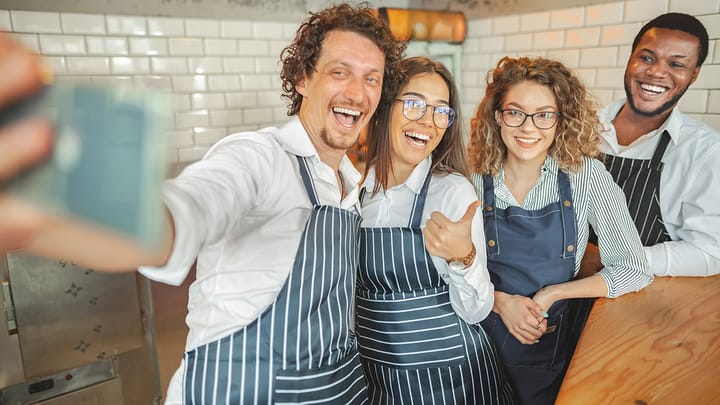
At the Cannes Lions event from Informa earlier this year, Starbucks announced it would become the first brand to pilot custom Creator Networks inside TikTok’s Content Suite. Selected employees receive creative briefs through the platform, produce content, and share in the ad revenue their posts generate. The pilot builds on Green Apron Creators, which Starbucks introduced in 2024, and the company reports that its employees post at roughly three times the rate of employees at similarly sized chains.
Starbucks didn’t invent the employee creator. That content was already being made in its stores and in thousands of other restaurants. What the pilot adds is a system around it, and the system is where the hard questions sit:
-
Who gets paid, and how much?
-
Does filming happen on the clock?
-
What has to be disclosed to viewers?
-
How does employee content fit alongside the outside creators a brand already works with?
Why employee creator programs are spreading across restaurant brands
Marketers outside foodservice have been building this playbook for years. Most notably, Digiday and Vogue have examined brand employees stepping into creator roles at retail and fashion brands like GAP and Staples.
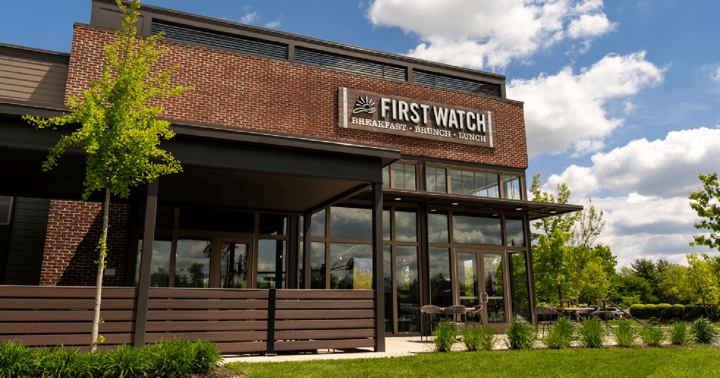
Restaurants now have their own versions, and early results are promising. Portillo’s built the Maxwell Street Mavens around 15 team members who have created content for campaigns, including a buy-one-get-one offer and the launch of the Portillo’s Perks loyalty program. Chief People Officer Jill Waite has said she would eventually like an internal creator at every location, indicating strong internal buy-in. First Watch also runs a content creator program for its hourly employees. Most of these programs started the same way. Employees were already posting, and the company decided to support it.
Recruiting is another part of the appeal. Handshake found that 73% of graduating seniors would be more likely to apply to a job after seeing behind-the-scenes content from an employer. That matters for operators dealing with persistent turnover and thin applicant pools.
How much do consumers trust employee-generated content?
Sprout Social’s 2026 State of Social Media research published in June found that 40% of consumers frequently discover a product or service through employee-generated content, rising to 61% among Gen Z. More than half see employee content at least once a week, and 46% say they would rather hear from frontline workers than from a company’s marketing team or its executives.
That preference tracks in foodservice, where the frontline is the product experience. An employee can show technique at volume, the choreography of a Saturday rush, how a piece of equipment holds up on its four hundredth ticket of the day. It adds up to a kind of authority that is difficult to construct any other way. An outside creator can visit for a day. An employee was trained on the product, works with it through every shift and knows the tips, shortcuts, and fixes that only come from hands-on experience.
How should restaurants pay employee creators?
Compensation is the first question to settle when standardizing an employee creator program. The same Sprout research found that 61% of consumers believe employees creating content on a brand’s behalf should be paid for it.
Money is the clearest way to show that the work has value. First Watch’s published program terms offer hourly employees $250 when the company reposts their content. Starbucks is sharing ad revenue. Other brands pay per post or pay usage rights when content runs in paid media. Whatever the structure, put a number on it and put it in writing.
Recognition, training, and visibility are real benefits, and employees often name them as reasons they want in, but they work best on top of payment rather than in place of it. Someone filming, editing, and appearing on camera is taking on a second role, and the rate should reflect that.
When should employees film, and what should they know going in?
Timing is the question general managers care about most, because content and service compete for the same hours. Both public models point off-shift. First Watch’s terms state that content should not be captured during working hours. The Wall Street Journal reported that a Starbucks barista came into her store on a day off to film approved content.
Whatever a brand decides, participants should have the answers before the first shoot:
-
Whether filming happens on or off the clock, and whether that time is paid
-
Which dayparts are open for filming and which are closed
-
What stays off camera, including guest faces, proprietary recipes and supplier terms
-
How much content is expected, and over what period
-
Who reviews content before it publishes, and how quickly
-
Where the content may run afterward, including paid media, careers pages and training
Written answers protect the employee, who should never have to choose between a brief and a full dining room. They also let a general manager back the program without making judgment calls in the middle of a rush.
What does the FTC require employee creators to disclose?
The FTC’s endorsement guides treat the employment relationship itself as a material connection, so it has to be disclosed clearly and conspicuously within the content. A line in a profile bio does not meet the standard. Build disclosure into the opening seconds of a video or the first line of a caption to maintain compliance and transparency.
Do employee creators replace influencer partnerships?
They do different work. Employee content deepens credibility with people who already know the brand. It humanizes, teaches, and answers questions guests are already asking. What it doesn’t supply is third-party validation, because viewers understand the person is part of the company.
Independent creators reach communities beyond a brand’s existing following and bring a point of view the audience reads as their own. Chef partners bring craft credibility. Customers bring proof. The right mix of influencer partners depends on budget and business goal.
What employee creators mean for foodservice suppliers
Suppliers have their own version of the employee creator, and it has been building on LinkedIn, where corporate chefs, R&D leads, and category directors post under their own names instead of through the company page. Operators follow the person rather than the logo, and a post from a named category leader reads as a point of view rather than an announcement.
B2B foodservice brands have also stepped into more creative partnerships with operators themselves. In pizza, suppliers like Real California Milk, Hormel Foods, and Central Milling have worked with creators who show how products perform in a working kitchen. Several of those creators have audiences in the low thousands and still influence purchasing, because the audience is correct.
Protecting what makes employee content work
-
Pay people for the work.
-
Put the rules in writing before the first shoot.
-
Disclose the relationship inside the content.
-
Keep independent voices in the mix.
Then get out of the way. An employee creator program works when the person on camera would say the same thing off it.
AUTHOR BIO
Kate Finley is the founder of Belle Communication, a nationally ranked PR and strategy firm specializing in foodservice and complex B2B brands. With nearly two decades of restaurant industry experience, from serving as Marketing Director for Chick-fil-A to representing more than 100 food and beverage brands, Kate has cultivated deep expertise in how foodservice decision-makers research, evaluate and choose suppliers.