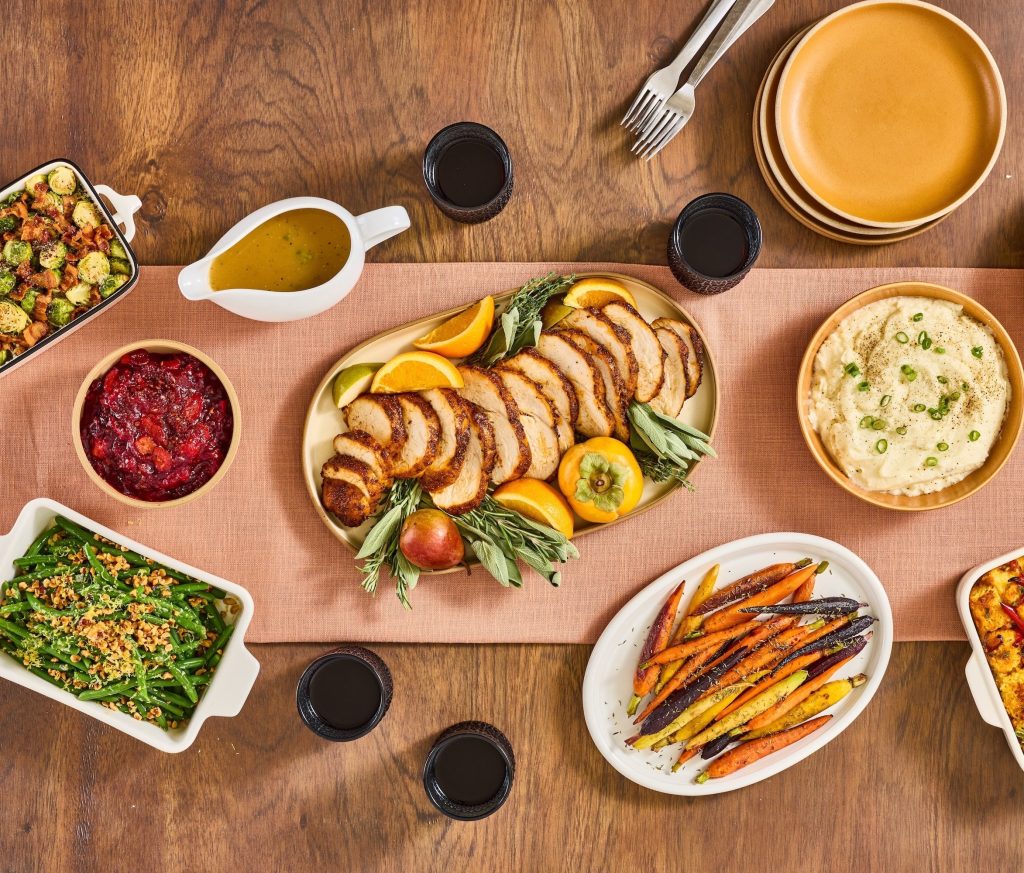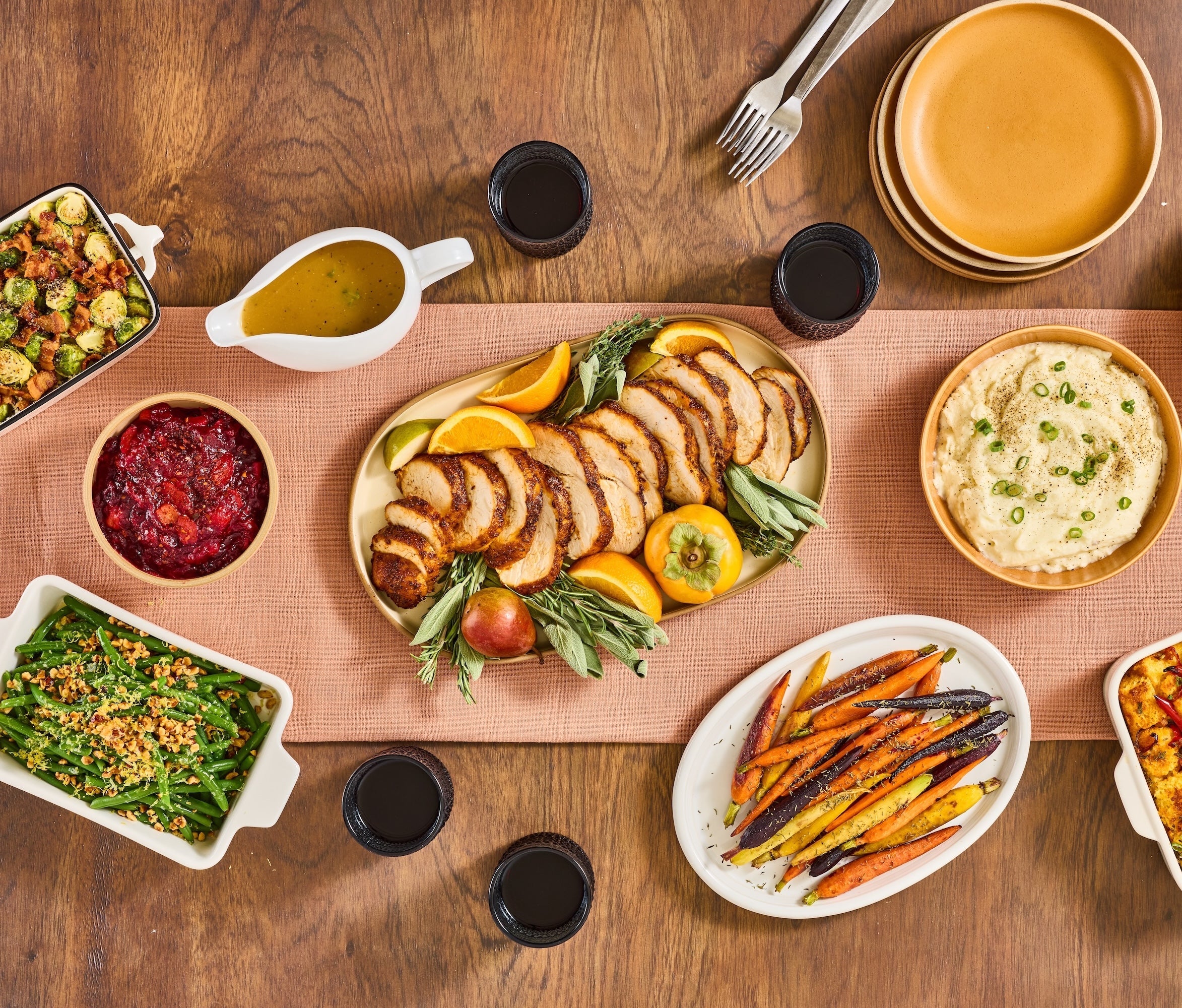
Thanksgiving is one meal with a dozen moving parts and a single deadline. The good news is that most of the seasoning happens early. The turkey gets its flavor a day or two ahead in the brine. The stuffing herbs go into the butter before the bread ever hits the pan. And the pie spice does its work the night before, while you’re sleeping.
Below, we walk through the meal in the order you’ll cook it, with the spices and techniques that make each part taste like the version people remember. If you’re skipping the bird this year, our holiday menus without turkey have you covered.
The Turkey
Start with a brine
If you do one thing differently this year, brine the bird. Salt does two jobs at once. It seasons the meat all the way through instead of only the surface, and it changes the proteins so they hold on to more moisture as they cook. That’s the difference between turkey that needs gravy and turkey that’s good on its own.
For a wet brine, dissolve two bags of Brining Spice in two gallons of water. That’s enough for a 10 to 15 lb. turkey. Plan on about an hour per pound in the brine, so for most birds, that means starting the night before. Keep everything below 40°F the whole time, whether that’s in the fridge or a well-iced cooler.
When it comes out, pat the turkey completely dry. If you have room, let it sit uncovered in the fridge for a few hours or overnight. Dry skin is what turns crisp and golden in the oven. Wet skin steams. For a full walkthrough, including when a dry brine makes more sense, see our wet vs. dry brine guide.
Season the skin, and under it
A brined bird is already seasoned through, so the rub is about the skin and the aroma. Use about 1 teaspoon of Roast Turkey Rub per pound. Work some of it under the breast skin with your fingers, rub the rest over the outside, and add a little to the cavity. The paprika in the rub helps the skin brown, while sage, rosemary, and thyme give you that classic Thanksgiving smell as it roasts.
Since the brine and the rub both carry salt, hold off on adding any more until you’ve tasted the drippings.
Roast it, then let it rest
Go by temperature, not the clock. Check the thickest part of the thigh and the breast with an instant-read thermometer, and pull the turkey when both read 165°F. Then tent it loosely with foil and let it rest for 30 to 45 minutes before carving. The juices settle back into the meat instead of running out onto the board, and you get a window to make gravy and finish the sides. Our roast turkey guide has times by weight.
Short on oven space or time? A spatchcocked turkey is flattened before roasting, so it cooks evenly in about half the time. If you have a smoker, Smoked Turkey frees up the oven for everything else.
If you’d rather not shop for each piece, The Complete Thanksgiving Spice Kit has the brine, the rub, a roasting bag, and the herbs and garlic for your stuffing and sides in one box.
The Gravy
The best gravy starts in the roasting pan. While the turkey rests, pour the drippings into a measuring cup and let the fat rise to the top. Then set the pan over two burners, add a splash of broth or wine, and scrape up the browned bits stuck to the bottom. Those bits carry more flavor than anything else in the kitchen.
From there, it’s a simple ratio. Cook equal parts turkey fat and flour, about 4 tablespoons of each for 4 cups of gravy, for two to three minutes, until it smells nutty. Slowly whisk in the warm broth and the drippings from under the fat, and simmer until it coats a spoon.
Season last, and taste first. Drippings from a brined, rubbed turkey are already salty, so you may not need any more salt at all. What gravy usually needs instead is herbs. A pinch of Rubbed Sage or Premium French Thyme in the last few minutes ties it back to the stuffing, and a little freshly ground black pepper keeps it from tasting flat.
Short on drippings, or want a second gravy on the table? French Onion Gravy comes together in about 10 minutes, with onion, garlic, and mushrooms for a rich, earthy flavor and a hint of balsamic for depth. It’s a great backup for a crowd, and it’s just as good over mashed potatoes the next day.
The Stuffing
Stuffing, or dressing if that’s what your family calls it, tastes like Thanksgiving because of four herbs: sage, thyme, rosemary, and savory. Most of its flavor comes from how you treat them.
Cook the herbs with the onion and celery in butter before anything else goes in the bowl. Dried herbs carry their flavor in oils that wake up in fat and heat, so a few minutes in the pan turns them from dusty to fragrant. Our Cornbread Stuffing takes this all the way, cooking thyme and sage slowly with the vegetables for about 30 minutes to build a deep, savory base.
For a classic bread stuffing, Poultry Seasoning brings sage, rosemary, onion, and garlic together in one jar, and it’s what our Sage and Savory Stuffing is built around. Use bread that’s a day or two old. Dry cubes soak up the broth without turning to mush.
Bake it outside the bird
We know, it’s tradition. But stuffing cooked inside the turkey has to reach 165°F to be safe, and by the time it does, the breast meat is dry. Bake it in its own dish instead. Cover it with foil for the first 45 minutes so it heats through, then uncover it for the last 20 to 25 minutes to brown the top. You get the crispy edges everyone fights over, plus a juicier turkey.
To save time on the day, assemble the stuffing the day before, cover it, and refrigerate it. Add about 15 minutes to the covered baking time, since it’s going in cold.
The Sides
Sides are where a Thanksgiving table gets its personality, and they’re also where seasoning most often falls short. Everything on the plate is rich, so the sides that stand out are the ones with something bright, salty, or toasty to cut through it.
Mashed potatoes
Season the potatoes twice. Salt the cooking water generously, like pasta water, so the potatoes are seasoned from the inside. Then warm the butter and cream before you mash them in, since cold dairy turns potatoes gluey. Fold in your seasoning at the very end. Herbed Mashed Potatoes gives you a handful of options, from shallot and dill with Capitol Hill Seasoning to the deep, roasted flavor of Black Garlic Salt.
Sweet potatoes
Sweet potatoes don’t need marshmallows to feel like a treat. Roasting them before you whip them concentrates their sweetness, and a little orange and maple keep them from tasting heavy. Our Orange & Maple Whipped Sweet Potatoes let you choose a warm spice blend, from salt-free Park Hill Maple & Spice to Ras el Hanout.
Green beans and Brussels sprouts
For green beans, boil them in salted water for two to three minutes, then plunge them into ice water. They stay bright green and crisp, and you can do this step the morning of. Right before dinner, warm them through with butter and a bright seasoning like the Pyramid Peak Lemon Pepper in our Green Beans with Toasted Hazelnuts & Lemon Pepper Butter.
Brussels sprouts need high heat. Roast them cut-side down at 425°F so the flat side caramelizes instead of steaming. Our Maple-Glazed Brussels Sprouts with Bacon & Walnut Oil finish with maple and Black Garlic Salt, which balances sweet and savory.
Cranberry sauce
Homemade cranberry sauce takes about 20 minutes and keeps in the fridge for days, so it’s the easiest thing to make ahead. Simmer the cranberries with brown sugar and orange, and tuck Mulling Spices into a muslin bag so you can pull them out once the sauce tastes right. The warm spice turns a standard side into one people ask about. Get the recipe for Mulled Cranberry Sauce.
The Pies
Pies are the one part of Thanksgiving you can, and should, make ahead. Most taste better after a night in the fridge, once the spices have had time to settle into the filling.
Pumpkin pie
The spice is what makes pumpkin pie taste like pumpkin pie. Canned pumpkin on its own is mild and a little earthy. Pumpkin Pie Spice brings the warmth, and a tablespoon is the right amount for one pie. For a deeper flavor, stir the spice into the pumpkin and sugar in a saucepan and warm it for a few minutes before mixing in the eggs and milk. The heat blooms the spices, much like it does for the herbs in your stuffing.
When you bake it, pull the pie when the edges are set but the center still jiggles slightly when you nudge the pan. It finishes setting as it cools, and taking it out at that point keeps the top from cracking. Our Old-Fashioned Pumpkin Pie is the classic
If your family wants something lighter, try Grandma Menard’s Pumpkin Chiffon Pie. It’s a family recipe from co-founder Janet Johnston’s grandmother, with an airy, mousse-like filling and a graham cracker crust spiced with ground ginger.
Sweet potato pie
Sweet potato pie is pumpkin pie’s richer Southern cousin, with a denser, silkier filling and a deeper natural sweetness. The key is a completely smooth purée. Cook the sweet potatoes until they’re very tender, then whip or press them until there are no strings left, so the custard bakes up velvety.
Our Bourbon Sweet Potato Pie leans into that richness with molasses, honey, and a splash of bourbon, and Baking Spice brings the warmth. For a showstopping finish, sprinkle the top with sugar and Honey Powder and caramelize it, like a crème brûlée.
Pecan pie
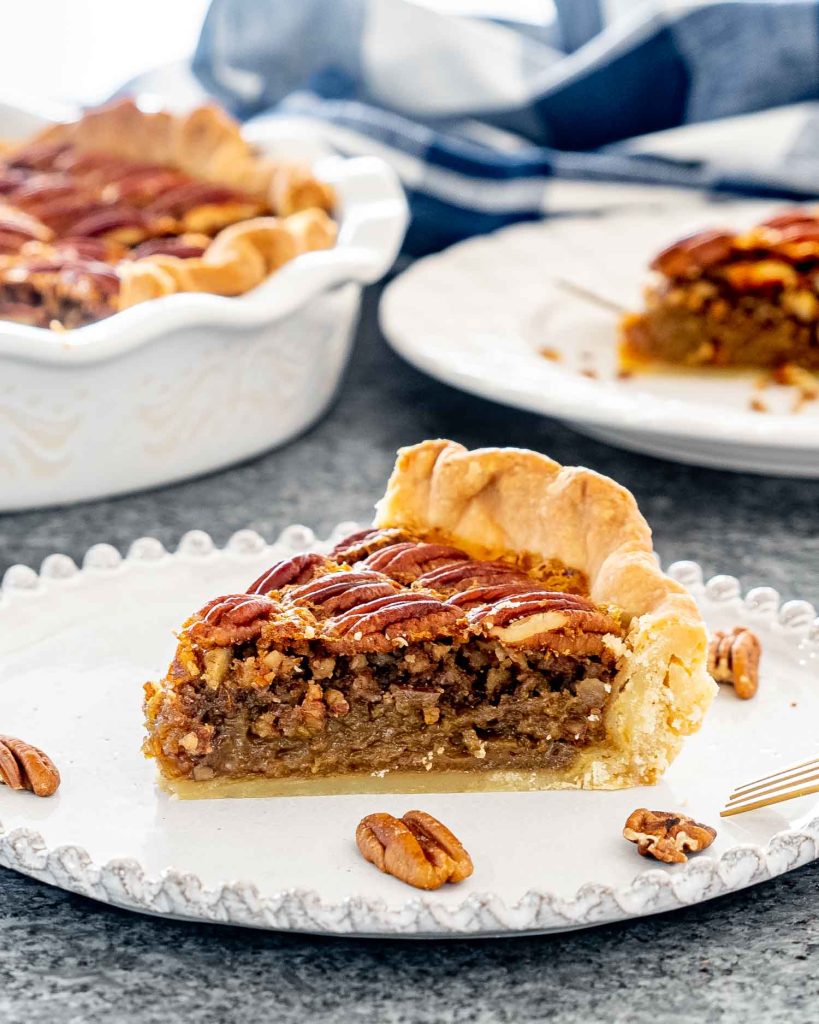
Pecan pie’s challenge is sweetness. Between the corn syrup and brown sugar, it can tip into cloying. In our Smoked Sugar and Maple Pecan Pie, Whiskey Barrel Smoked Sugar adds a light campfire note that balances all that sugar. A sprinkle on top before baking gives the crust a toasty finish.
Before Dinner: Appetizers & Something Warm to Drink
Guests usually arrive while the turkey is still resting, and that’s where a couple of easy starters come in. Keep them light, since nobody wants to fill up before the main event. Something crisp and a little tangy works best next to everything rich that’s coming.
Our Spiced Sweet Potato Crostini with Honey-Whipped Feta hits that note. Thin rounds of roasted sweet potato take the place of bread, topped with tangy whipped feta and your choice of Za’atar or Santa Maria Butcher’s Rub. They come together fast, and they look festive on a platter.
A pot of something mulled on the back burner does double duty. It gives guests something warm to hold, and it makes the whole house smell like the holidays. Add Mulling Spices to apple cider or red wine and keep it at a low simmer, never a boil. Boiling turns the spices bitter and cooks off the alcohol in wine. Start with our Mulled Apple Cider for a crowd that includes kids, or Mulled Wine for the grown-ups.
Your Thanksgiving Spice Checklist
Before you shop, check your cabinet against this list.
| For the… | Have on hand |
|---|---|
| Turkey | Brining Spice, Roast Turkey Rub |
| Gravy | Rubbed Sage or Premium French Thyme, black pepper |
| Stuffing | Poultry Seasoning, or sage, thyme, and rosemary |
| Potatoes | Capitol Hill Seasoning or Black Garlic Salt |
| Cranberry sauce and mulled drinks | Mulling Spices |
| Pies | Pumpkin Pie Spice, Whiskey Barrel Smoked Sugar |
If a jar in your cabinet has been there since last Thanksgiving, give it a sniff. Spices don’t really expire.
For peak freshness, we recommend using them within a year. If they’re stored well, they stay good for up to 2 years, though they’ll lose some of their punch. Our refill bags are sized to refill a jar exactly, so topping off the ones you already have is easy.
Orders over $49 ship free. If you need your order before Thanksgiving, place it by November 19 with FedEx 2Day shipping. What’s on your Thanksgiving table? Share your traditions by tagging us @savoryspiceshop on Instagram.
Previous Article
The Savory Spice Journal: What Exactly Is Curry?
Next Article
Holiday Dinner Without Turkey: Thanksgiving & Christmas Main Dish Ideas