Mediterranean seafood is about much more than grilled fish with a squeeze of lemon. Along the region’s coastlines, seafood finds its way into everything from rich tomato stews and saffron-scented rice to delicate carpaccio, creamy pasta, rustic bean dishes, and simple preparations where the quality of the fish does most of the work. Different countries and coastal regions bring their own techniques and ingredients, but fresh seafood, olive oil, herbs, citrus, and bold Mediterranean flavors appear again and again.
Some of these dishes are light enough for a summer lunch, while others are made for long dinners around a crowded table. Here are 35 Mediterranean seafood dishes to try, from Greek and Italian classics to Spanish favorites and a few less familiar regional specialties.
What better way to kick off a roundup of Mediterranean seafood dishes than with a Greek grilled octopus recipe that’s perfect for a summer barbecue? The octopus is first slow-cooked with aromatic vegetables until beautifully tender, then briefly seared in a hot pan to give the tentacles a lightly charred exterior. A simple dressing of good olive oil, lemon juice, and oregano is all it needs to bring out the flavor of the seafood.
Serve it warm or at room temperature with a fresh Greek salad, crusty bread, and a chilled glass of white wine. It’s the kind of uncomplicated Mediterranean cooking that’s hard to beat on a warm summer evening.

Pan-seared salmon is delicious on its own, but a creamy Tuscan-style garlic sauce makes it feel like a particularly special dinner. Sun-dried tomatoes, mushrooms, and garlic give the sauce plenty of flavor, while a splash of chicken stock adds savory depth. The whole dish comes together in about 30 minutes, making it a great choice for a weeknight meal that feels a little indulgent. Serve with steamed vegetables or roasted potatoes to soak up the sauce.

Few Spanish dishes announce themselves quite like a paella landing on the table. The saffron-scented rice, the bright orange prawns, the opened mussels across the top, paella looks like a celebration before anyone’s even picked up a fork. Rice and saffron are the only real non-negotiables here; everything else flexes based on what’s fresh. Chorizo cooked early in the process leaves behind a smoky, paprika-rich fat that the rice absorbs as it cooks, adding a depth that a pure seafood version can’t quite replicate.
Serve straight from the pan with lemon wedges and a cold Spanish white or rosado.

Saganaki usually brings feta to mind, but this shrimp version gets much of its character from a vibrant pepper spread instead. The sweet, concentrated peppers give the shrimp a richer base and a gentle sweetness that works especially well with their natural brininess. It has the kind of bold, saucy character that begs for something to scoop it up with, so warm crusty bread would be right at home here. Serve it as a shared starter alongside other Greek small plates, or make it the centerpiece of a casual dinner with a crisp white wine.

Mussels and tomatoes make a particularly good pairing, with the shellfish bringing a clean brininess to the sweet acidity of the tomato sauce. Garlic, white wine, butter, and fresh herbs deepen the broth without overpowering the mussels, while crusty bread is practically essential for soaking up every last drop. It’s a lovely dish for sharing, whether you’re putting together a casual seafood dinner or starting a larger Mediterranean meal with friends. You might want a chilled, dry white wine alongside it, to bring just enough acidity to keep the rich sauce in balance.

Anyone who’s eaten octopus on a Greek island terrace will recognise this dish immediately. It’s a classic low-cooked tender octopus, sliced and tossed with extra virgin olive oil, vinegar, capers, parsley, and oregano. The sharpness of the vinegar and the fresh herbs bring out the umami flavor of the octopus, while the capers add little bursts of salty acidity. Give it plenty of time to marinate so the flavors can settle in, then serve it with warm bread and a chilled glass of crisp wine to compliment it.

This easy tuna and cream cheese spread takes just five minutes to make and is perfect for a last-minute appetizer. Walnuts add a satisfying crunch, while fresh parsley and green onion bring extra flavor. Swap the mayo for Greek yogurt if you prefer something lighter and tangier. Serve it on toasted sourdough, with crackers, or as a dip for fresh vegetables alongside olives and other Mediterranean bites.

A good fish soup lives or dies by its broth, and making the stock from scratch makes a real difference here. The base is rich and deeply savory, and the seafood goes in toward the end so nothing overcooks — keeping the shrimp tender and the mussels just opened, with capers, olives, tomatoes, and fresh dill giving the whole thing a bright, briny Mediterranean character. Serve it with toasted bread to mop up the broth, and don’t overthink the seafood selection: squid, octopus, and prawns all work just as well depending on what’s fresh and available.
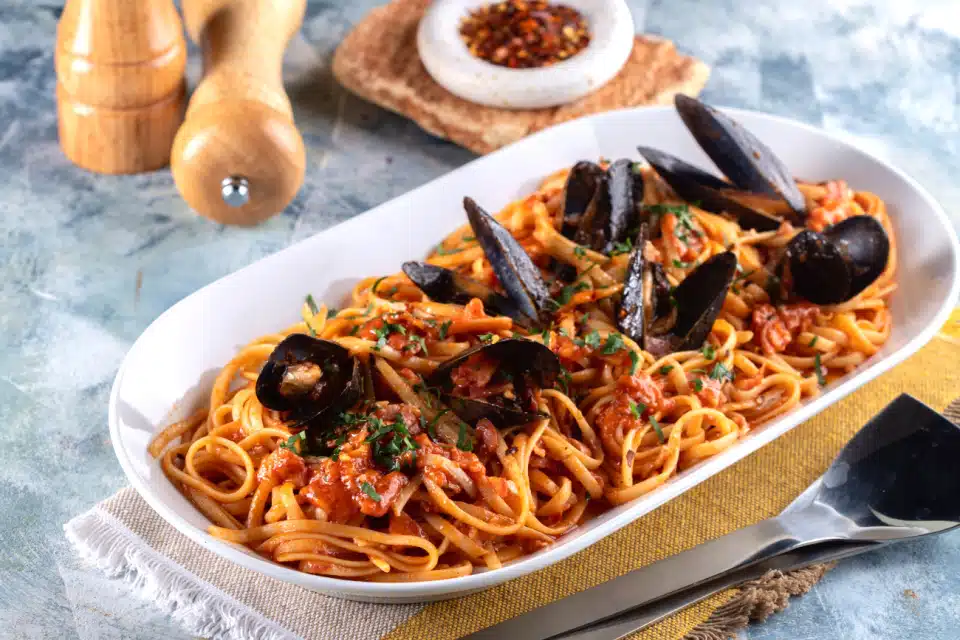
Linguine and mussels is one of those pairings that just makes sense — the long strands catch the sauce and wrap around the shellfish in a way that shorter pasta simply can’t. What makes this recipe stand out is the tomato base, which gets an unexpected boost from bacon and thyme that adds a savory smokiness and lifts the whole dish well beyond a straightforward seafood pasta. It serves four and works equally well as a relaxed weeknight dinner or something you’d happily put in front of guests.

There is something wonderfully hands-on about cracking open a salt crust to reveal a perfectly cooked whole fish underneath. The crust traps the sea bream’s moisture as it cooks, leaving the flesh tender and delicate, while the yogurt sauce brings a sharper, fresher counterpoint. Capers, mustard, dill, and parsley give the sauce enough acidity and herbal bite to complement the mild fish without masking it. Bring the whole dorade to the table before breaking it open, and serve it with boiled potatoes or a simple tomato salad for a leisurely Mediterranean lunch.

Spain’s answer to bouillabaisse, zarzuela is a generous, deeply flavored seafood stew built on a tomato and wine base spiked with smoked paprika, garlic, and chili. The detail that sets it apart from other Mediterranean stews is the picada, a paste of toasted almonds and hazelnuts stirred in near the end that thickens the sauce and gives it a richness that’s distinctly Spanish. Use whatever seafood is freshest and best on the day, and serve the whole thing in the middle of the table with crusty bread and a glass of whatever you’re drinking. It’s a dish that was made for sharing.

Octopus and legumes is a pairing that shows up across Greek coastal cooking, and this version is one of the most satisfying. Sweet peas cooked in a tomato and red wine sauce balance the savory depth of the slow-cooked octopus in a way that feels genuinely harmonious, and fresh dill folded through at the end lifts the whole dish without overwhelming it. It serves eight, reheats beautifully, and is the kind of thing worth making the day before a dinner party so the flavors have time to settle.

Few dishes reward good ingredients as directly as moules marinière. The mussels are steamed in white wine with shallots, celery, thyme, and bay leaves, then finished with cream and a splash of vinegar that keeps the sauce bright rather than heavy. It’s a classic French recipe that’s been on bistro menus for centuries, and it’s stayed there because it genuinely works. Serve in deep bowls with plenty of crusty bread and a dry white wine, ideally with friends around the table.
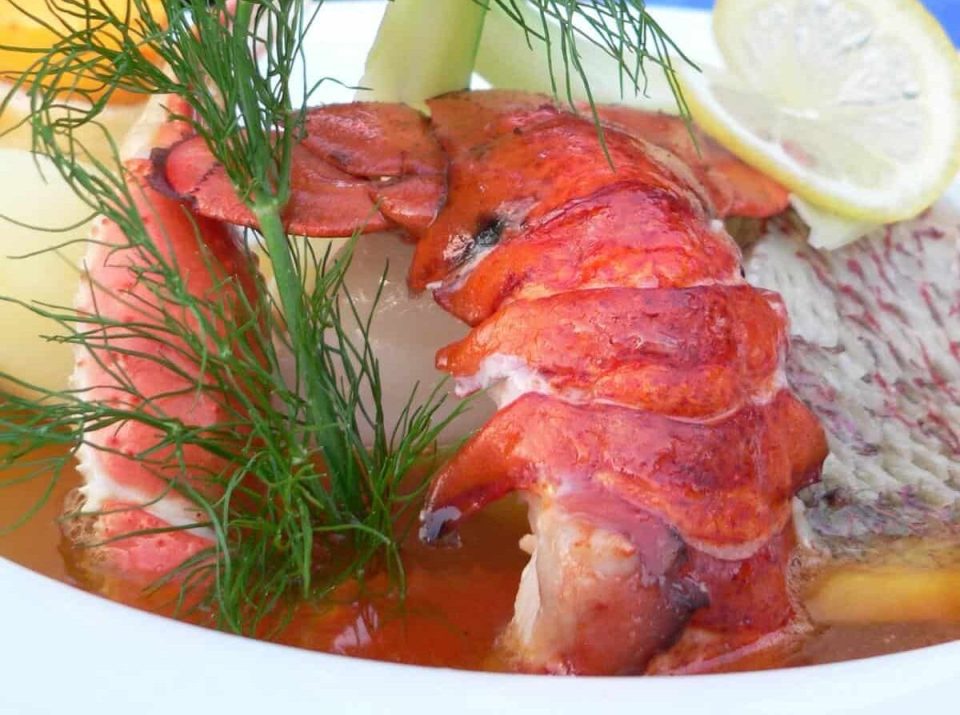
A classic seafood stew from Marseille, bouillabaisse is one of Provence’s most celebrated dishes. This traditional recipe features a rich, aromatic seafood broth served with rouille, a flavorful garlic sauce thickened with cooked potato for a rustic texture and beautifully smooth consistency.

The appeal here is largely about texture. Rigatoni gives the creamy sauce plenty of ridges and hollow centers to cling to, while sweet peas and tender shrimp keep the dish from becoming too rich or one-dimensional. It’s a more indulgent seafood pasta than the salmon and tomato version elsewhere in the list, with the cream sauce turning it into genuine comfort food. Serve it hot as the centerpiece of a relaxed dinner, perhaps with a sharp green salad to cut through the richness and a crisp white wine alongside.
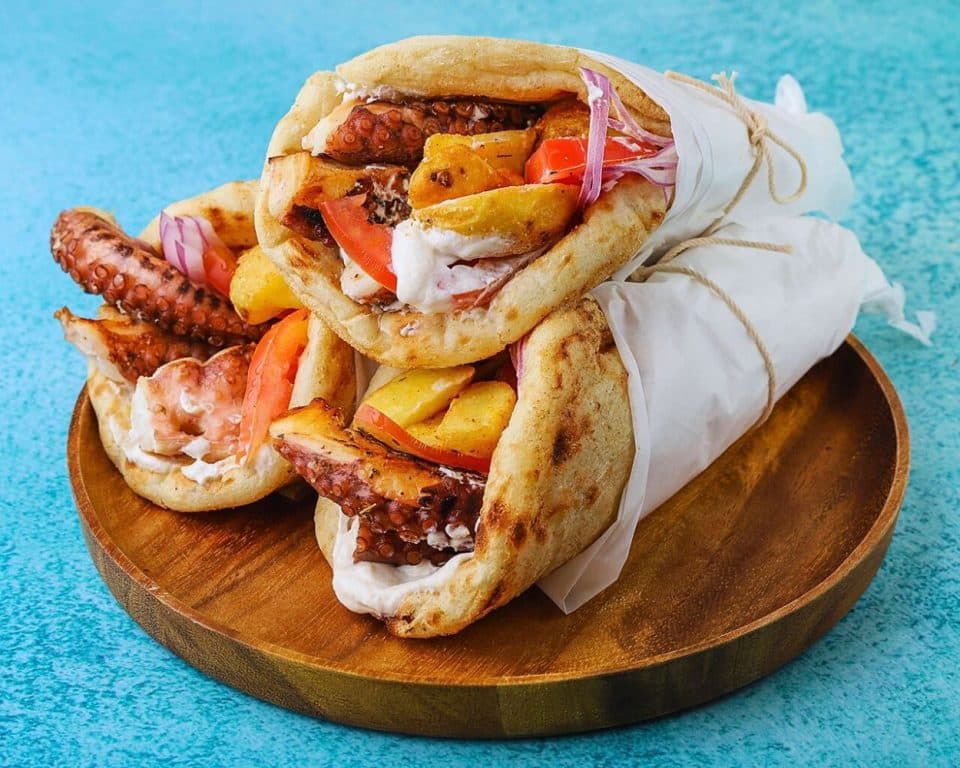
Souvlaki usually means pork or chicken, but octopus gives this Greek street-food staple a distinctly coastal character. Slow-cook the octopus until tender, then give the tentacles a quick turn on the grill so the outside develops a little char and firmness while the inside stays soft. Wrap it in toasted flatbread with tomato, onion, and taramosalata, whose creamy, salty character works particularly well with the smoky seafood. This is made for a summer lunch or casual outdoor meal, especially with crispy fries and a cold beer alongside.

This elegant tuna carpaccio lets fresh, high-quality tuna shine, complemented by fragrant basil oil, lemon, peppery arugula, and tangy caper berries. Light and full of Mediterranean flavor, it makes a lovely starter for a dinner party. Serve chilled with a crisp Pinot Grigio or Greco di Tufo.
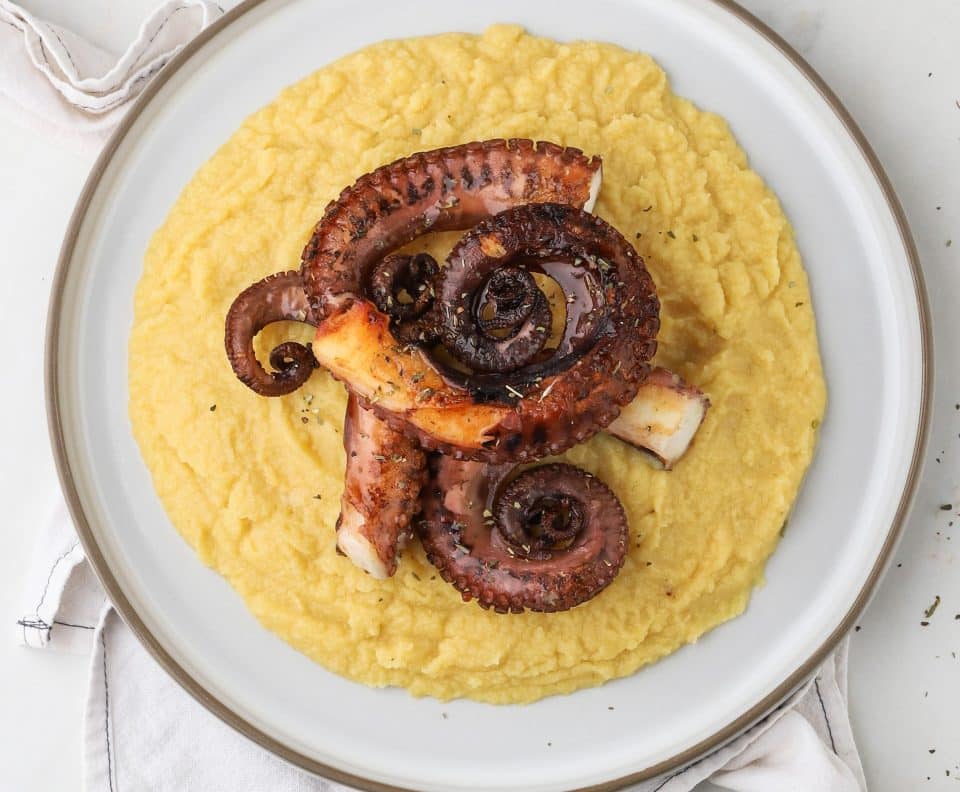
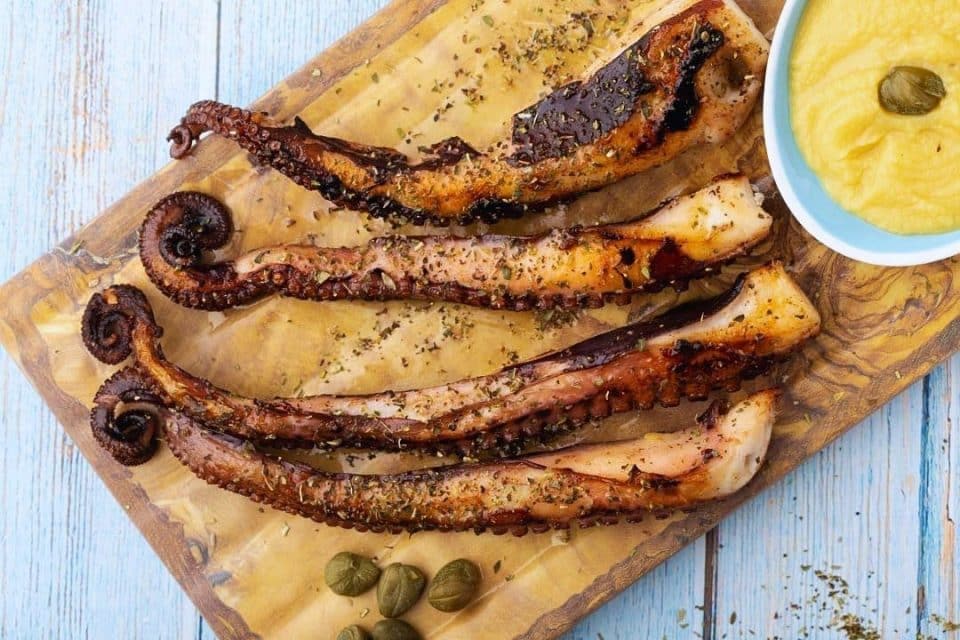
Fava, the silky yellow split pea puree beloved on Santorini, is one of the great supporting acts in Greek cooking, and paired with slow-roasted octopus it becomes something considerably more special. The fava is made with smoked paprika and apple cider vinegar, which gives it a warmth and tang that plain split pea puree doesn’t have, and the octopus is given a quick blast in a very hot pan after its slow cook to add color and a lightly caramelized exterior. The contrast between the velvety puree and the firm, slightly charred octopus is what makes this dish. Pair it with an Assyrtiko from Santorini for the full experience.
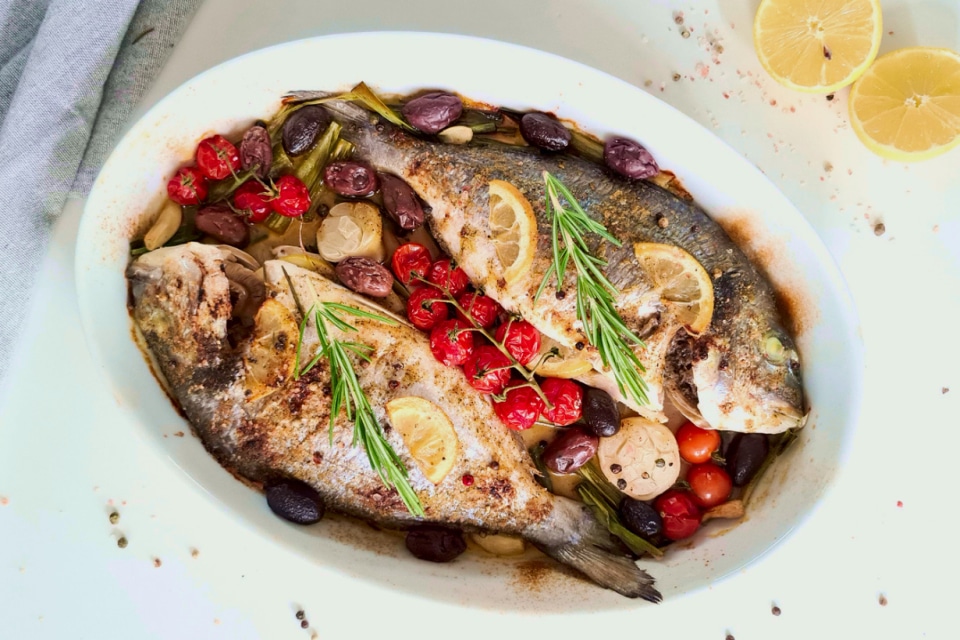
Sea bream is one of the Mediterranean’s most prized fish, mild and delicate with a clean sweetness that doesn’t need much done to it. Here the whole fish goes into the oven with cherry tomatoes, Kalamata olives, garlic, and fragrant herbs, and the juices that collect in the pan as it bakes form a light sauce that’ needs nothing added to it’s perfect as-is. The homemade tzatziki alongside adds a cool, creamy contrast that feels very much in the spirit of Greek coastal cooking. Crispy new potatoes and a cold glass of Assyrtiko complete the picture.

Fried calamari appears on seafood restaurant menus from Greece to Croatia to Spain for good reason — when done well, the contrast between the crisp, golden batter and the tender squid inside is genuinely irresistible. The breading here combines wheat flour, cornflour, fine semolina, smoked paprika, dried tarragon, and mustard powder, which gives the coating considerably more character than a plain flour dredge. The homemade tartar sauce, made with pickled cucumber, capers, and dill, is sharp and creamy in a way that cuts through the richness of the fried squid cleanly. Serve as a starter with cold beer or a glass of dry wine.

Sea bass doesn’t need much from the kitchen, and this Greek-style preparation understands that. The fish gets a lightly charred exterior over the grill while staying soft and juicy inside, then finishes with lemon, olive oil, mustard, and oregano. The mustard is a particularly nice touch, adding a little sharpness to what could otherwise be a very straightforward dressing. It’s a natural choice for a summer barbecue or outdoor dinner, especially with grilled vegetables alongside and a cold glass of Assyrtiko in hand.

For this dish, you have to simmer the baby octopus with lemon, garlic, dried chili, and peppercorns until tender, then coat it in olive oil and finish it on the grill. That second cooking step gives the tentacles lightly charred edges and a firmer exterior, creating a nice contrast with the tender flesh underneath. The red wine vinegar dressing with oregano, and lemon cuts through the smokiness, while the roasted fingerling potatoes pick up the same bright, savory flavors. Serve the octopus warm or at room temperature, either as a light main with a salad or as part of a larger Mediterranean spread.

Tuna rarely gets treated like comfort food, which is part of the charm of these Greek-inspired meatballs. The tuna mixture stays soft and tender rather than dense, with bread, onion, herbs, and egg whites giving the meatballs a light texture. A lemony yogurt sauce brings everything together, its cool tang bringing out the savouriness of the fish and herbs. They can work as a substantial mezze dish with pita and a few salads, or as the centerpiece of a casual family dinner with roasted potatoes.

The combination of sweet peas and prawns already gives this risotto a distinctly spring-like character, but valerian adds an interesting bitter-green note that keeps the dish from becoming too sweet or creamy. The rice stays soft and velvety while the prawns provide a firmer, delicate bite, and the fresh greens give the finished dish some lift. This would make a lovely first course for an Italian dinner, followed by something light such as grilled fish or roasted vegetables. A chilled Pinot Grigio would keep the whole meal feeling fresh.
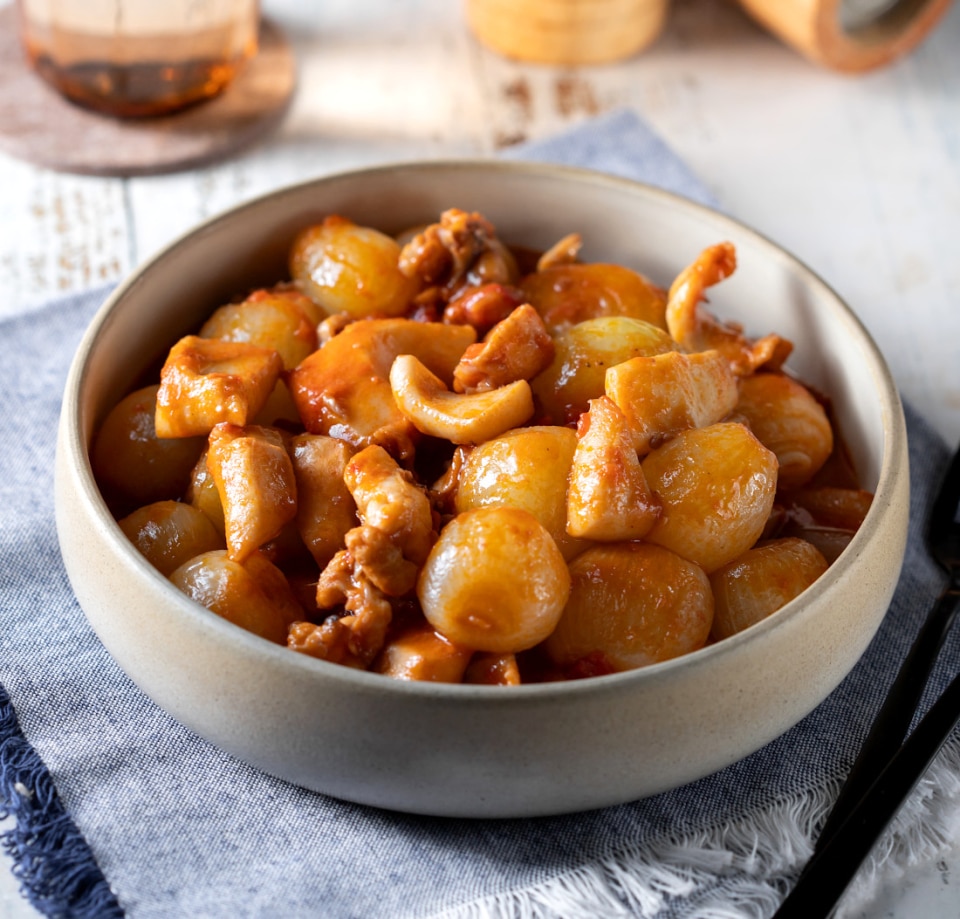
Cuttlefish becomes wonderfully tender when given time to cook slowly, and this traditional Greek preparation makes that texture the centerpiece of the dish. The seafood cooks in a deeply savory sauce with tomatoes, onions, wine, and herbs, taking on the flavors around it while still retaining its distinctive character. This is very different from the quick-grilled octopus dishes elsewhere in the roundup. Instead of a light summer seafood plate, think of this as a proper sit-down dinner, served with rice or plenty of bread to absorb the sauce and a robust Greek red wine.

Chickpeas might not be the first ingredient you expect to see in a pasta dish, but they make a particularly satisfying partner for prawns. Their soft, creamy texture gives the sauce body while the prawns bring a sweeter, more delicate seafood flavor and a little bite. Fettuccine gives the combination a substantial base without making it feel like a heavy cream pasta. This is a good choice when you want seafood pasta to function as a complete meal rather than simply a first course, especially with a sharp green salad and a glass of dry white wine.

Of all the ways to prepare octopus, this Galician classic might be the most deceptively simple and the most memorable. The tentacles are boiled until tender, sliced into rounds, arranged on a serving board, and finished with nothing more than sweet paprika, hot paprika, sea salt, olive oil, and a splash of the poaching liquid. That’s the whole dish, and it works because each condiment earns its place in terms of flavor added. The quality of the paprika and the olive oil matter here more than they do in almost any other recipe. Best served as a sharing appetizer with toothpicks, ideally alongside a glass of Galician Albariño.

This restaurant-quality pasta takes an unexpected ingredient—rye bread—and turns it into a wonderfully rich, silky sauce. Toasted bread is blended with shallots, thyme, and white wine, creating an earthy, savory base for linguine topped with tender squid sautéed in garlic. It’s an elegant, creative dish that wouldn’t look out of place on a fine-dining menu, and a lovely change from the usual tomato or cream-based seafood pasta.

This tuna carpaccio isn’t shy about flavor! Paper-thin slices of tuna are topped with crunchy pistachios, Niçoise olives, fresh basil, and a zesty lemon-chipotle vinaigrette. The combination is fresh, briny, a little smoky, and just spicy enough to keep things interesting. It’s a beautiful dinner-party starter that looks impressive without requiring much last-minute effort.

This is one of the more boldly seasoned dishes in the collection, with the prawns coated in a fragrant chilli-garlic masala before they meet a fresh couscous salad. The heat and aromatic spices give the seafood plenty of personality, while the grains and fresh vegetables provide a cooling, textural contrast. It’s a particularly good warm-weather lunch because the couscous salad can be served at room temperature, and the prawns bring enough substance to make the meal satisfying without feeling heavy. Add a spoonful of yogurt or a cool cucumber salad if you want something to temper the spice.

If you already have a few tuna dishes in mind, Salade Niçoise is a French classic that turns the fish into a complete meal. Seared tuna sits alongside soft eggs, crisp green beans, tomatoes, Kalamata olives, potatoes, and anchovies, so every bite has something different going on. The mustard and caper dressing ties the ingredients together with enough acidity to balance the richness of the eggs and tuna. The potatoes make this much more substantial than a typical salad, while the barely cooked tuna keeps it feeling fresh. It’s a good choice for a leisurely lunch, especially with a chilled Provençal rosé.

The secret to a great tuna tartare starts with one essential ingredient: exceptionally fresh, high-quality tuna suitable for eating raw. Unlike carpaccio, where the fish is thinly sliced, tartare uses finely diced tuna, giving it a more substantial texture. Dijon mustard, anchovies, capers, gherkins, parsley, and Worcestershire sauce bring the bold, savory flavors of a classic steak tartare, while the tuna keeps the dish feeling lighter.
Raw fish isn’t to everyone’s taste, but for seafood lovers, this makes a wonderful dinner-party starter. Serve it well chilled, with toasted bread or French fries on the side and a crisp glass of Chablis.

Salmon and cream can make for a heavy pasta, but this version takes a brighter route. Seared salmon is combined with tomatoes, green olives, capers, chili, garlic, and basil, so the richness of the fish gets plenty of salty, acidic, and fresh notes to balance it. The tagliatelle is particularly well suited to the sauce because its long strands catch the tomato juices and olive oil without competing with the salmon. It’s a straightforward dinner that comes together in around 40 minutes, but the combination of colors and flavors makes it feel more special than a standard weeknight pasta.
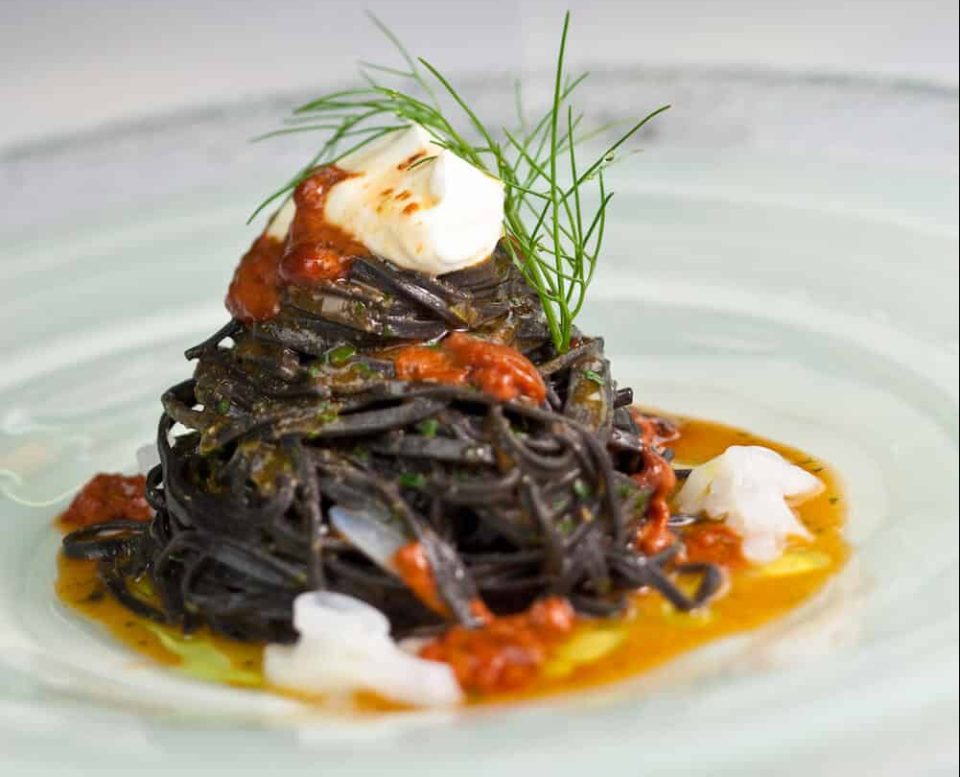
This is the kind of dish that belongs on a dinner table when you want seafood to feel genuinely special. Black spaghetti gets its striking color from squid ink, while tender cuttlefish and delicate sea urchin bring two very different expressions of the sea. Ricotta softens the intensity with its mild, creamy texture, creating a contrast between briny seafood, silky cheese, and springy pasta. The result is rich and elegant without needing a heavy sauce. Serve it as the centerpiece of an intimate dinner, with a dry white wine that has enough acidity to balance the ricotta and seafood.

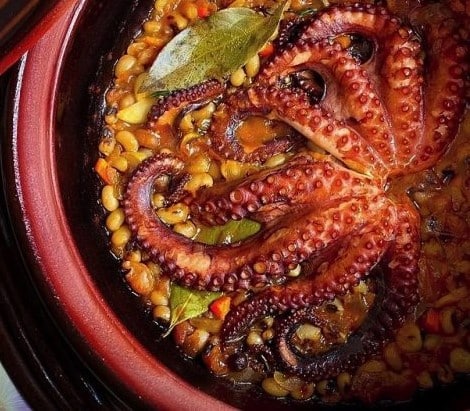
Black eyed beans have a natural earthiness that works remarkably well alongside octopus, and this oven-baked version makes the most of that pairing. The two cook together with tomato and a combination of spices like ouzo, rosemary, cinnamon, and star anise that gives the dish a warmth and complexity that’s hard to mistake. It’s a filling, comforting dish that improves with rest, and a drizzle of good olive oil and freshly cracked pepper before serving makes a noticeable difference.
Related: 41 Mediterranean Appetizers: Dips, Mezze, Tapas & More
Related: 30 Mediterranean Salad Recipes You’ll Love
Related: 21 Greek Side Dishes & Mezze to Bring Mediterranean Flavor to the Table
Related: 36 Must-Try Mediterranean Desserts & Pastries
Related: Mediterranean Food: 30 Iconic Dishes You Should Try