This post may contain affiliate links. Please read my disclosure policy.
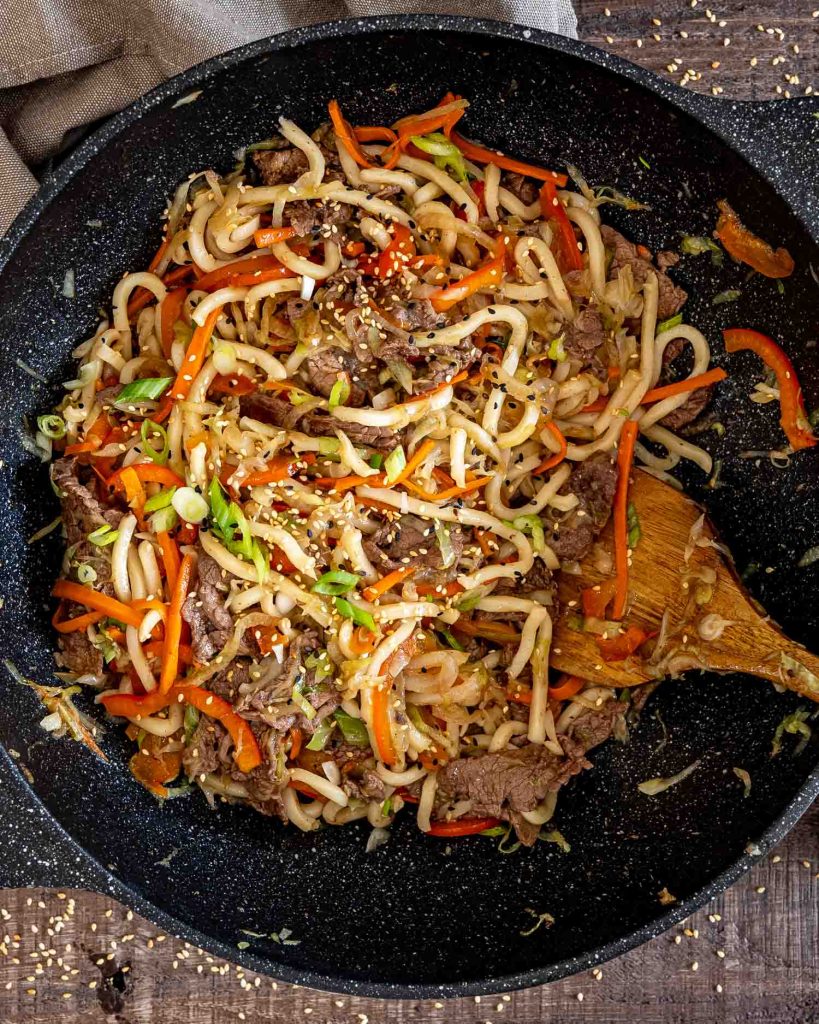
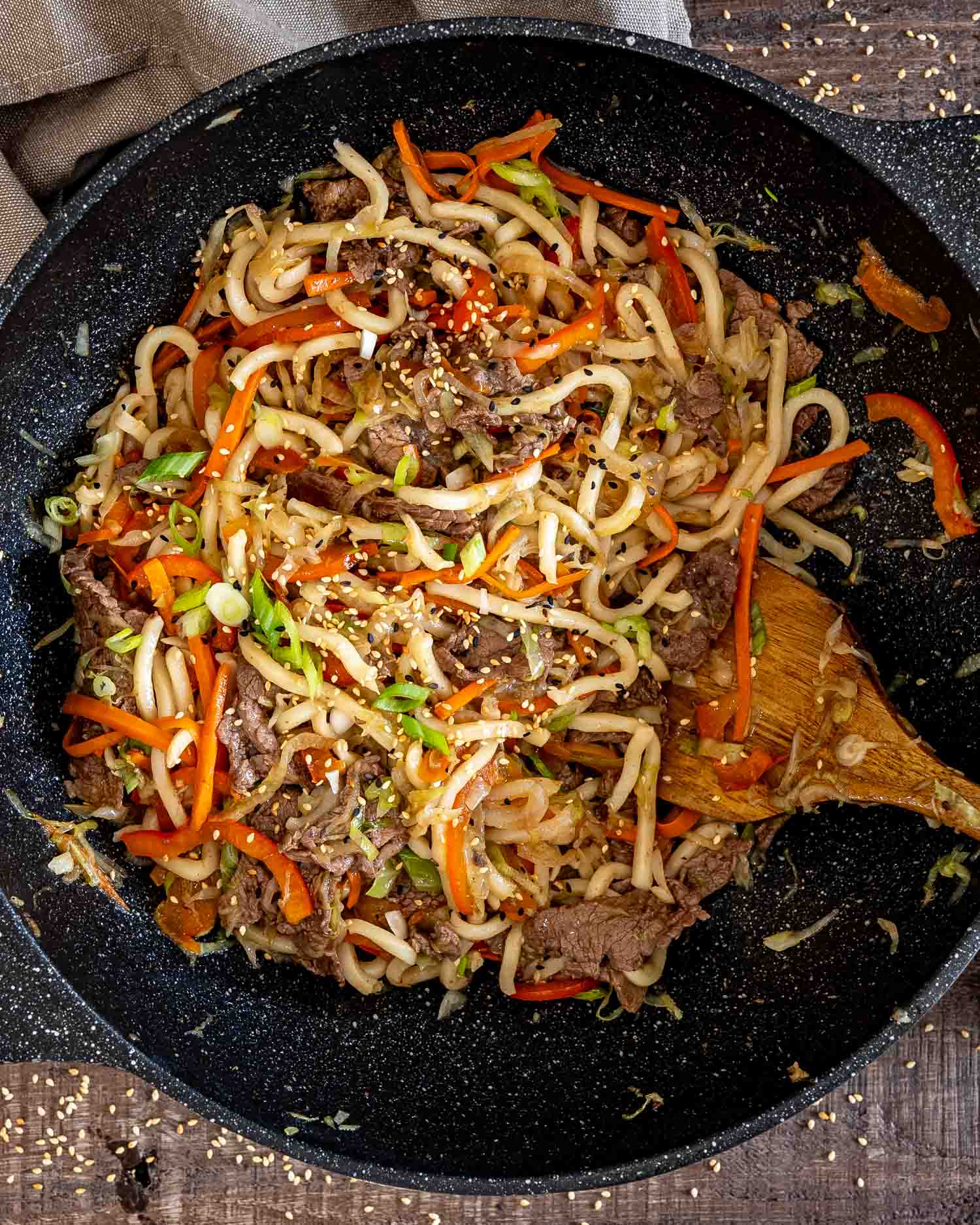
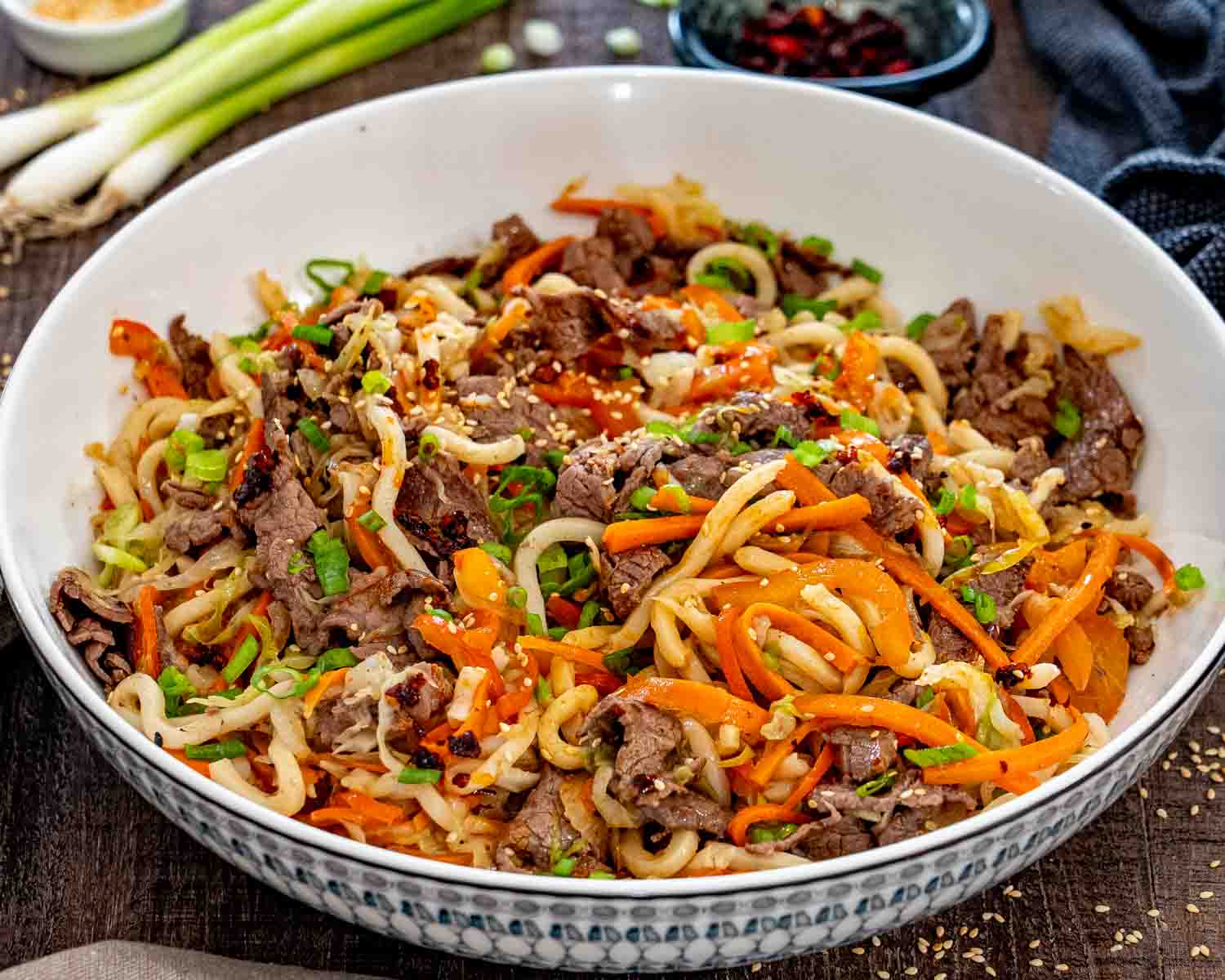
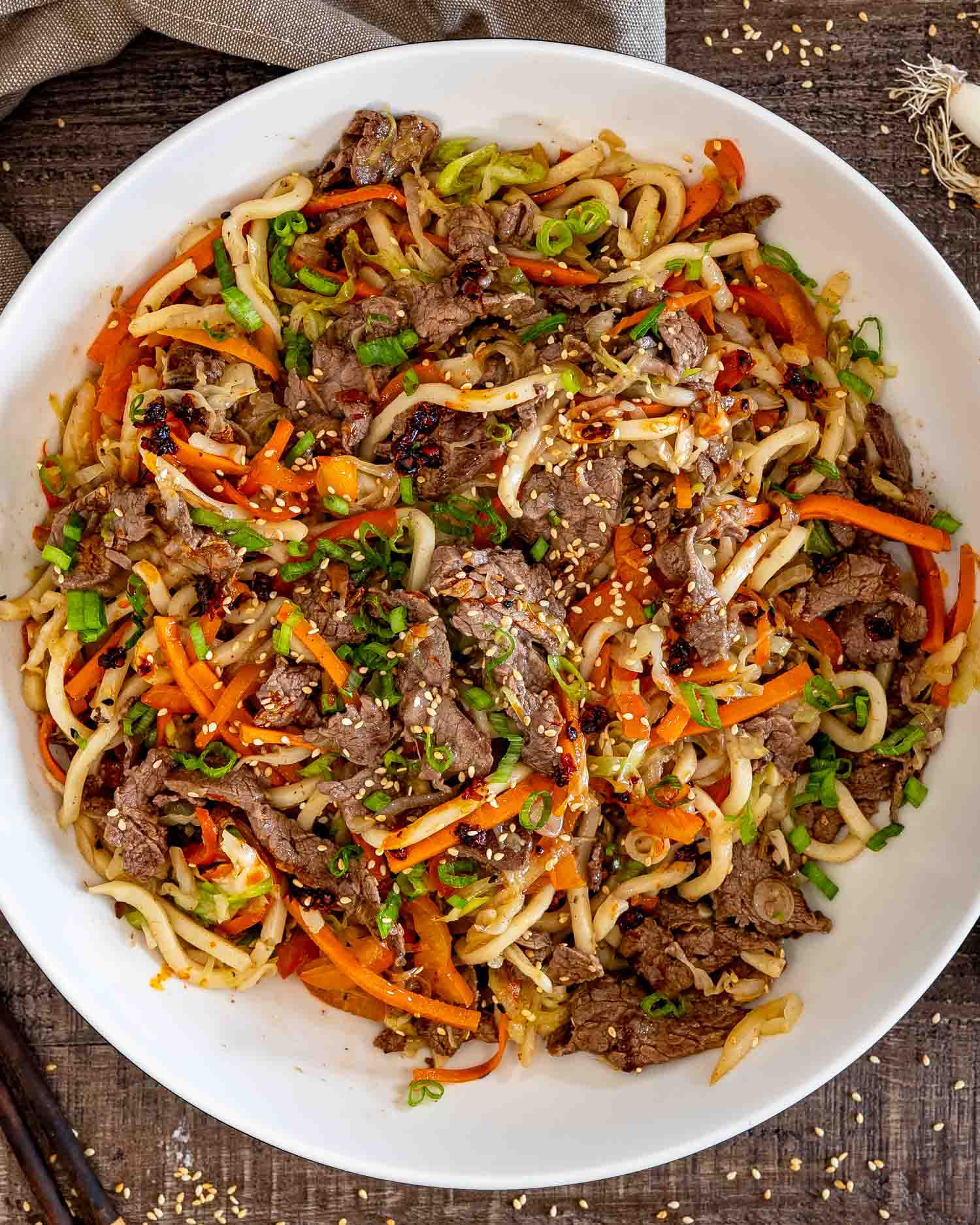
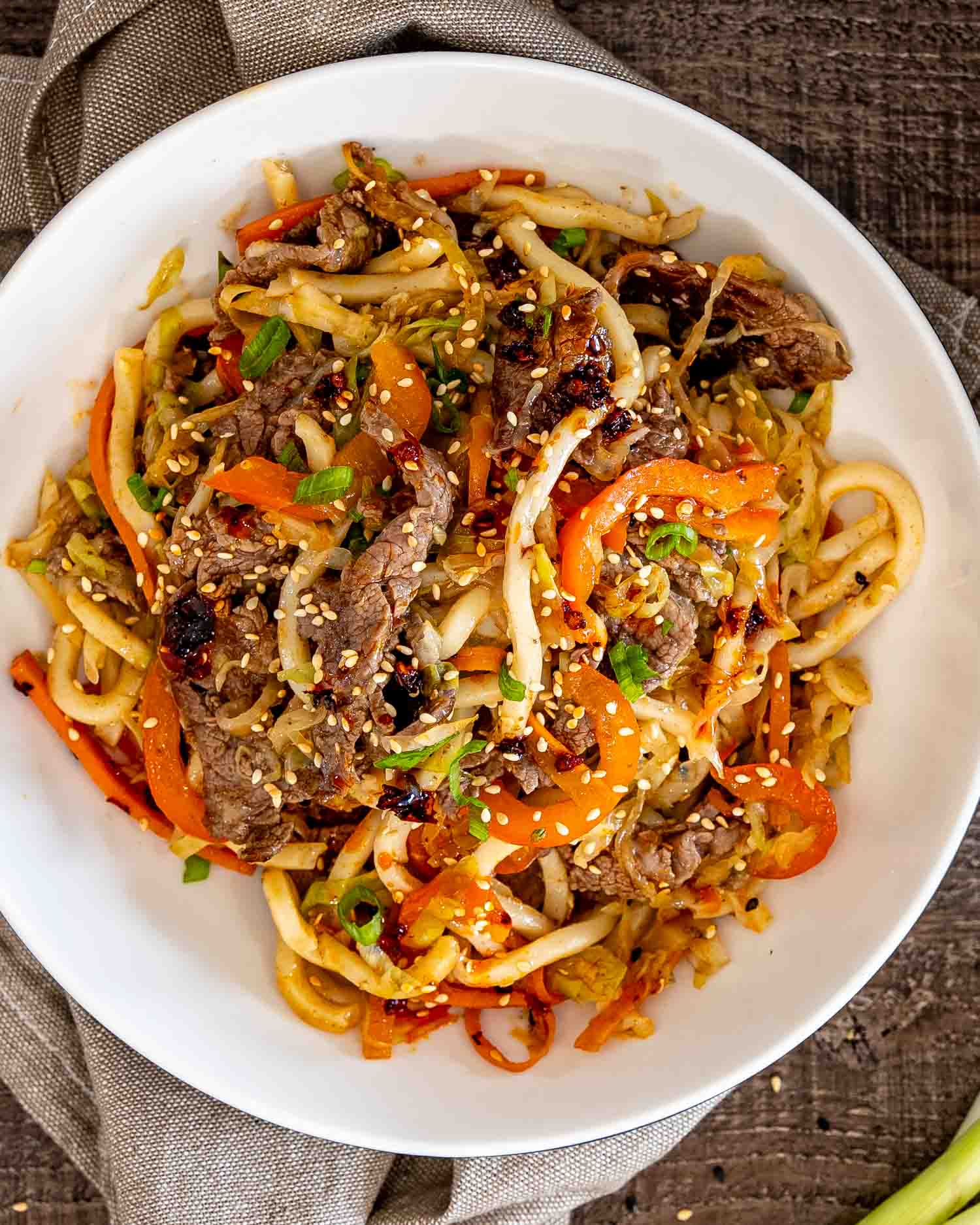
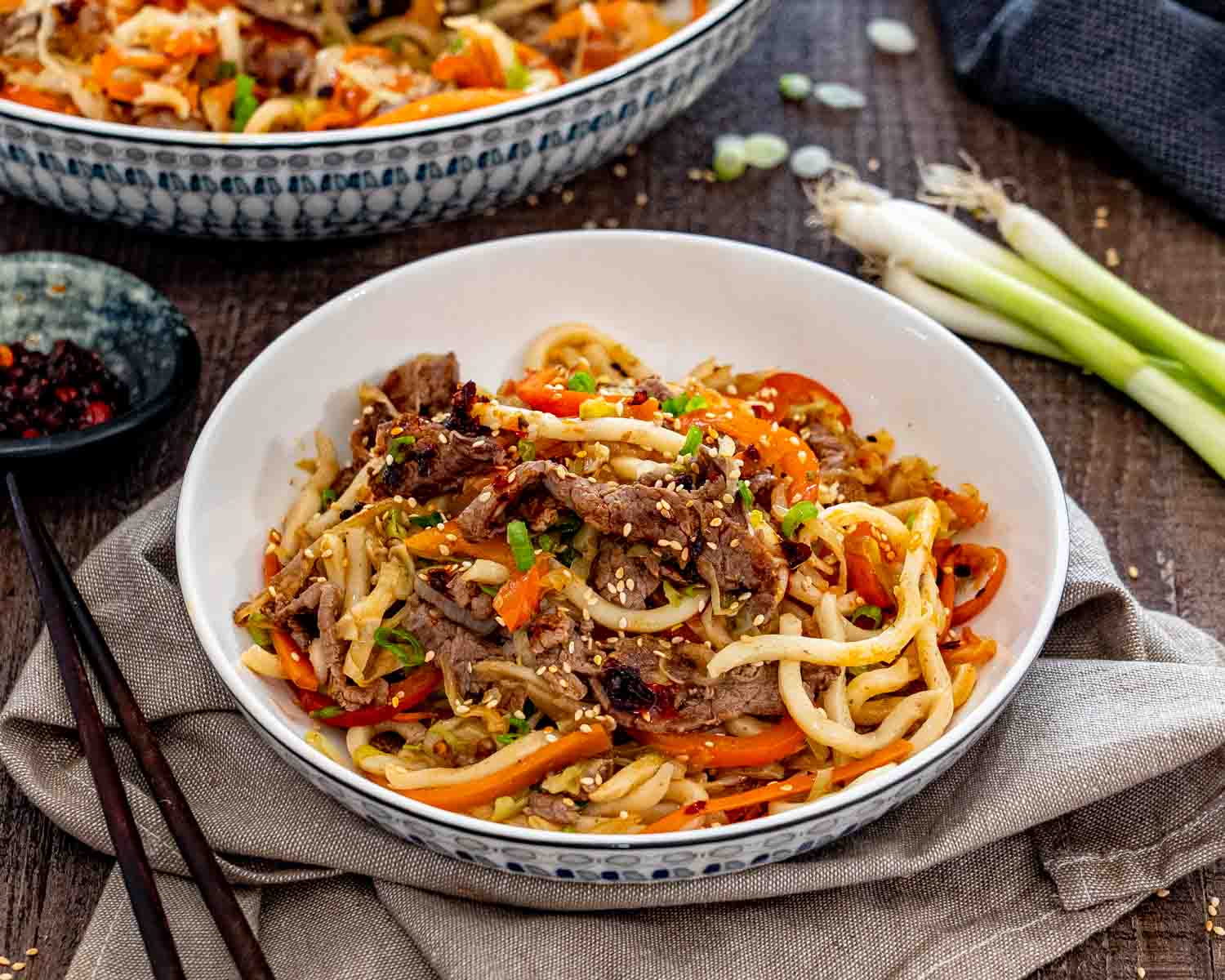
Takeout noodles always show up a little sad. Not these. Think thick chewy udon, seared beef, and vegetables with actual char on them, tossed in a sauce that goes glossy the second it hits the pan. Beef Yaki Udon. 30 minutes, one pan, nothing soggy about it.
Table of Contents
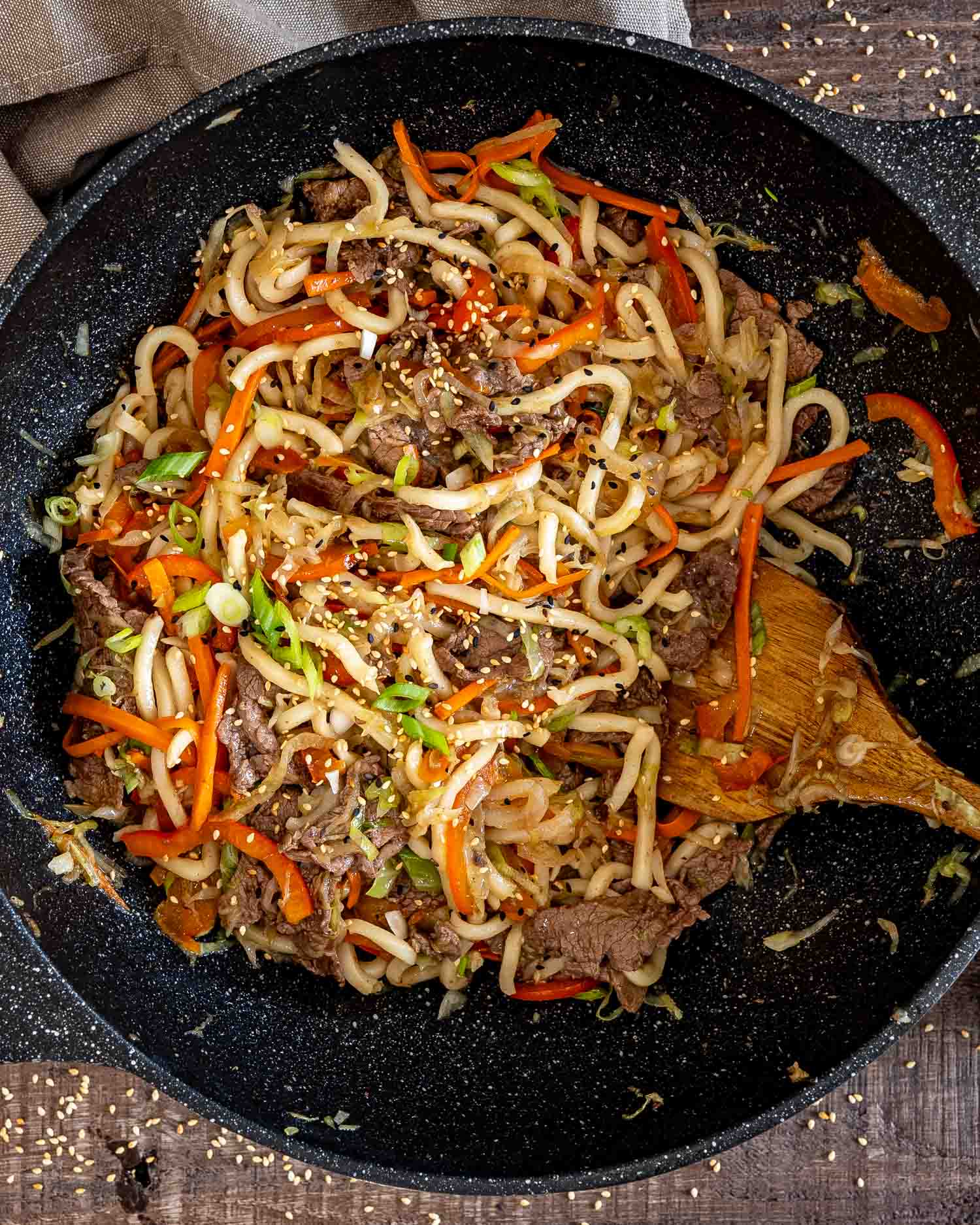
I should be upfront about the pacing here. The prep takes 15 minutes. The cooking takes about 8. Those 8 minutes are not relaxed.
This is a stir fry, which means it all happens at a temperature where turning around to look for the soy sauce is enough time to ruin the garlic. Everything goes in fast, in order, and then it’s done and you’re eating.
Which is why the most important instruction in this recipe isn’t a cooking step. It’s this: chop everything first. Mix the sauce, put the bowl next to the stove. Slice the beef, cut the vegetables, drain the noodles. Set your counter up like a tiny cooking show.
Do that and this is the easiest dinner you’ll make all week. Skip it and you’ll spend 8 minutes in a state of mild emergency while the garlic burns and you can’t find the mirin.
The reward is udon, which I’ll defend as the best noodle there is. Thick, chewy, slippery, and substantial enough to take a real sear instead of collapsing the moment sauce touches it. That’s the whole difference between this and the noodles that arrive in a paper carton, slightly steamed and apologetic.
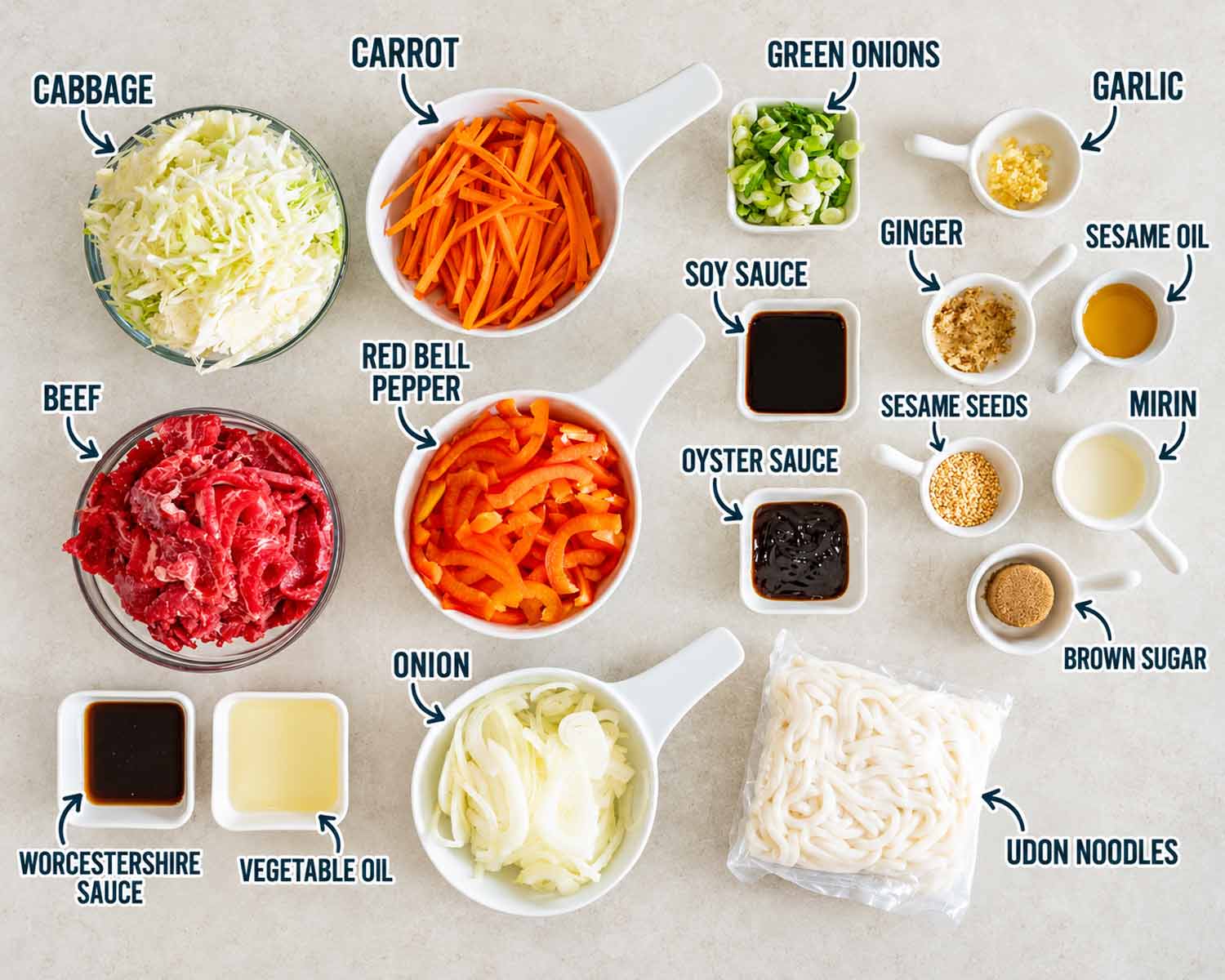
- Soy sauce (3 tablespoons, low sodium): Low sodium on purpose. There’s oyster sauce and Worcestershire in here too, both of which bring their own salt, and regular soy tips the whole thing into inedible.
- Oyster sauce (2 tablespoons): Thick, dark, savory, slightly sweet. It’s what gives the sauce enough body to cling to the noodles instead of pooling at the bottom of the pan. Yes, it’s made from oysters. No, it doesn’t taste like oysters.
- Mirin (1 tablespoon): Sweet Japanese rice wine. It brings a gentle sweetness and the glossy sheen on the finished noodles. Look near the soy sauce or in the Asian aisle.
- Brown sugar (1 tablespoon): Gives the sauce something to caramelize with in a very hot pan, instead of just coating everything.
- Worcestershire sauce (1 tablespoon): This is the one that makes people squint, and it absolutely belongs. Worcestershire landed in Japan in the 1800s and got absorbed so completely that there’s now an entire family of Japanese sauces descended from it. The sauces on tonkatsu, okonomiyaki and yakisoba are all its grandchildren. You’re not being fusion, you’re being accurate.
- Toasted sesame oil (1 teaspoon): Into the sauce, not the pan. It’s a finishing oil with a low smoke point, and blasting it over high heat just burns off everything you bought it for.
- Udon noodles (14 ounces): There’s a whole section on these below, because which kind you buy genuinely changes the dish.
- Flank steak or sirloin (1 pound): Thinly sliced against the grain. Also a section below, because this is where it goes wrong.
- Vegetable oil (2 tablespoons): Neutral, high smoke point. Not olive oil. Olive oil at stir fry temperature will set off your smoke alarm and make everything taste like a regret.
- Onion (1 large, sliced), green cabbage (2 cups, shredded), carrot (1 medium, julienned), red bell pepper (1 medium, thinly sliced): The classic yaki udon lineup. Cabbage is the one people are tempted to skip and shouldn’t. It goes sweet and silky and takes char better than anything else in the pan.
- Garlic (3 cloves, minced) and fresh ginger (1 tablespoon, grated): These go in late and stay for 30 seconds. Burnt garlic is bitter all the way through and there’s no fixing it once it happens.
- Green onions (3, sliced) and sesame seeds (1 tablespoon): The fresh crunchy finish. Don’t skip them thinking they’re garnish, they’re the only raw thing in the bowl.
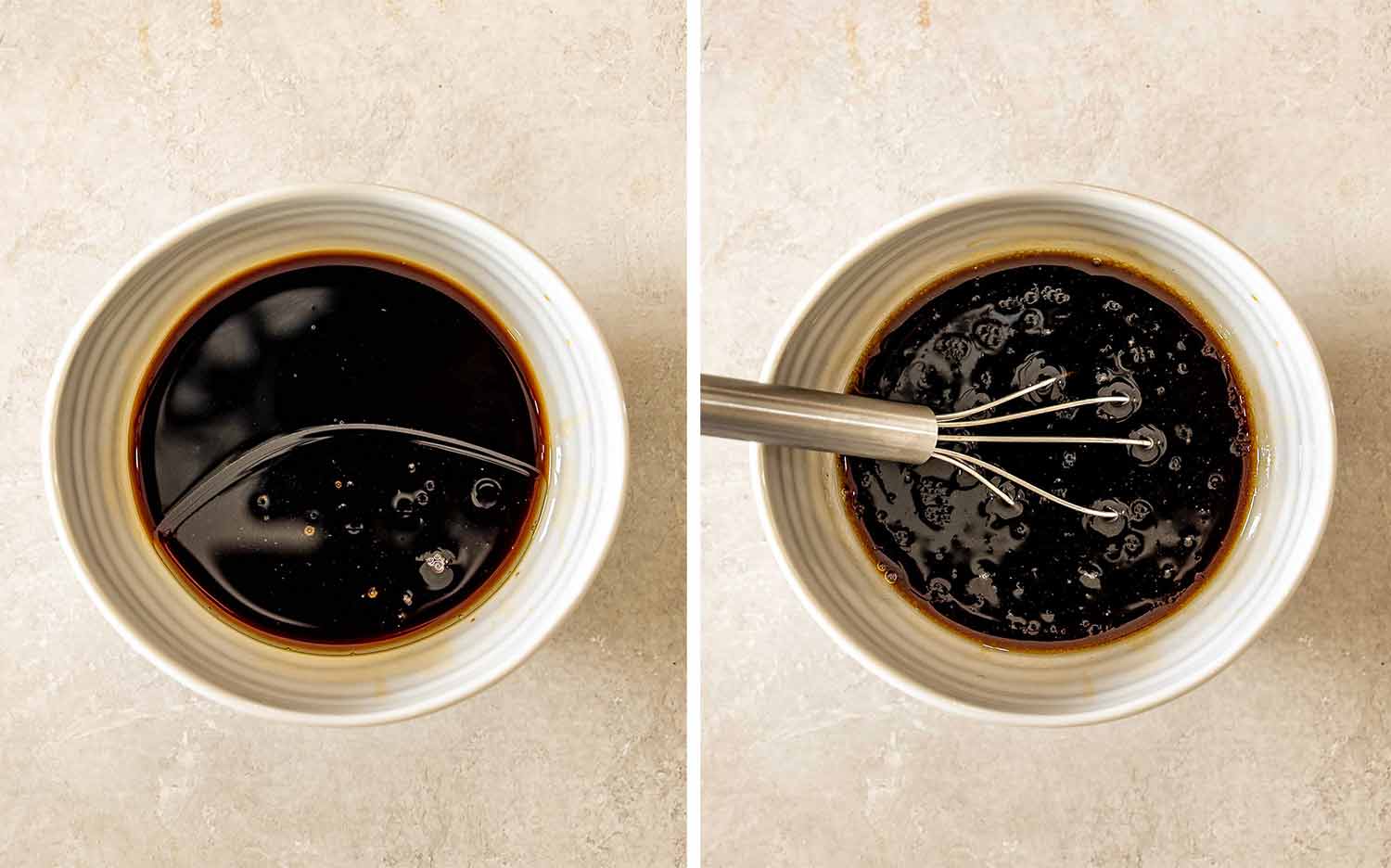
Mix The Sauce First: Whisk the soy sauce, oyster sauce, mirin, brown sugar, Worcestershire and sesame oil together in a small bowl, then put that bowl right next to your stove. Not on the other counter. Next to the stove. You’ll have about 4 seconds to grab it later and you don’t want to be looking.
Cook The Noodles: Prepare the udon according to the package. If they’re fresh or frozen, a quick soak or blanch in hot water is enough to loosen the strands. Drain and set aside.
Undercook them a touch. They’ve still got 2 more minutes in a hot pan ahead of them.
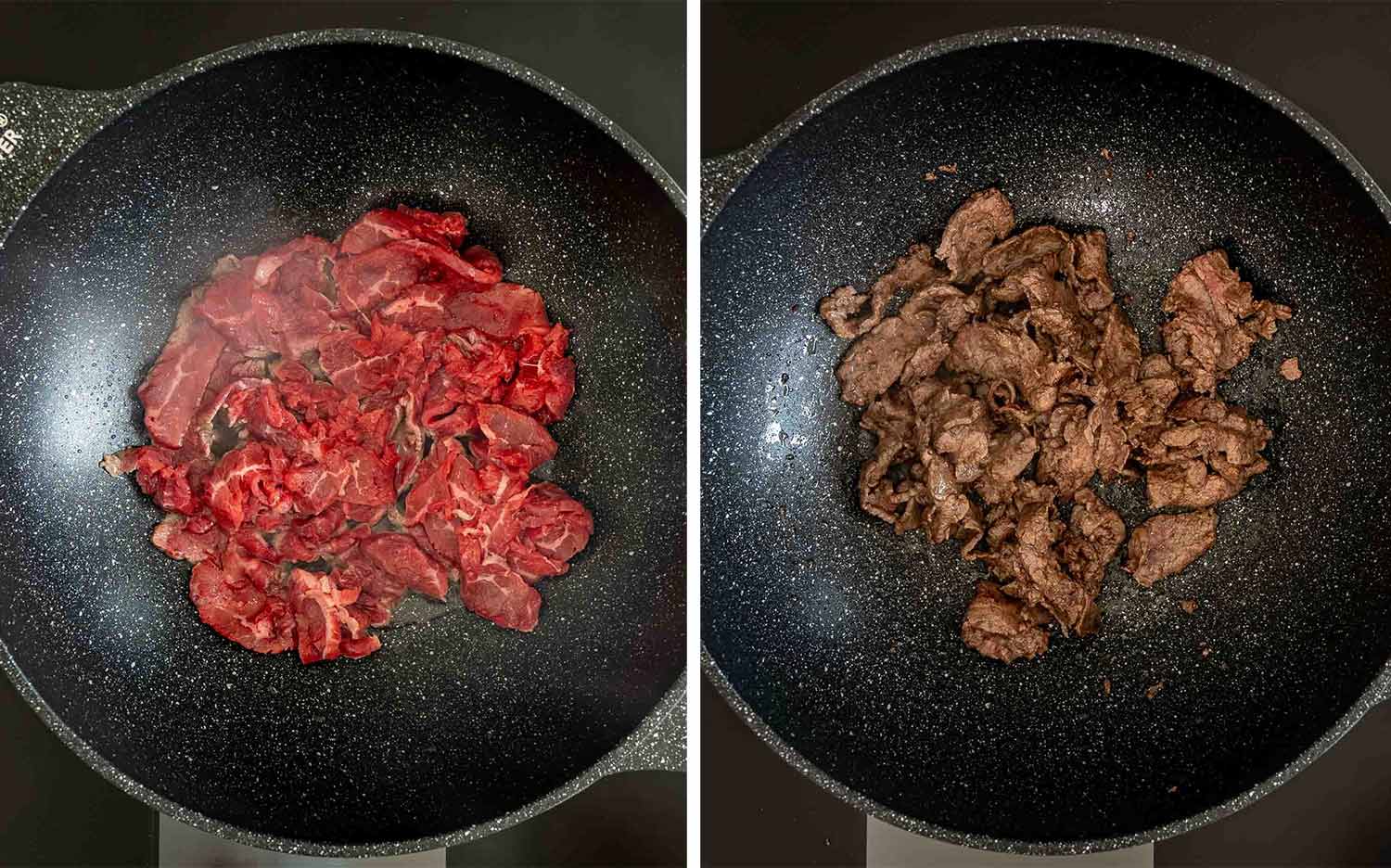
Sear The Beef: Heat 1 tablespoon of the oil in a large skillet or wok over high heat until it shimmers and looks thin and mobile. Add the beef in a single layer and leave it alone for 2 to 3 minutes.
Leave it alone is the instruction. Resist stirring. The beef needs contact with the pan to brown, and moving it around just lowers the temperature and steams it. It should be browned on the outside but not cooked through, because it’s coming back later. Transfer it to a plate.
If your pan isn’t big enough to hold the beef in one layer, do it in 2 batches. Crowding is how you end up with gray meat swimming in its own juice.
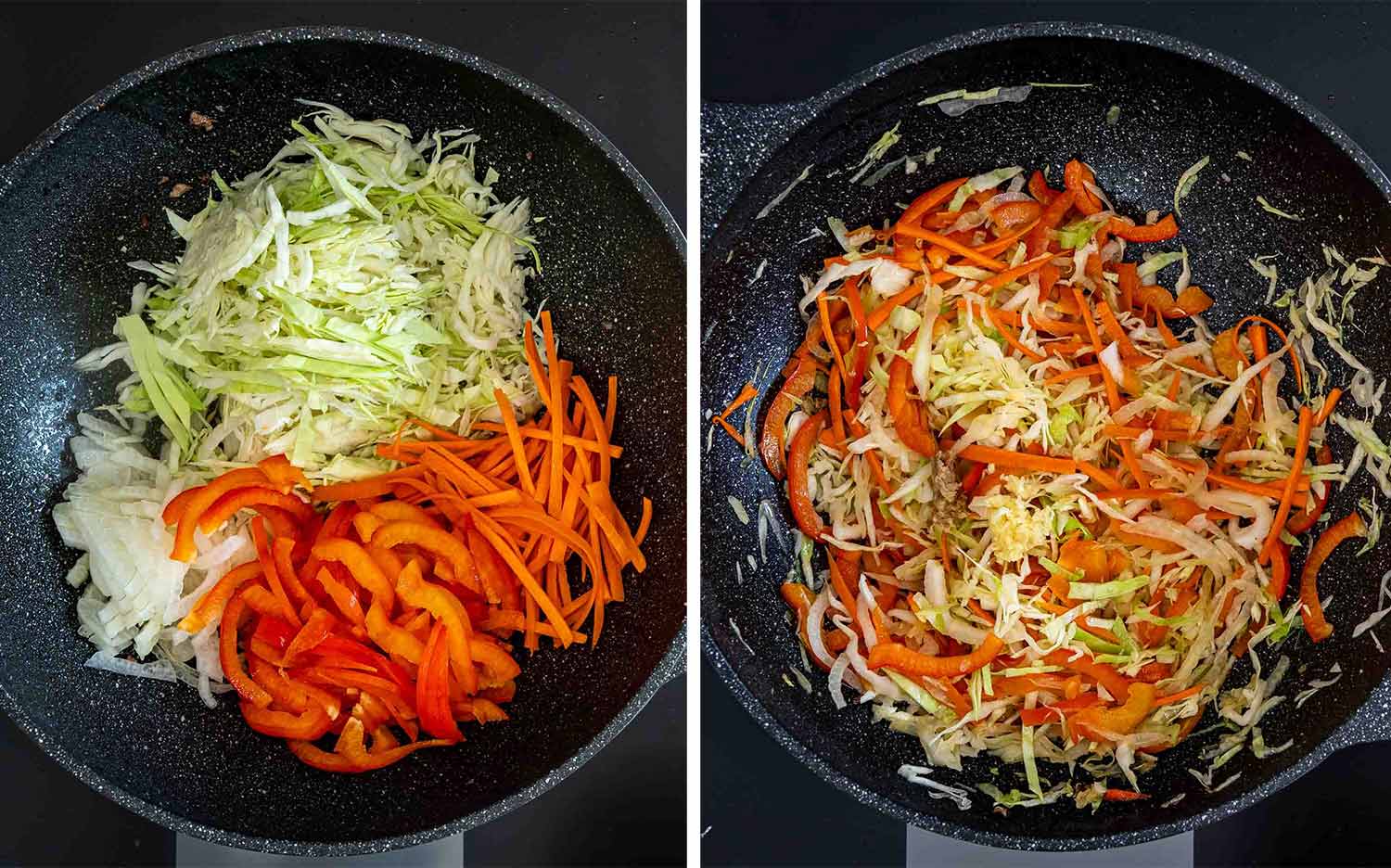
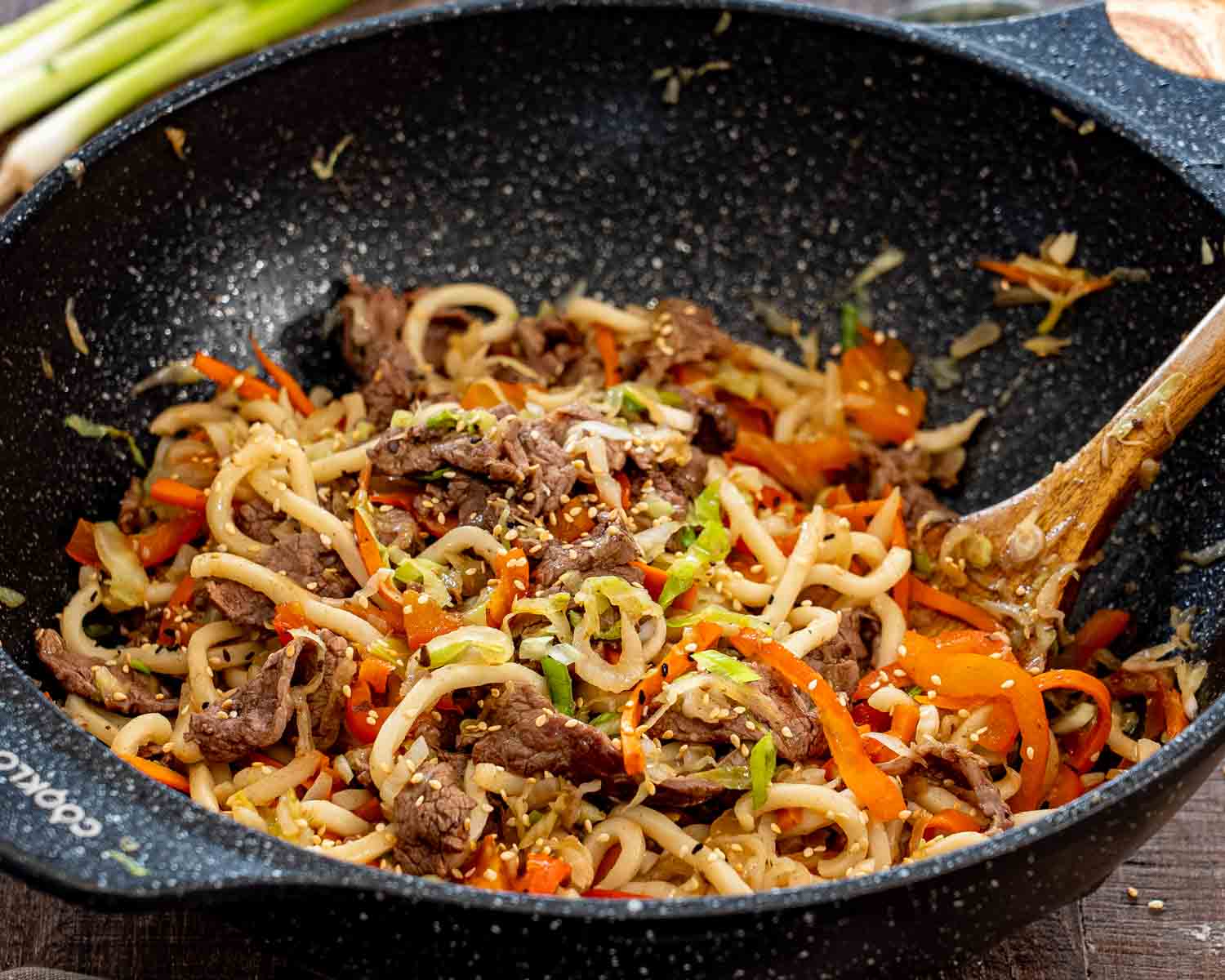
Stir Fry The Vegetables: Remaining tablespoon of oil into the pan, then the onion, cabbage, carrot and red pepper. Stir fry 3 to 4 minutes until they’re crisp tender and starting to catch some color at the edges.
Those charred edges are the whole point, so keep the heat high. You want some blistering and a bit of smoke. If everything’s gone soft and watery instead, your pan wasn’t hot enough and the vegetables are steaming in their own moisture.
Garlic And Ginger, Briefly: In they go for 30 seconds. That’s it. That’s the whole window. They’re going in last because they’re small and they burn in a way that ruins everything else in the pan.
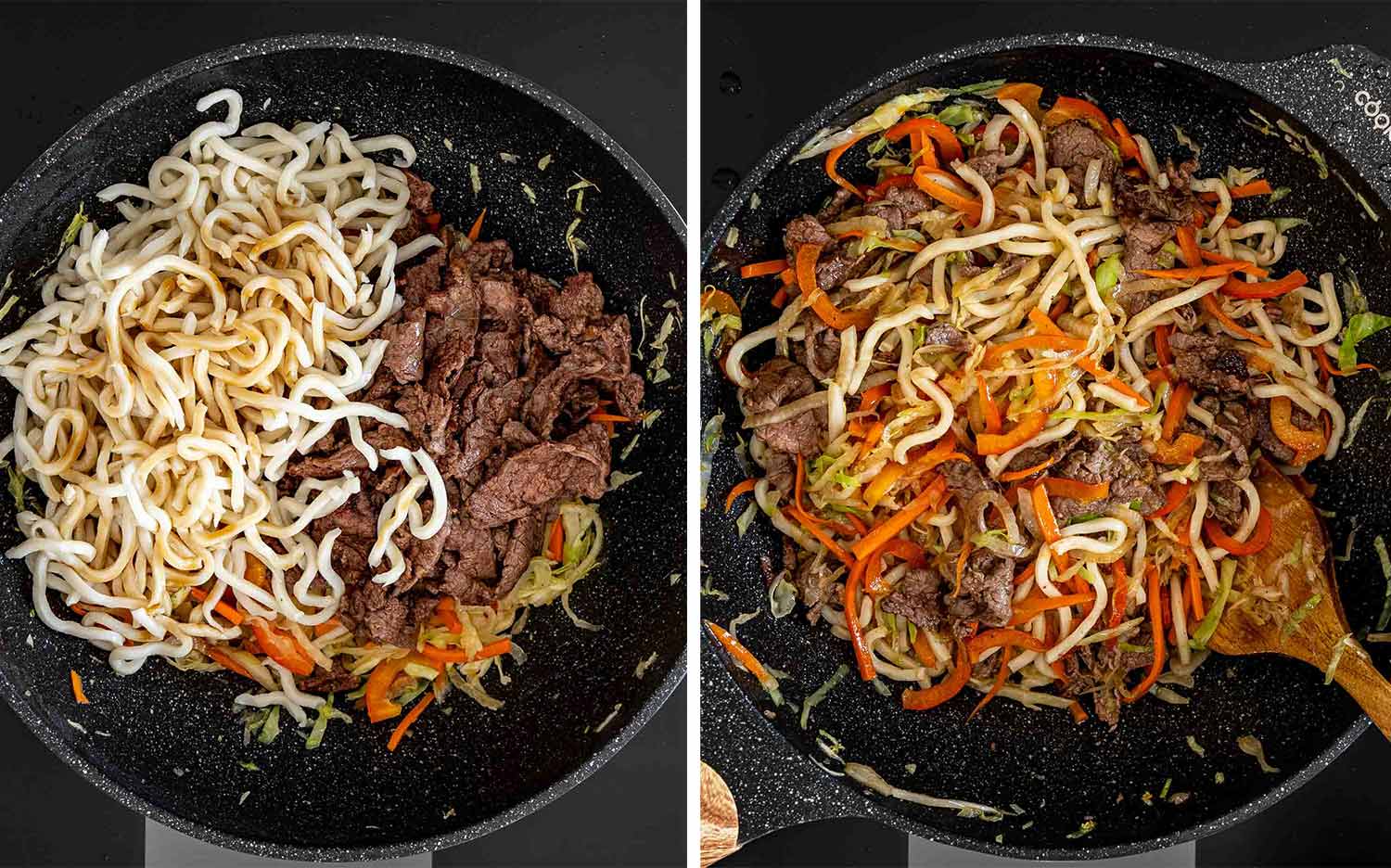
Bring It All Together: Beef back in, noodles in, sauce poured over the top. Toss everything for 1 to 2 minutes until the noodles are hot and glossy and every strand has sauce on it.
Use tongs and a lifting motion rather than stirring, which tears the noodles. If it’s looking a little dry, a splash of water loosens it right up.
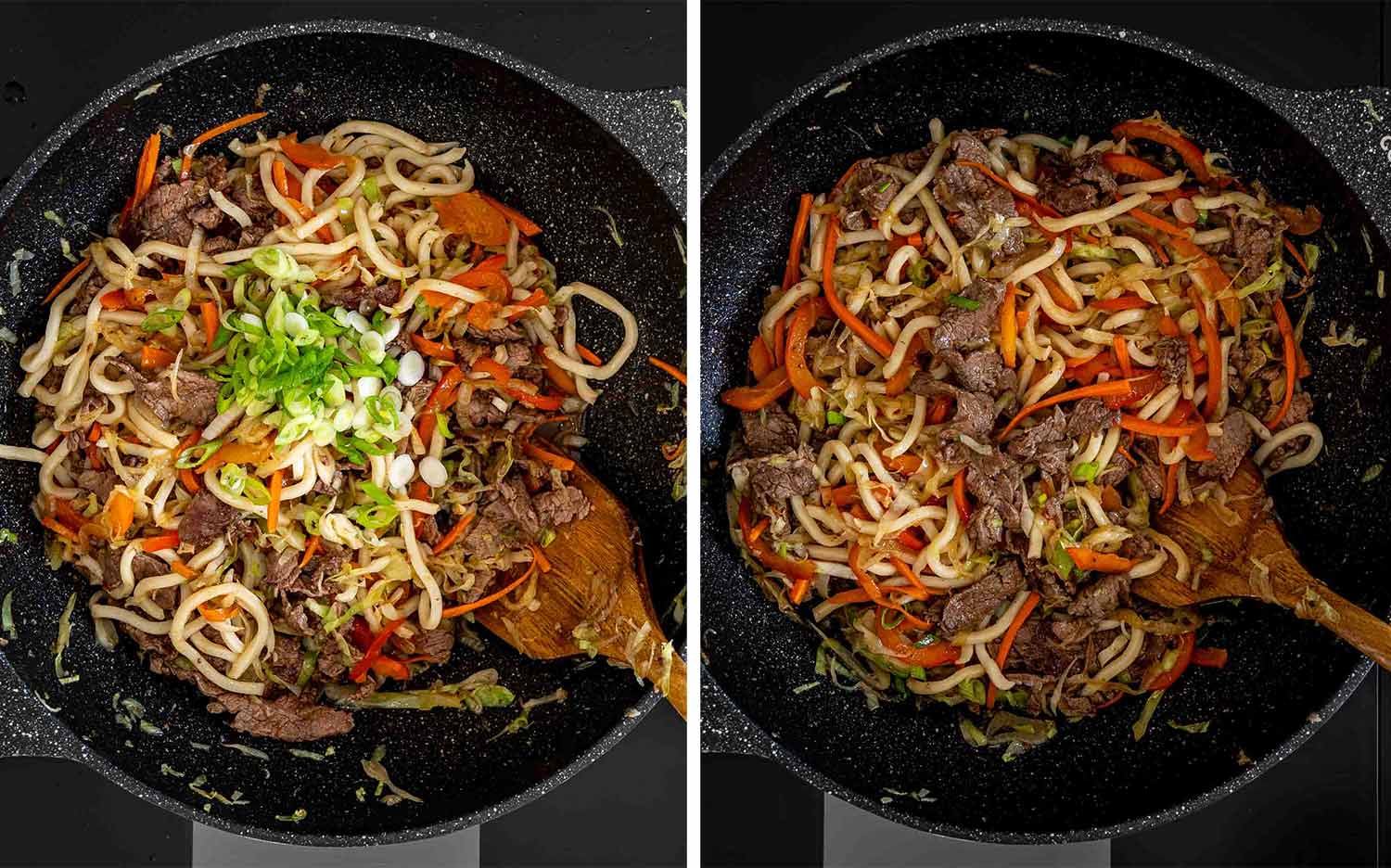
Finish: Stir in most of the green onions, then pile it into bowls and scatter the rest over the top with the sesame seeds. Eat it now, while the noodles still have their bounce.
Udon are thick, chewy Japanese wheat noodles, and they’re wonderfully bouncy in a way no Italian pasta is. They’re also sold in 4 different forms that behave completely differently, which is why this trips people up.
- Frozen udon is the best of them, and it isn’t close. It’s par cooked and flash frozen, so the texture is nearly identical to fresh. Straight from the freezer into boiling water for about a minute, then drain. These are in the freezer section of any Asian grocery and increasingly in regular ones.
- Fresh or refrigerated udon comes vacuum sealed in a plastic pouch, usually in blocks. A quick soak or blanch in hot water is all it needs to separate the strands. Good option, widely available.
- Shelf stable udon sits in the same pouch but lives in the regular aisle, often labeled something like straight to wok. It works, but it’s the softest and gummiest of the bunch, and it’s the one most likely to break apart when you toss it. If this is what you’ve got, be gentle with it.
- Dried udon behaves like regular pasta. It needs a real boil for 8 to 10 minutes. The texture ends up a bit firmer and less bouncy than the others, which some people prefer.
Whatever you buy, undercook it slightly. It’s going back into a hot pan for another couple of minutes at the end, and udon goes from perfect to mush faster than you’d like.
This is the step that decides whether your beef is tender or chewy, and it’s worth 5 extra minutes.
- Put the steak in the freezer for 15 to 20 minutes first. Not to freeze it, just to firm it up. Soft raw beef squashes and slips under a knife, and you end up with thick uneven pieces. Firm beef slices cleanly and thinly. This single trick is the difference between restaurant beef and sad beef.
- Find the grain and cut across it. Look at the surface of the steak and you’ll see the muscle fibers running in one direction, like the grain in wood. You want your knife going perpendicular to those lines, not along with them. Cutting with the grain leaves long fibers intact and gives you beef you have to chew like gum.
- Thin means thin. About an eighth of an inch. These pieces are going to sear in 2 to 3 minutes in a screaming hot pan, so anything thicker won’t cook through in time.
Flank steak is my first choice because the grain is so obvious you can’t really get it wrong. Sirloin works. Skirt steak works. So does a cheap stir fry pack, as long as you slice it yourself and don’t trust whatever the store did.
- No oyster sauce? Hoisin is the closest easy swap, though it’s sweeter, so cut the brown sugar in half if you use it. For a vegetarian version, mushroom stir fry sauce is made for exactly this and is genuinely excellent. In a pinch, 2 tablespoons soy sauce plus a teaspoon of sugar and a splash of fish sauce gets you most of the way.
- No mirin? Dry sherry or sake plus half a teaspoon of sugar is the standard swap. Rice vinegar with a pinch of sugar works too, though you lose a little of the roundness. Avoid rice wine vinegar as a straight 1 to 1, since mirin is sweet and the vinegar is not.
- No Worcestershire? Soy sauce with a tiny splash of balsamic covers the tang. It won’t be quite the same, because Worcestershire has tamarind and anchovy going on, but it’ll be good.
- Different protein. Chicken thighs sliced thin, pork loin, shrimp, or firm tofu all work on the same timing, except shrimp which needs about 90 seconds and should come out early.
- Different noodles. Yakisoba noodles, ramen, lo mein or even spaghetti in an emergency. You’ll lose the chew that makes udon udon, but the sauce doesn’t care.
- Different vegetables. Mushrooms, snow peas, bok choy, broccoli, bean sprouts. Just keep the total volume roughly the same and add the quick cooking things later.
These are the same idea with a different noodle, and people mix them up constantly.
Yaki just means grilled or fried. So yaki udon is fried udon and yakisoba is fried soba. Same dish family, same sauce family, same vegetables, same technique.
The difference is in the noodle and it matters more than you’d think. Udon is thick, round, soft and chewy, made from wheat flour and water. Yakisoba noodles are thinner, springier, and more yellow, because despite the name they’re not buckwheat soba at all, they’re wheat noodles made with an alkaline agent, closer to ramen.
Yakisoba sauce tends to be sweeter and more Worcestershire forward. Yaki udon sauce leans savory and soy heavy. The two overlap plenty and nobody will arrest you for crossing over.
If you want the thinner springier version, my Yakisoba is right here.
Fridge: Up to 3 days in an airtight container. Be warned, udon firms up and clumps badly when it’s cold. This is normal and fixable.
Reheating: A hot skillet with a splash of water, tossing until the noodles loosen and steam through, takes about 3 minutes. The water is what separates the strands. Microwaving works in a pinch but you’ll get softer noodles and no char.
Freezing: I wouldn’t. Cooked udon comes out of the freezer mushy and the vegetables go limp. This is a 30 minute recipe. Just make it again.
- Hoisin Chicken Udon Noodles – Same noodle, sweeter sauce, chicken instead of beef. One of the most made recipes on this site.
- Yakisoba – The thinner springier cousin, with a sweeter sauce.
- Mongolian Beef Ramen Noodles – Sticky, sweet, garlicky, and done in about the same time.
- Beef and Mushroom Stir Fry – Same slicing technique, no noodles, serve it over rice.
- Asian Ground Beef Noodles – Over on Craving Home Cooked, and the cheapest weeknight version of this whole idea.
- Asian Green Beans – If you want something on the side, these take 10 minutes.
Before You Begin! If you make this, please leave a review and rating letting us know how you liked this recipe! This helps our business thrive & continue providing free recipes.
This Beef Yaki Udon recipe tosses thick chewy udon noodles with seared steak and charred vegetables in a glossy soy and oyster sauce. One pan, 30 minutes, and better than takeout noodles that arrive steamed.
For the sauce
- 3 tablespoons soy sauce (low sodium)
- 2 tablespoons oyster sauce
- 1 tablespoon mirin
- 1 tablespoon brown sugar
- 1 tablespoon Worcestershire sauce
- 1 teaspoon toasted sesame oil
For the stir fry
- 14 ounces udon noodles
- 1 pound flank steak (or sirloin, thinly sliced against the grain)
- 2 tablespoons vegetable oil
- 1 large onion (sliced)
- 2 cups green cabbage (shredded)
- 1 medium carrot (julienned)
- 1 medium red bell pepper (thinly sliced)
- 3 cloves garlic (minced)
- 1 tablespoon fresh ginger (grated)
- 3 green onions (sliced)
- 1 tablespoon sesame seeds
Before You Begin! If you make this, please leave a review and rating letting us know how you liked this recipe! This helps our business thrive & continue providing free recipes.
-
In a small bowl, whisk together the 3 tablespoons soy sauce, 2 tablespoons oyster sauce, 1 tablespoon mirin, 1 tablespoon brown sugar, 1 tablespoon Worcestershire sauce, and 1 teaspoon sesame oil. Set it within reach of the stove, since this dish moves fast.
-
Prepare the 14 ounces udon noodles according to the package directions. If using fresh or frozen udon, a quick soak or blanch in hot water is enough to loosen them. Drain and set aside.
-
Heat 1 tablespoon of the vegetable oil in a large skillet or wok over high heat until it shimmers. Add the 1 pound sliced beef in a single layer and sear for 2 to 3 minutes, until browned but not fully cooked through. Transfer it to a plate.
-
Add the remaining 1 tablespoon oil to the pan. Add the sliced onion, 2 cups cabbage, julienned carrot, and sliced red bell pepper. Stir fry for 3 to 4 minutes, until crisp tender and starting to char at the edges.
-
Add the 3 cloves minced garlic and 1 tablespoon grated ginger and stir for 30 seconds, until fragrant.
-
Return the beef to the pan, then add the udon noodles and pour in the sauce. Toss everything together for 1 to 2 minutes, until the noodles are hot and coated in the glossy sauce.
-
Stir in most of the green onions, then serve topped with the remaining green onions and the 1 tablespoon sesame seeds.
- Prep everything before you turn the stove on. The cooking takes about 8 minutes start to finish and there’s no pausing once it begins.
- Freeze the steak for 15 to 20 minutes before slicing. Firm beef slices thin and clean. Soft beef squashes under the knife.
- Slice against the grain, at about an eighth of an inch. This is the single biggest factor in whether the beef is tender.
- Undercook the noodles slightly. They get another 2 minutes in the pan at the end, and udon turns to mush quickly.
- Keep the heat high and don’t crowd the pan. Char is the goal. If things go watery and soft, the pan was too cool or too full. Cook in batches if you need to.
- Toss with tongs, not a spoon. A lifting motion keeps the noodles intact. Stirring tears them.
Serving: 1servingCalories: 454kcal (23%)Carbohydrates: 46g (15%)Protein: 34g (68%)Fat: 16g (25%)Saturated Fat: 4g (25%)Polyunsaturated Fat: 5gMonounsaturated Fat: 5gTrans Fat: 0.04gCholesterol: 68mg (23%)Sodium: 1336mg (58%)Potassium: 748mg (21%)Fiber: 5g (21%)Sugar: 13g (14%)Vitamin A: 3608IU (72%)Vitamin C: 58mg (70%)Calcium: 97mg (10%)Iron: 3mg (17%)
Notice: Nutrition is auto-calculated for your convenience. Where relevant, we recommend using your own nutrition calculations.
My beef came out tough. What went wrong?
Can I make this vegetarian?
My noodles broke apart. Why?
Why is everything soggy instead of charred?
Can I use a regular skillet instead of a wok?
Is this spicy?