2026 has been a year of uncertainty for consumers and businesses, including quick-service restaurants and fast-casual dining.
The consumer price index (CPI) was up more than 4 percent year-over-year, the largest yearly increase since April 2023, with food away from home prices jumping 3.5%. This can directly impact consumers’ willingness to eat out and pay higher prices, further snowballing into other complications for restaurants, including staffing and operations as margins get tighter.
During periods of change, franchises need trusted technology solutions that eliminate more headaches than they create. They must show return on investment, scale seamlessly, and improve customer experience and loyalty: elements that directly correlate to better operations and bottom lines. If not, they become an unnecessary burden.
Digital signage is a strategic enterprise solution that delivers on those needs.
What is digital signage?
When signage is mentioned in QSR and fast casual conversations, it can evoke thoughts of broken-down menu boards or static and dated print ads. Times are changing fast.
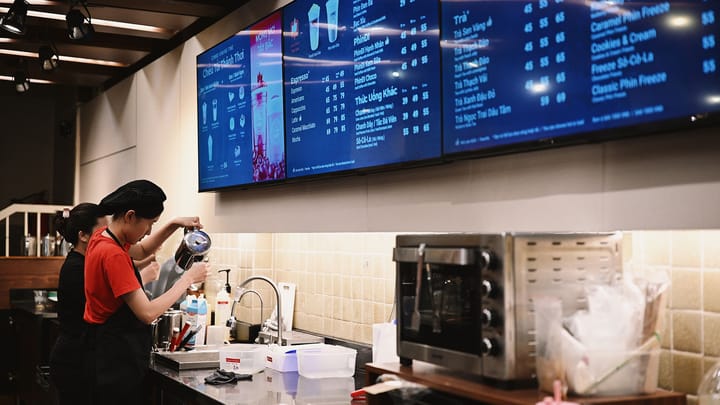
Modern digital signage is a dynamic visual solution, taking shape in many forms and serving several purposes that drive business results. From drive-thru and captivating menu boards to self-service kiosks and back-of-house displays, these multifaceted tools help franchises compete for foot traffic and strengthen customer loyalty, all while improving real-time engagement.
Any time there’s an opportunity to share information, create an experience, or rethink visual storytelling, digital signage has a part to play.
Signage builds customer awareness
Getting customers in the door and flooding drive-thru lanes with vehicles is one of the biggest challenges for QSRs and restaurants. Digital signage helps businesses course-correct.
Thanks to technological advancements, digital signage can deliver crisper, more readable content for QSRs and fast-casual restaurants to attract customers. Purpose-built media players, or embedded system-on-a-chip (SoC) solutions, help power these displays, unlocking a breadth of visual, audio, and operational capabilities. This not only helps QSRs and fast-casual restaurants compete for business amongst competitors, but also better positions them in broader shopping and commercial environments.
Digital signage doesn’t just stop at attracting customers, as it can engage customers and keep attention throughout the entire journey. Modern digital signage systems are dynamic content engines that deliver content to influence order decisions, encourage customer loyalty sign-ups, or promote the sharing of highly social experiences across consumer channels.
Seamless management across all displays
Digital signage management doesn’t have to be complex. There has been notable progress in developing remote device management solutions to ensure that franchises can keep their signage fleets updated and secure for content scheduling and playback.
Managing signage fleets remotely at scale offers several operational benefits. This includes grouping devices by location, region, or function for specialized content or updates, and achieving notable time and cost reductions by remotely rebooting and reconfiguring devices in bulk. The same applies to partners that these restaurants work with, who can recommend solutions that are easy to deploy and manage from a single location. This limits downtime and maintains content effectiveness without added headaches.
Investing in digital signage extends well beyond the initial installation. Functionality such as remote management, for example, ensures owners get the most out of their signage fleets and are positioned to support business objectives.
AI as an operational game-changer
The promises of AI extend far and wide, with many predictions focused on the future. What QSRs and fast-casual restaurants should know is that AI tools for digital signage can start driving real business progress right now.
There are digital signage media players (both the external players and those as part of SoC solutions) that can run AI on the edge, directly on the device. Those that have dedicated neural processing units (NPUs), for example, enable partners and integrators to run AI applications directly on the device, without latency and performance issues. For restaurant operators, this means that they can run reliable, secure digital signage networks that can scale with the business as new AI tools become available.
AI gaze detection has emerged as a prominent early use case, enabling businesses to measure customer engagement with digital signage by recognizing when patrons pay attention. This brings several benefits tied to actionable data insights. For example, in-store content and displays can detect moments when the customer engages, disengages, or interacts with information. This informs businesses which content prompts positive, revenue-generating behaviors and reveals which promos, branded assets, and order screens lose customer attention. This level of insight leads to better decisions.
Additionally, AI can make remote device management more intuitive. Today, restaurants can leverage AI to support diagnostics and system navigation, improving the usability and functionality of management solutions. This helps restaurants avoid content disruption that can impact operations and customer experiences. With device management scaling to hundreds or thousands of displays across local, regional, or national franchise signage networks, that’s a real impact on business outcomes and margins.
As the stakes and pressure continue to rise for QSR and fast-casual restaurants, businesses need solutions they can trust to get a return on investment. With its dependability and impact on customer and staff experience, digital signage is a necessary tool for many successful franchises.
Investing in signage is an investment in a business, and franchises can leverage this technology to compete for foot traffic, benefit from AI, and manage the content and displays that generate revenue and brand awareness.