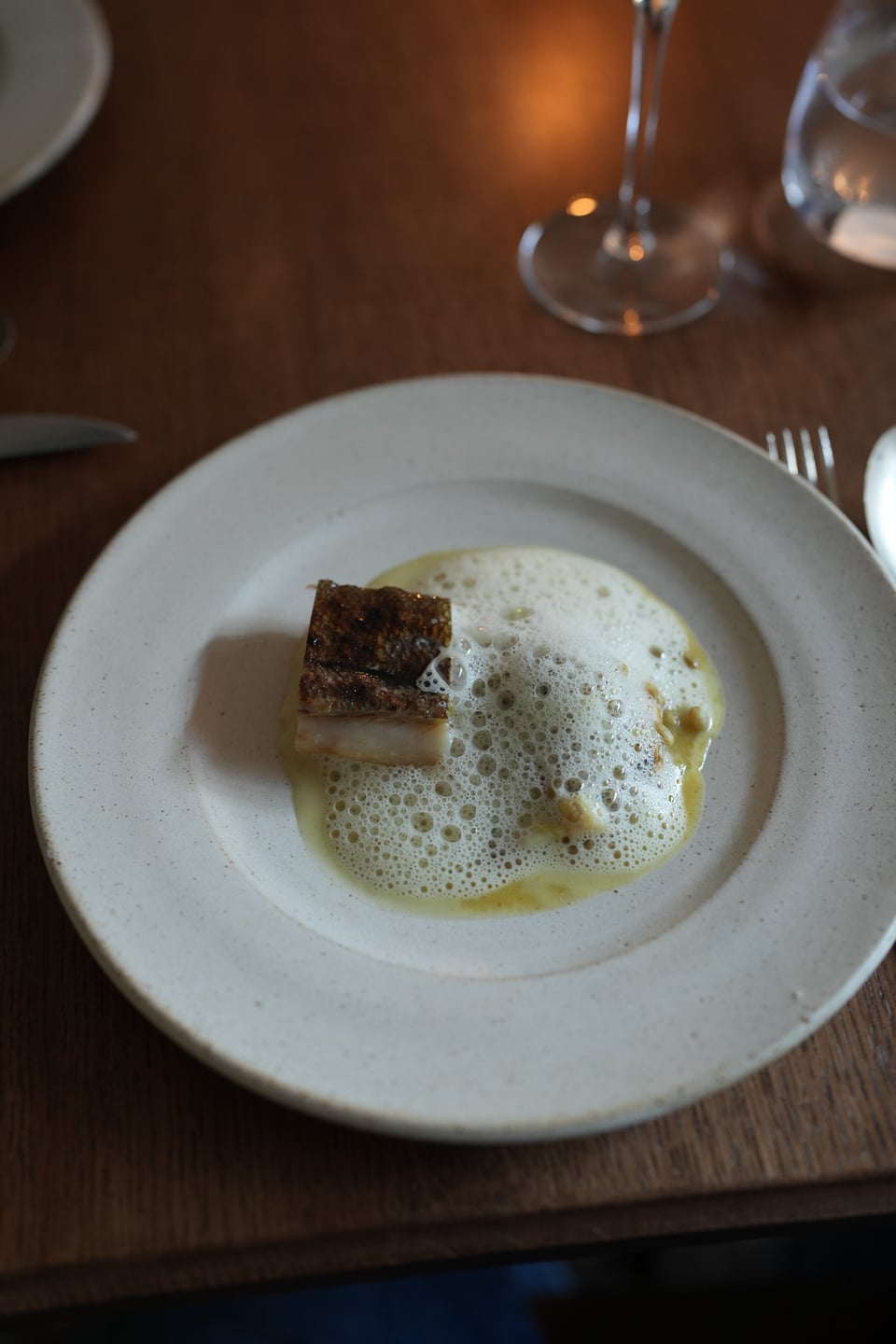
The opening of Waterhouse has been an opportunity to redefine what we wanted to be as a restaurant, and my ambitions as a chef. The Water House Project was somewhere we could experiment, treating it almost like a studio, a place to explore our creativity and develop ideas. Waterhouse feels like the culmination of those years of experience, with a clearer sense of identity.
We’re now looking at food through the lens of the North East, and Northumberland specifically where I was grew up. The new space also gives us much more flexibility. The kitchen is less domestic in its design and the offering is more diverse: people can pop in for a glass of wine and a snack at the bar, or experience the full tasting menu in the restaurant. It feels more relaxed and natural.
Our tastes have changed over the past few years, as have dining habits generally. On Sundays, for example, we’re also introducing a more sharing-style menu, which gives us the opportunity to create heartier dishes designed for sharing at the table. Having that flexibility is great for us as a restaurant, but it also gives diners different ways into the world we’re creating at Waterhouse.
Honestly, It’s all hard! I think the biggest thing you underestimate is how much has to happen before you can even think about the food and the menu, that’s one of the last things to come together. For us, licensing and negotiating with neighbours was probably the most significant challenge, alongside planning the kitchen, organising deliveries and simply getting everything and everyone into the right place at the right time.
The biggest thing you underestimate is how much has to happen before you can even think about the food and the menu.
There were also things you could never anticipate. Our kitchen was being delivered from Germany and, two weeks before opening, it ended up being held at a depot that was refusing to release it. I drove down to Deptford and sat there for eight hours because I wasn’t leaving until the entire kitchen was on a lorry. That same day, we had a call to say there had been four objections to our licence, so we were suddenly trying to understand how to mediate those too.
Alongside all of that, you’re managing a team through a major transition, keeping people motivated and bringing everyone with you into a completely new space. You can plan an opening as much as possible, but there are always going to be things you simply couldn’t have anticipated.
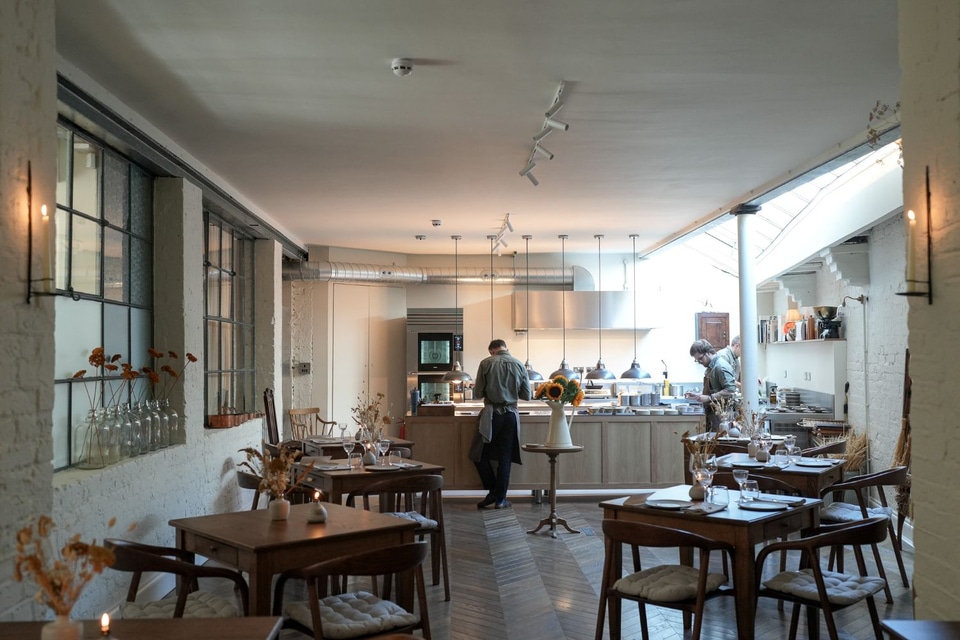
People don’t really ever see everything that happens in the background. The restaurant is open four days a week, but my wife Trish and I haven’t had a day off in several months. There’s always something that needs doing, the admin, accounting, communicating with guests, tastings, managing the team, the to do list is never ending!
The restaurant is open four days a week, but my wife Trish and I haven’t had a day off in several months.
As business owners, there’s always a sense that you could be doing more, and I think you underestimate how consuming that can become. You never completely switch off from it. Opening is obviously the most intense period, but even once you’re open, it isn’t enough to simply run a good restaurant and give people a great experience. You also have to find a way of communicating what you’re doing and why you’re doing it. The challenge is making sure that feels genuine and remains connected to what’s actually happening in the restaurant.
I suppose it’s not just about the food, it’s about how the restaurant feels. We wanted to create something familiar and generous, an extension of how we feel about Northumberland and how we want people to feel when they come into the restaurant. I probably romanticise it, but to me it’s a place where people have more time for each other, where communities are important and people understand the value of relationships.
We already have regulars who have built genuine relationships with different members of the team, and that feels particularly special in a restaurant in London. With the food, it’s about creating dishes that feel familiar to me from home, or using ingredients that have a connection to the region but pushing them in a contemporary and creative way. Northumberland perhaps doesn’t have the same clearly defined culinary identity as somewhere like France, so part of what interests me is discovering what Northumbrian cooking can look like today.
My most formative food memory is probably from a bike ride with my family when we came across a hare that had been clipped by a car. The initial idea was to bury it, but it happened to be Good Friday and my dad is a biology teacher, so he decided to dissect it. We then cooked it and made jugged hare, which was my Grandpa’s favourite, and shared it together on Easter Sunday.