This post may contain affiliate links. Please read my disclosure policy.
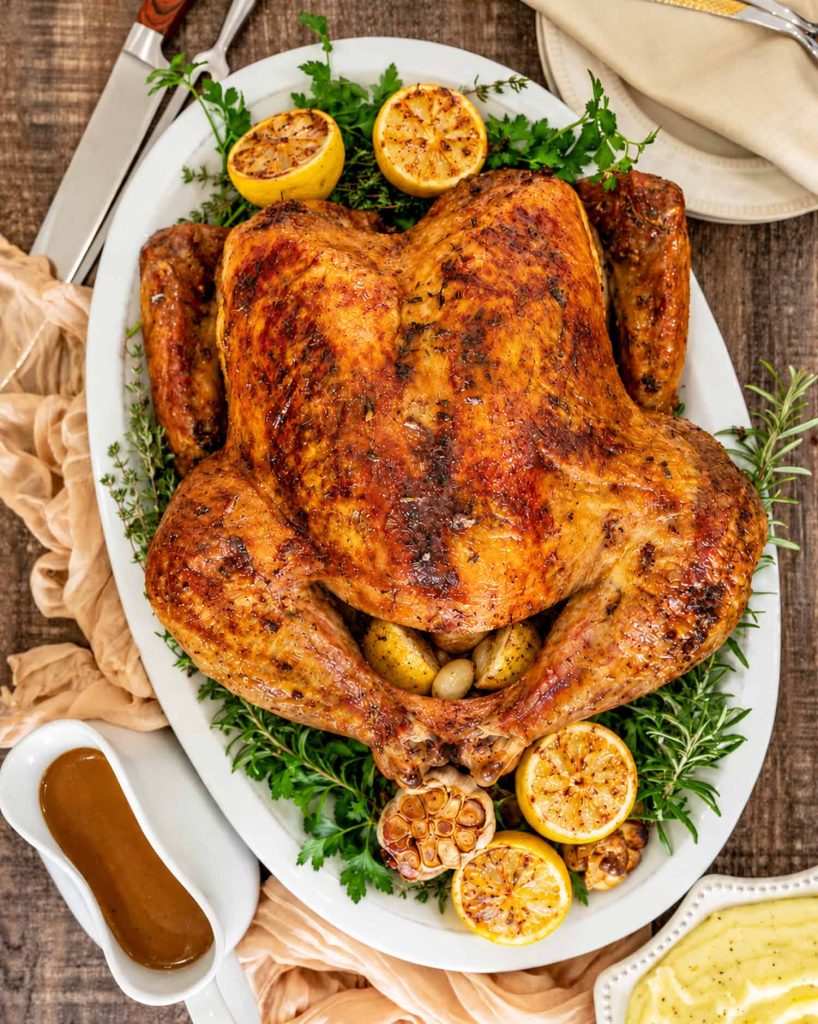
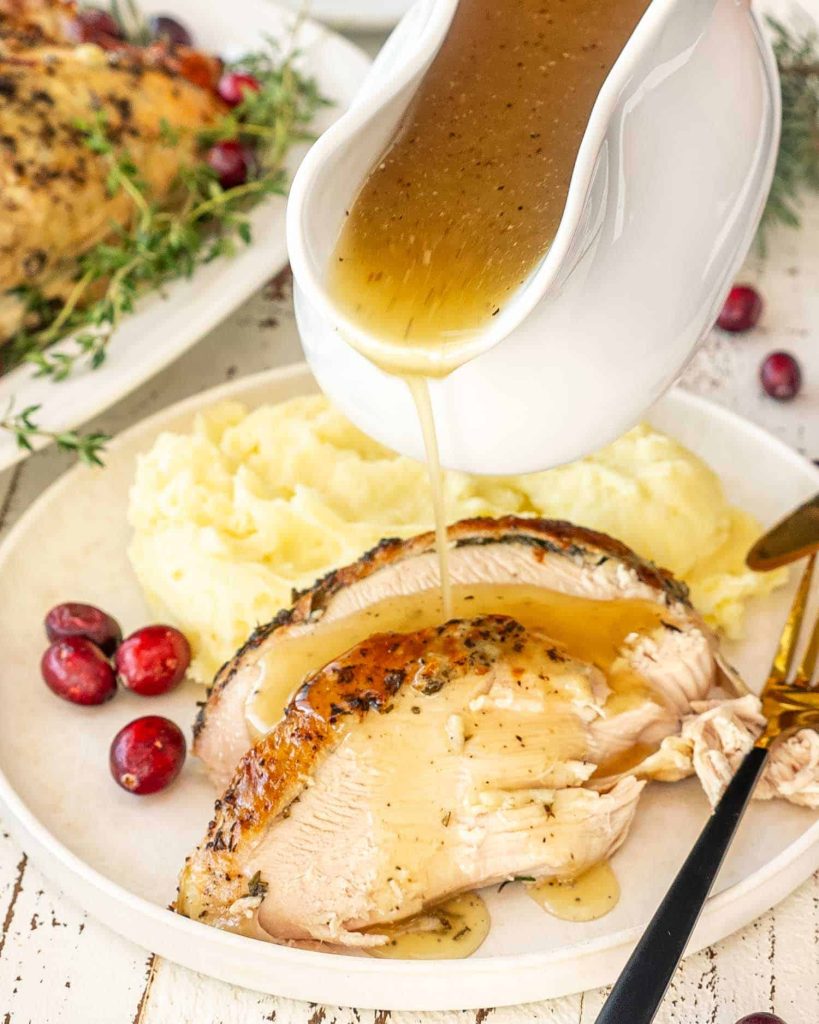
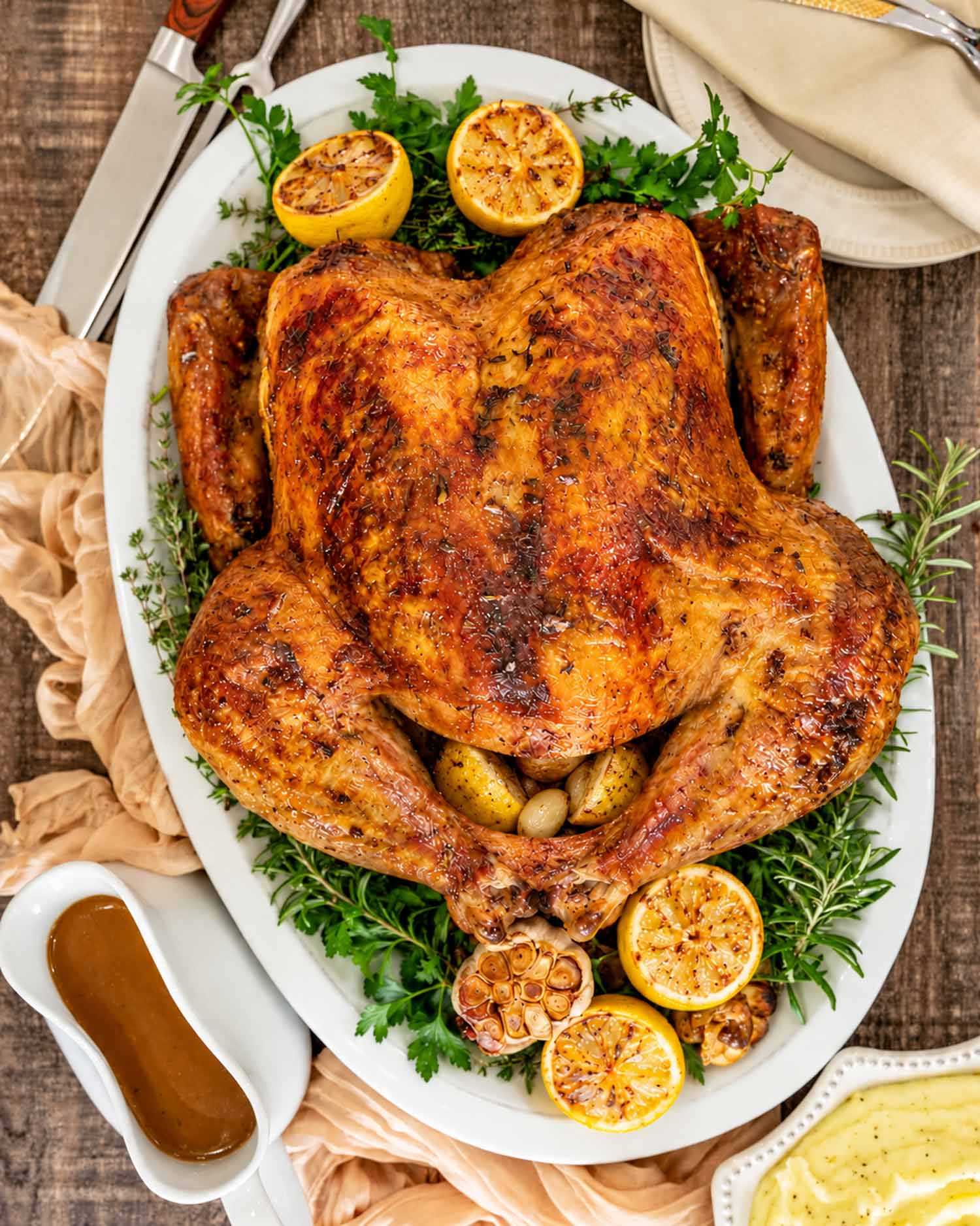
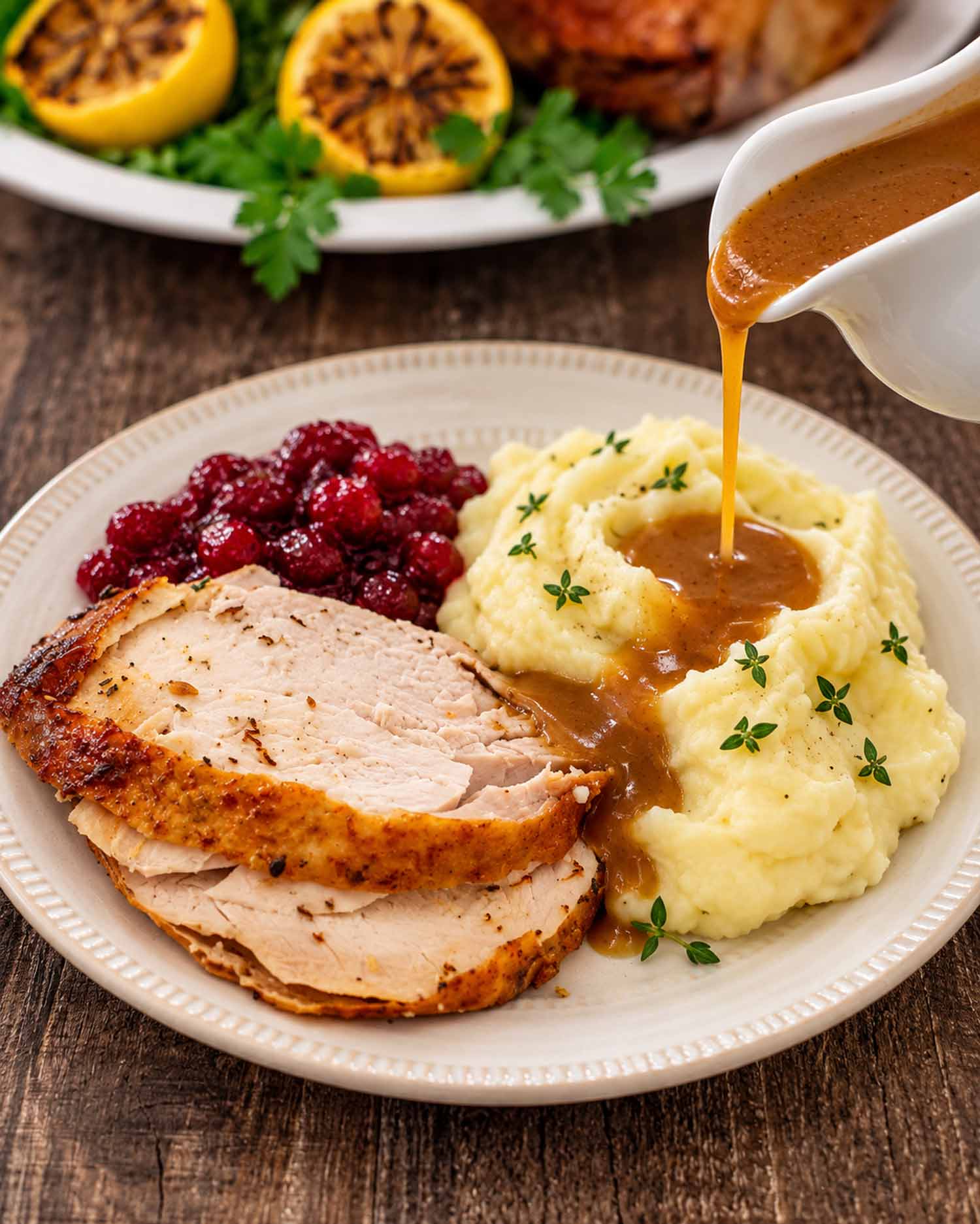
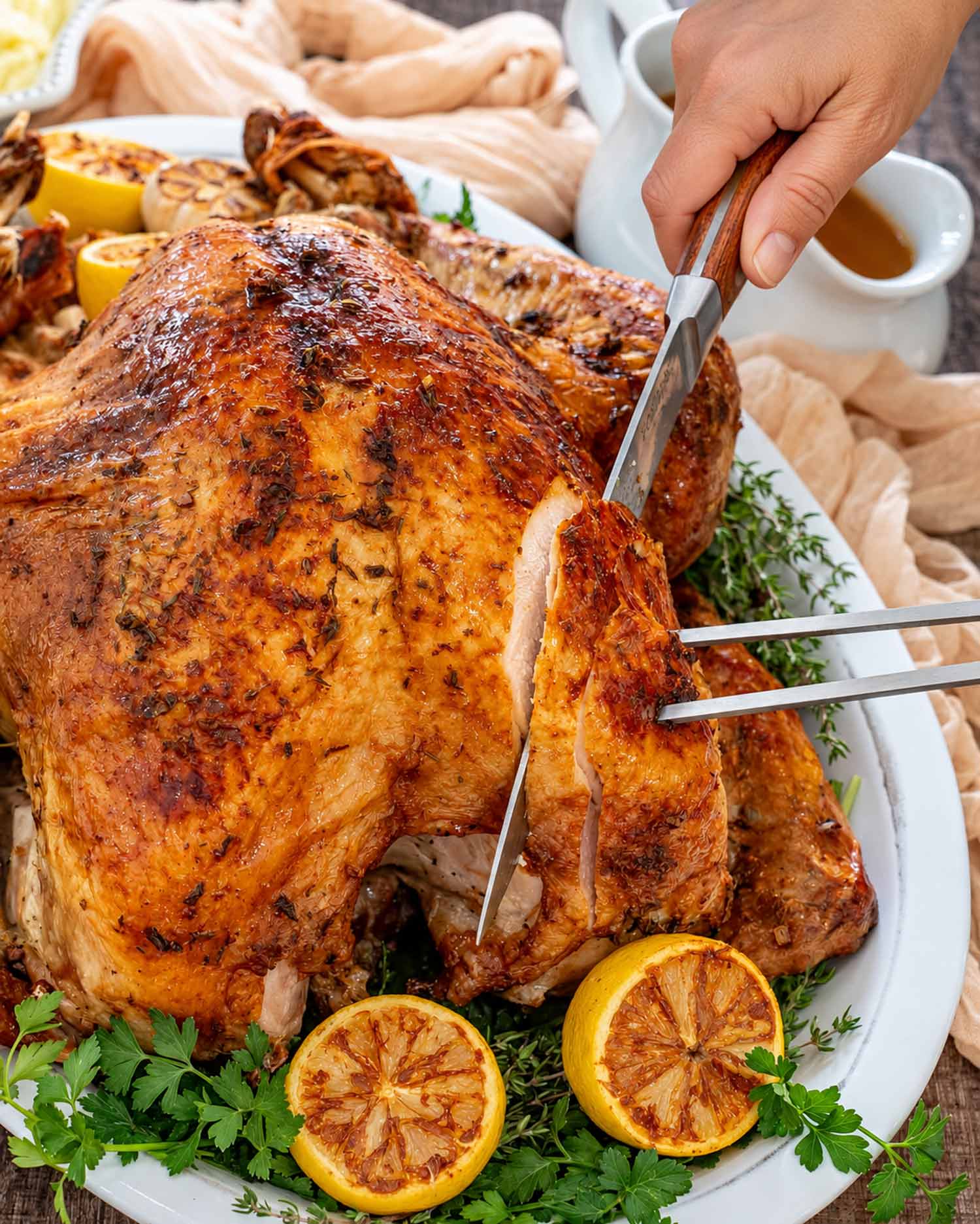
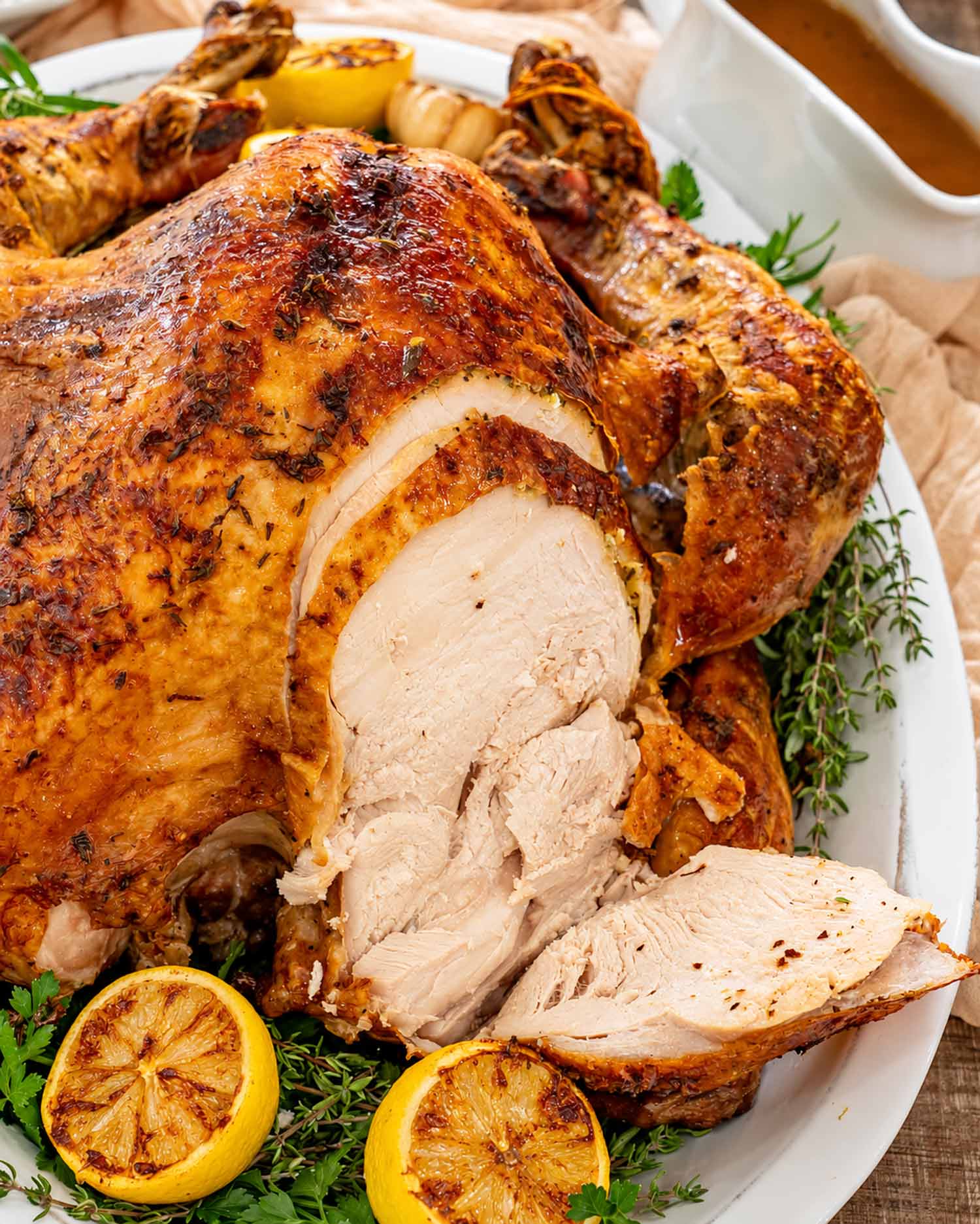
This Dry Brined Roast Turkey is juicy, seasoned all the way through, and has crispy golden skin. You salt it the night before, tuck garlic herb butter under the skin, and roast it uncovered. Then you make the best gravy of your life from the pan drippings!
Table of Contents
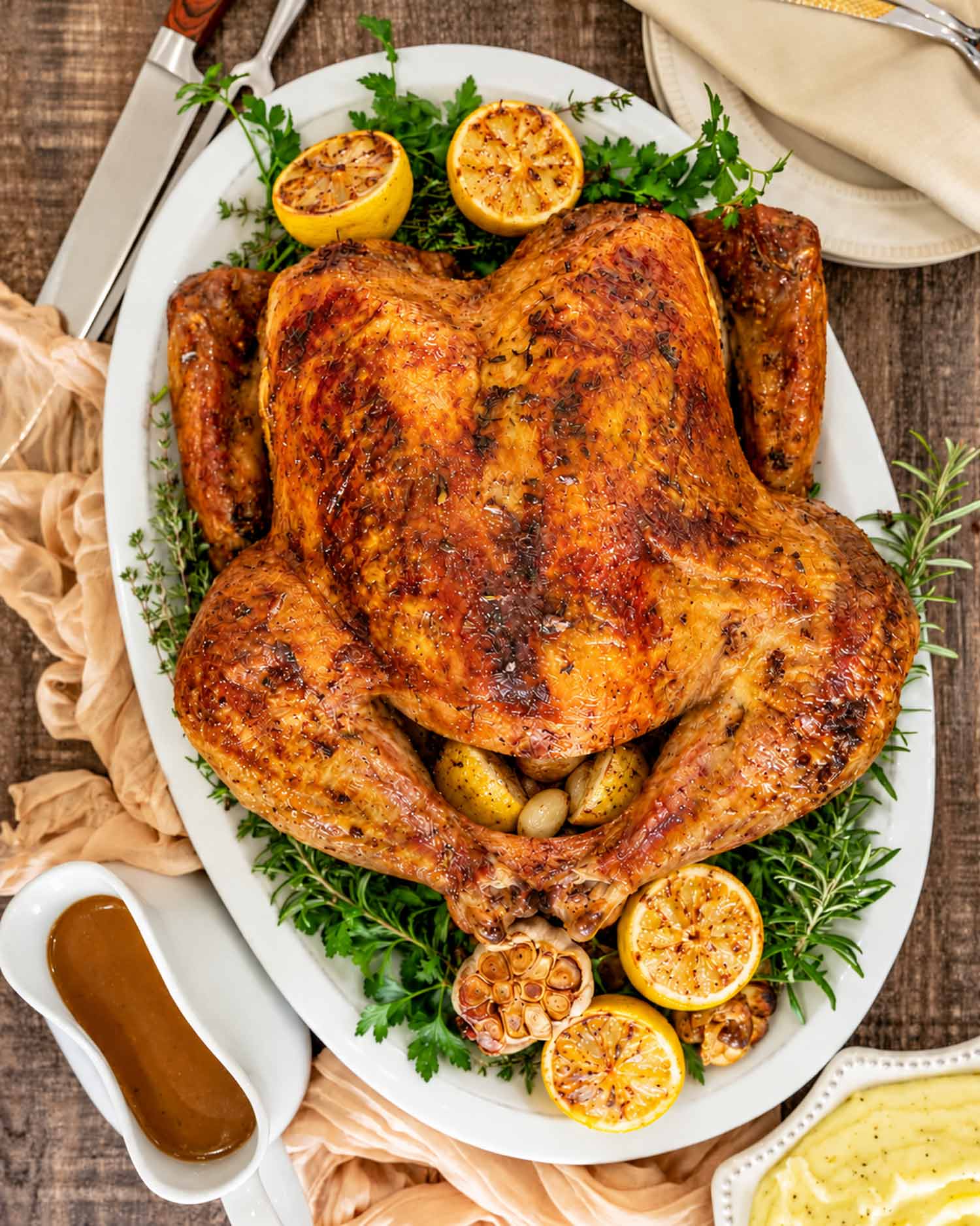
My roast turkey recipe has been on JoCooks since 2014. I grew up watching my mom roast turkeys, and I’ve been cooking for you since 2011. Turkey and I go way back.
My old recipe covered the turkey with foil for 2 hours. This year I changed almost everything. I salted it the night before, put butter under the skin, skipped the foil, and pulled it out based on temperature.
Full honesty: at 1 in the morning, I was standing in my kitchen wondering if I’d used too much salt. Then I went to bed. That felt like a problem for morning Jo.
It wasn’t a problem. The turkey was juicy and so tasty, and it wasn’t salty at all.
Remo took one bite and said it was the best turkey I’ve ever made. Then he asked what I did differently. We know what I did differently. It’s all right here.
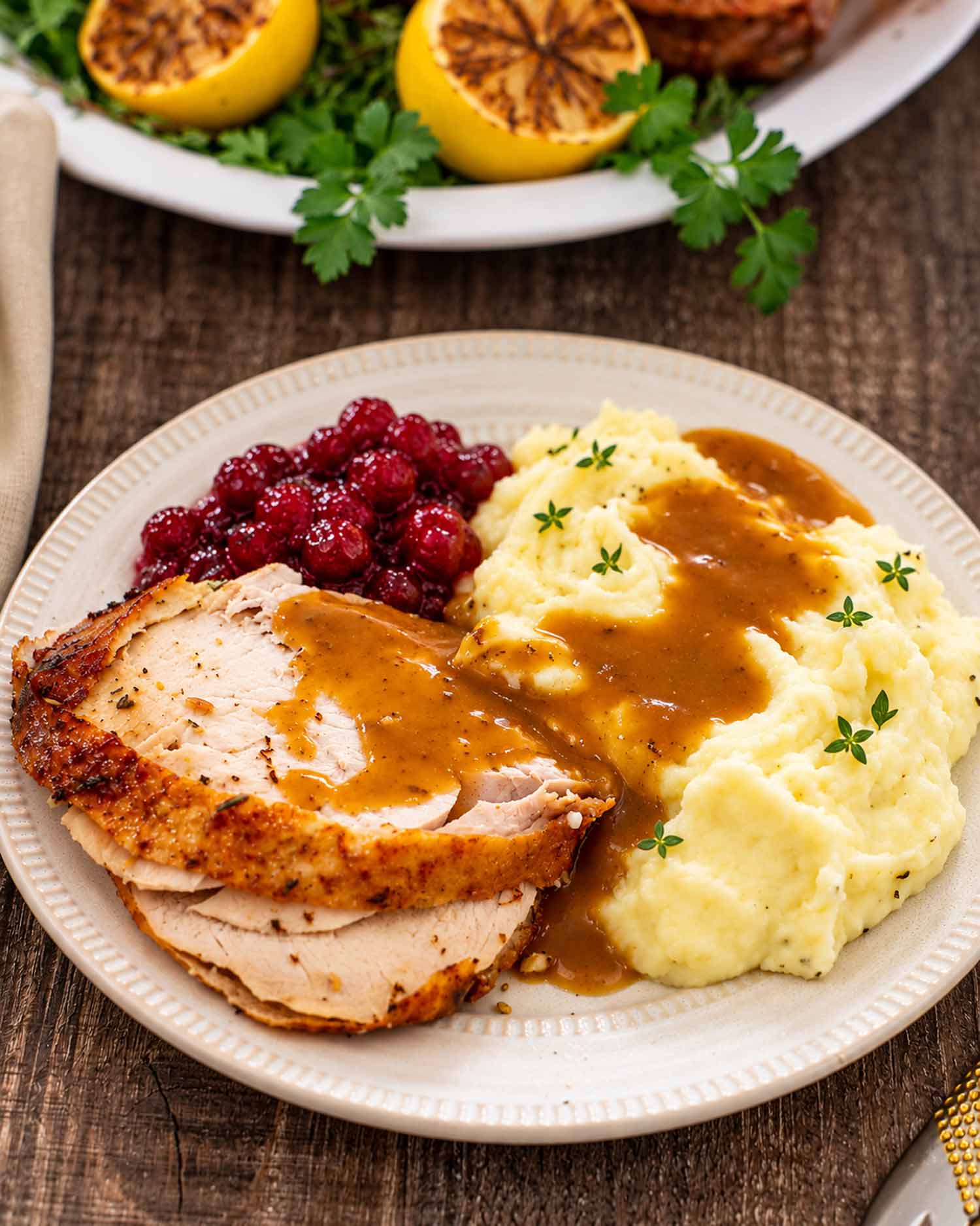
He also said the gravy was the best he’s ever had. I’m choosing to believe him.
Dry brining just means salting the turkey a day ahead. No bucket, no salt water, no wrestling a wet bird at the sink.
First, the salt pulls a little moisture out of the meat. That moisture dissolves the salt. Over the next several hours, the salty liquid soaks back in. You get turkey that’s seasoned all the way through, not just on the skin.
Salt also helps the meat hold on to its juice while it roasts. And because the turkey sits uncovered in the fridge, the skin dries out. Dry skin browns and gets crispy in the oven.
The next morning, there was barely any salt left on my turkey. It had soaked into the meat, and you could taste it in every bite.
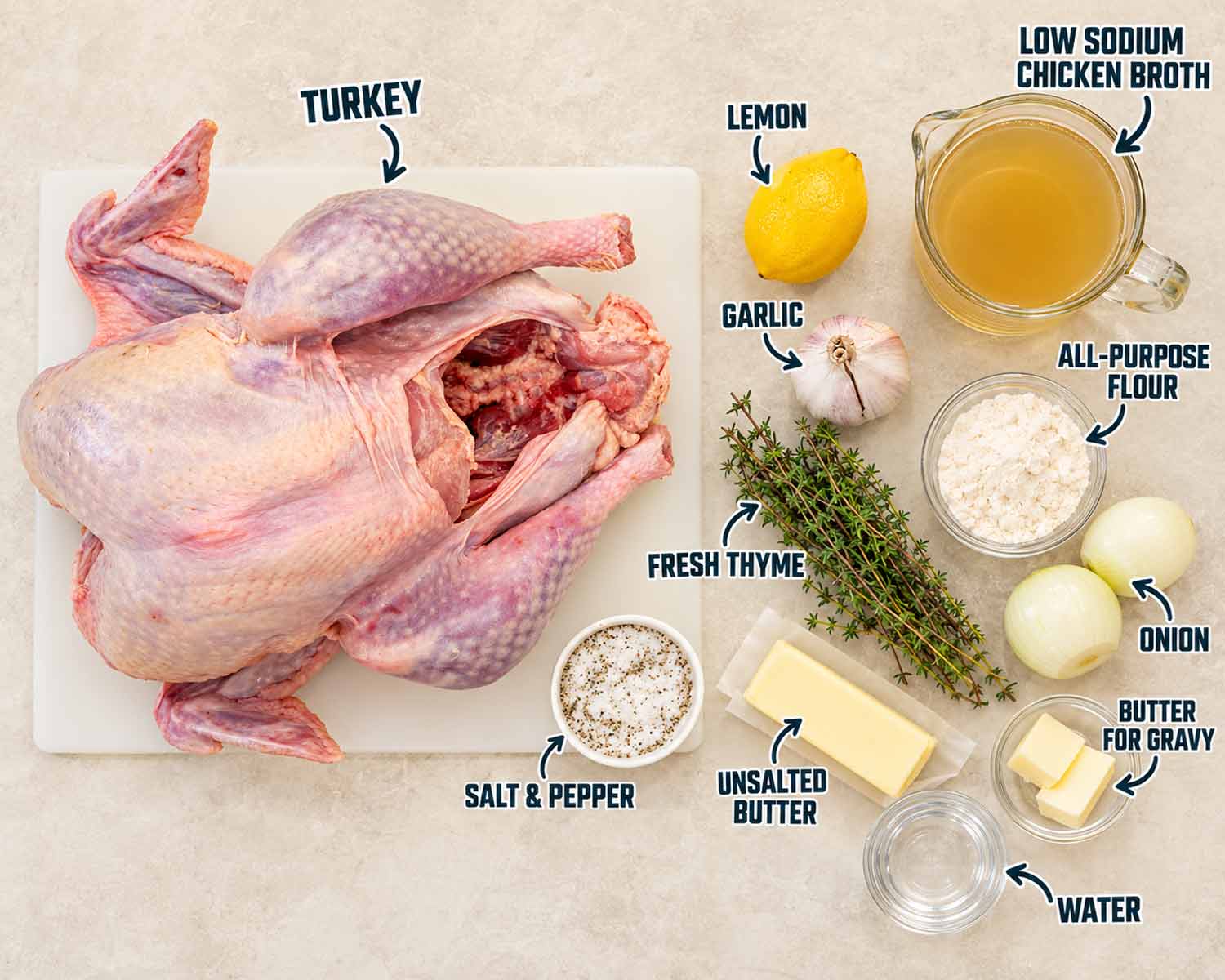
- Turkey (14 pounds / 6.5 kg): Thawed completely. Mine was 6.5 kg, a little over 14 pounds. Check the label before you buy. If it says self basting, kosher, or “enhanced,” it’s already salted, so skip the dry brine.
- Table salt (3 tablespoons): Plain old table salt. It sounds like a lot, but it’s spread over a 14 pound bird, and it wasn’t salty at all. Using kosher salt? Use 6 tablespoons Diamond Crystal or 3 tablespoons plus 2 teaspoons Morton.
- Black pepper (1½ teaspoons): Mixed in with the salt so it goes everywhere the salt does.
- Unsalted butter (¾ cup): Softened, not melted, so it stays put under the skin. Use unsalted, because the turkey is already seasoned.
- Lemon (1 large): The zest goes in the butter for brightness, and the lemon quarters go in the cavity.
- Fresh thyme (1½ tablespoons chopped, plus 10 sprigs): Chopped leaves in the butter, sprigs in the cavity. Rosemary or sage work too. This is when Remo’s greenhouse came in handy, I had lots of fresh herbs.
- Garlic (12 cloves): Mince 6 for the butter and leave 6 whole for the cavity. Yes, 12 cloves. It’s a big bird.
- Onion (1 large): Quartered and tucked into the cavity with the lemon and herbs. It flavors the drippings, which means it flavors the gravy. Mine were small onions, so I used 2.
- Water (1½ cups): Goes in the bottom of the roasting pan so the drippings don’t burn. Use water, not broth, because the drippings are already seasoned.
- Low sodium chicken broth (2 cups): For the gravy. Low sodium keeps the gravy from getting too salty. Turkey broth works too.
- Unsalted butter and all purpose flour (6 tablespoons each): These make the roux that thickens the gravy. You can swap the butter for the turkey fat you skim off the drippings.
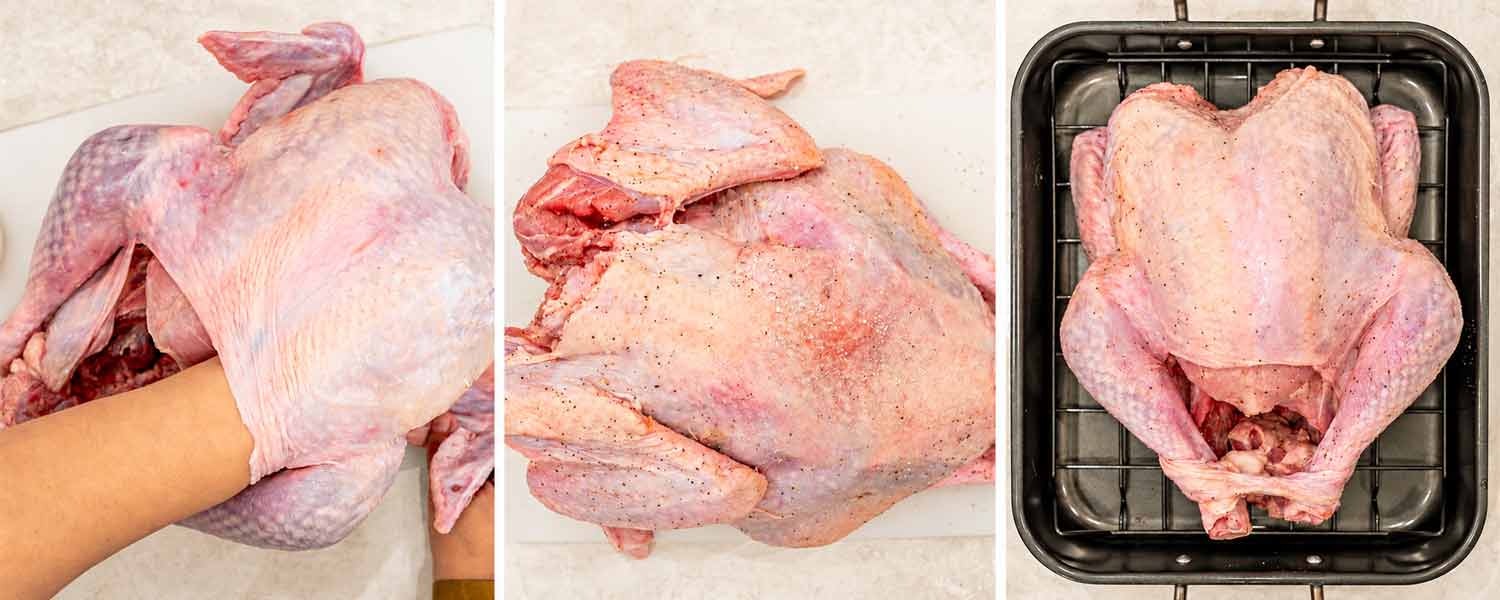
Salt the turkey the night before: Remove the neck and giblets and pat the turkey very dry with paper towels. Mix the 3 tablespoons salt with the 1½ teaspoons pepper. Loosen the breast skin with your fingers and sprinkle about a third of the mix right on the breast meat. Sprinkle the rest from about a foot above the bird over the outside, the legs, the back, and a little inside. Set it on a rack in your roasting pan and refrigerate it uncovered for 12 to 24 hours. Don’t rinse it.
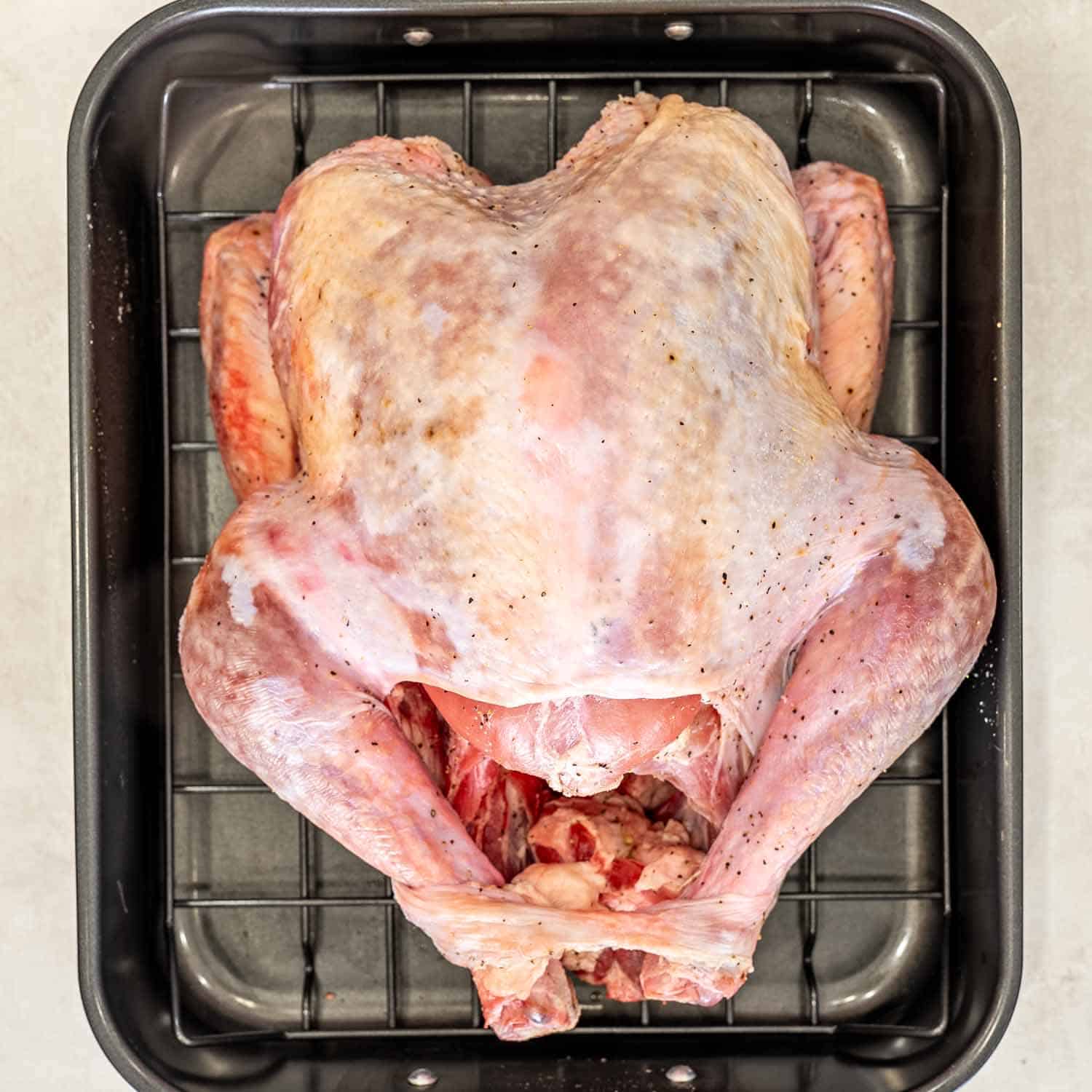
Let it sit out: An hour before roasting, take the turkey out of the fridge. Brush off any salt crystals you can still see and pour out any liquid in the pan. Heat the oven to 350°F (175°C) with a rack in the lower third.
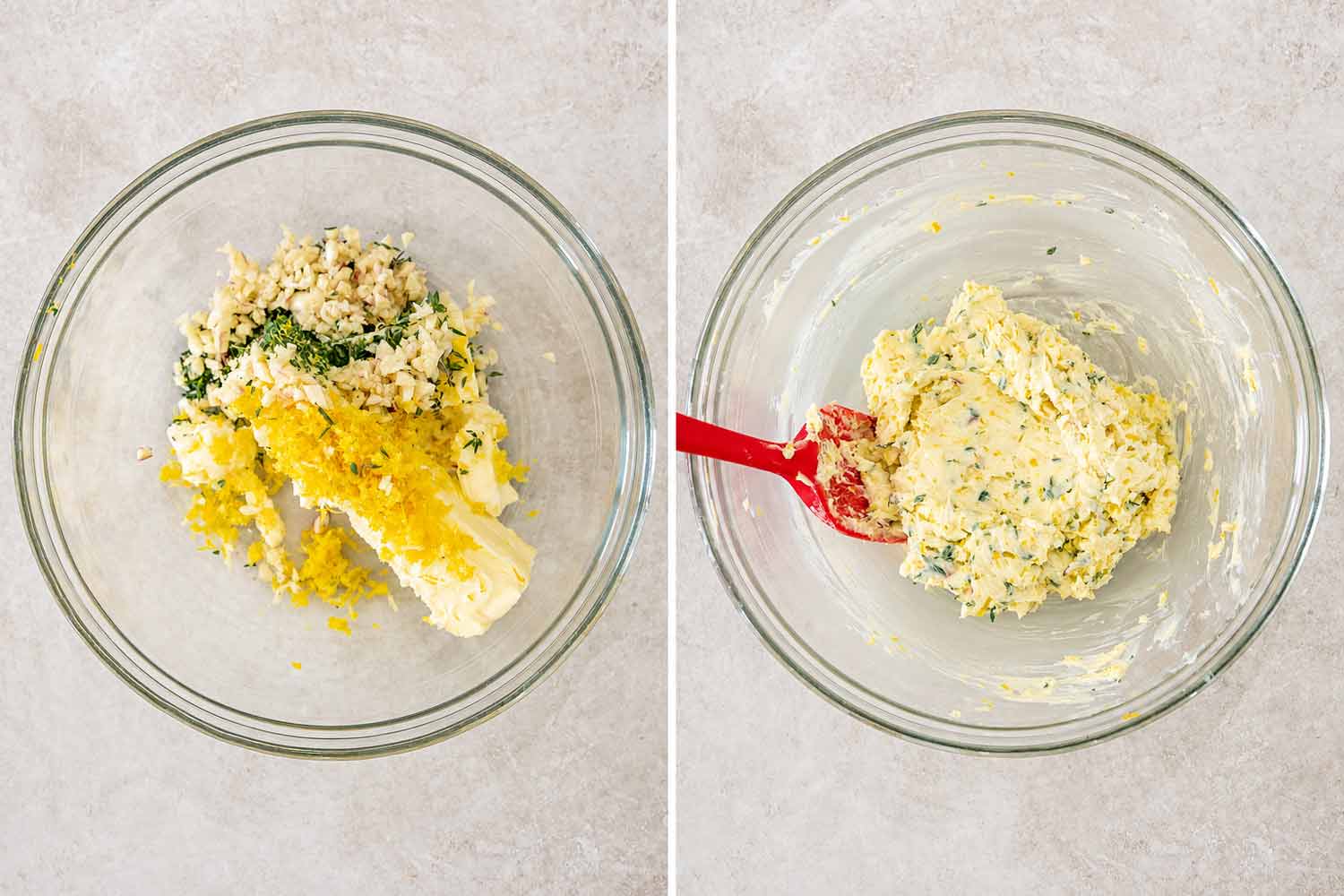
Make the garlic herb butter: Mix the ¾ cup soft butter with the lemon zest, the chopped thyme, and the 6 minced garlic cloves.
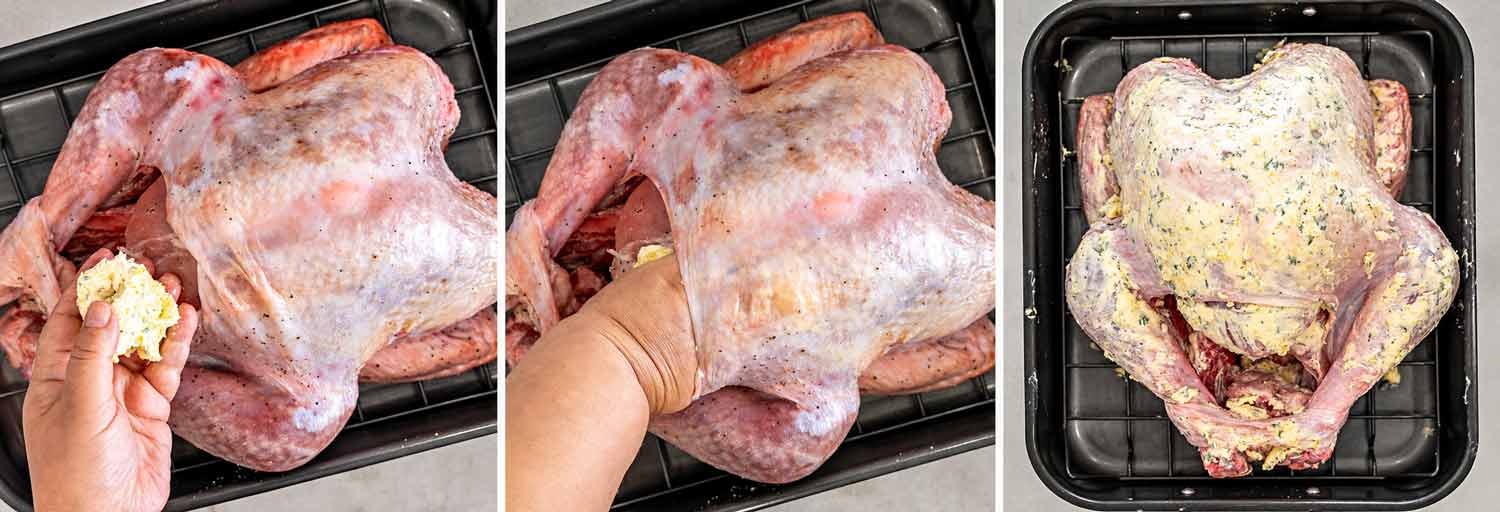
Butter under the skin: Pat the skin dry again. Push about two thirds of the butter under the breast skin and spread it over the meat. Rub the rest all over the outside. Don’t add any more salt.
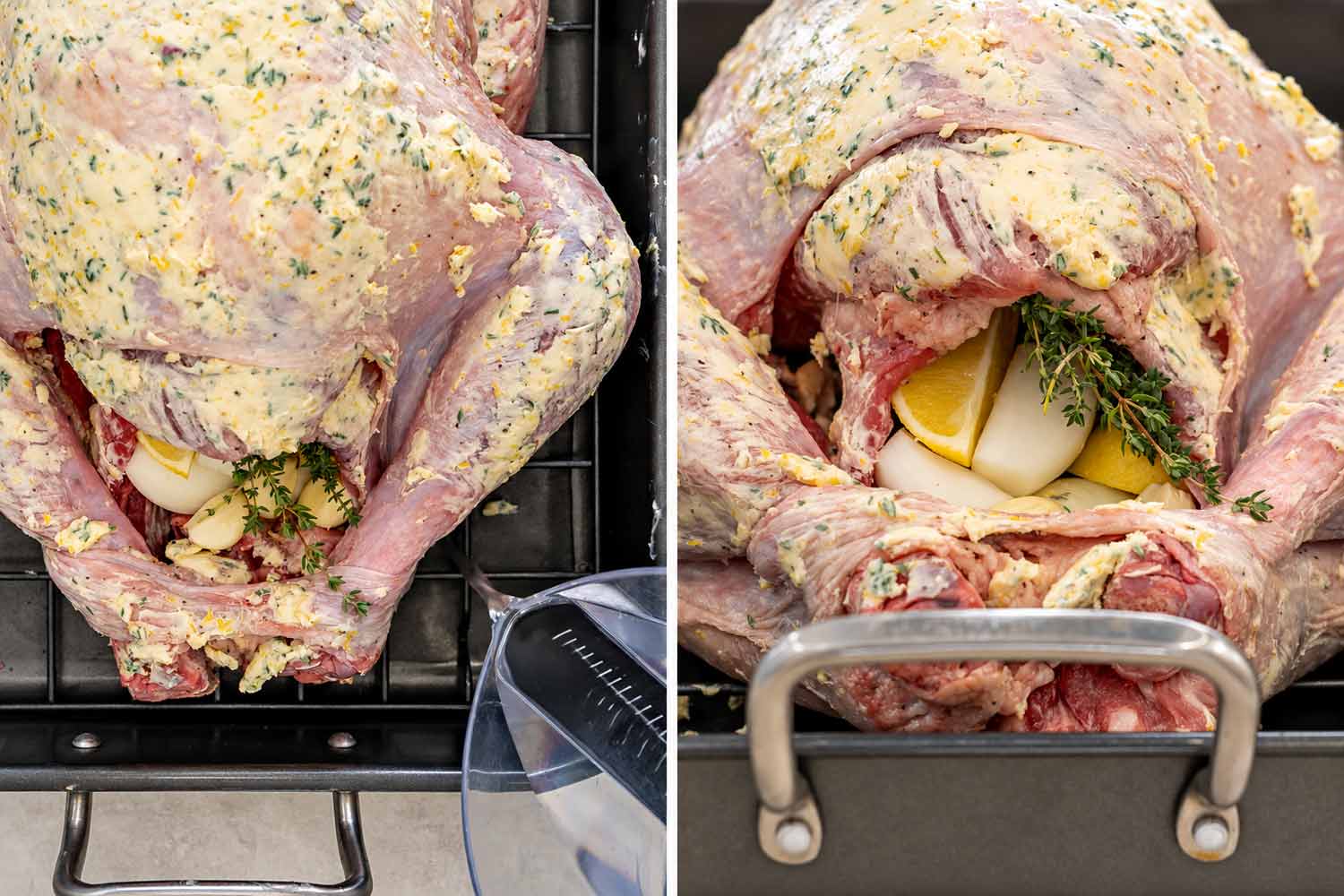
Fill the cavity and tie the legs: Loosely fill the cavity with the onion, lemon quarters, the 6 whole garlic cloves, and the thyme sprigs. Tuck the wing tips under and tie the legs together with kitchen twine.
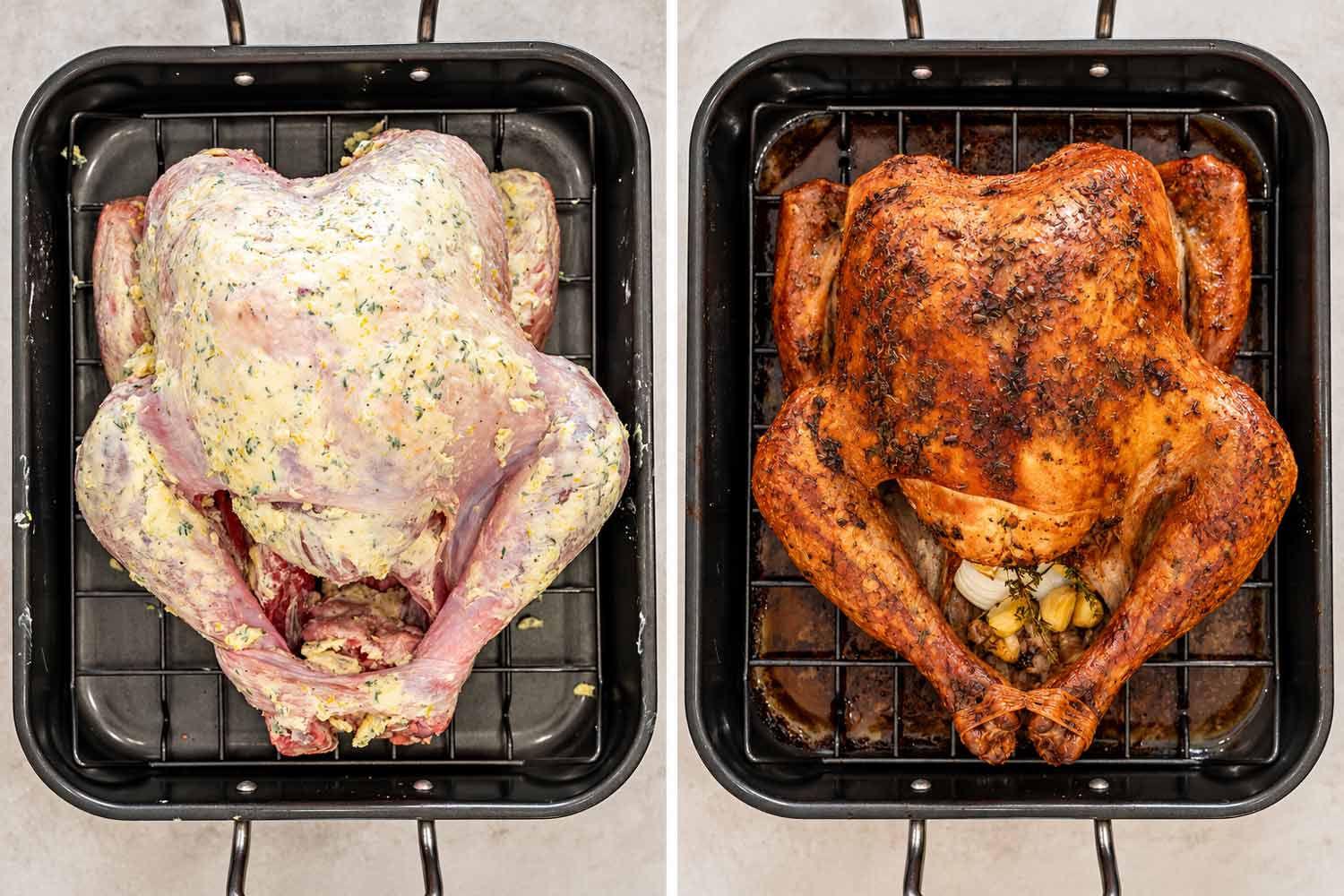
Roast it uncovered: Pour the 1½ cups water into the roasting pan and set the turkey on its rack on top. Roast uncovered. If the breast browns too fast, lay a loose piece of foil over just the breast. I had to do this after about 2 hours in the oven.
Check the temperature: My 14 pound turkey took 3 hours and 15 minutes. Start checking at about 2¾ hours, since every oven and every bird is a little different. It’s done when the breast reads 160°F (71°C) and the thigh reads 175 to 180°F (79 to 82°C).
Rest the turkey: Move it to a cutting board, tent it loosely with foil, and let it rest for 40 minutes. The breast will climb to 165°F (74°C) while it rests. Carve once it gets there.
This is the gravy Remo says is the best he’s ever had. It’s made right from the pan.
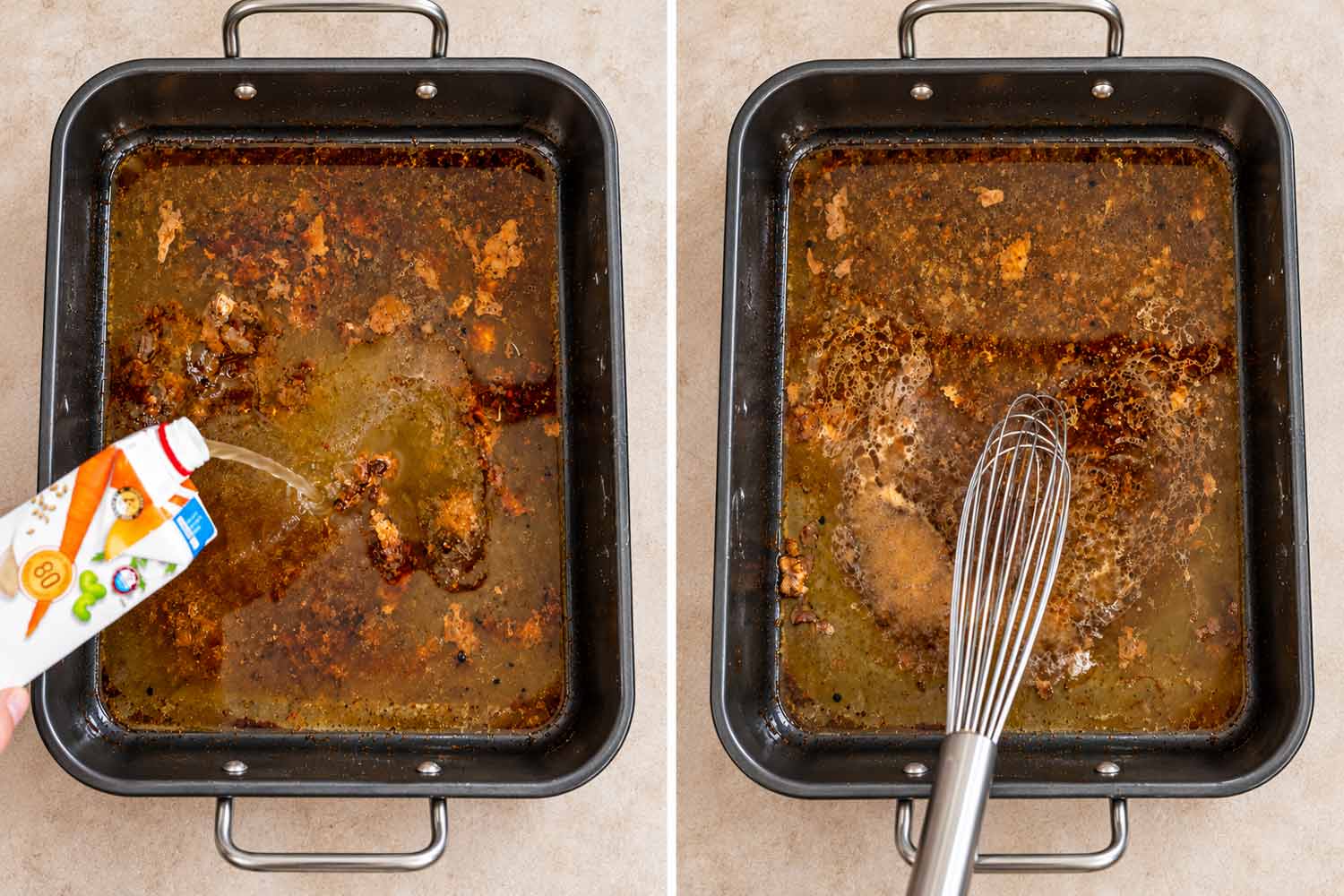
Scrape the pan: Pour about ½ cup of the broth into the hot roasting pan and scrape up all the browned bits. Those bits are pure flavor.
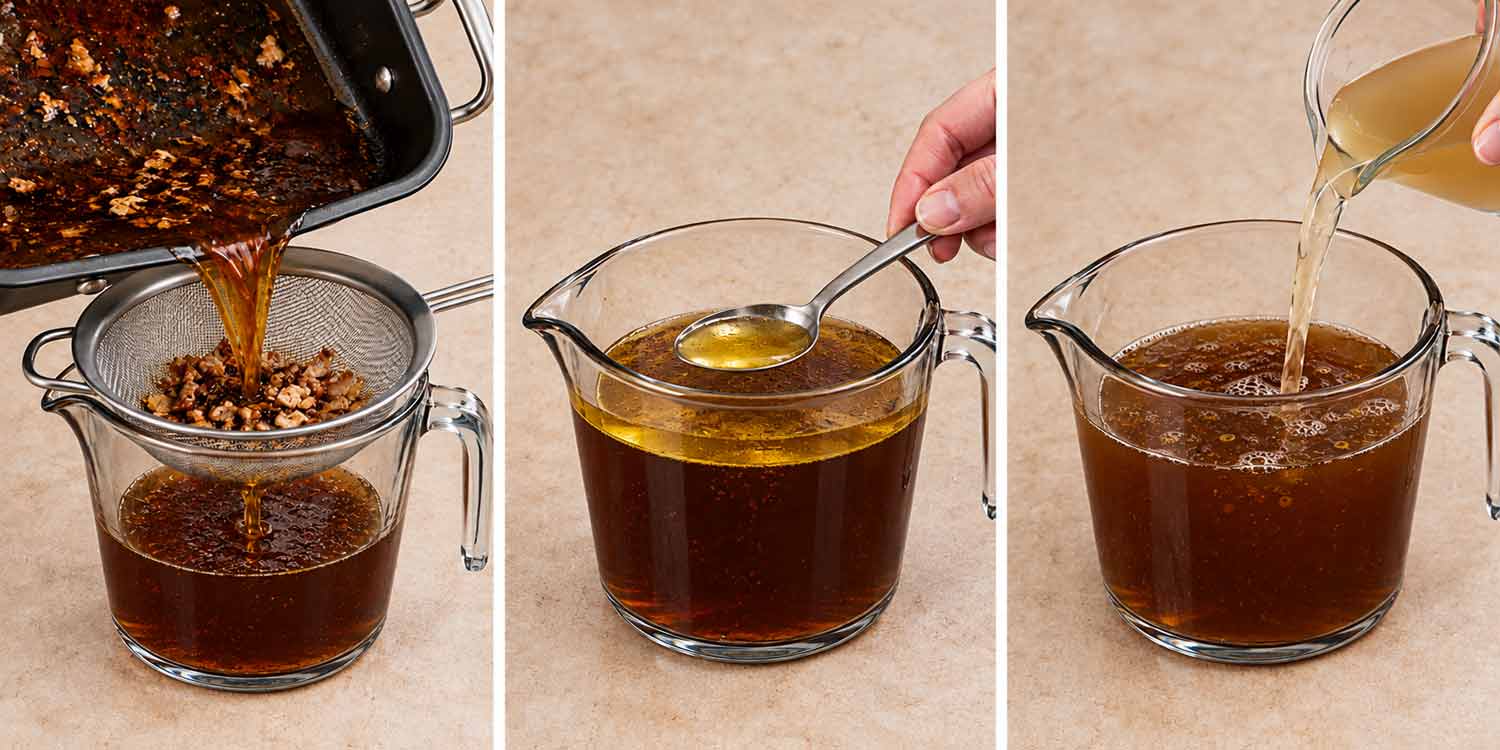
Strain and skim: Pour everything through a fine mesh sieve into a big measuring cup. Let it sit for a few minutes and spoon off the fat on top. Add broth until you have 3 cups.
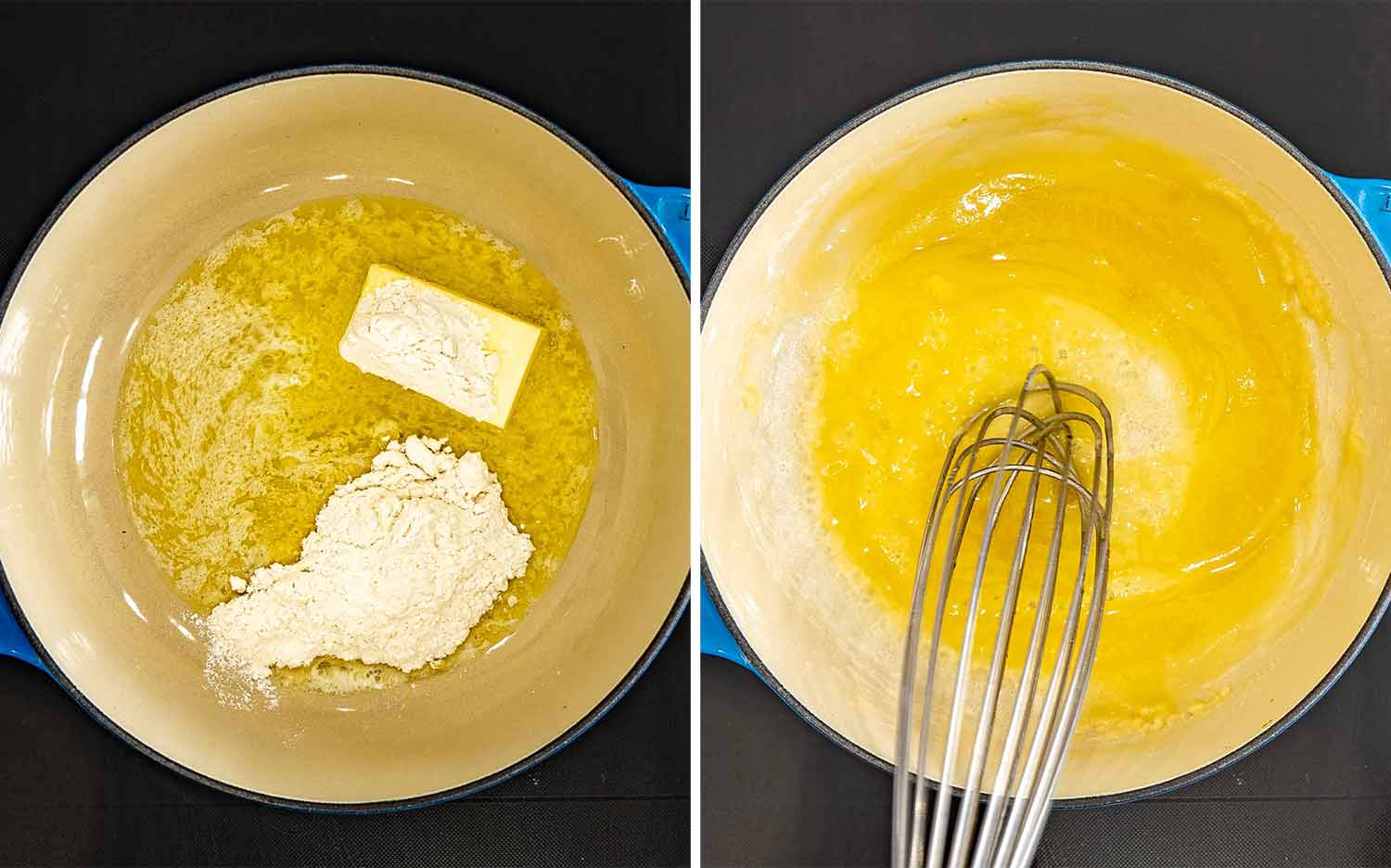
Make the roux: Melt the 6 tablespoons butter in a saucepan over medium heat. Whisk in the 6 tablespoons flour and cook for about a minute to get rid of the raw flour taste.
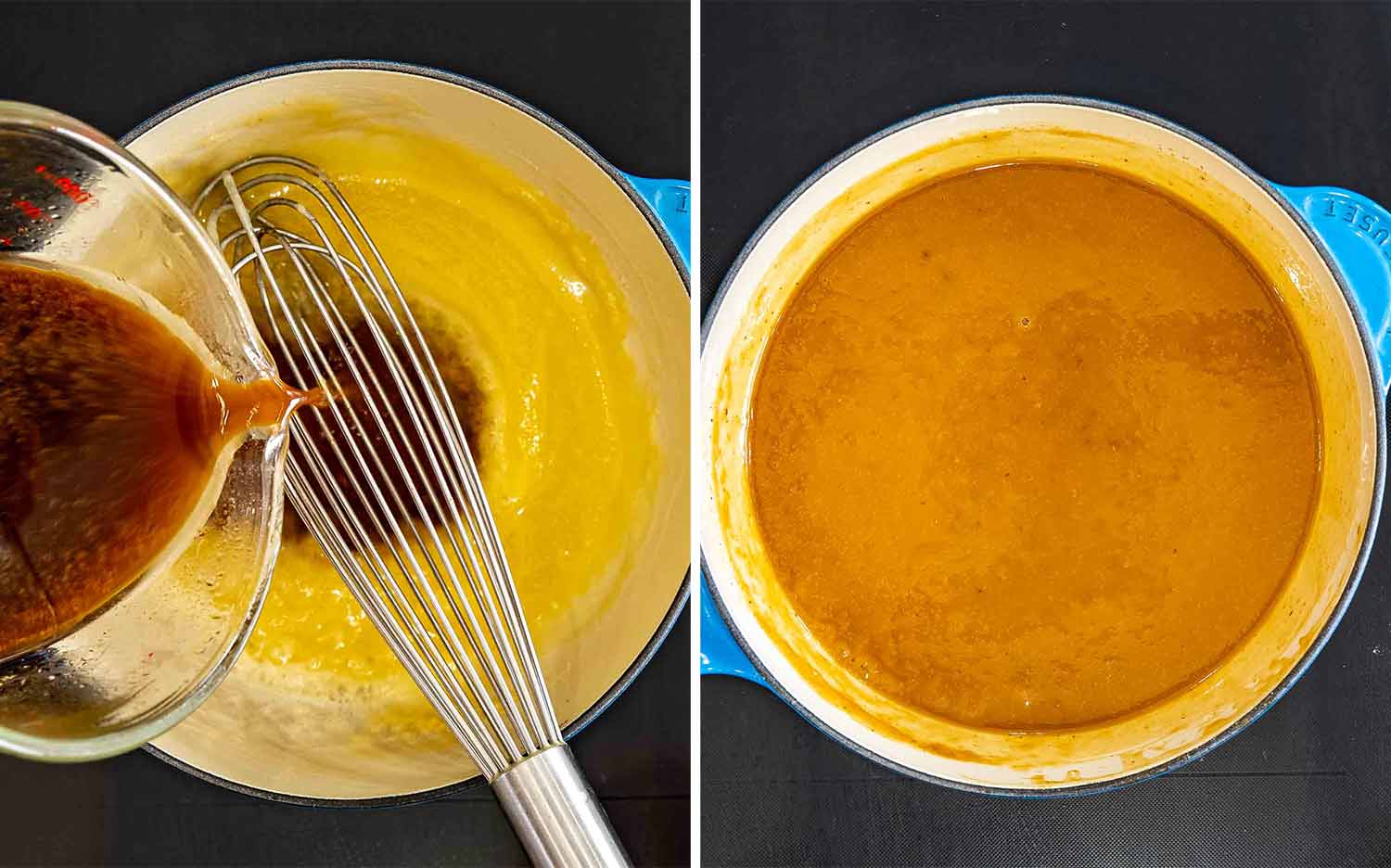
Whisk it smooth: Slowly whisk in the 3 cups of liquid. Bring it to a boil, then simmer until it’s thick, about 3 to 5 minutes. Too thick? Add more broth.
Taste first: Add pepper, then taste before you even think about salt. Drippings from a dry brined turkey are already seasoned.
- Use a thermometer. It’s the only way to know when your turkey is done. Skin color won’t tell you, and neither will the clock.
- Skip the foil. Covering the turkey steams it. Roasting it uncovered gives you golden, crispy skin.
- Don’t bother basting. Basting doesn’t make the meat juicier, and every time you open the oven, you let the heat out.
- Watch your salt brand. Yes, you can use regular table salt. No, you can’t use the same amount of table salt as kosher salt and then blame me.
- Use the rest time. The 40 minutes is when you make the gravy and finish the Mashed Potatoes. That’s what I served mine with, and there was not a drop of gravy left.
Thaw your turkey in the fridge. Allow about 24 hours for every 4 to 5 pounds, so a 14 pound turkey needs about 3 days. Set it in a pan to catch any drips.
These times are for an unstuffed turkey roasted uncovered at 350°F (175°C). My 14 pound turkey took 3 hours and 15 minutes. Use the chart to plan your day, then let the thermometer decide when dinner’s ready.
| Turkey Weight | Serves | Roasting Time |
|---|---|---|
| 10 to 12 pounds | 8 to 10 people | 2¼ to 2¾ hours |
| 12 to 14 pounds | 10 to 12 people | 2¾ to 3¼ hours |
| 14 to 18 pounds | 12 to 16 people | 3¼ to 4 hours |
| 18 to 20 pounds | 16 to 18 people | 4 to 4½ hours |
| 20 to 24 pounds | 18 to 22 people | 4½ to 5 hours |
Start checking the temperature about 30 minutes before the low end of the range. Your turkey is done when the breast reads 160°F (71°C) and the thigh reads 175 to 180°F (79 to 82°C). A stuffed turkey takes longer, and the stuffing needs to reach 165°F (74°C).
Don’t forget the 40 minute rest. Plan it into your timing, because that’s when the gravy happens.
Before You Begin! If you make this, please leave a review and rating letting us know how you liked this recipe! This helps our business thrive & continue providing free recipes.
This Dry Brined Roast Turkey is salted the night before, buttered under the skin, and roasted uncovered for juicy, well seasoned meat and crispy golden skin. Easy gravy from the drippings included.
Turkey:
- 14 pound turkey (thawed)
- 3 tablespoons table salt
- 1½ teaspoons black pepper
- ¾ cup unsalted butter (softened)
- 1 large lemon (zested, then quartered)
- 1½ tablespoons fresh thyme leaves (chopped)
- 12 cloves garlic (6 minced, 6 left whole)
- 10 sprigs fresh thyme
- 1 large onion (quartered)
- 1½ cups water
Gravy:
- 2 cups low sodium chicken broth (plus more if needed)
- 6 tablespoons unsalted butter
- 6 tablespoons all purpose flour
- black pepper (to taste)
- salt (only if needed)
Before You Begin! If you make this, please leave a review and rating letting us know how you liked this recipe! This helps our business thrive & continue providing free recipes.
Dry brine (the night before):
-
Remove the neck and giblets. Pat the turkey very dry inside and out with paper towels.
-
Mix the 3 tablespoons table salt and 1½ teaspoons pepper. Gently loosen the breast skin with your fingers. Sprinkle about a third of the mix under the skin, directly on the breast meat. Sprinkle the rest from about a foot above the bird over the outside, the legs, the back, and a little inside the cavity.
-
Set the turkey breast side up on a rack in a roasting pan. Refrigerate it uncovered for 12 to 24 hours. Don’t rinse it.
Roast:
-
Take the turkey out of the fridge 1 hour before roasting. Brush off any salt crystals and pour out any liquid in the pan. Preheat the oven to 350°F (175°C) with a rack in the lower third.
-
Mix the ¾ cup softened butter, the lemon zest, 1½ tablespoons chopped thyme, and the 6 minced garlic cloves.
-
Pat the skin dry. Push about two thirds of the butter under the breast skin and spread it over the meat. Rub the rest over the outside of the skin. Don’t add more salt.
-
Loosely fill the cavity with the onion, lemon quarters, 6 whole garlic cloves, and 10 thyme sprigs. Tuck the wing tips under the body and tie the legs together with kitchen twine.
-
Pour the 1½ cups water into the roasting pan and set the rack with the turkey on top.
-
Roast uncovered for about 3 hours and 15 minutes, checking the temperature from 2¾ hours on. If the breast browns too fast, loosely tent just the breast with foil.
-
Take it out when the breast reads 160°F (71°C) and the thigh reads 175 to 180°F (79 to 82°C). Keep the thermometer off the bone.
-
Move the turkey to a cutting board, tent it loosely with foil, and rest it for 40 minutes. The breast will rise to 165°F (74°C). Check that it gets there before carving.
Gravy:
-
Pour about ½ cup of the broth into the hot roasting pan and scrape up the browned bits.
-
Strain everything from the pan through a fine mesh sieve into a large measuring cup and throw out the solids. Let it sit a few minutes, then spoon off the fat that rises to the top. Add broth to make 3 cups.
-
Melt the 6 tablespoons butter in a saucepan over medium heat. Whisk in the 6 tablespoons flour and cook for 1 to 2 minutes.
-
Slowly whisk in the 3 cups liquid. Bring it to a boil, then simmer for 3 to 5 minutes until thickened. Add more broth if it’s too thick.
-
Season with pepper. Taste before adding any salt.
- Check the label: if your turkey is self basting, kosher, or “enhanced,” skip the dry brine. It’s already salted.
- Kosher salt: use 6 tablespoons Diamond Crystal or 3 tablespoons plus 2 teaspoons Morton instead of the table salt.
- Pan liquid: use water, not broth. The drippings will already be seasoned.
- Cook time: a 14 pound turkey took 3 hours and 15 minutes. Always go by the thermometer, not the clock.
- Other sizes: see the cooking times chart in the post. Start checking about 30 minutes before the low end of the range.
- Gravy: taste before salting. If it’s too salty, thin it with more low sodium broth or water.
- Yield: the gravy makes about 3 cups.
Serving: 1servingCalories: 779kcal (39%)Carbohydrates: 7g (2%)Protein: 122g (244%)Fat: 28g (43%)Saturated Fat: 13g (81%)Polyunsaturated Fat: 3gMonounsaturated Fat: 7gTrans Fat: 1gCholesterol: 400mg (133%)Sodium: 2386mg (104%)Potassium: 1343mg (38%)Fiber: 1g (4%)Sugar: 1g (1%)Vitamin A: 773IU (15%)Vitamin C: 9mg (11%)Calcium: 86mg (9%)Iron: 5mg (28%)
Notice: Nutrition is auto-calculated for your convenience. Where relevant, we recommend using your own nutrition calculations.
Originally published Nov 2014. Updated with additional information.
Do I rinse the turkey after dry brining?
Won’t 3 tablespoons of salt make the turkey salty?
Can I dry brine for less than 12 hours?
Can I dry brine a turkey that’s still a little frozen?
Can I stuff this turkey?
How much turkey do I need per person?
Can I cook a turkey from frozen?