Salt is a flavor enhancer, not a flavor itself. It sharpens your perception of everything else on the plate by suppressing bitterness and amplifying aromatics, which is exactly why a dish goes flat the moment it’s removed rather than simply tasting a little less salty. Take salt out and you haven’t subtracted one ingredient. You’ve removed the mechanism holding the others together.
Building real flavor without it means understanding what else can do that job, and that’s the difference between a good salt-free kitchen and a disappointing one. Whether you’re cooking for someone managing their sodium intake or cutting back on sodium for any reason… or you’re simply out of salt and curious what happens next, here’s where a good knowledge of both other flavors and salt-free seasonings comes in handy.
The Fastest Way to Start Salt-Free Cooking
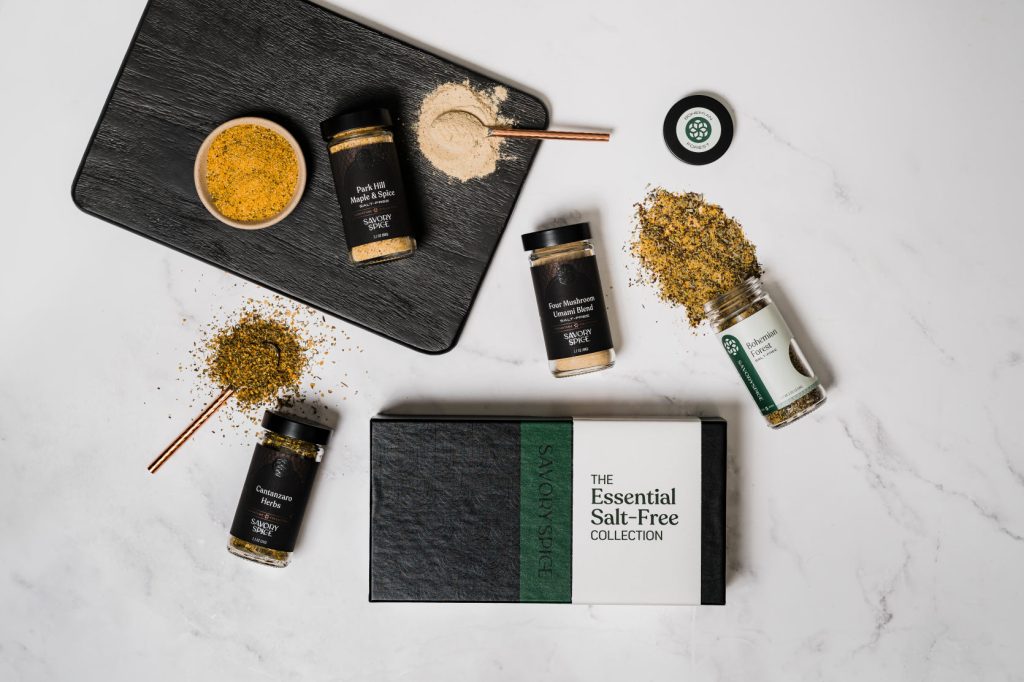
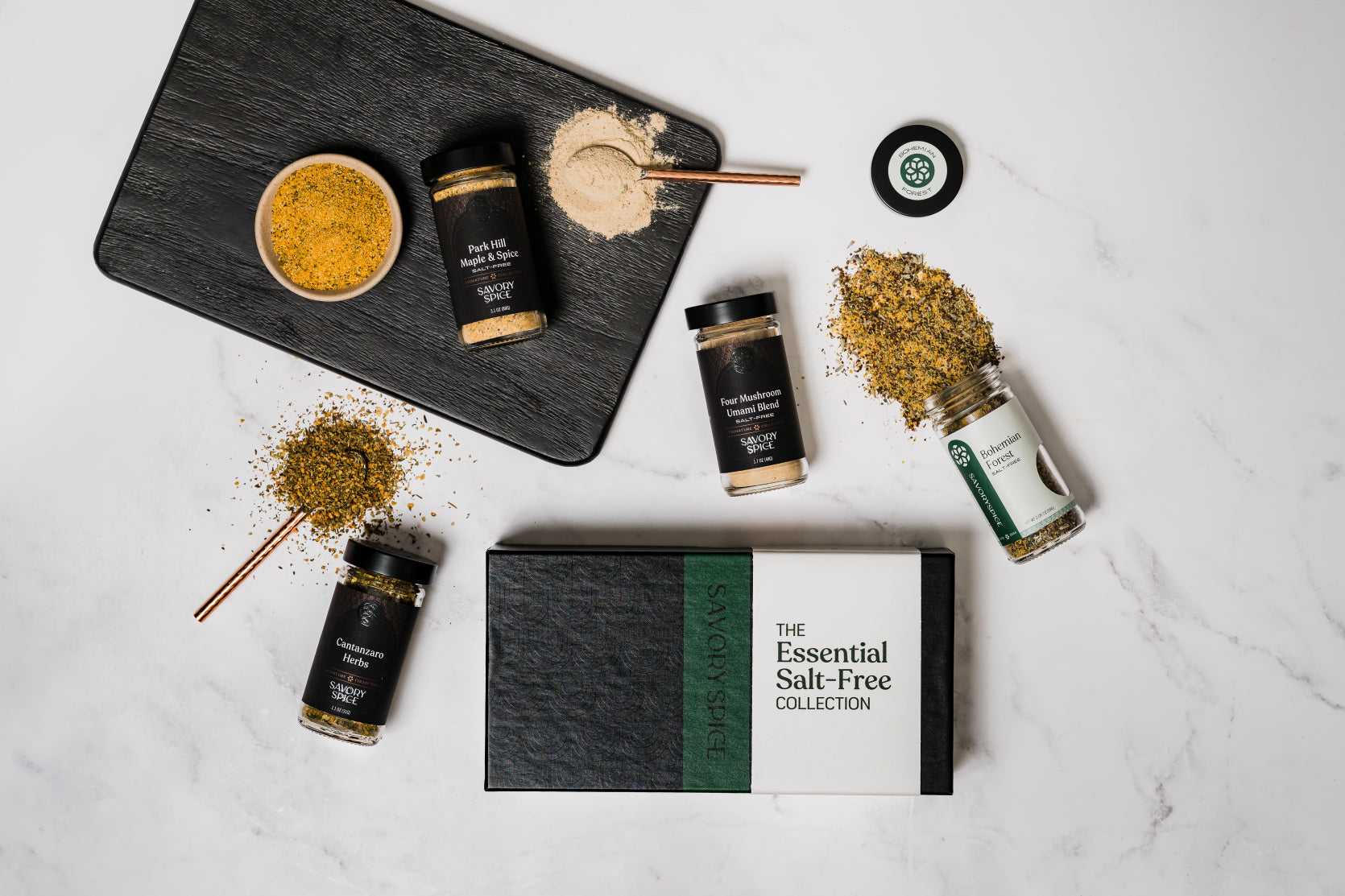
If you’d rather not build a salt-free shelf one jar at a time, The Essential Salt-Free Collection puts four of our most versatile blends together in one box, enough range to cover a chicken dinner, a pan of roasted vegetables, and everything in between. Everything below explains what’s actually happening in these blends and why, but this is the shortcut if you just want to jump start your salt-free cooking.
What Flavors Actually Replace Salt
There are a handful of mechanisms that do real work in place of salt, and knowing them changes how you shop and how you cook. Professional kitchens lean on all five of these constantly, usually in combination, long before they lean on the salt shaker.
Umami
Umami is the deep, savory character found in mushrooms, aged cheese, tomatoes, and cured meats, and it comes from naturally occurring glutamates that trigger the same satisfaction on the palate that salt does. It’s the reason a good tomato sauce or a properly reduced mushroom stock tastes complete without needing much salt at all. Our Four Mushroom Umami Blend leans entirely on this concept, built from 4 different mushrooms, and it’s the closest thing to a one-for-one salt substitute in our entire lineup. Bloom it in a little fat before adding liquid and the glutamates carry even further.
Acid
Acid does what a good squeeze of lemon or a splash of vinegar has always done in a professional kitchen: it brightens a dish and makes every other flavor in it taste more distinct by cutting through fat and resetting the palate between bites. Citrus Pepper Seasoning and California Citrus Rub are both built on this principle, which is why they read as bright and finished rather than flat, the same way a chef finishes a rich dish with a squeeze of citrus right before it leaves the pass.
Heat
Heat, typically from chiles and pepper, works on the palate directly through capsaicin and piperine, amplifying whatever surrounds it and keeping a dish from tasting muted. This is why a chili or a curry with real chile depth rarely needs much added salt, the heat is doing perceptual work salt would otherwise have to do. Crushed Aleppo Chiles, Ancho Chile Powder, and a well-built peppercorn blend all carry their weight this way, and each brings a different character. Aleppo is fruity and moderate, Ancho is raisiny and mild, and a good peppercorn blend brings sharp, volatile heat that fades fast.
Aromatics
Aromatics add a register salt never touched to begin with, the volatile top notes you smell before you ever taste, carried by the essential oils in fresh and dried herbs. Italian Herbs, Herbes de Provence, and Cantanzaro Herbs all work at this level. A quick bloom in warm oil or butter before you add anything else releases far more of those oils than adding herbs cold, which is a technique worth using anywhere you’d otherwise compensate with more salt.
Smoke
Smoke reads to the palate as depth and complexity in much the same way slow-developed browning does, which makes it one of the more underused tools in a salt-free kitchen. It works because smoke compounds interact with the same receptors that register richness and char, giving a dish a sense of having been cooked longer or hotter than it actually was. Whiskey Barrel Smoked Black PepperandSmoked Spanish Sweet Paprika both do this work, and either one can stand in for the savory backbone a dish would otherwise lose without salt.
The real trick, the one professional cooks use without necessarily naming it, is stacking two or three of these at once rather than leaning on a single one. A little acid plus a little umami plus a little heat covers more sensory ground than any one of them alone, which is exactly how a well-built salt-free blend is put together in the first place.
The Salt-Free Blends People Actually Look For
Salt-Free Lemon Pepper
Citrus Pepper Seasoning is the one to reach for. Bright citrus oil and cracked pepper stand in for the salty version, and its perfect for seasoning chicken, fish, or a pan of roasted vegetables without needing anything else added. The citrus oil does double duty, brightening the dish while also helping the pepper’s aromatics bloom.
Salt-Free Poultry Seasoning
Poultry Seasoning is handcrafted specifically for this, and it’s proof that a properly seasoned roast chicken or turkey doesn’t depend on salt to taste finished. Sage, thyme, and marjoram carry the savory register that salt would otherwise be asked to provide, and rubbing it under the skin rather than just on top gets the aromatics closer to the fat, where they render and spread through the meat as it cooks.
Salt-Free Cajun Seasoning
Cajun Blackening (Salt-Free) pulls its intensity from cayenne and paprika rather than the salt load that defines most blackening blends, which matters more than it sounds. In a screaming-hot cast iron pan, salt draws moisture to the surface and interferes with the char you’re actually after. This salt-free blackening seasoning also lets you get a cleaner sear.
Salt-Free Chili Seasoning
Mediumand Mild Chili Powderlet you build a proper pot of chili from the ground up, without a packet doing the sodium work for you, and blooming either one in oil before adding your liquid, the same way you’d bloom curry powder, unlocks noticeably more depth than stirring it in raw.
What Else Belongs in Your Salt-Free Kitchen
Beyond the blends people search for by name, a few more belong in any serious salt-free kitchen:
Four Mushroom Umami Blend earns a second mention here because it’s genuinely versatile: soups, burgers, risottos, roasted vegetables, anywhere you’d instinctively reach for salt to round things out and add savory weight.
Onion & Garlic Everyday Seasoning is the workhorse. It doesn’t announce itself the way a specialty blend does, it just makes nearly everything taste more like a more finished version of itself.
Rocky Mountain Butcher’s Rub and California Citrus Rub are both perfect salt-free grilling seasonings, one peppery and herbaceous, the other citrus-forward and lighter, and between them they cover most of what comes off live fire, from a thick-cut steak to a piece of grilled fish.
Bohemian Forest and Park Hill Maple & Spice prove that salt-free cooking has range. One is earthy and mustard-forward, built for roasted meats, the other warm with maple sweetness and built for pork or a bowl of roasted root vegetables.
Baharat and Shawarma Seasoning bring Middle Eastern depth, warm spice built for lamb, chicken, and roasted vegetables. Barrier Reef Caribbean Mix and Huli Huli Chicken cover the Caribbean and Pacific end of things, both built for a fast weeknight dinner that still tastes like it came from somewhere specific.
Chimichurri Rojo Dry Rub and Sweet Sesame Stir Fry round it out with Latin American and Asian cooking, proof that global flavor doesn’t require a pantry full of specialty sauces to pull off. Summit County Slow Cooker Blend is the one to reach for when you want that same range of flavor with something you can throw in the pot and let simmer all day long.
Things That Were Already Salt-Free (and You Probably Didn’t Know It)
Here’s what most people miss: a large share of what’s already sitting in a spice cabinet was never salted to begin with.
Black pepper. Cinnamon. Vanilla extract. Mexican oregano.
Nearly every single-ingredient dried herb and spice is inherently salt-free, since sodium is something added during processing, never something that occurs naturally in the plant itself.
That includes staples likeGround Cumin and Roasted Granulated Garlic, both sitting in kitchens everywhere without anyone thinking twice about it. If you’re cooking for someone watching their sodium, the smartest first move costs nothing: check what’s already on the shelf before buying anything new.
The same goes for Greek Oregano, Italian Herbs, Smoked Spanish Sweet Paprika, and Four Corners Peppercorn Medley. The difference between a single-ingredient spice and a blend is worth knowing here, too. A blend can hide salt as a filler ingredient; a true single-origin spice, by definition, cannot.
Cooking Without Salt, Without Losing Flavor
A few habits make the transition easier, and they’re the same habits professional cooks rely on even when salt is fully on the table.
Season earlier and more generously than instinct tells you to. Salt-free blends don’t carry the same per-pinch intensity a salt-based seasoning does, so what feels like overseasoning in the moment usually reads as correctly seasoned once it’s finished cooking.
Taste continuously rather than seasoning once and stepping away, the way you would when developing any sauce or braise from scratch. Flavor concentrates and shifts as liquid reduces, and a dish that tastes underseasoned at the ten-minute mark may be exactly right by the time it’s done.
Build in layers instead of expecting one blend to do everything a good all-purpose salt would. A hit of acid stirred in at the end, alongside a savory rub applied earlier, will usually get you further than either working alone, the same principle a chef uses when finishing a dish with both fat and citrus.
And don’t underestimate blooming. Toasting a dry spice blend in a bit of oil or butter for thirty seconds before anything else hits the pan releases aromatic compounds that stay locked away in the jar otherwise, whether or not salt is in the mix.
Salt-free was never the same thing as flavorless. It just asks you to build flavor from more directions at once, the way a good cook already does.
Ready to build a salt-free shelf of your own? Shop our full collection of Salt-Free Spices and No Salt Seasonings and find the blend that does the job salt used to.