Signature: An exclusive interview with Culver’s CEO Julie Fussner
.jpg?width=100&auto=webp&quality=80&disable=upscale "Picture of Sam Oches")
It’s tough out there for America’s burger joints. According to the most recent Technomic Top 500, limited-service burger sales grew a measly 1.5% in 2025, a figure that fell short of the year’s 3.8% inflation mark and bested only the sandwich (0.2%) and pizza (-0.3%) categories.
But if burgers are fading, Culver’s didn’t get the memo. The better-burger brand that’s been slinging Wisconsin-inspired favorites since 1984 enjoyed a robust 14.2% sales growth last year, closing the year with $4.36 billion at 1,043 locations, according to Technomic — helping it to leapfrog competitor Whataburger and become the 24th largest restaurant chain in the U.S.
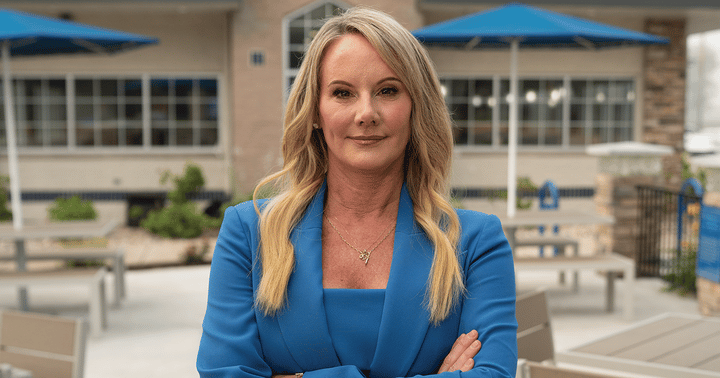
While the growth was significant, 2025 may come to be better known at Culver’s as the beginning of the Julie Fussner era. Previously the company’s chief marketing officer, Fussner — who initially joined the brand as vice president of marketing in 2017 after a decade at Kraft Foods Group and a handful of years at American Family Insurance — was tabbed as Culver’s fifth CEO in April of last year. Her task? Figure out how the company can maintain its remarkable growth momentum while ensuring Culver’s always lives up to its uncompromising quality and hospitality standards.
Fussner sat down with NRN’s editor-in-chief in Culver’s first-ever location in Sauk City, Wisconsin, to share how her marketing experience has informed her role as chief executive and how the company’s family-like atmosphere is building a formidable leadership pipeline.
This interview has been edited for brevity and clarity. Scan the QR code on page XX to access more of the interview, including exclusive video.
Let’s go back to the beginning. What was your upbringing like?
I grew up in the suburbs of Chicago. I feel very fortunate for my upbringing — a very loving family. I am the one girl in the family sandwiched between two brothers.
I was a gymnast from the time I was three until I was 18. So the vast majority of my time was spent doing that. … My mom always tells the story that when I was three, she had to find something that would teach me how to fall, because I was such a crazy child, in the air all the time, climbing on things. So she enrolled me in that and it just seemed to be a very good thing.
A lot of leaders have experience in athletics when they’re young; it teaches a lot about leadership. As a gymnast, did you feel like you were learning anything that equipped you for your future career?
Yeah, I could not agree with you more that athletics is a particularly good way to learn about leadership. There are a few things that happen with sports in general, certainly gymnastics in particular: the discipline that it takes, so the practice every single day — that’s all you’re doing. The performance part of it is just two minutes of it.
There’s also a need for really significant resilience. So especially in a sport like gymnastics, all you do is fall. That falling and getting up and never giving up no matter how many times it takes you to do something, I think, is something you need, especially if you’re going to progress in your career.
And then I think the idea that you’re being coached constantly. You’re getting feedback and you’re learning to get better. That idea that you’re learning all the time is sort of ingrained in you. And so now, when I get feedback, it’s not a negative thing. It’s just somebody helping me try to get better.
At what point did you identify leadership in yourself? And how did that quality develop?
I moved to Madison, Wisconsin, [in the early 2000s] and worked for Oscar Mayer, part of Kraft Foods, and I spent 10 years there. That was by far the most formative part of my career in total, because in 10 years, I had nine different roles there.
This is advice I give to a lot of people if you want to progress in your career. [Of those] nine roles, maybe two or three were promotions. It was mostly lateral moves, just learning things in different categories. We had different roles within marketing, so it was a lot of lateral moving around, but really built a nice skill set for me from a marketing standpoint — and, frankly, working cross-functionally, which is obviously very critical in this role.
Culver’s is rooted deeply in Wisconsin culture. I imagine that must have appealed to you when you initially joined Culver’s as vice president of marketing.
Oh, 100%. We actually say that the menu is homegrown. The Butter Burger, fresh frozen custard, cheese curds, all the great dairy that we have on the menu is all inspired by Wisconsin, and we actually think that that’s a real differentiator for us — not only the breadth of the menu, but saying that it’s inspired from Wisconsin, because people know we have great food here, especially as it relates to dairy.
I say “dream come true” a lot with this brand, because for a marketer to have all of the differentiation that we have in this brand makes the job so straightforward.
What were the opportunities you saw when you stepped into the CEO role? What did you want to do with this brand?
We have a great culture, but we needed to dramatically strengthen it, in my opinion. And our culture really is just about caring for people. That’s even in our brand idea: We say our love for food is as strong as our love for people.
There’s a lot of time I spend just out talking with team members. This idea of listening to them so I understand how to react to how we need to strengthen the culture was very important to me.
What exactly does culture look like? And what are some practical ways you can strengthen it?
To the first question, it looks like family. We don’t just say that. I think a lot of companies probably use that term; we actually mean it. And that started with [founder] Craig [Culver] and his family. But that truly is the definition of our culture.
What you have to do first is clarify what you want your culture to look like. And we’ve been very clear about that at Culver’s from day one: It’s all about the people. … The way that I practically employ a strategy against that is making sure that I know our people, I know our operators, I know many of our team members, including at our support center; I know everybody on a deep level so that I can know what is important to them, listen to their needs and their opinions. Of course, we might have to go a different direction. But when you do that, explain the why behind that so people feel heard and supported.
Culver’s hosts a management class for managers across the system. How has that helped you to build a leadership pipeline?
We have what we call Manager Workshops. We have a level one, two, and three. So you progress through those levels. Our owner operators invest in their team members. They send [leaders] from all over the country to come here for a couple of days. So that’s a pretty significant investment; it could be a relatively new team member that they’re sending on their first business trip.
In these Manager Workshops, they get to come to our support center and experience the culture that we want them to experience from us. And then we do what we call our “Chats with Leadership.” So for an hour in these workshops, every single one, somebody from our senior leadership team — I will do a lot of them — literally just takes any questions that they have. And that’s a really fun way to engage.
At a time when so much of the industry is struggling, Culver’s sales last year grew 14%. Now it’s over $4 billion in sales annually at more than 1,000 restaurants, and you expect even more growth this year. What’s the secret to breaking through those headwinds and continuing to grow Culver’s?
The No. 1 thing that we have to do is deliver a consistent experience every time in Culver’s, because the experience is different. When you come here, you are welcomed more than you are, I believe, at any other brand. I believe that the breadth of our menu is outstanding. You’re going to get a great meal, but with great hospitality. That has to happen every single day, every single shift, for every single guest. So we focus very heavily on consistency among our restaurants. If we do that, everything else is gravy.
Now, we’ve had a lot of gravy in the last few years. We launched third-party delivery [in 2024]; a lot of these things we do a little bit after the rest of the industry, mostly because we are focused on that consistency in the experience that we love to have here, either in our dining room or through our drive thru. But we we’ve realized people want Culver’s in other ways as well.
So we’ve been able to layer other things on. We obviously launched online ordering. We now have a rewards program that just launched this year, and people are getting heavily engaged in that. And the other thing is we are staying open later in areas where that makes sense. All of these things have been able to layer on top of that baseline.
It’s incredible that you didn’t have a loyalty program until recently. And yet, Culver’s customers are probably already among the most loyal. How do you expand that loyal consumer base into parts of the country that have never heard of Culver’s?
Our marketing plays very well even in other markets. So even though we say “From Wisconsin with love” … we’ve tested that and we’ve been running it for quite some time now in Arizona and Florida, and it resonates because people understand that Midwest or Wisconsin hospitality.
But I’ll be honest with you, the real secret is the local owner operator. We are so picky about who we choose to be able to run a Culver’s restaurant, and then when they do open in a new community, they do a ton of community involvement and local marketing. They reach out to the schools and everyone around them to really make that connection in their local market. And I think that makes all the difference.
And most of these owner operators are coming up through the Culver’s system, right?
Yes.
Tell me about then that formative process for owner operators. What’s that process like?
This is for sure part of the secret sauce of Culver’s. An individual owner operator can technically only own four restaurants. We limit that because we don’t believe you can be present and engaged in more than four. And of course, you have great managers in those restaurants.
Once you’ve hit that four and you want to keep growing or investing in new restaurants, we have a great program called the Mentee Program. The mentor is the owner of that current restaurant, and they have a great general manager who raises their hand and says, “I’d love to be an owner operator.” We go assess their skill level and if they need any development. If they’re ready, they come through our training program and our leadership program, and then they can become the owner of their own restaurant. Their name is on the door, but it requires a lower financial investment; they only have to own roughly 19% of the business, so they’re able to afford that. They don’t have to own the land and all of that. But the owner operator who invested in them invests in that restaurant so that they can get in just at a lower financial investment.
I imagine you are still facing headwinds. What are the things that, especially now as CEO, are keeping you up at night?
I know I’m going to sound like a broken record, but the thing that keeps me up most is losing any of what we just talked about — compromising on anything. Especially as you grow, it does become much harder to keep that consistency. When you have 1,100 restaurants, that becomes harder.
Now, what gives me a lot of comfort is that we’re not changing anything in our process of who we select to run those restaurants, so if we keep that really pure, then I don’t worry so much about losing anything in the experience. But I will tell you, the headwinds for the QSR industry do keep me up at night because eventually you worry that it could trickle down to you. I’m hopeful that we’ve put enough in place that that won’t happen, but when the whole pie is not growing, it does make it a lot harder to grow.
You say that word change; you aim for consistency in your systems but, as you know, there’s kind of an evolve-or-die mindset in retail. How do you make sure you’re evolving the brand without changing it too much?
Yeah, it’s the biggest debate that we have, where the right places are to evolve. We get asked all the time, “Are you going to put kiosks in the lobby?” And I don’t say “never” to anything, but right now that doesn’t feel right for us because we love taking your order. Now, when the lobby is slammed and it could help someone to place an order that way, maybe that would be an appropriate evolution.
Taking your order in the drive thru: to use AI for something like that would not be an evolution that would make any sense to us. However, being able to order ahead so that you don’t have to wait in a long drive-thru line, we don’t feel like that’s taking away from the experience.
We want to be able to meet those needs, so we really just balance [it all].
The future is obviously very bright for Culver’s. You’re now a top 25 brand in the United States. What is the direction Culver’s is moving in?
The biggest focus for us right now is meeting the demand within the system. A lot of our [owner-operator] growth is coming from within: 80%-90% is people who are already working in a Culver’s. So the big focus for us now is how we get very strategic with our development and where we’re going.
We’re going to open five new states. We have development agreements with people in our system. And our big focus there is, do we have the people ready to go open those restaurants? The vast majority of our time is being spent right there, and then all of the supporting functions that have to go along with that.
Then we’re doing a pretty significant transformation in training. The team members coming to us now are very different than they were 15, 20 years ago, and so we’re working to make the training feel very contemporary for them. So we have a lot of things going on to make sure people are set up for success, but it’s still focused around having the right people for where we’re expanding and then training them appropriately.
Let’s talk a little bit more about your leadership and your role here as CEO. How do you feel like coming up through marketing has uniquely set you up for success as CEO?
I always go back to three things for my leadership that I believe work really well for me. I think they would work well for other leaders too, but it probably applies more in Culver’s because we talk about people so much. [They’re] connection, clarity, and then continuous improvement.
When you’re in marketing, your only job is to connect with a consumer. How do you get your brand to connect? In this role, it’s not about my brand connecting, per se; the marketing team is going to do that. It’s about me [understanding] what the team needs, what the team wants, where we need to evolve, and what the owner operators are going to need in three to five years so we can prioritize those activities.
Second is clarity: What is our vision? Where are we going? What absolutely cannot change? And where do we need to evolve? Back to that conversation in marketing, if your message is not crystal clear, it gets completely lost. That was something I was taught very early on. If I can’t explain an idea to a six-year-old, it’s not clear enough yet.
And then continuous improvement. All functions are changing over time, where you better be adapting all the time, getting better all the time. The media landscape changes how you create. The consumer changes. And I believe for CEOs — and especially at this organization — if we want to stay in this position that we’re in, we’ve got to keep improving, even if that just means making that experience that much more consistent as we grow.
How would you describe your leadership style?
I’m very direct. I’m very transparent. I’m very clear on what I want. It’s probably very clear when I’m unhappy.
I really want people to feel supported. I want them to feel like I have their back. I don’t care if people make mistakes. I think that’s how we learn. And I think when they feel really supported and then they’re very clear on where we’re going, we can do really amazing things.
What would be your advice to anybody who either wants to be a CEO or just wants to be a leader in business and the restaurant business in particular?
The first thing is figure out what authentically works for you in your leadership style. There’s a million different styles that can work. What works really well for you that is also very authentic to you? I think when people are trying to fake it or behave like a certain leader, it’s not authentic, and it also takes so much more energy to do that. And I think that that takes away from your energy for focusing on the team or the strategy or the work.
So one would be, what is the thing that’s core to you that works from a leadership standpoint? [The second is] to be open to feedback and be coachable; at every level, you should be trying to get better. And then the third is … don’t worry so much about the title or the progression. I took nine jobs in 10 years. Most of those were lateral, head down, learn as much as you can.
Contribute as much as you can. Especially take care of those around you. How can you be of more assistance to someone around you or hopefully the person above you? Can you make their life easier because you’re contributing even more? You do those things and I promise you the promotions will come.
Read more about: