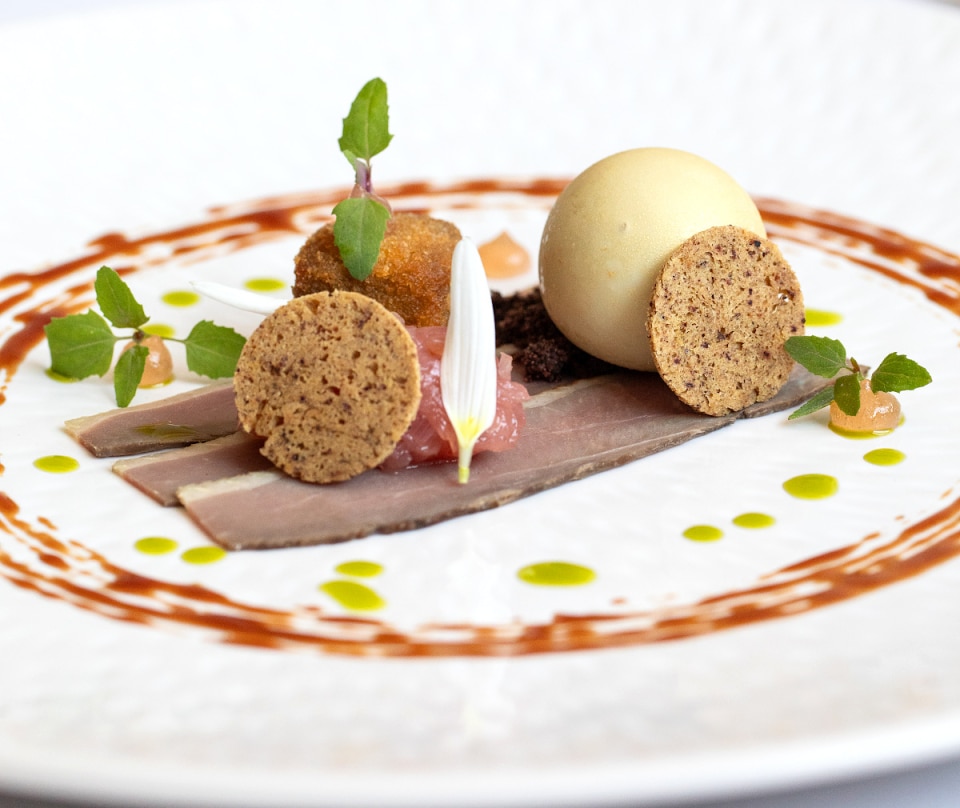
Receiving a Michelin star was obviously one of the proudest moments of our lives, but more than anything it felt like validation.
Helen and I never built Lumière around awards. We built the restaurant we’d want to spend our own money in—warm, relaxed, genuinely welcoming, with food we were proud to serve. The Michelin star told us that staying true to that vision was the right decision.
It didn’t fundamentally change how we cook or how we look after our guests. If anything, it reinforced that authenticity matters more than trying to be something you’re not.
We’re fortunate that our strengths complement each other. I spend most of my time focused on the food, while Helen leads everything front of house and the overall guest experience. Because we’re married, we’re constantly talking about the restaurant. Ideas don’t stop when service finishes—they continue over breakfast, walking the dog or working in the garden.
We both care about exactly the same thing: how people feel when they leave.
Most importantly, we both care about exactly the same thing: how people feel when they leave. We want guests to feel as though they’ve spent the evening at a dinner party hosted by close friends rather than in a formal restaurant.
The biggest advantage is simple—we answer only to ourselves. If we want to grow a particular ingredient, support a local producer or completely change the menu because something incredible is ready in the garden that morning, we can.
The challenge is that every decision carries responsibility. Independent restaurants don’t have head offices or large corporate support structures. Every rising cost, every staffing challenge and every economic change lands directly on your shoulders.
But I wouldn’t swap that independence. It allows us to build something that genuinely reflects who we are.
For us, sustainability isn’t a marketing exercise—it’s simply how we think. We grow a significant amount of our own produce, compost our kitchen waste, keep bees, minimise food waste and constantly look for ways to use ingredients more intelligently.
Sometimes sustainability means using a whole vegetable instead of just the perfect-looking part. Sometimes it means changing a dish because that’s what’s naturally available rather than importing something out of season. It’s about making thousands of small decisions every day that, collectively, make a real difference.
Spending time in the vineyards completely changes your perspective. You see just how much work, skill and risk goes into every bottle. It creates enormous respect for the people making these wines.
English wine has improved beyond recognition over the last decade. People are often surprised by just how world-class they are.
English wine has improved beyond recognition over the last decade. I’d encourage anyone who’s still sceptical to try a top-quality Chardonnay or Pinot Noir alongside a sparkling wine. People are often surprised by just how world-class they are.
I think people would be surprised how much happens before the first guest arrives. A single component on a plate might have taken several days to prepare. Herbs are picked that morning, stocks reduced over many hours, ferments checked, breads baked fresh, gardens harvested and every sauce tasted multiple times.
By the time dinner service begins, most of the work has already been done. Service is really the final performance after days of preparation.
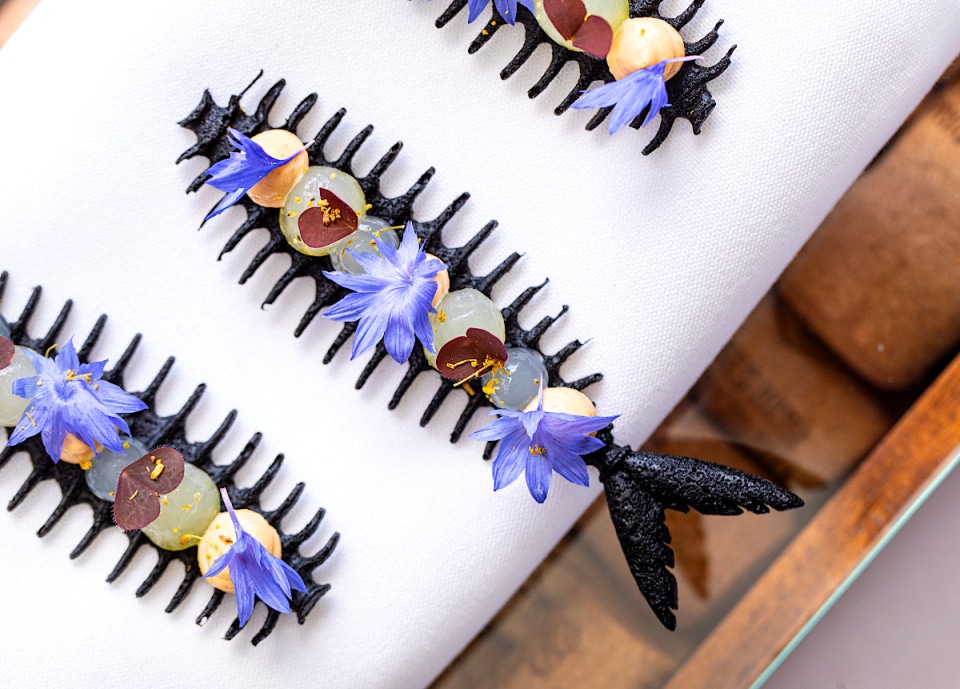
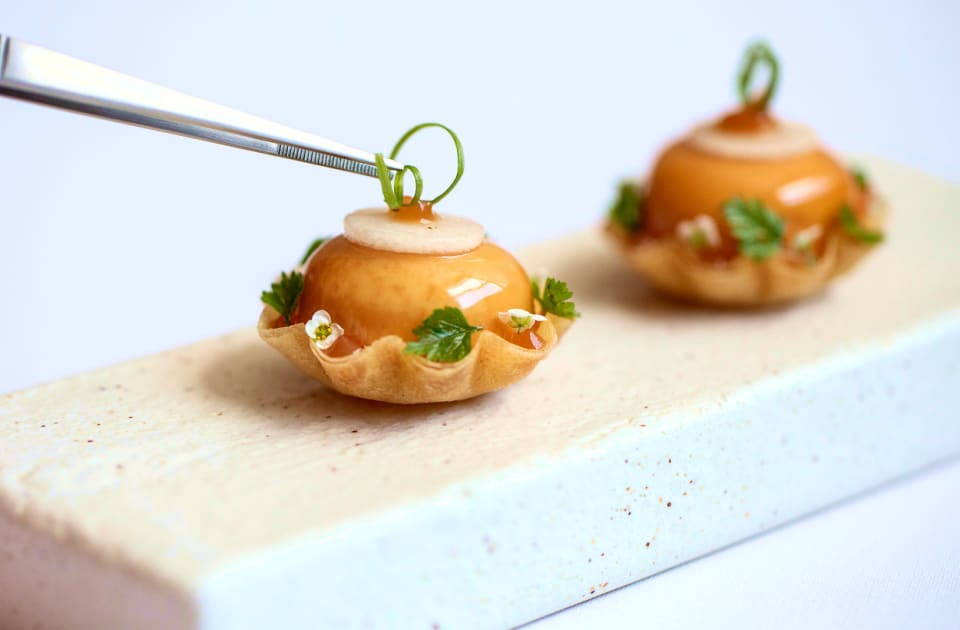
The dish changes throughout the seasons, but I’d probably choose one built around ingredients from our own garden. Those dishes represent everything we believe in—seasonality, restraint and allowing exceptional ingredients to speak for themselves.
I don’t think cooking is about adding more. It’s often about knowing when to stop.