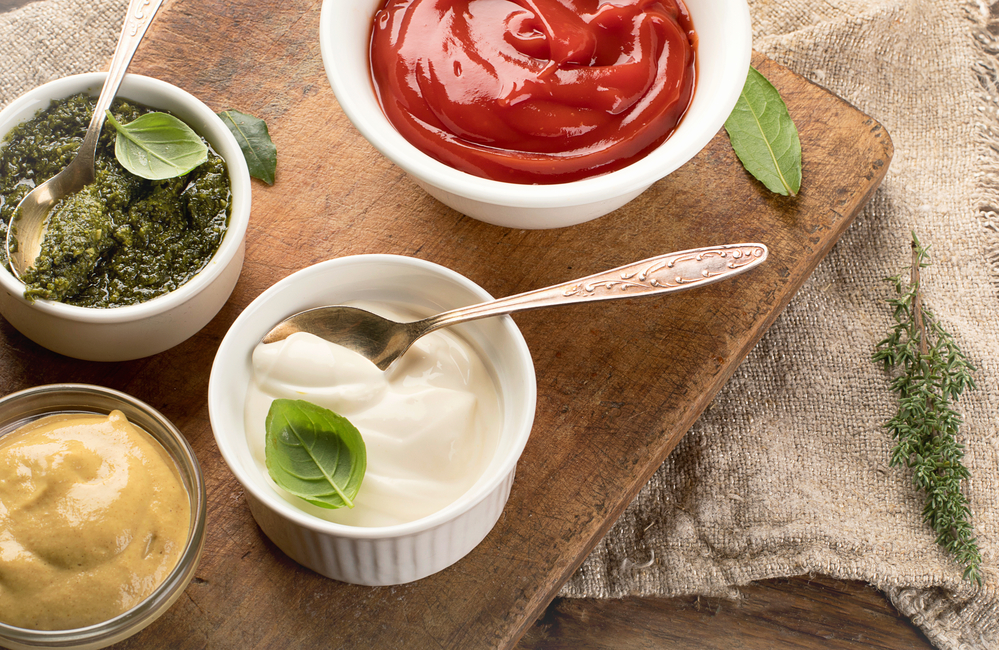
Homemade condiments are surprisingly easy to make, and making your own ketchup, mayonnaise, mustard, barbecue and hot sauces at home gives you the chance to create them to taste, with just the right amount of seasonings, spice, heat, and salt.
Editor’s Note: This post was originally posted on May 21, 2015 and has been updated with additional information.
Some people evaluate a potential new friend by the titles on their bookshelves. But a good hard look at the contents of the refrigerator door might be even more revealing. That’s where you find the condiments, after all. People tend to be passionate about their secret sauces. Are you a Heinz person or a Hunt’s person? Duke’s, Hellmann’s, Kewpie, or Miracle Whip? Whole grain, ballpark, or dijon? Sriracha, Pete’s, or Tabasco?
All these different labels cast shades of meaning on those who prefer them. The types and brands of condiments we hold dear are no less than emblems of our identity. Show me your mayo, and I’ll tell you who you are … or at least make an educated guess about where you were born.
You know a person is unusually devoted to their special condiment when they’ve got a homemade version instead of a store-bought variety. Yes, it’s impressive to see a bottle of DIY ketchup or a Ball jar of homemade mayonnaise. But if you’ve never made them, you might be surprised how easy it is to whip up a batch. Making your personal private label house condiments gives you the chance to create them the way you’ve always wanted them to taste, with just the right amount of seasonings, spice, heat, and salt.
If you’ve ever mixed a bit of hot sauce into your ketchup, you’ll probably like this DIY Spicy-Sweet Ketchup. It has a fresher flavor than the supermarket kind, but the mix of spices–including allspice and cloves–gives it a familiar ketchupy quality.
We naturally think of tomatoes when we think of ketchup, but this classic condiment has a long history of being made from different base ingredients, including unlikely foodstuffs such as oysters. And there are many alt-ketchup recipes in circulation today. If you are feeling ketchup-curious, blackberries (fresh or defrosted) make a surprisingly good substitute for the usual tomatoes in this Blackberry Ketchup.
Or if your issues with ketchup are with the acidity and texture, try this Savory Tomato Jam instead for a spreadable preserve that offers the bright taste of tomatoes with richer, deeper and warmer notes.
Homemade mayonnaise is even more intimidating than ketchup, thanks to this sauce’s reputation for breaking as you try to unify the two typical main ingredients: oil and eggs. The hand-whisked method described in this recipe for Homemade Mayonnaise is actually more foolproof than the food processor method. (Different bowl sizes and blade constructions can give you uneven results with small quantities of mayo, so if you try it that way, you can’t say you weren’t warned.) Just remember to keep that stream of oil thin (dispense it from a squeeze bottle for best control) and your whisking steady and vigorous!
You get a sense of accomplishment from making your own condiments, but DIY vegan mayo also gives you the satisfaction of using something that would otherwise go to waste. That liquid in your can of chickpeas? It’s known as aquafaba, and you can use it instead of eggs to make a variety of things including mayonnaise. Commercial versions of aquafaba mayo are now widely available, but they’ll cost you. Save money and feel smug with this Homemade Vegan Mayonnaise recipe.
Mustard doesn’t get enough credit. It’s often saving the day on a sandwich, cutting the richness of meat and cheese and just generally making it nice. It brings salad dressings into balance and can even subtly brighten up mac and cheese. Mustard is magic, and you can make it yourself. It’s really a simple matter of soaking mustard seeds with a flavorful liquid, such as apple cider vinegar, and adding salt and seasonings. You choose how smooth or how grainy it is when you blend it. Our favorite mustards are the whole seed variety and this Pickled Mustard Seeds recipe is our go-to.
There’s a strong case to make your own barbecue sauce. If you’ve ever read over the ingredients list on a typical store-bought brand, you know why. Even more so than other condiments, there’s a lot of weird ingredients in there you don’t likely stock in your home kitchen. For that reason, homemade barbecue sauces taste better. They are sweet without being cloying, and homemade recipes are often more spice-forward. And you’ll find interesting twists, like these five fruit-forward barbecue sauces.
No discussion of homemade condiments could be complete without mentioning hot sauce, the most personal of all sauces. When you make it yourself, you can really dial in that specific heat level that is perfect for you. Some people want a skull-tingling, full-face sweating kind of sauce while others want only the murmur of chili on their tongue. As a general rule, removing hot pepper seeds before turning it into sauce will make it less hot so keep that in mind as you check out a roundup of recipes for hot sauces, salsas and chile condiments.