Why restaurants don’t need a consultant to fix prime cost anymore

7 Min Read
Shutterstock
Every operator knows the number. Prime cost — food plus labor as a share of sales — is healthy somewhere between 55 and 60%. Plenty of restaurants are running at 68%.
The traditional fix is a consultant. At $150 to $350 an hour, a focused prime cost engagement lands somewhere around $11,000, and to their credit, it usually works. Pull the POS and payroll data, rebuild the schedule around actual ticket volume, re-cost the worst menu items, stand up a weekly dashboard. Operators routinely earn the fee back within months.
Most of them still don’t hire one. Not because they think the consultant is wrong, and not because $11,000 is out of reach for a restaurant pulling in $2 million. They pass because of the question mark still sitting there when the math is finished: Is this going to put more back on the bottom line than it takes off? Nobody can answer that for them. Not even the consultant who wrote the proposal, and it was his job to make it sound like the answer was yes.
Flip it around and it’s obvious. If that same engagement came with a guarantee attached, sign here, and this hands back $22,000 against the $11,000 investment, it would be signed before the first meeting was over. The number was never the problem; not knowing was.
That outline, in more detail, is exactly what arrives in the proposal a consultant sends, for free, when an operator asks for a quote. And what I want every operator to understand is that the free document and the paid engagement just collapsed into each other.
I spent thirty years in enterprise sales and now build AI systems for businesses, including my own. Recently, I tested this directly. I wrote the kind of four-week prime cost scope of work a consultant sends after the walkthrough, not the vague phases on their website. I’ll be straight about how I built it: it’s a composite rather than a copy of any one firm’s document, priced against published rates for that kind of work, because a scope of work without a dollar figure next to it is just a description. Then I handed it to an AI with a few sentences of context: 120 seats, casual dining, $2.1 million revenue a year, prime cost at 68%, targeting 58%.
In about a minute, it came back with the work itself. Rebuild Tuesday through Thursday dinner from four line cooks to three, with the fourth clocking in only when ticket volume crosses fifteen covers an hour, based on ninety days of POS timestamps, saving roughly nine labor hours a week across the three slowest shifts. Re-cost the chicken parm: $4.80 plate cost against a $16 menu price, cut the portion from eight ounces to six, swap the hand-cut fries for a par-baked wedge, and that one item drops from a 30% food cost to 23% with no menu price change. Then, add a weekly dashboard with red, yellow, and green signals against the target.
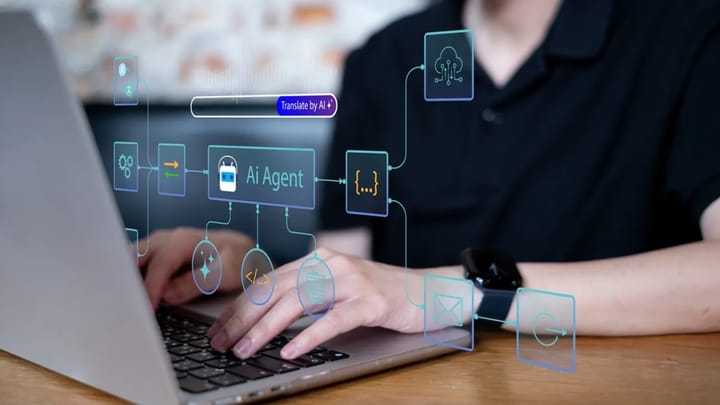
Then, the part no proposal ever contained. Connected to the systems the restaurant already runs, the POS, the scheduling app, the way the newest one-window AI tools allow, it asks whether it should update the recipe costing and rebuild next week’s schedule now, or start Monday.
I call the mechanism the Kerzie effect: once a buyer holds the seller’s scope of work and their own context, an AI can synthesize, and now execute, what used to require paying for the seller’s time. The POS data was always the context that mattered, and it always belonged to the operator. The consultant’s proposal was always the playbook, and it was always free. The only thing being paid for was the execution gap, and that gap is closing.
Now the honest part, because I run a business in a trade myself and I’m not selling a fantasy.
The consultant who has walked five hundred kitchens knows things no outline holds. They can taste that a food cost problem is actually a portioning culture problem. They know which GM will quietly sabotage a schedule change. That’s observation, not a playbook: things a person standing in the kitchen can see that no document can. Accountability too, somebody who comes back in thirty days and asks whether the number moved. That’s worth money and it survives this. Notice that neither one is judgment about what the restaurant should do.
Think of AI competency as a continuum. On the far left is the guy who says he’s using AI, and what he means is he types a question into a chatbot and reads what comes back. On the far right is a fully AI-operated company, autonomous systems running the whole thing. The line an operator has to cross to do what I just described sits much further left than most people assume. It is past the chatbot, and it is nowhere close to the far end. It is also moving toward them, because the tools keep getting simpler. The line is real, though, and it cuts both ways: a Harvard Business School experiment with 758 consultants found AI did their within-reach work about 25% faster at roughly 40% higher quality, and people working beyond its reach did worse than people using none at all.
Crossing that line is not the only requirement: Somebody has to care that prime cost sitting at 68% is money walking out the back door every week, and care enough to own this and make operations better. The dashboard that nobody fills in on Monday is just a spreadsheet with opinions. If nobody in the building wanted that number to move, the AI didn’t fail anyone. And whatever gets built, somebody now maintains.
There’s also a question of who in the building actually does this, and the answer is probably not the owner. It’s the GM, or whoever already lives in the POS reports and knows that Tuesday dinner has been overstaffed since spring. The AI needs that context, and they’re the ones holding it. None of this requires being technical.
My read is that restaurant jobs aren’t going anywhere, and the titles mostly stay; what turns over is the skill underneath them. A GM who wants to be the person who learns this is the cheapest operational upgrade on the table, and the restaurant already employs it.
Here’s what I’d recommend, though, and it isn’t what anyone expects from somebody who sells this for a living. The playbook isn’t worth buying. Most operators already knew that much. The part most of them miss is that somebody else’s judgment isn’t worth buying either. Judgment about a restaurant was never going to be outsourced well, because the owner is the one who has to live with the call at 11:00 on a Friday night.
The move is to take both halves without paying for either one. Ask for the proposal. Let the consultant do the work and propose the playbook, in detail, the way selling has always worked. Then run that outline against the restaurant’s own POS data with an AI and look hard at what comes back. The reason that output is worth taking seriously is that the AI has nothing to sell. A consultant’s recommendation is shaped, honestly and usually without anyone meaning it, by whatever that consultant happens to offer. The AI has no service line to protect. It puts the options on the table, and then the operator does the part that was always theirs: decide.
Either the restaurant saves $11,000, or it walks into the engagement knowing precisely what it’s paying for. The advantage in this transaction always belonged to whoever held the data, and that was always the operator.