Chef Chris Gatto of Ken’s Foods has watched the industry evolve throughout more than four decades in restaurant and foodservice operations. While technology, ingredients and consumer tastes have changed dramatically, he believes the essential mission of the professional kitchen has remained the same: deliver memorable flavor with dependable execution. “The biggest change has been the access chefs now have to global ingredients, information and technology,” Gatto said. “What has remained constant is the need to serve food that tastes great, can be executed consistently and gives the guest a reason to come back.”
For operators, the immediate challenge is not simply controlling labor or managing food costs. It is addressing all of those pressures at once while continuing to provide the restaurant-quality experience customers expect. “Operators are being asked to do more while food costs remain unpredictable and labor continues to be a challenge,” Gatto added. “The opportunity is to create excitement while keeping the operation efficient and profitable.”
In a real-world kitchen, “doing more with less” does not mean lowering standards or limiting creativity. It means extracting more value from every ingredient, simplifying production and reducing the number of products that must be purchased, stored and managed.
That type of cross-utilization is particularly important when proteins carry a high cost. A premium protein can anchor a higher-priced center-of-the-plate entrée while appearing in smaller portions across bowls, sandwiches, salads or shareable appetizers. The operator gains multiple menu applications without taking on another major ingredient or preparation process. “The best operators think about efficiency before they add something new,” Gatto detailed. “They look at how an ingredient can work across the menu, how it affects waste and whether the team can execute it during the busiest part of the day.”
Flavor is what allows that disciplined approach to remain exciting. One core item can take on entirely different personalities through sauces, dressings, glazes and finishing applications. Familiar menu formats also give guests a comfortable way to explore global flavors. “Global flavors have staying power because the ingredients that once seemed unfamiliar are now much more accessible,” Gatto outlined. “When an operator introduces those flavors through a familiar item such as a chicken sandwich, bowl, wrap or flatbread, guests can explore without feeling intimidated.”
Ready-to-use (RTU) sauces and dressings can play a central role in that strategy. Ken’s Foods and its portfolio of foodservice products give operators tools to create recognizable flavors, reduce preparation time and maintain consistency from shift to shift and location to location.
These products can also serve as starting points rather than finished ideas. Ranch dressing, for example, can be blended with herbs, hot sauces, citrus, seasonings or other ingredients to create a broad range of signature flavors. The operator can create something distinctive without bringing in a completely separate sauce for every menu application.
“A versatile base sauce can become dozens of different flavor experiences with the addition of one or two ingredients,” Gatto added. “That supports SKU rationalization while still giving the menu a point of difference.”
When beginning a menu refresh, Gatto recommended looking first at the products already in the kitchen. Operators should identify ingredients with the greatest potential for cross-utilization, review items that create unnecessary labor or waste and consider where a new sauce or flavor profile could give an existing dish renewed relevance. “The mistake is adding ingredients and menu items without considering the operational impact,” Gatto noted. “An idea may sound exciting, but if it adds too many SKUs, slows the line or cannot be executed consistently, it can work against the business.”
Artificial intelligence can help generate ideas, but Gatto emphasized that technology should complement rather than replace experienced culinary guidance. Ken’s Foods can work as an extension of an operator’s research and development team, helping translate flavor ideas into practical applications that fit the kitchen, menu and customer base. “AI can provide a long list of ideas, but it does not have more than 40 years of real-world operating experience,” Gatto concluded. “The future is exciting because operators have more tools than ever, but the strongest ideas will still come from combining innovation with practical kitchen knowledge.”
Restaurant and foodservice operators, along with the distributors that support them, can connect with Chef Chris Gatto and the Ken’s Foods foodservice team through their Ken’s Foods representative or the company’s foodservice website at https://www.kensfoodservice.com/. The team is available to discuss menu development, ready-to-use sauce and dressing applications, SKU rationalization and flavor solutions designed for the realities of today’s professional kitchen.
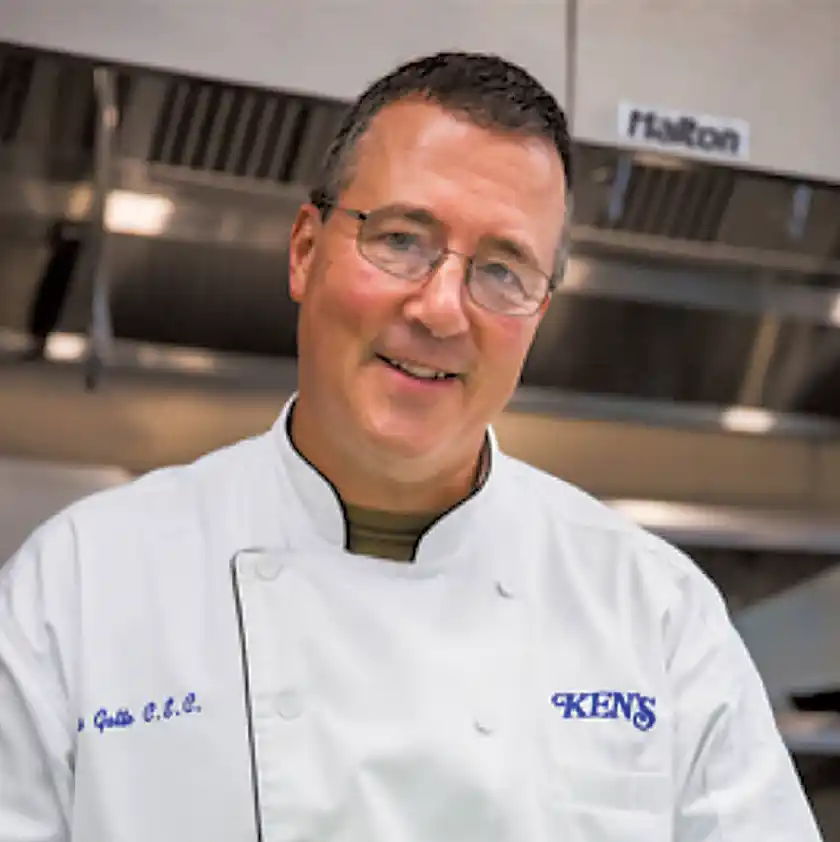
Chris Gatto, Corporate Executive Chef (CEC), brings a unique blend of manufacturing expertise and operational insight to his role as Corporate Executive Chef, enabling him to craft culinary solutions that cater precisely to customers’ needs while ensuring they are practical for execution at the unit level.
With an Associate Degree in Culinary Arts, a Bachelor’s in Food Marketing, and a Master of Arts in Teacher Education, Chris combines a strong academic foundation with real-world experience. As a Certified Executive Chef with the American Culinary Federation and an active member of the Research Chefs Association, he remains at the forefront of industry trends and innovations.
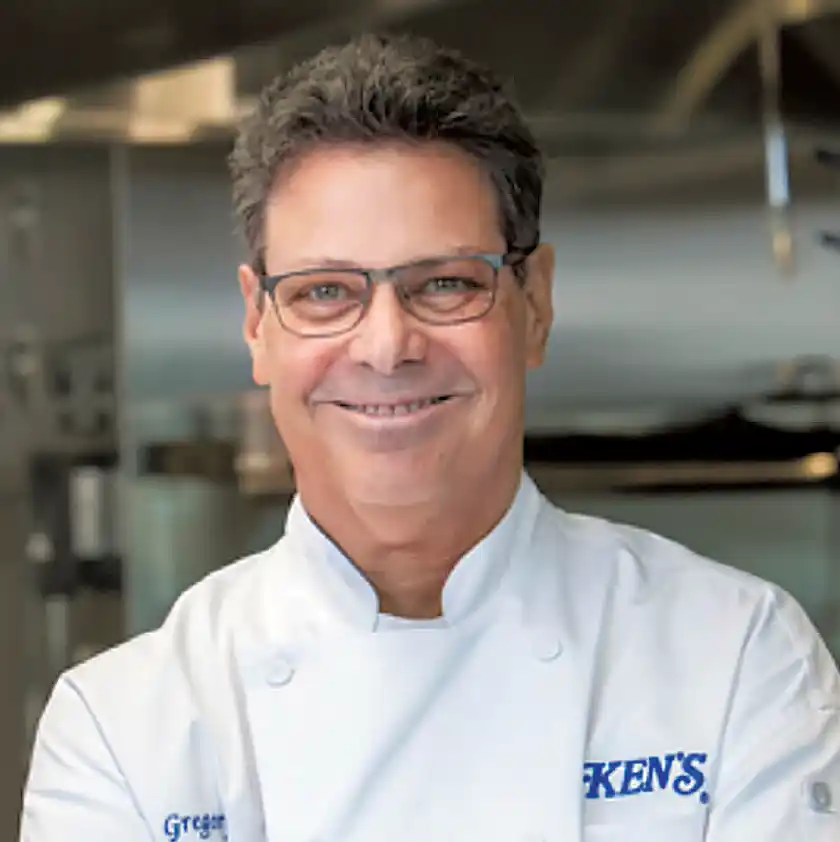
Gregory Schweizer, Corporate Executive Chef, is devoted to delivering high-quality culinary solutions through knowledge, strategy, and innovation.
His extensive training includes studies at the Culinary Institute of America (CIA), Le Istituto Culinario de Toscano, Halliburton Institute of Technology, Eckerd College Management Development Institute, Darden University, and the Applebee’s Leadership Institute.

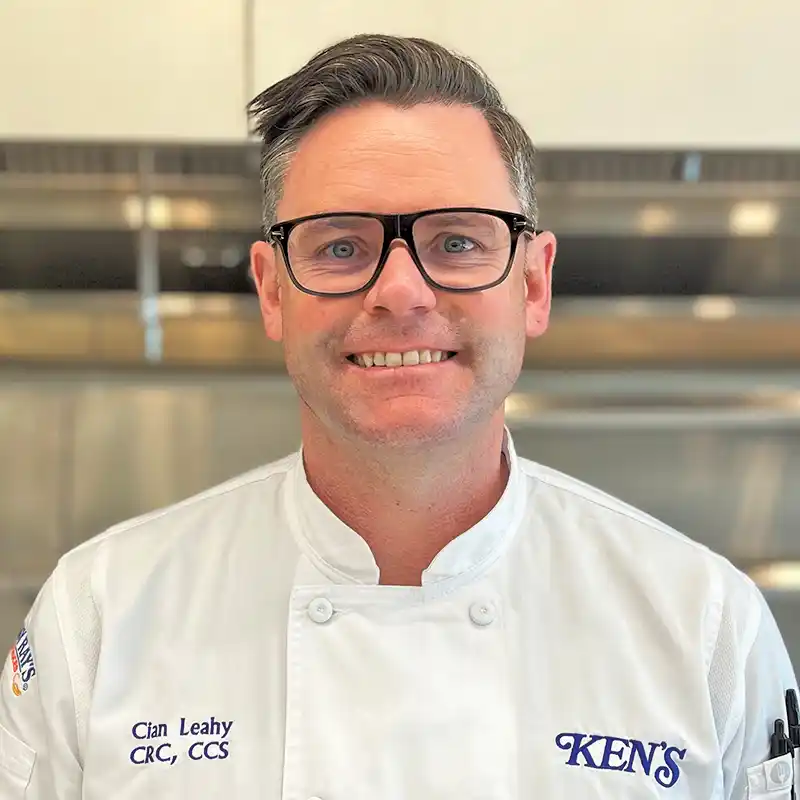
Cian Leahy, Corporate Executive Chef is, a Certified Research Chef (CRC) and Certified Culinary Scientist (CCS), blends fine dining roots with over 20 years in food manufacturing working with brands like Taco Bell, Subway, and Pizza Hut.
He holds degrees in Food Science and Culinary Arts and currently serves as Chair of the Certification Committee for the Research Chefs Association.