Vinegar is one of those ingredients most people take for granted, and yet the variety hiding behind that familiar bottle is incredibly surprising.
At its core, vinegar is simply what happens when alcohol meets fermentation, but what that alcohol starts from, how the vinegar is made, and how long it ages can produce wildly different results. The difference between a splash of Chinkiang black vinegar and a few drops of aged balsamic tradizionale isn’t just a matter of degree, they’re practically different ingredients entirely, with different flavors, different acidity levels, and completely different uses in the kitchen. This guide covers 20 vinegar types from around the world, with a look at what makes each one distinctive and where it’s best used.
Note: For shelf-stable pickling and canning, follow a tested recipe and use vinegar with the specified acidity, commonly 5%. Do not substitute homemade vinegar or products intended for cleaning.
Best for: Pickling vegetables and baking recipes that use baking soda. Pasted text
White distilled vinegar is the most neutral and utilitarian vinegar on this list. It’s sharp, clean, and almost entirely without flavor beyond its acidity, which typically sits around 5–7%. It’s made by fermenting distilled alcohol, which is why it lacks the complexity of wine or fruit vinegars. In the kitchen it’s most useful for pickling, where its neutrality lets the vegetables speak for themselves, and for cleaning, where its acidity does useful work without leaving behind any flavor residue.
It’s not a vinegar you’d necessarily reach for in a dressing or a sauce, but for preserving and certain baking applications (it activates baking soda reliably) it’s hard to beat on price and consistency.
Best for: Vinaigrettes, béarnaise sauce, and light fish or chicken marinades.
Made from fermented white wine, white wine vinegar has a clean, moderately sharp acidity of around 5–7% with a mild fruitiness that makes it considerably more versatile than distilled vinegar without being as assertive as red wine vinegar. It’s a French kitchen staple, used in vinaigrettes, béarnaise sauce, and light marinades where you want acidity without color or heaviness. It pairs particularly well with delicate ingredients: white fish, mussels, chicken, fresh herbs, and light salads.
The quality varies considerably depending on the base wine, so a better bottle makes a difference in the finished dish. If your recipe calls for white vinegar and you don’t have it in your pantry, check out these substitutes.
Best for: Greek salad dressings, escabeche, braised meats, and lentil dishes.
Red wine vinegar brings a more robust, tangy acidity than its white counterpart, with a deeper flavor that carries some of the tannins and fruit character of the wine it’s made from. Acidity typically runs between 5–7%, but the flavor feels bolder than the numbers suggest.
It’s a workhorse in Mediterranean cooking and used in various dishes, from Greek salad dressings, Italian dishes, Spanish escabeches, and braised meat dishes. It also pairs well with robust ingredients that can stand up to its character: red meat, strong cheeses, lentils, and roasted vegetables. Check out these red wine vinegar substitutes, but keep in mind that well-aged red wine vinegars can develop a depth and smoothness that younger, inexpensive versions lack, making them more difficult to substitute.
Best for: Delicate salad dressings, seafood sauces, and light finishing touches.
Champagne vinegar is made from Champagne or other sparkling wines, and the result is one of the most delicate vinegars available. It is light, crisp, and subtly fruity with a gentle acidity that hovers around 5–6%. It’s not something you’d use for heavy marinades or bold sauces; its value lies in applications where subtlety matters. Think light vinaigrettes for tender salad greens, sauces for seafood and shellfish, or finishing touches for dishes where a heavier vinegar would overpower.
It’s arguably the most elegant option on this list for everyday use, and one of the easiest to grab when you’re not sure which vinegar a dish needs.
Best for: Gazpacho, salmorejo, romesco sauce, vinaigrettes, and caramelized onions.
Sherry vinegar is one of the great underrated pantry ingredients, produced in the Jerez region of southern Spain using the same solera aging system as sherry itself. The result is a vinegar with real complexity: nutty, slightly sweet, and deeply savory, with an acidity around 7% that feels rounder and more integrated than most wine vinegars.
It’s aged for a minimum of six months, with premium versions spending years in oak barrels. In Spanish cooking it’s an essential ingredient in various dishes like gazpacho, salmorejo, and romesco and it’s exceptional in vinaigrettes, seafood, and caramelized onions. Outside Spain it’s unfortunately underused given how much character it brings to a dish.
Best for: Salad dressings, meat glazes, strawberries, and aged Parmesan.
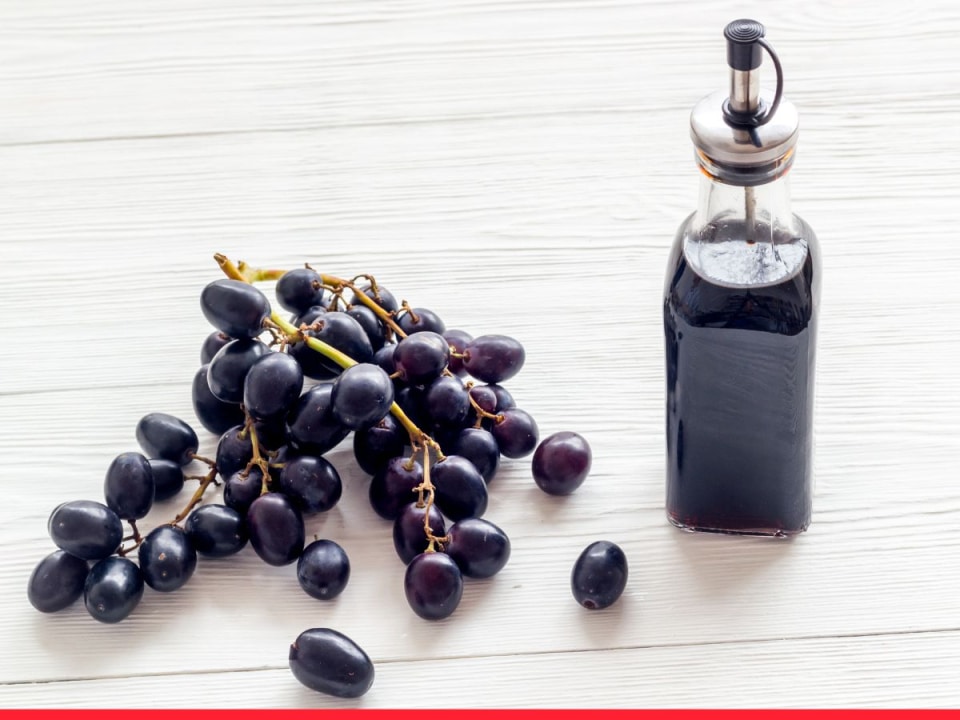
Balsamic vinegar is one of the most widely used vinegars in the world, though what most people buy at the supermarket can be a long way from the traditional product it’s named after. Commercial balsamic is made from grape must blended with wine vinegar, with caramel sometimes added for color and sweetness and the result is generally a thick, sweet-sour syrup with a rich, fruity depth and an acidity around 6%, though the thickness and sweetness level can vary.
It’s incredibly versatile: drizzled over strawberries, reduced into a glaze for meat, whisked into salad dressings, or paired with aged Parmesan and prosciutto. The quality range is enormous, and a mid-range bottle from a reputable producer makes a noticeable difference over the cheaper options.
Best for: Light vinaigrettes, pale sauces, white fish, and burrata.
White balsamic is made from the same Trebbiano grapes as regular balsamic but cooked under pressure to prevent caramelization, keeping the color light and the flavor cleaner and less sweet. The acidity is similar — around 6% — but the character is noticeably more delicate, with a subtle fruitiness and a brightness that makes it particularly useful in dishes where dark balsamic would stain or overwhelm. It’s the better choice for light vinaigrettes, pale sauces, dishes with white fish or burrata, and anywhere the visual presentation matters. Less widely available than regular balsamic but worth tracking down if you cook with pale or delicate ingredients regularly.
Best for: Finishing grilled meats, aged Parmesan, strawberries, and vanilla ice cream.
This is an entirely different product from commercial balsamic you find everywhere. Aceto Balsamico Tradizionale is produced only in Modena or Reggio Emilia under strict DOP regulations, aged for a minimum of 12 years (and up to 25 or more) in a series of progressively smaller barrels made from different woods, each imparting its own character. The result is a thick, complex, intensely flavored condiment with a deep sweetness balanced by acidity.
Traditional balsamic vinegar is never used in cooking as the heat would destroy what makes it special. A few drops over aged Parmesan, grilled meat, fresh strawberries, or even vanilla ice cream is all it takes, and the experience is unlike anything else in the vinegar world. If you have a big budget to splurge on, check out our research on the most expensive traditional balsamic vinegars in the world.
Best for: Fish and chips, chutneys, pickles, and hearty meat dishes.
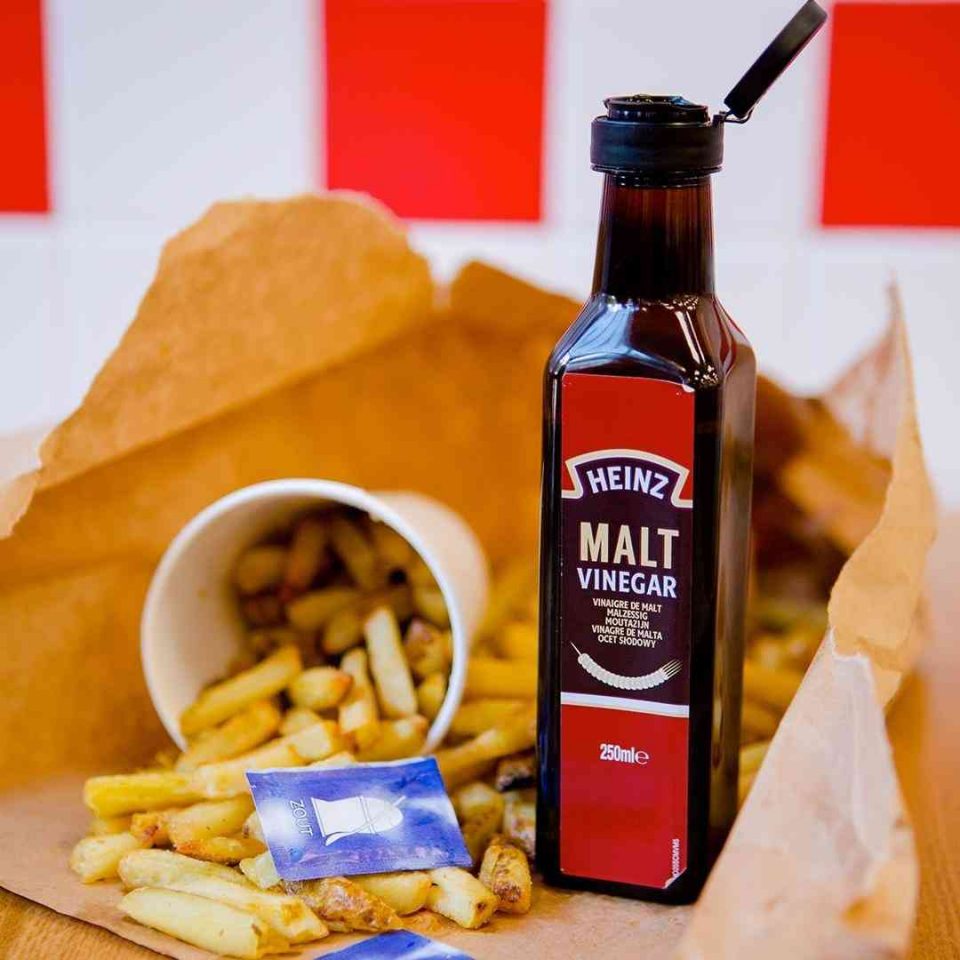
Malt vinegar is made from fermented malted barley (essentially unhopped ale that’s been allowed to acidify) giving it a distinctive toasty, slightly sweet flavor with a robust, earthy edge that sets it apart from wine vinegars. Acidity sits around 5%, and the flavor is assertive enough to stand up to fried food, which is precisely where it’s most at home: doused liberally over fish and chips in Britain, where it’s a condiment as culturally embedded as ketchup.
It also works well with meats, in chutneys, pickling, and and some versions of Worcestershire sauce. Outside these applications it’s rarely used in fine cooking, but it’s irreplaceable within its lane.
Best for: Dumpling dipping sauces, cold noodles, sweet-and-sour sauces, and braised pork.
Chinkiang (also romanized as Zhenjiang) is the most famous of China’s black vinegars, made from glutinous rice and aged until it develops a deep, complex flavor. The acidity is relatively low at around 3.5–5%, but the taste is rich, slightly smoky, and faintly sweet with an almost malty depth that makes it incredibly addictive.
It’s the essential dipping vinegar for Shanghai soup dumplings (xiaolongbao), a key ingredient in sweet and sour sauces, cold noodle dishes, and braised pork recipes. A splash added at the end of cooking adds a subtle flavor that’s hard to identify but immediately noticeable. There’s no perfect substitute for it so if a recipe calls for Chinkiang, it’s worth seeking out the real thing.
Best for: Seasoning noodles, dipping dumplings, and adding depth to braised dishes.
Shanxi mature vinegar is China’s other great black vinegar, produced in Shanxi province and aged considerably longer than Chinkiang (sometimes up to ten years) which gives it a deeper, more complex flavor with stronger umami notes and a less sweet, more savory profile. The acidity sits around 4–6%, but the flavor is concentrated and layered in a way that a younger vinegar simply isn’t. It’s used in northern Chinese cooking as a table condiment, a dipping sauce, and a seasoning for noodles, dumplings, and braised dishes.
In China, Shanxi vinegar carries regional pride comparable to how the French regard their best wine vinegars — it’s a serious ingredient with a serious production tradition behind it.
Best for: Sushi rice, cold noodle dressings, dipping sauces, and vegetable soups.
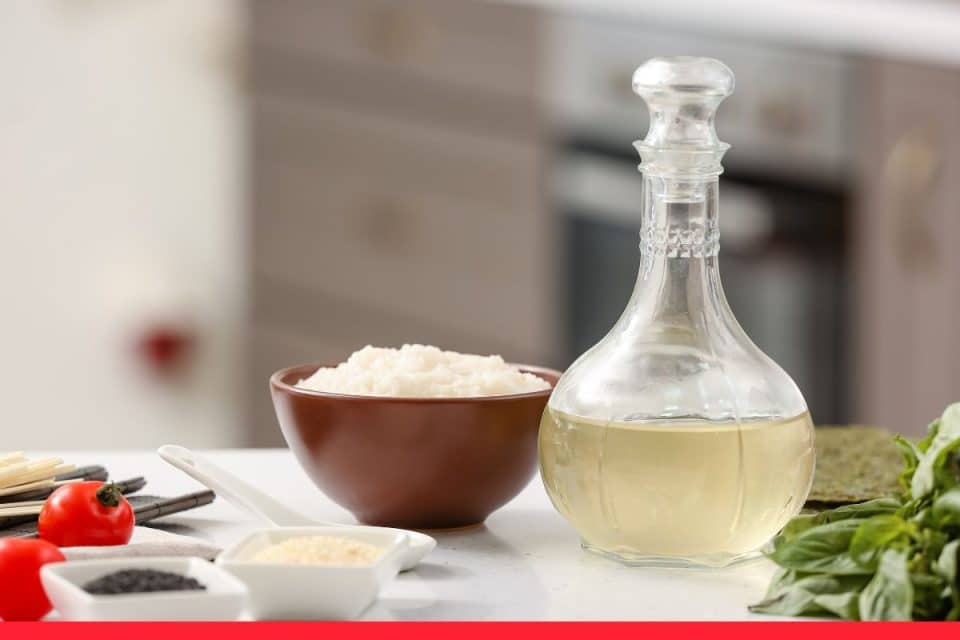
Rice vinegar is the most widely used vinegar across East and Southeast Asian cooking, made from fermented rice and considerably milder than most Western vinegars. Its acidity typically sits around 4–5%, which is part of why it’s so versatile. The flavor is clean, slightly sweet, and gently sour without any harsh edge.
It’s essential for seasoning sushi rice, dressing cold noodles, making dipping sauces, and balancing roast meats or veggie-based soups. Japanese, Chinese, Korean, and Vietnamese cuisines all rely on it, though the specific flavor profile varies by country — Japanese rice vinegar tends to be the mildest and most delicate, while Chinese versions can be slightly sharper. It’s one of the easiest vinegars to cook with because it rarely overpowers. You can find more info and rice vinegar substitutes ideas here.
Best for: Filipino adobo, vinegar-braised dishes, and dipping sauces for grilled meats.
Coconut vinegar is made from the fermented sap of the coconut palm’s flower buds, and it’s a staple condiment and cooking ingredient across the Philippines, India, and parts of Southeast Asia. The flavor is mild and slightly musty, with a faint sweetness and an earthiness that distinguishes it from the cleaner sharpness of wine vinegars.
In Filipino cooking it’s used as a dipping sauce for grilled meats, as a souring agent in adobo, and in various vinegar-braised dishes where its gentle flavor complements rather than dominates. The unrefined version, which retains a cloudy sediment, is preferred in traditional cooking over the filtered commercial versions.
Best for: Marinades, grilled pork, seafood, and lightly dressed vegetables.
Cane vinegar is made from fermented sugarcane juice, and while it sounds like it should be sweet, the fermentation process converts the sugar into acidity, leaving behind a mild, slightly mellow vinegar with an earthy, faintly grassy flavor profile with around 5% acidity.
It’s most significant in Filipino cuisine, where it’s known as sukang iloco and used as a dipping sauce, a marinade base, and a souring agent in cooked dishes. It’s also used in parts of the American South, France (as vinaigre de canne), and other sugarcane-growing regions. The flavor is mild enough to use where you want acidity without a strong vinegar presence, and it works particularly well with grilled pork, seafood, and simply dressed vegetables.
Best for: Dipping grilled or fried foods, souring Filipino dishes, and pickling.
Palm vinegar is produced from the fermented sap of various palm species, most notably the nipa palm, and is particularly common in the Philippines, where it’s considered one of the country’s most prized artisanal vinegars. The flavor is distinctively mild and slightly sweet, with a clean, almost floral quality that makes it noticeably different from both cane and coconut vinegars.
It’s used as a dipping sauce for grilled and fried foods, as a souring agent in Filipino dishes, and in pickling. Outside Southeast Asia it’s rarely encountered, but within Filipino cooking it carries a regional specificity that makes it worth knowing since certain dishes specifically call for it rather than a generic vinegar substitute.
Best for: Slaws, salad dressings, marinades, and root vegetable dishes.

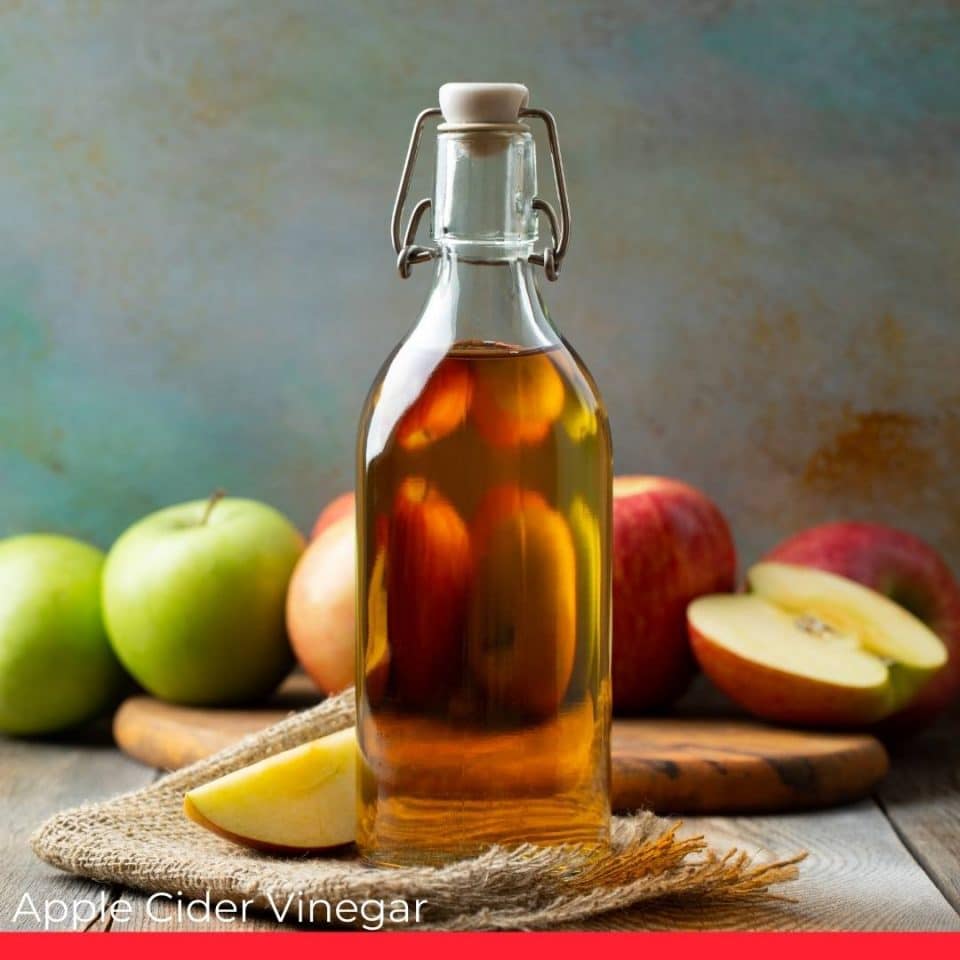
Apple cider vinegar has had a remarkable decade, graduating from a niche home remedy product to a mainstream pantry staple on the back of its wellness reputation, though according to Webmd there’s not a lot of scientific evidence of the claimed health benefits.
It’s made from fermented apple juice, and it has a mild, fruity acidity (typically around 5–6%) with a faint sweetness that makes it more approachable than most wine vinegars. In the kitchen it works well in salad dressings, slaws, marinades, and sauces where a gentle apple-forward tang is an asset. It also pairs naturally with meat-forward dishes and root vegetables.
Best for: Potato salads, salad dressings, and meat marinades.
Beer vinegar is made from fermented beer, and the style of beer used directly shapes the final flavor. It’s considered to be a malty, slightly bitter vinegar with more flavor than distilled vinegar but less complex than a good wine vinegar. It’s most commonly produced and used in Germany, Austria, the Netherlands, and Belgium, where it appears in salad dressings, potato salads, and meat marinades. Darker beer vinegars made from ales or stouts have a richer, more robust flavor, while those made from lager are lighter and more neutral. It’s a niche ingredient outside Central Europe but an interesting one for anyone who enjoys cooking with beer.
Best for: Duck, game meats, hearty stews, and reduction sauces.
Madeira vinegar is made from the fortified wine of the same name, produced on the Portuguese island of Madeira, and it inherits the wine’s distinctive character — rich, slightly nutty, with a caramel complexity that most wine vinegars don’t have. Acidity sits around 6–7%, but the flavor feels rounder and more integrated than the sharpness of standard red or white wine vinegar. It pairs particularly well with game meats, duck, robust stews, and reduction sauces where its flavor adds a layer of richness rather than just acidity. It’s not widely available outside Portugal and specialist food shops, but it’s one of the more interesting vinegars to seek out if you cook seriously with wine-based sauces and want something beyond the standard options.
Best for: Seafood, dipping sauces, cold appetizers, and noodle dishes.
Red rice vinegar occupies an interesting middle ground in the Chinese vinegar family. It’s less intense and smoky than Chinkiang black vinegar but with more complexity than plain white rice vinegar. Made from red yeast rice, it has a mild, slightly sweet and tangy flavor with subtle fruity notes and 4–5% acidity.
In Chinese cooking it’s most associated with seafood dishes and dipping sauces, where it complements delicate flavors without overpowering them. It’s also used in some noodle dishes and cold appetizers. Less widely exported than Chinkiang, it’s worth seeking out in Chinese grocery stores if you want to explore the full range of Chinese vinegar traditions beyond the better-known black varieties.
Best for: Adding distinctive herb, spice, or fruit flavors to dishes.
Infused vinegars are made by steeping herbs, spices, fruits, or aromatics in a base vinegar — usually white wine, apple cider, or rice vinegar — until the flavoring compounds have transferred into the liquid. The result is a vinegar with a distinct character layered on top of its base acidity, which typically stays around 5–6% depending on the carrier. Tarragon vinegar, a French classic, is one of the most well-known examples; others include chili vinegar, garlic vinegar, and rose petal vinegar, which appear across European, Asian, and Middle Eastern cooking traditions. The base vinegar matters — a good white wine vinegar produces a more nuanced infusion than a harsh distilled one. They’re also straightforward to make at home, which makes them a useful way to use up fresh herbs before they turn, and a characterful homemade gift.
Related: Mediterranean Vinegar-Marinated Octopus
Related: Prosciutto Wrapped Asparagus with Reduced Balsamic